

ESA Reusable Space Rider Prototype Damaged in Parachute Drop Test Incident
A full-scale model of Europe's robotic orbital laboratory suffered a severe anomaly during an atmospheric drop test, complicating timelines for autonomous space re-entry.
By The Global Wire Newsroom · Reported from Space com
Link preview · horizonglobalnews.com
ESA Reusable Space Rider Prototype Damaged in Parachute Drop Test Incident
A full-scale model of Europe's robotic orbital laboratory suffered a severe anomaly during an atmospheric drop test, complicating timelines for autonomous space re-entry.
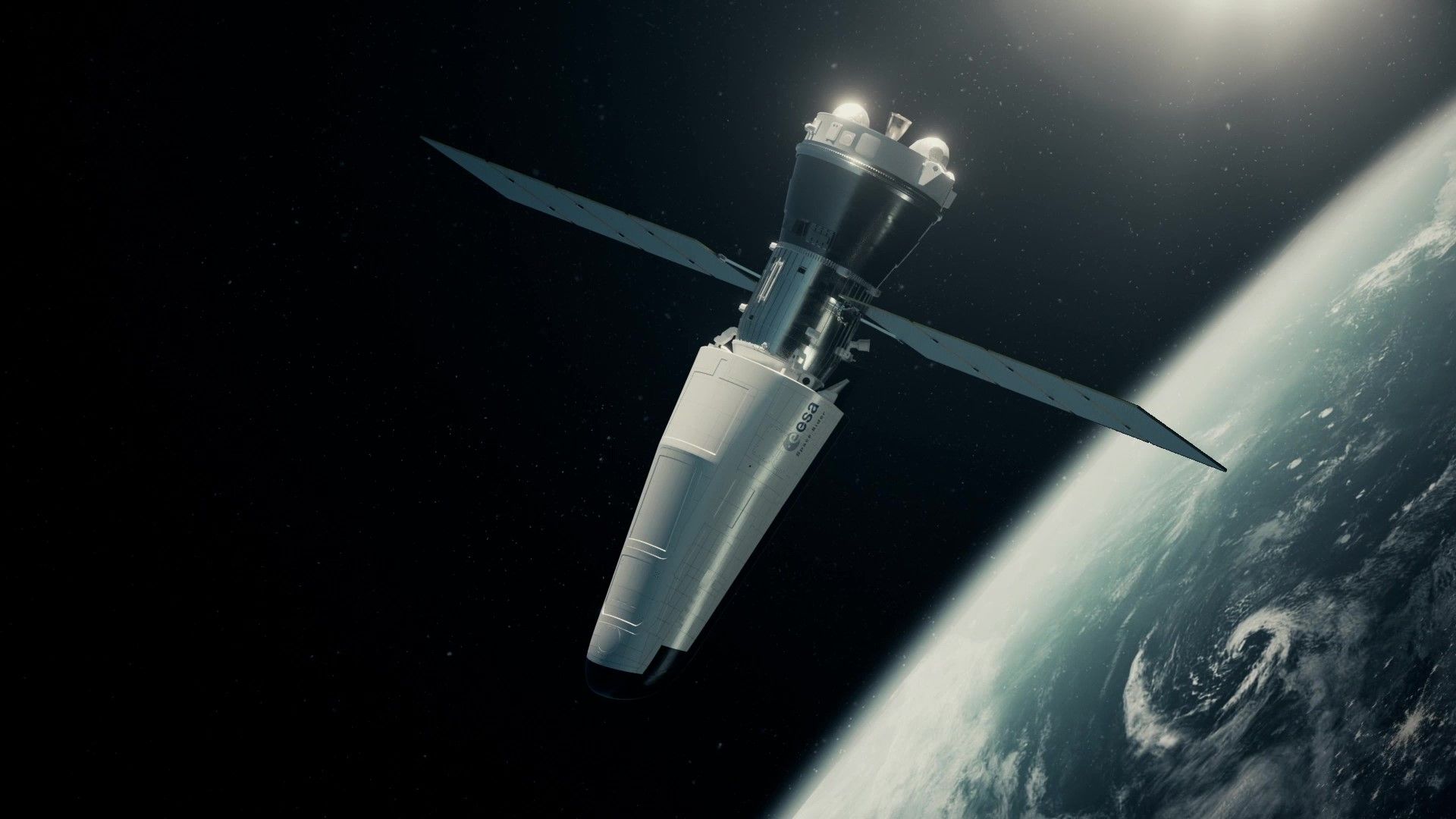
A full-scale test article of Europe's flagship reusable orbital spacecraft, Space Rider, suffered a major anomaly during an atmospheric drop test, delivering an unexpected technical setback to the continent's ambitions for sovereign, returnable space transportation. The incident took place during an exercise aimed at validating the vehicle's descent and landing systems, when a prototype released at altitude failed to execute its planned recovery sequence as intended. The trial was part of an extensive verification campaign designed to qualify the uncrewed spaceplane's steerable parafoil and automated landing algorithms ahead of an orbital maiden voyage, according to reporting by Space com.
Key facts
What happened
Engineers conducted the trial to assess the complex sequence that governs Space Rider's terminal descent through the lower atmosphere, according to reporting by Space com. During operational flights, the vehicle is designed to shed orbital velocity through aerodynamic braking, deploy a subsonic stabilization chute, and finally unfurl a massive, steerable ram-air parafoil that guides the craft toward a soft, runway-style touchdown.
To evaluate these systems without expending a space launcher, development teams routinely lift structural prototypes using helicopters or high-altitude transport aircraft over dedicated military or aerospace test ranges. Once severed from its release mechanism at several thousand metres altitude, the prototype begins a steep descent intended to trigger automated deployment sequences.
During the October 6 drop, the sequence diverged significantly from nominal parameters. Instead of transitioning smoothly into a controlled glide under the parafoil, the test article experienced an anomaly that disrupted the descent path and prevented a normal landing. Detailed telemetry is currently being processed to determine whether the mechanical deployment hardware jammed, the rigging lines fouled during extraction, or the onboard guidance, navigation, and control software miscalculated dynamic inputs required to stabilize the glide slope. The vehicle sustained notable damage upon impact, truncating the test objectives.
Why it matters
This drop test anomaly strikes directly at one of Europe's most strategically sensitive space initiatives. Currently, the European Space Agency possesses no sovereign capability to return hardware, microgravity experiments, or industrial payloads from orbit back to Earth. European researchers and private corporations requiring orbital exposure and physical sample return must either purchase capacity on American platforms—such as the SpaceX Dragon capsule or Sierra Space's nascent Dream Chaser spaceplane—or rely on complex bilateral agreements with non-Western launch providers.
Space Rider is designed to break that reliance. By offering an integrated, reusable platform that combines an orbital bus with a re-entry capsule, Europe seeks to democratize access to low Earth orbit for scientific institutions, pharmaceutical developers, and material fabricators. A delay in resolving aerodynamic recovery issues pushes back commercial operations, leaving European commercial actors reliant on foreign transport architectures.
Furthermore, the failure presents broader programmatic headaches for ESA's institutional timeline. Space Rider had already absorbed multiple schedule adjustments resulting from previous technical redesigns and the cascading delays affecting its launcher, the Italian Vega-C. When structural test vehicles are heavily damaged in pre-flight campaigns, replacement components must be procured and qualified, consuming budget margins that are tightly bound by ESA ministerial mandates. Any pause in ground and atmospheric validation work risks pushing the debut flight further toward the late 2020s, inflating development expenses and freezing commercial contracts.
The background
Space Rider traces its engineering lineage back to the Intermediate eXperimental Vehicle, known as IXV. In February 2015, ESA successfully launched the suborbital IXV prototype aboard a Vega rocket from Kourou. The IXV executed a flawless suborbital trajectory, survived atmospheric re-entry using advanced ceramic thermal protection tiles, and deployed parachutes before splashing down into the Pacific Ocean. While IXV proved that Europe could manage hypersonic aerothermodynamics and lifting-body re-entry, water recovery necessitated expensive naval retrieval operations and exposed sensitive flight hardware to corrosive saltwater.
To overcome these limitations, ESA ministers approved the Space Rider program at the 2016 Ministerial Council in Lucerne, Switzerland, committing to an uncrewed system capable of dry, land-based recovery. Rather than conventional multi-stage parachutes that require water splashdowns or broad desert salt flats, Space Rider was conceived with a sophisticated parafoil that can steer the craft into a designated landing strip—most notably planned for the Santa Maria Island airport in Portugal's Azores archipelago, or an adapted strip in French Guiana.
The industrial architecture splits responsibilities across major European aerospace entities. Thales Alenia Space, an Franco-Italian joint venture, serves as co-prime contractor managing the re-usable re-entry module. Avio, the Italian propulsion specialist based in Colleferro, oversees the expendable Space Rider Service Module, which is derived directly from the AVUM+ fourth stage of the Vega-C rocket. Together, the system is designed to provide approximately 600 to 800 kilograms of payload capacity across an internal bay volume of 1,200 litres.
Atmospheric drop testing is historically the most hazardous phase of spaceplane development. Unlike computer simulations, full-scale drop trials expose fabric wings and suspension rigging to violent, unpredictable transient wind loads and boundary-layer turbulence. The United States experienced similar tribulations during the early testing phases of the Space Shuttle's parachute recovery systems, NASA's X-38 crew return vehicle, and commercial systems like the Dream Chaser, where early aerodynamic and drop trials uncovered unforeseen stability issues that demanded extensive redesigns of control surfaces and deployment bags.
Reaction
Neither ESA leadership nor the primary industrial consortium members have issued comprehensive public post-mortems immediately following the test, a typical posture while internal engineering review boards sift through black-box flight data, sensor recordings, and high-speed tracking footage. Technical panels involving system architects from Thales Alenia Space, Avio, and independent specialists from ESA's Directorate of Space Transportation are assembling to dissect the telemetry.
Observers across the European space policy sector anticipate that official statements will be delivered through ESA programmatic communications channels once root-cause analysis reaches definitive milestones. In parallel, European national space agencies—particularly the Italian Space Agency (ASI), which serves as the largest financial contributor to the Space Rider initiative—will scrutinize the failure during internal executive committees. Stakeholders in member states funding the optional program will demand assurances that the underlying issue is an isolated mechanical integration fault rather than an architectural design deficiency requiring a ground-up rework of the parafoil steering mechanisms.
What we don't know yet
Crucial technical details surrounding the failure remain unconfirmed in public records. The precise altitude of the drop, the aircraft used to release the vehicle, and the designated test range where the incident occurred have not been officially detailed by the involved agencies. It also remains unclear at exactly what point in the recovery sequence the failure manifested: did the pilot parachute fail to deploy the main parafoil canopy, did the steerable canopy experience a catastrophic structural tear under dynamic opening shock, or did the automated steering winches fail to respond to navigational commands?
Equally unknown is the structural condition of the prototype itself. While initial descriptions point to a severe anomaly resulting in damage, investigators have not clarified whether core internal avionics, thermal protection substrates, and telemetry packages survived the impact intact enough to furnish conclusive data. Perhaps most critically for industry, the impact of this incident on the targeted maiden orbital launch schedule remains uncalculated, leaving commercial payload customers without firm operational windows.
What to watch
In the coming weeks and months, several concrete milestones will indicate how severely the incident has altered the program's path:
This report is based on original reporting by Space com.
How this story was produced
This report was written by The Global Wire newsroom from reporting first published by Space com. We verify the core facts against the original report, write our own account, and add the background and consequences a short wire item leaves out. Drafting is AI-assisted inside an editor-supervised pipeline, and every story is checked for accuracy of attribution, structure and duplication before it appears — full detail in our AI and funding disclosure.
Spotted an error? Tell us at corrections@horizonglobalnews.com and read our corrections policy or editorial standards.




Reader comments
Loading comments…