

Trump Floats Billions in Farm Aid and Citizen Dividends Ahead of November Vote
Campaign pledges of direct cash payments and agricultural subsidies face constitutional hurdles and scrutiny over past delivery.
By The Global Wire Newsroom · Reported from Chad de Guzman
Link preview · horizonglobalnews.com
Trump Floats Billions in Farm Aid and Citizen Dividends Ahead of November Vote
Campaign pledges of direct cash payments and agricultural subsidies face constitutional hurdles and scrutiny over past delivery.
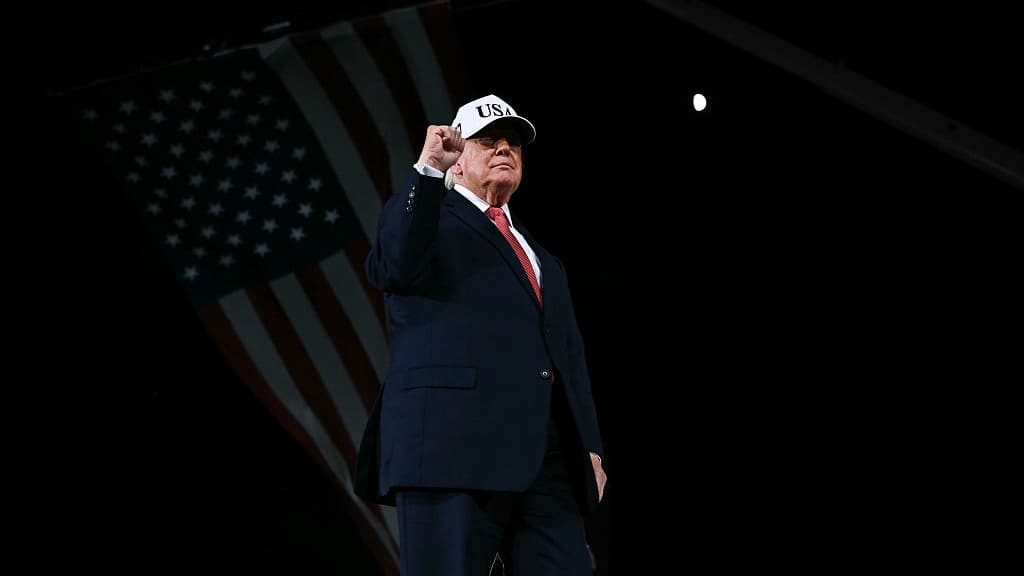
WASHINGTON — On the campaign trail leading into the November elections, Donald Trump has intensified appeals to voters by floating direct financial windfalls, dangling billions of dollars in fresh assistance for American farmers alongside a proposed $5,000 direct payout dubbed a "Trump Dividend" if Republicans capture control of government. The pledges, aimed directly at rural communities and working-class households facing persistent cost-of-living pressures, highlight an increasingly transactional closing pitch to the electorate. However, the sweeping promises arrive against a complex backdrop of fiscal constraints, constitutional limits on executive spending authority, and persistent skepticism regarding the candidate's historical record of translating off-the-cuff campaign commitments into enacted statutory policy.
Key facts
What happened
In recent public appearances across critical battleground states, Trump has framed the upcoming congressional and presidential balloting not merely as a choice of political philosophy, but as a direct financial referendum for everyday citizens. According to reporting by Chad de Guzman, the Republican nominee has pledged sweeping direct federal outlays, telling crowds that a decisive party triumph would clear the path for a newly minted "Trump Dividend" of $5,000 per recipient, while simultaneously vowing to inject billions of additional dollars into agricultural regions battered by volatile commodity prices and elevated borrowing costs.
These proposals represent an escalation of Trump's long-standing strategy of floating direct economic benefits during competitive electoral cycles. By attaching personal branding to potential government disbursements, the campaign seeks to establish a visceral link between voter support and immediate household liquidity. The promises have been offered primarily during campaign rallies and media interviews rather than through formal, detailed legislative blueprints, leaving the operational mechanics, eligibility thresholds, and precise funding mechanisms unspecified.
While the concept of direct voter relief resonates with constituencies wrestling with post-pandemic inflation, critics and fiscal policy analysts have noted a pronounced discrepancy between rhetorical generosity and structural follow-through. Trump’s political track record includes numerous ambitious economic declarations—ranging from comprehensive infrastructure plans funded by private capital to direct payments that stalled amid legislative resistance—that ultimately failed to materialize in statutory law.
Why it matters
The policy implications of dangling unlegislated cash distributions extend across the federal budget, macroeconomic stability, and constitutional governance. At a fundamental level, the promises challenge established norms surrounding the separation of powers. The executive branch cannot unilaterally mint new entitlement disbursements or appropriate funds without statutory authorization enacted by both chambers of Congress. For prospective beneficiaries, treating such declarations as guaranteed policy introduces significant financial distortion, potentially altering personal budgeting or farm financing decisions based on relief that may never survive Capitol Hill negotiations.
From a macroeconomic perspective, distributing a $5,000 cash dividend on a national scale represents an enormous fiscal undertaking. If distributed broadly to adult Americans, such an initiative would necessitate upwards of $750 billion to $1 trillion in federal outlays. In an environment characterized by national debt exceeding $35 trillion and annual federal deficits surpassing $1.8 trillion, an injection of this magnitude would place immense upward pressure on Treasury yields, national borrowing requirements, and potentially reignite inflationary trends that the Federal Reserve has spent years seeking to contain.
For the agricultural sector, the promise of billions in relief speaks to acute vulnerability. American farmers face depressed margins driven by high equipment financing costs, declining crop receipts for corn and soybeans, and shifting export dynamics. Federal support has traditionally formed an indispensable safety net, but ad hoc political commitments risk distorting long-term farm bill reauthorizations, creating uncertainty over whether agricultural producers should plan operations around predictable baseline programs or contingent executive interventions.
The background
Direct federal transfers and emergency agricultural bailouts have precedent in recent American history, but they have historically required intricate legislative compromise or specific existing statutory authorities. During the trade tensions between the United States and China during Trump's first administration, the executive branch bypassed legislative logjams by utilizing the Commodity Credit Corporation (CCC), an entity established during the New Deal in 1933 and formalized under the CCC Charter Act of 1948. Through the Market Facilitation Program (MFP), the Department of Agriculture dispensed roughly $28 billion across 2018, 2019, and 2020 to shield domestic agricultural producers from retaliatory foreign tariffs.
Similarly, broad-based direct cash disbursements to individuals became a signature economic response during the COVID-19 pandemic. The CARES Act, enacted with bipartisan support in March 2020, delivered Economic Impact Payments of up to $1,200 per adult. Later that year, Trump signed the Consolidated Appropriations Act of 2020, which authorized an additional $600 per individual. In the closing weeks of December 2020, Trump publicly demanded that Congress increase those payments to $2,000—a demand that fractured his own party's congressional leadership and was ultimately realized under the Biden administration through the American Rescue Plan Act of March 2021.
Despite these precedents, the political context governing fiscal appropriations has fundamentally shifted. The emergency pandemic relief packages were financed through extraordinary bipartisan consensus in response to a sudden collapse of economic output. In contrast, current fiscal policy is constrained by statutory debt limit caps, sharp polarization, and mounting scrutiny from credit rating agencies regarding long-term federal debt trajectories. Furthermore, Trump's record includes signature economic promises that never advanced beyond conceptual stages, notably the repeated declarations of an impending $1.5 trillion infrastructure bill that languished for four years without a cohesive legislative text reaching the congressional floor.
Reaction
The pledges have drawn immediate attention across political and policy circles, though structured legislative responses remain constrained by the electoral calendar. Fiscal watchdogs and conservative economic institutions have consistently voiced reservations about untargeted federal handouts, arguing that deficit-financed stimulus exacerbates structural debt burdens and risks prolonging elevated interest rates set by monetary authorities.
Democratic lawmakers and progressive policy organizations are expected to challenge the credibility of the proposals, framing the promised "Trump Dividend" as an unfunded campaign gambit that mirrors past unfulfilled promises. Opponents will likely contrast the proposed individual payments with conservative tax platforms that prioritize the permanent extension of corporate and high-income rate reductions enacted under the Tax Cuts and Jobs Act of 2017.
Within agricultural lobbies, including organizations such as the American Farm Bureau Federation and the National Farmers Union, responses are typically balanced between urgent calls for immediate disaster and revenue relief and a desire for structural stability through a comprehensive five-year farm bill. Farm state representatives in Congress have stressed that while direct ad hoc relief offers temporary liquidity, long-term credit stability requires predictable crop insurance baselines and conservation funding codified by statute.
What we don't know yet
Significant gaps remain regarding the operational architecture of Trump's proposals. The campaign has not clarified how the $5,000 dividend would be funded, whether it would be structured as a direct Treasury payment, a refundable tax credit, or funded through proposed tariffs on foreign imports. The legal rationale for enacting such an outlay without explicit congressional authorization remains entirely unaddressed, and it is unknown whether the proposal assumes a sweeping legislative package passed via the budget reconciliation process, which requires only a simple majority in the Senate.
It is similarly unclear what eligibility criteria would govern the dividend. Reporting has not disclosed income thresholds, phase-out schedules, or whether dependents would qualify. In the agricultural domain, specific eligibility formulas for the proposed billions in farm assistance have not been detailed, leaving open whether funding would target specific commodity producers impacted by international trade dynamics or provide across-the-board assistance for climate-related yield losses and elevated input costs.
What to watch
The immediate factor determining the feasibility of these proposals is the composition of the 119th Congress following the November elections. If Republicans secure unified control of the White House, the Senate, and the House of Representatives, observers must watch whether leadership incorporates cash disbursements into early budget reconciliation blueprints, which must balance spending against revenues to conform with the Senate's Byrd Rule.
Budget analysts should track whether the campaign releases formal policy white papers detailing revenue offsets, such as universal tariff revenues, to fund the initiatives. Economic watchdogs will also monitor the formal negotiations surrounding the expiration of individual tax provisions from the 2017 tax law at the end of 2025, which represents the primary vehicle through which any broader tax dividend or rebate could realistically be deliberated.
Finally, observers must monitor whether congressional leaders from agricultural states introduce standalone emergency relief measures during the upcoming post-election lame-duck session, or whether farm relief discussions remain frozen until new executive and legislative mandates take effect in January.
This report draws upon reporting originally published by Chad de Guzman.
How this story was produced
This report was written by The Global Wire newsroom from reporting first published by Chad de Guzman. We verify the core facts against the original report, write our own account, and add the background and consequences a short wire item leaves out. Drafting is AI-assisted inside an editor-supervised pipeline, and every story is checked for accuracy of attribution, structure and duplication before it appears — full detail in our AI and funding disclosure.
Spotted an error? Tell us at corrections@horizonglobalnews.com and read our corrections policy or editorial standards.






Reader comments
Loading comments…