

Paris Enforces Central Curfew Around République and Les Halles After Severe Riots
French authorities deployed overnight patrols across key Paris districts following intense street violence, leaving central thoroughfares quiet under movement restrictions.
By The Global Wire Newsroom · Reported from Frederique Mauduit
Link preview · horizonglobalnews.com
Paris Enforces Central Curfew Around République and Les Halles After Severe Riots
French authorities deployed overnight patrols across key Paris districts following intense street violence, leaving central thoroughfares quiet under movement restrictions.
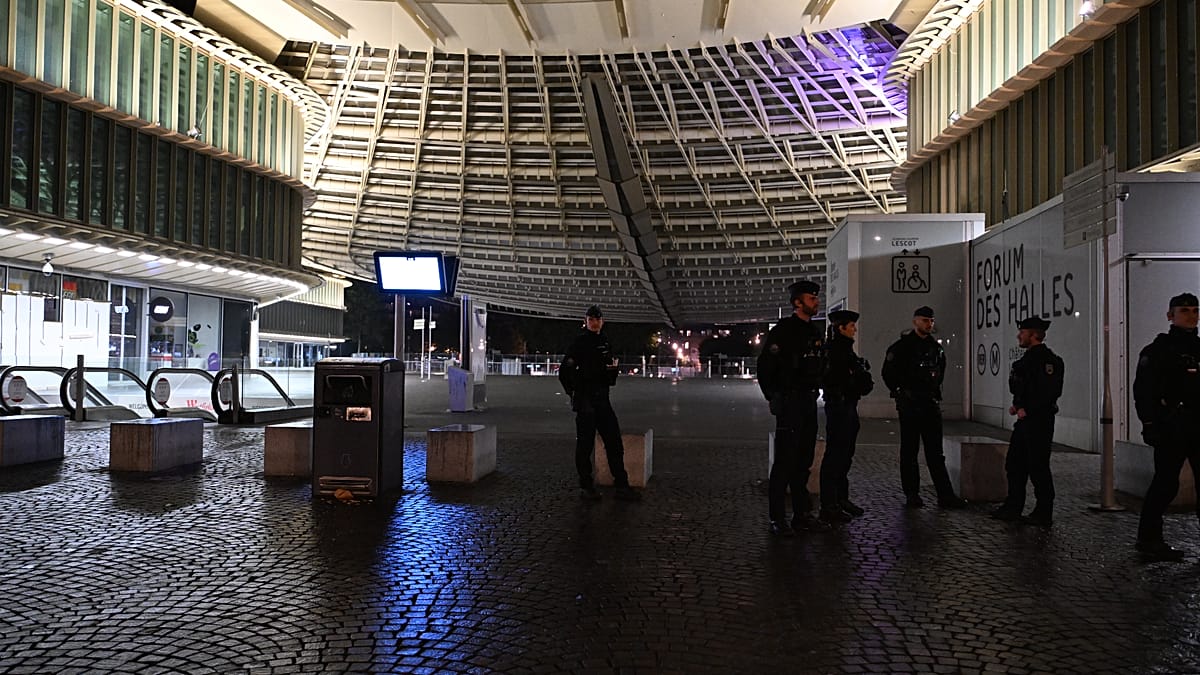
French law enforcement authorities placed key sectors of central Paris under an overnight curfew on Monday following an eruption of civil unrest characterized as the nation's most severe rioting in several years. The localized restrictions targeted the perimeters surrounding Place de la République and the Les Halles commercial district, two of the capital's busiest civic and transit hubs. Visual documentation and field dispatches showed heavily equipped police units maintaining a conspicuous presence across deserted boulevards, with public avenues remaining quiet throughout the nighttime hours as the movement ban took effect.
Key facts
What happened
According to video coverage and reporting by Frederique Mauduit, Paris police moved into position late Monday to enforce a mandatory overnight curfew after days of severe civil unrest escalated into major rioting. The operational focus centered squarely on two strategic urban nodes: the vast pedestrian plaza at Place de la République and the high-density shopping and transit core around Les Halles.
As the curfew commenced, heavily outfitted police brigades deployed across the intersections that link the 1st, 2nd, 3rd, 10th, and 11th arrondissements. Police cruisers and foot patrols moved through usually crowded pedestrian plazas, commercial boulevards, and metro entrances. Streets that normally sustain vibrant evening dining and pedestrian traffic cleared out, with commercial storefronts shuttered and residential corridors falling silent under the enforcement operation.
Footage gathered from the scene confirmed that despite tensions leading up to the intervention, the overnight hours passed without renewed mass clashes in the cordoned sectors. Officers maintained stationary checkpoints and conducted perimeter sweeps around key access routes feeding into both Place de la République and the Forum des Halles complex, ensuring that crowds could not assemble under cover of darkness.
Why it matters
The imposition of a localized curfew in the core of a major European capital represents an aggressive public-order intervention that carries substantial civic, economic, and institutional ramifications. From an urban governance standpoint, Place de la République and Les Halles are not peripheral neighborhoods; they represent the structural heart of Parisian daily life. Les Halles hosts the Châtelet-Les Halles transit complex, one of the world's largest underground rail stations, serving hundreds of thousands of commuters daily across multiple Paris Métro lines and RER suburban commuter routes. Shutting down movement in this sector disrupts late-night transit connections, night-shift labor, and regional logistics connecting suburban departments to the capital.
Economically, emergency curfews deliver immediate shocks to local commerce. The central districts host dense clusters of independent restaurants, cultural venues, and retail flagship stores that rely heavily on evening foot traffic. In previous periods of acute disruption, prolonged restrictions have eroded hospitality revenues, deterred international tourism, and driven up property insurance premiums for retail operators.
Politically, deploying curfews signals that conventional riot management techniques—such as static cordons, tear gas dispersion, and mobile rapid-reaction squads—have reached their limits in suppressing civil disorder. When municipal or national authorities resort to restricting fundamental freedom of movement, it heightens scrutiny from civil liberties organizations and opposition lawmakers. It also tests the operational capacity of French policing agencies, which must sustain around-the-clock mobilizations without exhausting personnel or triggering escalatory confrontations with local residents.
The background
French public-order policing operates under the direct supervision of the Ministry of the Interior and, within the capital, the Préfecture de Police de Paris. Under the French legal framework, notably the Code général des collectivités territoriales and the Code de la sécurité intérieure, authorities hold specific administrative instruments to curtail public circulation, restrict assembly, and institute protective security perimeters when serious threats to public order arise.
Place de la République has long served as France's foremost staging ground for political demonstration and civic mobilization. The square was the epicenter of the 2016 Nuit Debout movement, served as a primary gathering point during the 2018–2019 Yellow Vest (Gilets Jaunes) demonstrations, and regularly anchors trade union marches protesting pension and labor reforms. Because broad boulevards radiate outward from the plaza toward eastern Paris, the area frequently becomes a flashpoint for confrontations between radical demonstration blocs and mobile gendarmerie and police units.
Les Halles presents a different set of security challenges. Historically known as "the belly of Paris" before its wholesale redevelopment in the late 20th century, the area combines a sprawling multilevel shopping mall with expansive subterranean rail connections. Because of its direct transit links to the northern, eastern, and southern suburbs (banlieues), the district has occasionally seen sudden escalations of unrest, property destruction, and looting during broader waves of national turmoil.
France has grappled with recurring cycles of severe urban unrest over the past two decades. The benchmark remains the autumn 2005 riots, which prompted the national government to invoke the historic 1955 state of emergency law, permitting prefects across dozens of departments to institute municipal curfews. More recently, in late June and early July 2023, the fatal police shooting of 17-year-old Nahel Merzouk in the western suburb of Nanterre triggered days of nationwide rioting, commercial looting, and arson that caused more than one billion euros in property damage. During that crisis, several suburban municipalities—including Clamart, Compiègne, and Neuilly-sur-Marne—enacted localized nighttime curfews under mayoral decrees to regain control of public spaces, although the central core of Paris largely avoided formal movement prohibitions at that time.
Reaction
While specific statements from municipal and state officials were not immediately published alongside the overnight visual reporting, measures of this scale traditionally trigger immediate political and institutional fallout across the French political spectrum.
The Préfecture de Police de Paris typically defends emergency movement restrictions as indispensable administrative safeguards designed to shield public infrastructure, emergency responders, and private property from organized vandalism. National government leaders, including the interior minister, routinely emphasize zero-tolerance policies toward street violence when deploying exceptional security measures.
Conversely, municipal council members representing left-leaning parties and civil liberties advocates historically voice skepticism regarding broad curfews. Critics frequently question the proportionality of blanket movement bans, cautioning that severe restrictions risk criminalizing ordinary residents and transit users while doing little to resolve the underlying socioeconomic grievances or policing controversies driving street violence. Business associations, including the retail and restaurant federations representing central Parisian merchants, are expected to seek clear timelines for the lifting of restrictions to minimize operational losses.
What we don't know yet
Significant operational and contextual details remain unconfirmed in the immediate aftermath of the overnight deployment. The underlying spark that triggered this particular wave of unrest—characterized as France's worst in years—has not been specified in available dispatches. While earlier episodes of major rioting in France have stemmed from fatal police encounters, controversial legislative enactments, or high-profile judicial rulings, the precise catalyst for the current violence has not been detailed.
Furthermore, official records have not yet clarified the exact hours of the curfew, whether administrative exemptions were granted for essential night workers, or the precise geographic boundaries established by the prefectural decree. Authorities have also withheld aggregate figures regarding total arrests, police injuries, civilian casualties, or the extent of commercial property damage inflicted in the hours preceding the curfew. It remains uncertain whether the movement restriction was planned as a single-night tactical intervention or represents the start of a multi-day enforcement regime.
What to watch
The trajectory of the security response over the coming 48 to 72 hours will depend on several concrete indicators:
This account is based on field reporting and video documentation published by Frederique Mauduit.
How this story was produced
This report was written by The Global Wire newsroom from reporting first published by Frederique Mauduit. We verify the core facts against the original report, write our own account, and add the background and consequences a short wire item leaves out. Drafting is AI-assisted inside an editor-supervised pipeline, and every story is checked for accuracy of attribution, structure and duplication before it appears — full detail in our AI and funding disclosure.
Spotted an error? Tell us at corrections@horizonglobalnews.com and read our corrections policy or editorial standards.





Reader comments
Loading comments…