

French Mayoral Leader Points to Russian Role in Coordinated Domestic Unrest
Patrick Molinoz, a senior official in France's mayoral association, alleges recent unrest showed signs of planning and foreign state meddling.
By The Global Wire Newsroom · Reported from Méabh Mc Mahon
Link preview · horizonglobalnews.com
French Mayoral Leader Points to Russian Role in Coordinated Domestic Unrest
Patrick Molinoz, a senior official in France's mayoral association, alleges recent unrest showed signs of planning and foreign state meddling.
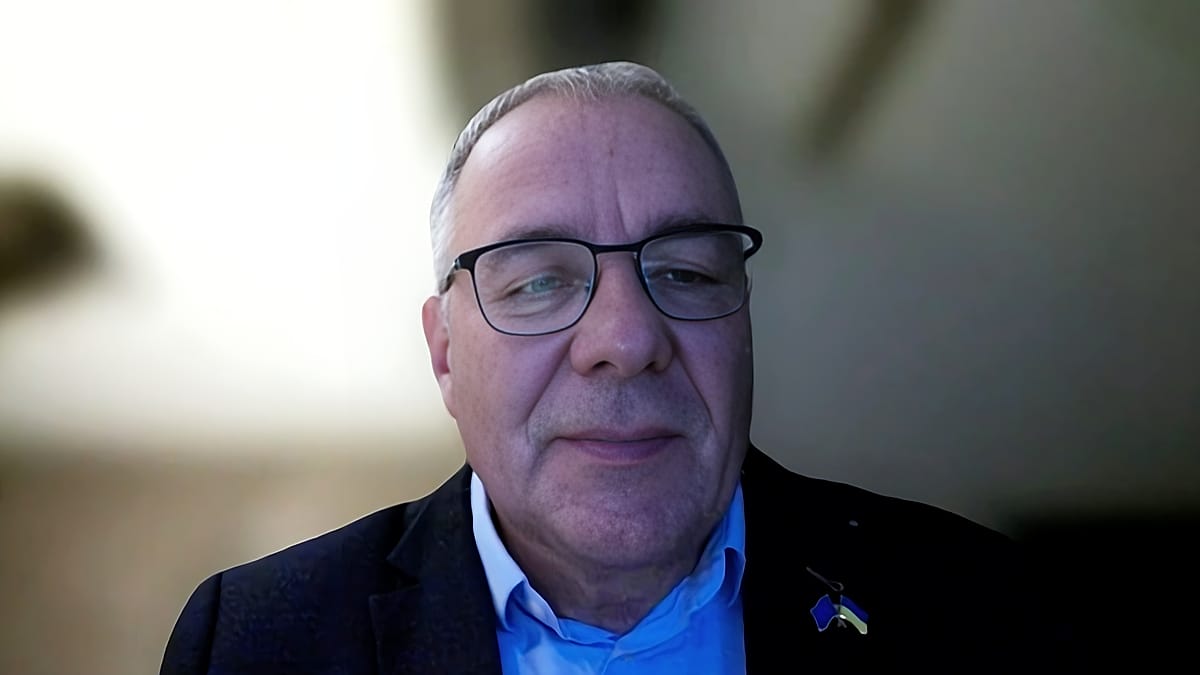
A senior official representing French municipal leaders has publicly alleged that recent episodes of violent unrest in France bore hallmarks of pre-meditated coordination, pointing directly toward Russian involvement. Patrick Molinoz, vice-president of the Association des Maires de France (AMF), stated that the disturbances appeared organized rather than spontaneous, asserting that foreign interference from Moscow was highly probable. The allegations bring the issue of hybrid warfare and foreign destabilization into municipal security, elevating local governance concerns into broader international defense debates.
Key facts
What happened
In remarks reported by journalist Méabh Mc Mahon, Patrick Molinoz asserted that the trajectory of recent civil unrest across French municipalities demonstrated clear evidence of external planning. Molinoz, who helps lead the influential French Mayoral Association, argued that the scale, timing, and operational nature of the violence pointed away from entirely localized, organic grievances and toward structured orchestration.
Central to his assessment was the accusation that the Russian Federation played an active role in stoking or facilitating the unrest. Molinoz characterized the prospect of Russian interference as "quite certain," suggesting that hostile actors abroad seized upon domestic fault lines to amplify destructive conduct across French streets.
As vice-president of the AMF, Molinoz represents an organization tasked with defending the administrative and security interests of France's mayors, many of whom find their town halls, municipal police stations, and local infrastructure directly targeted during waves of public disorder. His intervention shifts the narrative surrounding street-level violence from purely socio-economic policing matters to national security and counter-espionage territory, attributing a coordinating hand to external geopolitical adversaries.
Why it matters
The claim that street-level civil unrest is being amplified or directed by a hostile foreign power carries profound ramifications for French governance, law enforcement doctrine, and European domestic security. When local riots are categorized not merely as law-and-order crises but as manifestations of hybrid conflict, the framework for state response changes fundamentally. Intelligence services, cybersecurity watchdogs, and counter-espionage apparatuses become central to what would otherwise be conventional public-order policing under the Ministry of the Interior.
For municipal governments, the stakes are existential and immediate. Town mayors and local council members represent the most accessible tier of the French state, operating without the heavy security details provided to federal cabinet ministers. When unrest targets municipal assets—such as schools, administrative centers, and transport nodes—mayors bear the physical and financial brunt of the devastation. If foreign intelligence services or state-backed cyber units are intentionally manipulating social media networks to trigger flash mobs and accelerate urban destruction, local municipalities cannot defend themselves using standard municipal policing methods.
Furthermore, this development complicates French domestic politics. Valid civil protests and deep-rooted domestic grievances run the risk of being viewed through a geopolitical security lens, potentially delegitimizing domestic political debates. Conversely, ignoring verified instances of foreign information manipulation leaves public safety vulnerable to hostile intelligence services that seek to paralyze Western democracies from within. At a broader European level, France's experience offers a cautionary model for other North Atlantic Treaty Organization (NATO) and European Union member states confronting similar pressure points.
The background
Concerns regarding foreign interference in French domestic affairs have escalated sharply in recent years, particularly in the wake of Russia's full-scale invasion of Ukraine in February 2022. While Russian operations previously concentrated on digital disinformation campaigns during elections—such as the hack-and-leak operations during the 2017 French presidential campaign—recent intelligence assessments highlight a shift toward active physical provocations designed to divide society.
In 2021, the French government established VIGINUM, an official technical agency under the General Secretariat for Defence and National Security (SGDSN), dedicated to detecting foreign digital disinformation and information manipulation. In several declassified investigations, VIGINUM uncovered sprawling Russian networks, notably the "Doppelgänger" campaign, which cloned mainstream French media outlets to disseminate fabricated reports designed to undermine public confidence in national institutions.
More recently, French security authorities have documented low-level physical operations financed and directed by Russian intelligence cutouts. In autumn 2023, French police investigated the spray-painting of blue Stars of David on buildings across Paris and its suburbs, an act that domestic intelligence later linked to individuals directed by Russian-linked networks aiming to inflame religious tensions following the outbreak of violence in the Middle East. Similarly, in mid-2024, French authorities detained individuals suspected of placing empty coffins draped with French flags near the Eiffel Tower, carrying slogans criticizing French military assistance to Ukraine.
The Association des Maires de France, founded in 1907, represents the executive leaders of the country's municipalities. In recent years, mayors have repeatedly sounded alarms regarding rising physical violence directed at elected officials, from the arson of private residences to assaults on civic halls during periods of widespread urban disturbance, such as the national riots of June and July 2023. Molinoz's comments reflect a growing conviction among local administrators that these escalating threats are not solely the product of domestic polarization.
Reaction
While the specific remarks delivered by Patrick Molinoz were documented in a video interview with Méabh Mc Mahon, domestic and international reactions to broad accusations of foreign-instigated unrest generally follow sharp ideological and institutional divides.
Within France, the Ministry of the Interior and the national domestic intelligence service, the DGSI, routinely examine the role of digital algorithms, encrypted messaging networks like Telegram, and foreign amplification in public disorder. Government officials typically emphasize that while foreign actors exploit fractures, the underlying grievances often remain domestic. Opposition parties across the political spectrum frequently scrutinize such claims: left-wing critics often caution that blaming foreign adversaries can serve as a political deflection from deep-seated economic and social policy failures, while right-wing factions push for harsher policing irrespective of foreign involvement.
Russian diplomatic representatives historically deny all accusations of hybrid sabotage and societal destabilization, routinely dismissing European claims as unfounded anti-Russian hysteria. In comparable instances where French officials have pointed to Moscow's involvement in domestic incidents, the Russian Foreign Ministry has rejected the assertions as fabricated pretexts meant to distract French voters from internal crises.
What we don't know yet
Several substantive gaps remain regarding Molinoz's claims. Crucially, the public record does not yet disclose the precise intelligence or forensic evidence upon which the AMF vice-president based his assertion that the violence was planned and that Russian involvement was "quite certain." It remains unverified whether Molinoz received formal briefings from the General Directorate for Internal Security (DGSI) or VIGINUM, or whether his remarks represent an extrapolation based on municipal damage patterns and online coordination observations.
Additionally, the scope of the alleged planning remains undefined. It is unclear whether the claim implies that foreign operatives physically infiltrated local groups, provided financial resources to domestic agitators, or restricted their interference to automated digital amplification, bot networks, and the distribution of inflammatory content across social media platforms. Clarifying whether foreign entities directly initiated the unrest or merely capitalized on existing domestic tensions remains a vital, unresolved distinction that directly impacts the legal and diplomatic culpability of the actors involved.
What to watch
The trajectory of this issue will depend on several upcoming institutional and policy developments. First, observers should monitor whether the French government formally endorses Molinoz's claims through an official statement or declassified intelligence assessment released by the SGDSN or the Ministry of the Interior. Such a step would signal that state counter-espionage agencies have verified the links and are preparing formal diplomatic or legal repercussions.
Second, legislative inquiries in the French Senate or National Assembly may demand formal hearings into foreign interference in local municipal security, potentially summoning both intelligence directors and municipal leaders to testify under oath.
Third, upcoming meetings of the Association des Maires de France will demonstrate whether the broader body of French mayors officially adopts Molinoz's position into their formal security recommendations. If local leaders collectively petition the central government for dedicated counter-interference resources, it will accelerate the integration of hybrid threat defenses into municipal governance.
Finally, diplomatic relations between Paris and Moscow will provide a barometer of the state's response. Should the French Foreign Ministry summon Russian diplomats or issue formal sanctions regarding street-level interference, it would confirm that the allegations have evolved from municipal warnings into high-level geopolitical confrontation.
This report draws upon original reporting by journalist Méabh Mc Mahon.
How this story was produced
This report was written by The Global Wire newsroom from reporting first published by Méabh Mc Mahon. We verify the core facts against the original report, write our own account, and add the background and consequences a short wire item leaves out. Drafting is AI-assisted inside an editor-supervised pipeline, and every story is checked for accuracy of attribution, structure and duplication before it appears — full detail in our AI and funding disclosure.
Spotted an error? Tell us at corrections@horizonglobalnews.com and read our corrections policy or editorial standards.



Reader comments
Loading comments…