

Anthropic Data Centre Developer in Nova Scotia Rejects Newfoundland Land Fee Claims
A corporate dispute over unpaid land fees for a southern Newfoundland green hydrogen project has spilled into plans for a major artificial intelligence data centre in Nova Scotia.
By The Global Wire Newsroom · Reported from The Canadian Press
Link preview · horizonglobalnews.com
Anthropic Data Centre Developer in Nova Scotia Rejects Newfoundland Land Fee Claims
A corporate dispute over unpaid land fees for a southern Newfoundland green hydrogen project has spilled into plans for a major artificial intelligence data centre in Nova Scotia.
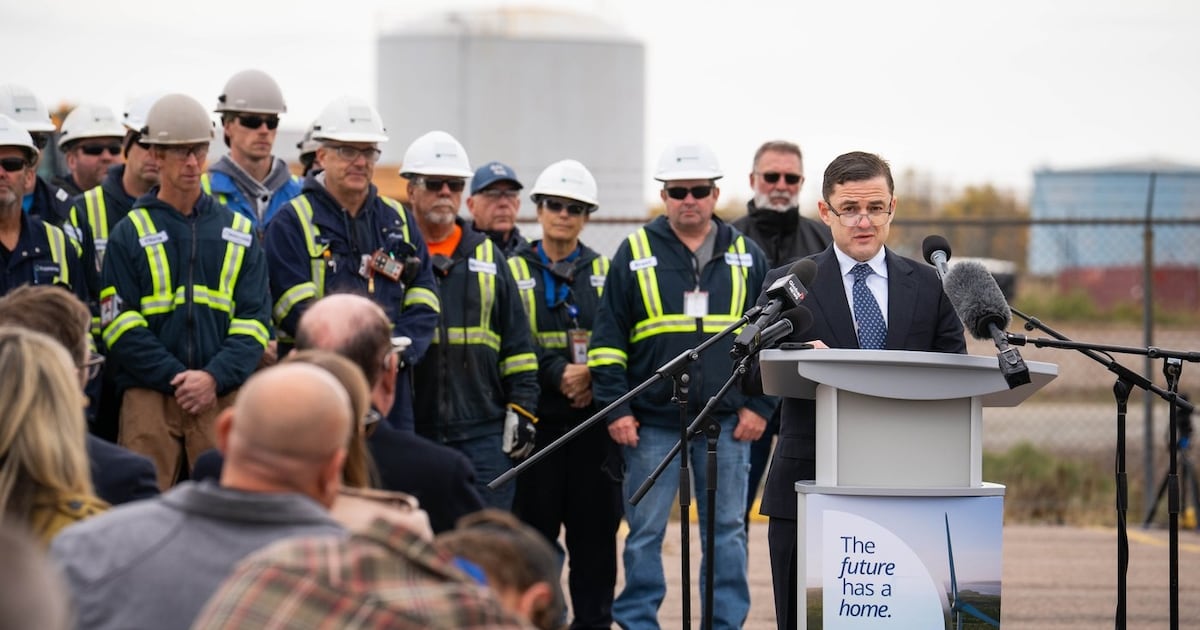
ST. JOHN'S, N.L. — A corporate developer advancing plans to construct a massive artificial intelligence data centre in Nova Scotia for industry heavyweight Anthropic is locked in an administrative and financial disagreement with the provincial government of Newfoundland and Labrador over land fees tied to a troubled wind-to-hydrogen project, according to reporting by The Canadian Press.
The conflict connects two of the most heavily scrutinized industrial sectors in Atlantic Canada: the capital-intensive drive to establish commercial-scale green hydrogen export hubs and the rapid continental race to secure high-voltage electrical infrastructure for generative artificial intelligence models. While the developer continues to market and design a major computing facility across the Cabot Strait in Nova Scotia, provincial authorities in Newfoundland and Labrador are seeking outstanding land-use payments associated with acreage reserved for wind turbines in the island's southern region—liabilities the proponent explicitly insists it does not owe.
Key facts
What happened
The dispute centres on financial obligations tied to public acreage in southern Newfoundland, where the project proponent had sought to harness the province's world-class onshore wind corridors to power industrial electrolysers, generating clean hydrogen and ammonia for export. Under Newfoundland and Labrador's provincial land management framework, private proponents selected to pursue renewable energy developments on public property must pay designated Crown land fees to reserve exploration corridors, conduct environmental assessments, and maintain site exclusivity.
As the southern Newfoundland hydrogen venture ran into operational and economic headwinds, the provincial government calculated outstanding land payments associated with the designated parcels. According to reporting by The Canadian Press, the firm behind the initiative has pushed back against those assessments, publicly and administratively denying that it holds any delinquent debt to the provincial treasury.
Simultaneously, the same developer has been marshaling capital, land, and utility planning in Nova Scotia to build an expansive, high-density data centre facility intended to house infrastructure for Anthropic. San Francisco-based Anthropic, the creator of the Claude generative AI model family, has experienced surging enterprise demand that requires gigawatts of compute capacity across North America. The developer’s dual profile—struggling with legacy commitments in Newfoundland while pursuing a capital-intensive tech facility in Nova Scotia—has thrust its interprovincial commercial operations into public view.
Why it matters
The standoff touches on critical policy, financial, and infrastructural questions facing Atlantic Canada, a region attempting to transform its economy into a hub for both renewable power generation and digital infrastructure.
For Newfoundland and Labrador, the integrity of the Crown land allocation process is directly at stake. When the province lifted its longstanding moratorium on commercial wind energy development in 2022, it designed a multi-stage competitive bidding framework meant to generate public revenue through land-reserve fees, lease payments, and eventual royalties. If developers are permitted to reserve thousands of hectares of public land without remitting assessed fees—or if disputes drag on unresolved—the provincial government risks both a shortfall in non-tax revenue and the sterilization of valuable public acreage that cannot be reallocated to viable commercial users.
For the artificial intelligence industry and Anthropic in particular, the dispute highlights the counterparty and execution risks inherent in building massive power-hungry data centres. Generative AI development requires enormous clusters of specialized graphics processing units (GPUs), demanding hundreds of megawatts of uninterrupted electrical capacity. Hyperscale developers are increasingly venturing outside traditional computing hubs such as Northern Virginia, looking to jurisdictions like Atlantic Canada for cooler climates, available space, and renewable power grids. However, partnering with developers facing legal or financial disputes on other infrastructure projects exposes tech firms to construction delays, reputational exposure, and regulatory scrutiny.
Furthermore, the grid operator in Nova Scotia, Nova Scotia Power, is legally mandated to phase out coal-fired power generation by 2030 and supply 80 per cent of provincial electricity from renewable sources. Integrating an extraordinarily heavy electrical load from an AI data centre requires immense capital investment in transmission and firm clean generation. If the project’s corporate backer faces solvency questions, fee disputes, or regulatory challenges in neighbouring jurisdictions, utility regulators will face heightened pressure to scrutinize the project's financial underwriting to ensure captive domestic ratepayers are insulated from grid-connection liabilities.
The background
Atlantic Canada's commercial renewable energy landscape shifted dramatically in August 2022, when Canadian Prime Minister Justin Trudeau and then-German Chancellor Olaf Scholz signed the Canada-Germany Hydrogen Alliance in Stephenville, Newfoundland. The bilateral declaration set an ambitious target to begin exporting green Canadian hydrogen across the Atlantic by 2025, triggering a regional rush by consortiums to secure coastal land, offshore port facilities, and high-wind terrestrial corridors.
Newfoundland and Labrador quickly established a competitive process to allocate provincial Crown land for wind-powered hydrogen initiatives. In 2023, the provincial Department of Industry, Energy and Technology selected multiple companies to proceed through an intensive Crown land application process, covering hundreds of thousands of hectares across the island, including tracts on the Port au Port Peninsula, the Exploits Valley, and southern Newfoundland. Under the provincial rules, selected proponents were subjected to strict milestones, requiring regular security deposits, bid bonds, and recurring land-reserve rental payments while environmental impact statements and financing packages were finalized.
However, the macroeconomics of green hydrogen deteriorated swiftly between 2023 and 2026. Rapidly rising global interest rates elevated capital expenditure costs for multi-billion-dollar industrial projects. Supply chain bottlenecks inflated the costs of commercial electrolysers and high-capacity wind turbines. Compounding these issues, European import regulations and certification frameworks for green fuels developed slower than anticipated, while prospective off-takers balked at high long-term purchase prices. As a result, several high-profile Atlantic Canadian hydrogen proposals stalled, were scaled back, or required corporate restructuring, leaving developers with significant carrying costs on reserved land.
In parallel, the explosion of commercial generative artificial intelligence following late 2022 created an unprecedented global demand shock for data centres. Anthropic, backed by billions of dollars in investments from technology giants including Amazon and Google, emerged as one of the primary drivers of compute demand. As primary computing clusters in the United States confronted severe regional electrical grid constraints and lengthy utility interconnection queues, developers began pitching Atlantic Canada as an alternative destination, leveraging the region's access to subsea telecommunications cables, proximity to northeastern markets, and potential wind energy assets.
Reaction
While the project developer has formally denied owing the assessed Crown land fees to Newfoundland and Labrador, neither party has publicly released detailed correspondence regarding the exact nature of the administrative disagreement.
Within Newfoundland and Labrador, provincial opposition parties and resource watchdogs have historically pushed the government to enforce strict fiscal accountability on green energy proponents, demanding that developers who fail to meet statutory fee deadlines forfeit their exclusive land rights. Government ministers overseeing Crown lands and energy policy have routinely stated that provincial resources must be managed strictly in accordance with published regulations and statutory payment schedules.
In Nova Scotia, community groups, municipal leaders, and energy analysts are expected to monitor the situation closely through the Nova Scotia Utility and Review Board (UARB). The independent regulatory tribunal oversees utility capital investments and electrical interconnection tariffs, where any formal application by Nova Scotia Power to supply high-voltage transmission service to an Anthropic-dedicated facility would face extensive public and legal examination. Anthropic itself has maintained a standard corporate posture regarding third-party development disputes, generally avoiding direct commentary on the secondary business dealings of independent real estate and infrastructure developers.
What we don't know yet
Several substantive details regarding the dispute remain undisclosed in the public reporting. The specific dollar figure demanded by the Newfoundland and Labrador government has not been revealed, making it difficult to assess whether the dispute involves a nominal administrative penalty or millions of dollars in multi-year Crown land reservation levies.
It is also unclear what formal legal mechanism the company is using to challenge the debt, including whether it has initiated formal administrative review proceedings, sought judicial review, or simply refused payment based on differing contractual interpretations of lease milestones. The exact corporate identity structure is another open question; large developers frequently create special purpose vehicles (SPVs) for individual energy and technology projects to ring-fence financial liabilities, which could legally isolate the Nova Scotia data centre asset from historical debts incurred in Newfoundland.
Additionally, the operational timeline and precise location of the Nova Scotia data centre have not been comprehensively detailed, nor has it been confirmed whether Anthropic holds an executed, legally binding lease agreement or a non-binding letter of intent with the proponent.
What to watch
The trajectory of the dispute will be defined by several critical decision points in the coming months. First, observers should watch for formal enforcement actions from the Newfoundland and Labrador Department of Industry, Energy and Technology or the Department of Transportation and Infrastructure. If the province issues a formal notice of default, revokes the proponent's Crown land access rights, or registers liens or recovery lawsuits in the Supreme Court of Newfoundland and Labrador, the financial details will become matters of public record.
Second, attention will turn to the Nova Scotia Utility and Review Board. Any hyperscale computing facility requires formal utility filings to secure high-capacity power allocation, transmission line construction, or specialized load-serving agreements. Intervenor submissions in those regulatory hearings often unearth deep financial assessments of commercial proponents.
Finally, the status of the southern Newfoundland wind-hydrogen project itself will signal whether the developer plans to abandon its renewable fuel ambitions altogether or restructure its land holdings to settle outstanding accounts with the provincial crown.
Reporting from The Canadian Press provided the initial account of the fee dispute and project details.
How this story was produced
This report was written by The Global Wire newsroom from reporting first published by The Canadian Press. We verify the core facts against the original report, write our own account, and add the background and consequences a short wire item leaves out. Drafting is AI-assisted inside an editor-supervised pipeline, and every story is checked for accuracy of attribution, structure and duplication before it appears — full detail in our AI and funding disclosure.
Spotted an error? Tell us at corrections@horizonglobalnews.com and read our corrections policy or editorial standards.





Reader comments
Loading comments…