

Tesla Roadster Interface Adds Jet Telemetry, Thruster Gauges and Track Settings
Tesla has revealed cockpit telemetry for its delayed Roadster, incorporating aerospace-style graphics and cold-gas thruster controls.
By The Global Wire Newsroom · Reported from Aamir Khollam
Link preview · horizonglobalnews.com
Tesla Roadster Interface Adds Jet Telemetry, Thruster Gauges and Track Settings
Tesla has revealed cockpit telemetry for its delayed Roadster, incorporating aerospace-style graphics and cold-gas thruster controls.
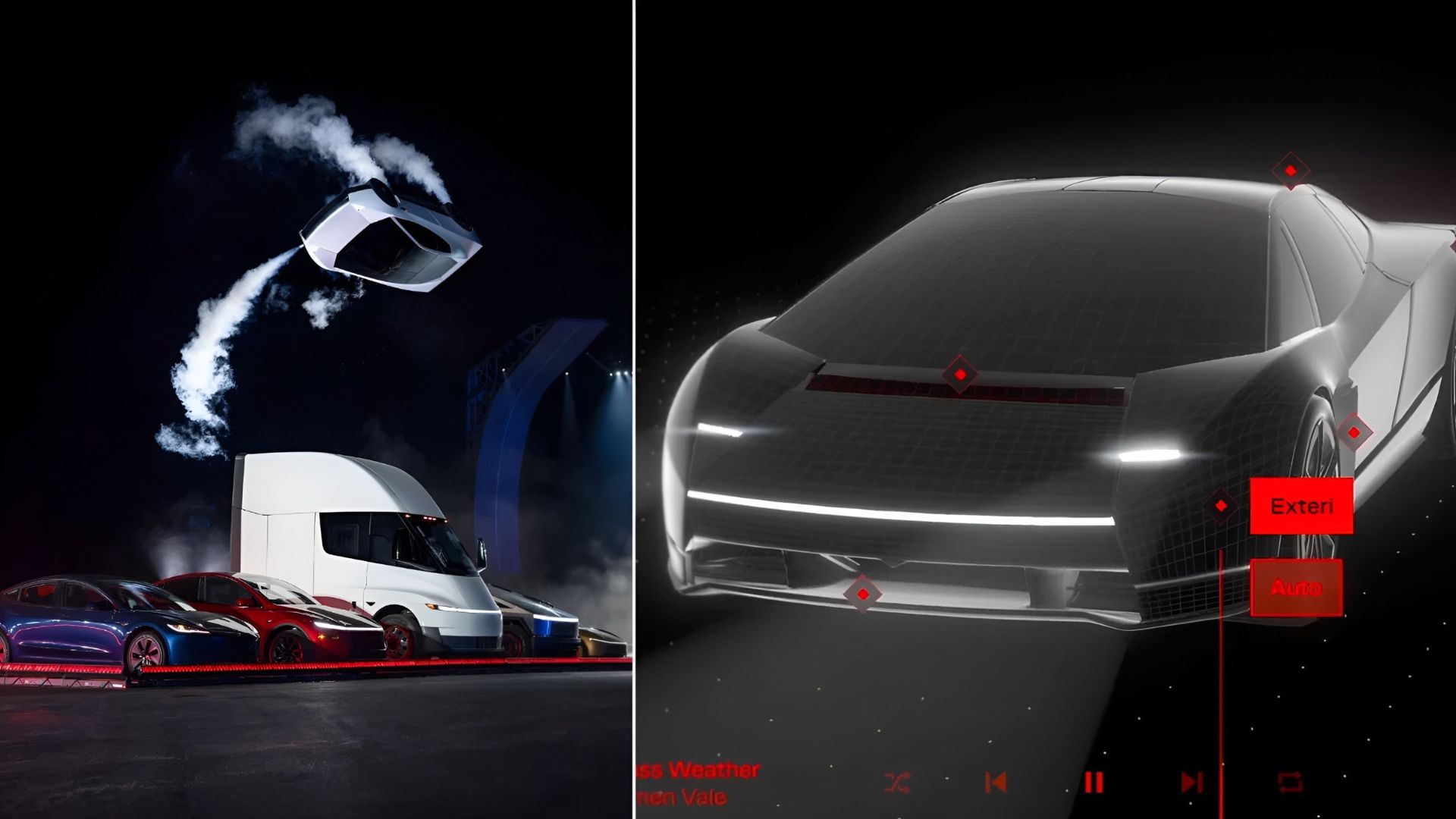
Tesla has unveiled an updated digital cockpit interface for its long-anticipated second-generation Roadster, integrating aviation-style visual telemetry, controls for active aerodynamic wings, dedicated pneumatic thruster readouts, and comprehensive circuit lap tracking software. The specialized driver display, designed to support the vehicle's track-oriented functions, reflects the electric automaker's ongoing efforts to finalize the user experience for its flagship halo sports car nearly a decade after its initial public presentation. The digital architecture positions high-performance telemetry alongside operational parameters for external flight-inspired hardware, bridging conventional automotive instrumentation with experimental auxiliary propulsion controls.
Key facts
What happened
Tesla has structured an advanced user environment for the second-generation Roadster that moves beyond the minimalist single-screen configuration found in the company's mass-market sedans and crossover vehicles. According to reporting by Aamir Khollam, the updated cockpit interface incorporates specialized fighter jet graphics, detailed thruster performance telemetry, adjustable wing controls, real-time lap timing analytics, and a comprehensive track mode system.
The visual interface presents critical performance dynamics through an aerospace-inspired head-up and digital cluster aesthetic. Rather than relying entirely on standard automotive instrumentation—such as basic road speed, state of charge, and turn-by-turn navigation—the system incorporates dedicated sub-menus designed to govern variable aerodynamic elements. Drivers are provided manual and automated options to trim adjustable wings, altering downforce profiles depending on whether the vehicle is operating in a straight-line acceleration run or navigating technical racing circuits.
Beyond aerodynamic adjustments, the software environment integrates operational telemetry specifically calibrated for auxiliary reaction thrusters. Displays within the digital cluster depict pressure levels, system readiness, and directional actuation vectors associated with compressed-gas release points. These thruster readouts are paired with an extensive telemetry suite that logs split times, lateral acceleration figures, braking G-forces, and thermal metrics across the battery pack and electric drive units.
The track mode environment represents an evolution of the dynamic handling software previously introduced on the Model 3 Performance and Model S Plaid. However, the Roadster version reported by Aamir Khollam expands this architecture to oversee multi-axis vehicle dynamics, allowing the driver to balance torque distribution across individual motors while observing how aerodynamic downforce and secondary propulsive forces interact during high-speed cornering and braking sequences.
Why it matters
The introduction of specialized cockpit displays and pneumatic thruster controls carries structural implications for vehicle homologation, digital interface standards, and Tesla's positioning in the ultra-luxury performance segment. For the broader automotive industry, the deployment of auxiliary cold-gas propulsion concepts moves automotive engineering into uncharted regulatory territory. Standard road-vehicle type-approval frameworks governed by the National Highway Traffic Safety Administration in the United States and the United Nations Economic Commission for Europe do not currently feature safety provisions or operational standards for high-pressure pneumatic reaction thrusters mounted on passenger automobiles.
From a market standpoint, the development indicates that Tesla remains committed to fulfilling the ambitious mechanical promises made during the Roadster's 2017 debut. The high-performance electric sports car sector has matured significantly over the past seven years. Established European manufacturers and specialized hypercar builders—such as Rimac Automobili with its Nevera, alongside electric offerings from Porsche and forthcoming platforms from Ferrari—have set verified benchmarks for track endurance, digital instrumentation, and chassis dynamics. By pursuing aerospace-grade controls and auxiliary pneumatic assist systems, Tesla is attempting to establish a distinct technological category that justifies the vehicle's prolonged gestation period and preserves its standing as an engineering showcase.
Furthermore, the complexity of managing variable wings and reaction thrusters through an integrated in-vehicle display highlights shifting paradigms in digital human-machine interface design. Performance drivers operating at high speeds require instantaneous feedback without cognitive distraction. Translating jet-inspired telemetry into an accessible, road-legal consumer screen requires balancing regulatory driver-distraction mandates with the functional necessity of monitoring non-traditional propulsion systems.
The background
Tesla initially entered the commercial automotive market in 2008 with the original Roadster, a two-door sports car constructed on a glider chassis supplied by British automaker Lotus Cars. Between 2008 and 2012, Tesla manufactured approximately 2,450 units of the first-generation vehicle, utilizing the platform to validate early lithium-ion battery packs and AC induction motors before turning its resources toward the Model S premium sedan.
In November 2017, Tesla staged a surprise unveiling of the second-generation Roadster prototype during the launch event for the heavy-duty Tesla Semi in Hawthorne, California. At that presentation, Chief Executive Officer Elon Musk announced performance specifications that were unprecedented for road-going electric vehicles: a zero-to-60 mile-per-hour acceleration time of 1.9 seconds, a top track speed exceeding 250 miles per hour, a 200-kilowatt-hour battery pack, and a single-charge range of 620 miles. The company established an entry price of $200,000 for standard models, with a limited run of 1,000 "Founders Series" vehicles priced at $250,000, requiring upfront customer reservation deposits ranging from $50,000 to the full purchase amount.
Deliveries were initially targeted for 2020. However, commercial production was repeatedly postponed as the company prioritized the mass-production ramp of the Model 3, the construction of international manufacturing facilities in Shanghai, Berlin, and Austin, and the protracted engineering development of the stainless-steel Cybertruck. In 2018, Musk publicly claimed that the vehicle would offer an optional "SpaceX package" utilizing composite overwrapped pressure vessels to feed compressed-air thrusters around the perimeter of the chassis to assist acceleration, braking, and lateral cornering. While automotive engineers consistently questioned the practical road legality and pedestrian safety of such an apparatus, the concept became a central pillar of the Roadster's technical identity.
Reaction
Neither the National Highway Traffic Safety Administration nor the Federal Aviation Administration has issued formal guidance regarding the deployment of cold-gas thrusters on passenger vehicles, though regulatory specialists have widely noted that exterior high-pressure gas venting faces severe hurdles under federal motor vehicle safety standards governing pedestrian protection, noise thresholds, and pressure-vessel crashworthiness. Automotive safety groups are anticipated to scrutinize any physical release of external propulsion systems on public roadways, raising concerns over road surface debris displacement and passenger compartment safety in the event of a structural collision.
Within the technical community, automotive engineers and software developers have observed that digital telemetry interfaces can be refined independently of physical mechanical homologation. Industry analysts expect consumer advocacy organizations and vehicle evaluation bodies to demand clear boundaries separating track-only functions from highway-enabled operational modes, preventing the activation of experimental aerodynamic profiles or auxiliary burst systems in mixed civilian traffic.
What we don't know yet
Significant structural and commercial aspects of the second-generation Roadster remain unverified. It is not currently established whether the fighter jet graphics and thruster displays represent finalized production software destined for commercial vehicles or concept demonstrations developed for internal testing and promotional display. Tesla has not detailed how high-pressure composite tanks would be integrated into the vehicle without encroaching on passenger cabin volume, adding prohibitive curb weight, or compromising Federal Motor Vehicle Safety Standard roof-crush and rear-impact requirements.
Additionally, Tesla has not released validated certification data regarding final curb weight, battery chemistry, motor configuration, or official range ratings under the United States Environmental Protection Agency testing cycle. The company has also left unclarified whether early reservation holders from 2017 will face adjusted pricing structures given widespread automotive inflation, supply chain fluctuations, and engineering modifications over the intervening years.
What to watch
Key milestones over the coming quarters will determine whether the Roadster's digital systems translate into a functional production vehicle. Observers will track official safety and homologation filings submitted to the National Highway Traffic Safety Administration, which must disclose vehicle curb weight, safety equipment, and any exemptions sought for auxiliary pneumatic systems or non-traditional aerodynamic devices.
Attention will also focus on corporate roadmaps delivered during Tesla's scheduled quarterly earnings calls and annual shareholder gatherings, where capital expenditure allocations for specialized low-volume assembly lines must be established before manufacturing can commence. Further validation will come from potential physical testing programs at closed-circuit proving grounds such as the Nürburgring Nordschleife in Germany, where telemetry data and variable aerodynamic software would undergo empirical evaluation under competitive conditions.
This account is based on reporting by Aamir Khollam detailing the digital cockpit capabilities, flight graphics, and track telemetry designed for Tesla's second-generation Roadster.
How this story was produced
This report was written by The Global Wire newsroom from reporting first published by Aamir Khollam. We verify the core facts against the original report, write our own account, and add the background and consequences a short wire item leaves out. Drafting is AI-assisted inside an editor-supervised pipeline, and every story is checked for accuracy of attribution, structure and duplication before it appears — full detail in our AI and funding disclosure.
Spotted an error? Tell us at corrections@horizonglobalnews.com and read our corrections policy or editorial standards.


Reader comments
Loading comments…