

Unbounder X Camper Canopy Introduces Rapid-Deploy Sleeping Pod to Overlanding Market
A newly unveiled truck canopy system deploys a self-contained sleeping compartment within 30 seconds, reflecting an industry shift toward integrated living space in pickup toppers.
By The Global Wire Newsroom · Reported from C C Weiss
Link preview · horizonglobalnews.com
Unbounder X Camper Canopy Introduces Rapid-Deploy Sleeping Pod to Overlanding Market
A newly unveiled truck canopy system deploys a self-contained sleeping compartment within 30 seconds, reflecting an industry shift toward integrated living space in pickup toppers.
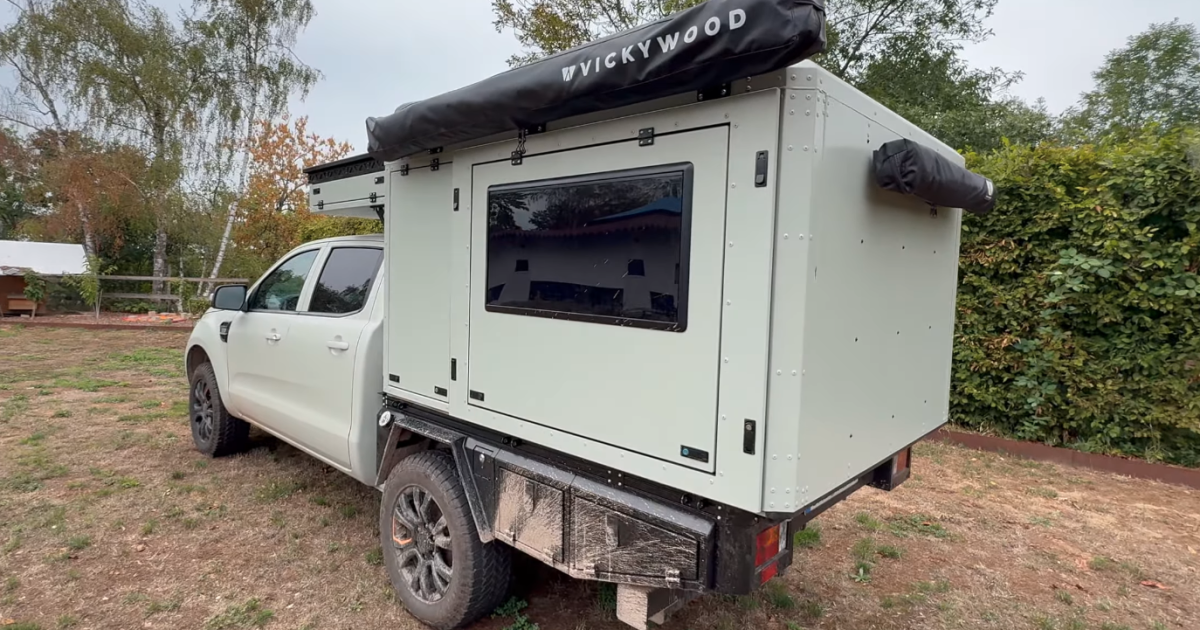
A novel vehicle-based shelter system designed to balance cargo utility with rapid overnight accommodation was unveiled on October 23, 2026, as details emerged regarding the Unbounder X camper canopy. Designed to mount directly onto the cargo bed of standard pickup trucks, the design incorporates an integrated sleeping compartment that deploys in approximately 30 seconds, according to reporting by C C Weiss. The product enters an increasingly competitive overlanding and vehicle-camping sector, where manufacturers are shifting away from utilitarian truck shells toward modular shelters that incorporate enclosed, climate-protected living quarters without demanding the physical bulk or logistical compromises of traditional slide-in recreational vehicles.
Key facts
What happened
Detailed specifications regarding the Unbounder X camper canopy emerged in late October 2026, focusing on a structural design that attempts to solve one of the persistent trade-offs in vehicular exploration: the balance between vehicle drivability and camp comfort. As reported by C C Weiss, the canopy system incorporates an internal sleeper pod mechanism engineered for deployment in roughly 30 seconds, positioning it among the fastest-pitching integrated shelter systems in its class.
Traditional truck caps—often termed toppers, bed toppers, or canopies—have historically consisted of a rigid fiberglass or aluminum shell enclosing the cargo box of a pickup truck. In conventional overlanding configurations, these shells function strictly as utility volumes, sheltering storage drawers, auxiliary batteries, water tanks, and outdoor cooking equipment. Sleeping arrangements in such setups traditionally required pitching a standalone ground tent, mounting an exterior rooftop tent over the cab or canopy roof rack, or unrolling a mattress directly on the truck bed floor amidst stored cargo and mechanical gear.
The Unbounder X takes a different mechanical approach by housing an internal sleeping pod directly within the canopy enclosure. The mechanism deploys rapidly into an enclosed resting area, avoiding the need for multi-step ladder assemblies, complex canvas folding routines, or extensive gear displacement on the truck bed floor. The development marks an ongoing transition across the overland equipment landscape, where product designers are prioritizing functional interior ergonomics and all-weather accessibility over bare-bones utility shells.
Why it matters
The introduction of systems like the Unbounder X matters because it directly addresses the changing regulatory, economic, and practical realities facing vehicle-based travel and mobile recreation. Over the past decade, light-duty pickup trucks—ranging from mid-size platforms like the Toyota Tacoma and Chevrolet Colorado to half-ton models like the Ford F-150 and Ram 1500—have become the primary foundation for overland travel. However, these vehicles carry rigid mechanical limits, notably payload capacities that typically range between 1,200 and 1,900 pounds, and Gross Vehicle Weight Ratings (GVWR) that cannot legally or safely be exceeded.
Traditional slide-in cabover campers frequently weigh between 1,500 and 3,000 pounds dry. Once auxiliary water, propane, dual-battery systems, recovery gear, and passengers are factored in, standard half-ton and mid-size trucks carrying traditional campers routinely exceed their structural axle ratings and braking design thresholds. Exceeding gross vehicle weight strains suspensions, compromises off-road maneuverability, elevates center-of-gravity rollover risks, and significantly degrades highway fuel efficiency.
Lightweight canopy campers circumvent these critical engineering bottlenecks by keeping installed dry weight far below that of traditional slide-in campers. By consolidating a bed and protective enclosure into a streamlined profile that fits the perimeter of the truck bed, canopies like the Unbounder X allow adventurers to maintain off-pavement performance while remaining within manufacturer gross axle ratings. Furthermore, setup speed is an essential safety and usability metric in outdoor recreation; a shelter that deploys in 30 seconds significantly reduces exposure to severe weather, high winds, and remote hazards compared to rooftop tents requiring manual propping, rainfly adjustments, and exterior ladder climbing.
The background
The evolution of vehicular camping shelters reflects several decades of shifting consumer expectations and mechanical engineering developments. In the twentieth century, vehicle camping diverged into two clear tracks: large commercial recreational vehicles (RVs) built for paved highways and designated campgrounds, and minimalist backcountry gear designed to fit into unmodified four-wheel-drive vehicles. During the late 1960s and 1970s, fiberglass truck toppers grew popular as commercial tradesmen and hunters looked to keep tools and provisions dry within pickup beds.
Over the subsequent decades, the overland recreation movement expanded from specialized expedition circuits in Australia and southern Africa into mainstream international markets. In Australia, harsh outback tracks necessitated rugged aluminum canopy systems mounted to cab-chassis utility vehicles (known locally as utes), equipped with dual gull-wing doors for tool and pantry access. However, these Australian-style canopies rarely featured interior human habitability; sleeping occurred in heavy-duty canvas swags or rooftop folding tents.
Between 2015 and 2025, consumer preferences shifted rapidly toward hybrid designs. Outdoor enthusiasts increasingly demanded interior stand-up height, weather-sealed changing quarters, and direct transitions from the sleeping berth into the cargo bed without having to step outside into snow, mud, or rain. Manufacturers responded by creating wedge-style pop-top canopies that replace the traditional fiberglass topper with an aluminum frame, incorporating a pop-up roof and elevating bunk. The sector has seen participation from specialized builders who moved away from passive cargo covers toward integrated, pop-up architectural spaces.
Concurrently, macroeconomic trends in housing, travel, and remote work contributed to unprecedented demand for versatile, multi-purpose utility platforms. Owners who use their pickup truck for daily commuting or trades work during the business week often resist semi-permanent, heavy slide-in installations that require mechanical jacks and hours of labor to dismount. The light canopy shelter addresses this operational requirement by preserving cargo utility during working hours while standing ready for rapid deployment during weekend recreation.
Reaction
While public consumer reactions to the Unbounder X are just beginning to surface across overlanding forums and digital automotive communities following the coverage by C C Weiss, market analysts and industry observers anticipate significant scrutiny from vehicle outfitters, fabrication specialists, and off-road enthusiasts. In similar product launches, reaction tends to split between off-road purists focused on structural rigidity and minimalist travelers evaluating comfort metrics.
Formal evaluation from industry trade bodies—such as the Specialty Equipment Market Association (SEMA) in North America or relevant recreational vehicle manufacturing groups—is expected when the vehicle shelter appears at trade showcases or consumer expos. Overland builders typically evaluate novel canopy releases against three key criteria: how well the sealing gaskets perform against fine bull-dust and highway rain, whether the deployment hinge geometry withstands sustained sub-zero temperatures, and the degree to which internal structural struts intrude upon standard cargo box dimensions.
Fabricators and fleet outfitters are also expected to examine the structural compatibility of the sleeper pod mechanism. In forums dedicated to overland fabrication, builders frequently debate whether proprietary integrated designs limit aftermarket customization, such as the mounting of interior 12-volt compressor refrigerators, water filtration tanks, and high-output lithium iron phosphate battery banks.
What we don't know yet
Substantial operational, commercial, and technical details regarding the Unbounder X canopy remain unconfirmed in available reports. First, the specific dimensions of the sleeping pod and the overall structural enclosure have not been detailed. Prospective buyers require precise data regarding mattress length, shoulder width, and internal clearance to determine whether the sleeping quarters comfortably accommodate tall adults or couples.
Second, compatibility across varied truck bed lengths remains an open question. Pickup beds vary widely across North American, European, and Australian markets, spanning short-bed variations measuring approximately 5.0 to 5.5 feet, standard beds measuring 6.0 to 6.5 feet, and long-bed configurations exceeding 8.0 feet. It is not yet clear whether the Unbounder X utilizes a modular footprint adaptable across multiple truck makes—such as the Toyota Hilux, Ford Ranger, and larger full-size platforms—or whether it is limited to a single vehicle platform.
Third, critical metrics regarding total dry weight, structural shell materials (such as aluminum, composite fiberglass, or carbon-fiber framing), insulation ratings, retail pricing, warranty terms, and international availability have yet to be disclosed. Price point in particular will determine whether the unit competes against entry-level wedge caps or targets the luxury expedition vehicle segment.
What to watch
Moving forward, several clear benchmarks will indicate the market viability and production progress of the Unbounder X. Observers should watch for official manufacturing disclosures regarding retail pricing and reservation deposit schedules. Pricing will determine whether the system can undercut composite monocoque slide-in campers or if it will be positioned at a premium above conventional pop-top toppers.
Field testing validation will serve as another key milestone. Real-world testing reports under extreme weather conditions—specifically high-wind stability tests and sub-zero thermal performance—will show whether the 30-second rapid deployment mechanism relies on mechanical gas struts, electronic actuators, or manual folding latches. The long-term reliability of these moving parts in dusty, off-camber backcountry environments will be critical to its technical reception.
Finally, industry watchers should monitor forthcoming automotive aftermarket expositions, including overland expos in North America and Europe, where prototype or production units are likely to be demonstrated to verify setup speed and interior living dimensions against physical production pickups.
This report is based on original reporting and automotive field coverage published by C C Weiss.
How this story was produced
This report was written by The Global Wire newsroom from reporting first published by C C Weiss. We verify the core facts against the original report, write our own account, and add the background and consequences a short wire item leaves out. Drafting is AI-assisted inside an editor-supervised pipeline, and every story is checked for accuracy of attribution, structure and duplication before it appears — full detail in our AI and funding disclosure.
Spotted an error? Tell us at corrections@horizonglobalnews.com and read our corrections policy or editorial standards.




Reader comments
Loading comments…