

Tuolumne River Restoration Project Sees Immediate Chinook Salmon Spawning
Crews deposited over 24,000 cubic yards of gravel and woody debris across 4.78 acres of the Tuolumne River, drawing spawning Chinook salmon within days of work finishing.
By The Global Wire Newsroom · Reported from TOI Science Desk
Link preview · horizonglobalnews.com
Tuolumne River Restoration Project Sees Immediate Chinook Salmon Spawning
Crews deposited over 24,000 cubic yards of gravel and woody debris across 4.78 acres of the Tuolumne River, drawing spawning Chinook salmon within days of work finishing.
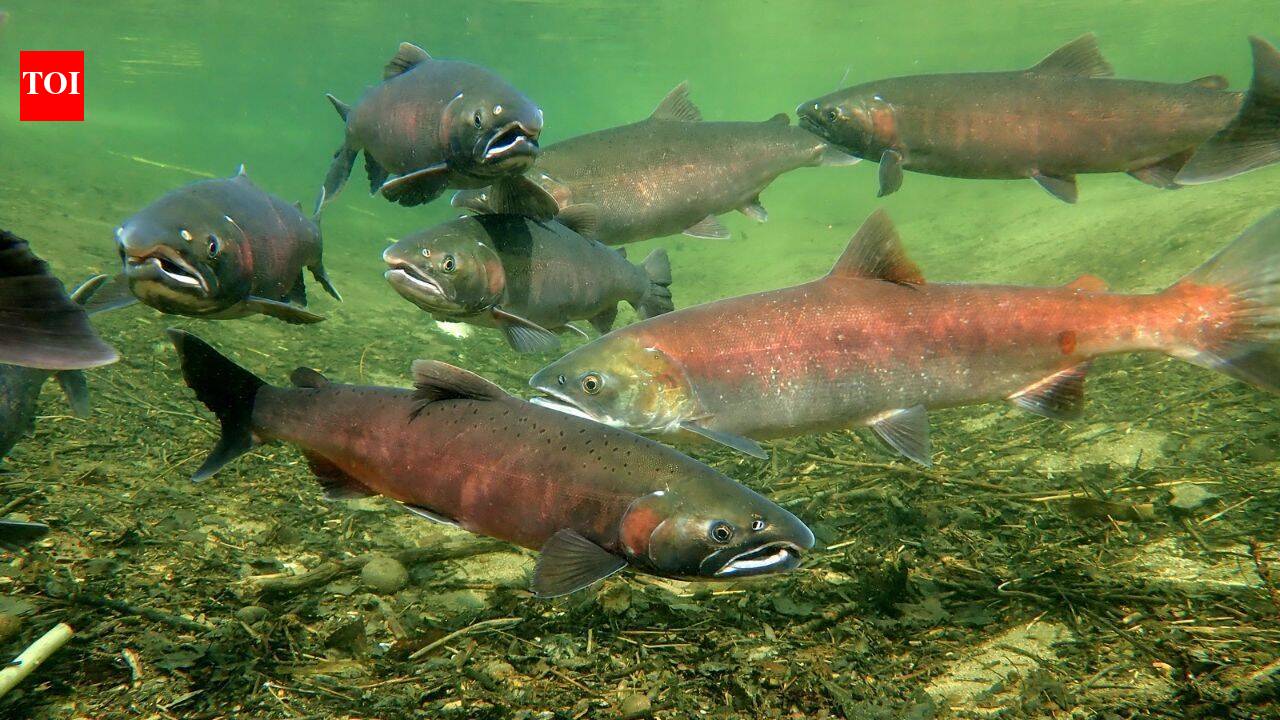
Habitat restoration crews in California have completed an extensive engineering intervention along the Tuolumne River, installing thousands of tons of gravel, large boulders, and whole trees to rehabilitate degraded spawning grounds for native fish. Within days of the heavy machinery vacating the riverbed, fisheries scientists documented fall-run Chinook salmon actively depositing and fertilizing eggs across newly constructed gravel riffles, according to monitoring reported by fisheries research consultancy FISHBIO and detailed by the TOI Science Desk. The project, which rehabilitated roughly 4.78 acres of instream habitat, represents a targeted effort to counteract decades of gravel starvation and channel degradation along one of the San Joaquin Valley's major tributaries.
Key facts
What happened
Over the course of the late summer and early autumn construction window—timed deliberately to minimize disruption to migratory aquatic species—civil engineering contractors and aquatic restoration specialists altered a nearly five-acre stretch of the lower Tuolumne River. The riverbed in this reach had suffered prolonged bed incision and coarsening, conditions where high-velocity water strips fine gravel away and leaves behind an immobile pavement of cobble or exposed bedrock unsuited for nest excavation.
To reverse this degradation, heavy equipment operators hauled and graded more than 24,000 cubic yards of river-rounded gravel and small cobble across 4.78 acres of the channel and floodplain margin. The sediment was graded into dynamic bedforms known as riffles—shallow, fast-flowing sections of river where water percolates through porous gravel, delivering oxygenated water critical for incubating fish embryos while carrying away metabolic wastes.
Alongside the sedimentary deposits, crews placed structural elements designed to restore natural river architecture. These included 80 individual boulders, strategically clustered to redirect currents, create scour pools, and form low-velocity resting zones for migrating adult fish. Additionally, workers anchored 49 whole trees and rootwads into the banks and channel margins. Such large woody debris serves multiple ecological purposes: it traps drift material, fosters macroinvertebrate colonization to feed growing juveniles, and provides complex physical overhead cover from avian and terrestrial predators.
Field biologists monitoring the site immediately following the conclusion of construction observed adult Chinook salmon entering the rehabilitated reach. The fish were documented cutting redds directly into the newly graded gravel bars. Such an immediate response indicates that migratory adults were actively prospecting for scarce, suitable substrate amidst peak autumn spawning conditions, occupying the human-engineered riffles as soon as the aquatic sediment plume settled.
Why it matters
The immediate occupation of the newly placed gravel by spawning salmon demonstrates the acute physical bottlenecks currently limiting Central Valley salmonids. Fall-run Chinook salmon (Oncorhynchus tshawytscha) in California's Central Valley have historically formed the backbone of the state's commercial and recreational salmon fisheries, while functioning as a keystone ecological link transporting marine-derived nutrients deep into inland freshwater systems. However, decades of water diversions, gravel mining, and impoundments have driven populations to historically depressed levels.
In recent years, the scarcity of returning adult salmon has triggered severe economic hardship across California and Oregon coastal communities. The Pacific Fishery Management Council and the California Department of Fish and Wildlife have closed or severely curtailed commercial and recreational ocean salmon seasons multiple years in a row due to collapsed abundance forecasts for Sacramento and San Joaquin river runs. Rebuilding self-sustaining wild production is the primary regulatory prerequisite for relaxing these devastating coastal closures.
From a hydrological and restoration science perspective, the rapid adoption of this 4.78-acre intervention offers validation for physical bedform manipulation. Many habitat investments take years to demonstrate measurable biological returns. When an endangered or stressed anadromous species colonizes an artificial riffle within 72 to 96 hours of site clearance, it confirms that lack of usable, appropriately sized spawning gravel is a direct limiting factor in the reach, rather than merely water temperature or chemistry. It proves that targeted, micro-scale engineering can generate immediate physical utility, even within highly regulated and modified watersheds.
The background
The Tuolumne River is one of three primary snowmelt-fed tributaries forming the lower San Joaquin River basin, along with the Stanislaus and Merced rivers. Prior to European settlement and the Gold Rush, hundreds of thousands of wild salmon returned annually to the Tuolumne, utilizing high-elevation spawning grounds and expansive floodplains that stretched across the Central Valley floor.
The hydrology of the watershed changed permanently throughout the late 19th and 20th centuries. The construction of water-storage infrastructure, culminating in the 1971 completion of the New Don Pedro Dam, impounded the river to provide municipal supplies for the San Francisco Bay Area via the Hetch Hetchy system and irrigation water for agricultural districts in Stanislaus and Tuolumne counties. While New Don Pedro Dam provides vital water security, flood protection, and hydroelectric generation, it forms a total barrier to upstream fish passage. More insidiously for downstream geomorphology, the reservoir traps 100 percent of the coarse sediment, gravel, and large wood naturally transported from the Sierra Nevada granite highlands.
Without an upstream supply of sediment, regulated pulse releases from the dam wash mobile gravel downriver during high-flow years without replenishing it, a process known as gravel starvation. Downstream of dams, rivers slowly wash away the pebble beds that salmon require, leaving behind either an armoring layer of heavy rock that fish cannot dig into, or deep, slow-moving pools that harbor non-native predatory warm-water fish such as striped bass and largemouth bass. Furthermore, historical commercial aggregate mining directly dredged gravel from the lower Tuolumne riverbed to build highways and foundations, transforming wide braided channels into oversized, stagnant pits. Modern restoration programs on the Tuolumne operate under agreements between water districts, state wildlife agencies, and local environmental trusts aimed at physically trucking in sorted gravel to replace what the dams hold back.
Reaction
While formal public statements from regulatory agencies were not detailed in the initial report, regional biological observers and fisheries scientists have closely tracked the swift colonization of the site. Practitioners in river restoration typically view immediate redd construction as an unambiguous short-term success metric, particularly given the substantial financial and logistical resources required to source, wash, sort, and place 24,000 cubic yards of river sediment.
Agricultural water agencies and municipal water users in the region, including the Turlock Irrigation District and Modesto Irrigation District, historically highlight gravel supplementation and non-flow habitat projects as evidence that fish recovery can be advanced through targeted channel engineering rather than solely through mandatory increases in unimpaired river flow. Conversely, commercial fishing groups and environmental non-governmental organizations frequently point out in public forums, such as California State Water Resources Control Board proceedings, that structural interventions like gravel placement can only succeed long-term if paired with adequate, cold spring flows that allow hatched juveniles to survive downstream outmigration through the Sacramento-San Joaquin River Delta.
What we don't know yet
Despite the encouraging visual confirmation of spawning, several vital data points remain unverified. It is not yet known whether the eggs deposited in these new riffles will successfully incubate and emerge as viable fry. Incubation depends heavily on fine sediment concentrations, water temperature, dissolved oxygen levels within the inter-gravel pore space, and river flow stability over the coming winter months.
Furthermore, the initial report does not quantify how many individual redds were identified, nor does it specify the total number of spawning adults observed utilizing the site. It also remains unverified whether the returning adults are wild-origin fish or hatchery-produced strays originating from the nearby Tuolumne or Merced river hatcheries. Finally, the long-term durability of the placed material remains untested; subsequent high-flow events may either mobilize and disperse the 24,000 cubic yards of gravel downstream or bury it under finer sediments, requiring future physical maintenance.
What to watch
Over the next four to six months, fisheries technicians will conduct regular carcass and redd surveys to quantify the total reproductive output within the restored 4.78-acre boundary. Biological monitoring will shift in late winter and early spring toward rotary screw trap sampling, which captures outmigrating juvenile salmon to determine emergence success and size distributions.
Observers should also monitor regional hydrological management decisions heading into the wet season. Flow releases controlled by local irrigation districts from Don Pedro Dam will dictate water depth and velocity over these riffles, directly affecting egg survival. Beyond the Tuolumne, this rapid biological uptake will likely be cited in upcoming regulatory debates surrounding the California Bay-Delta Plan update and voluntary habitat agreements, where policymakers evaluate whether expanding physical gravel injection across other Central Valley rivers can justify balanced water diversions.
This account is based on reporting published by the TOI Science Desk, incorporating field observations and monitoring documentation from fisheries consultancy FISHBIO.
How this story was produced
This report was written by The Global Wire newsroom from reporting first published by TOI Science Desk. We verify the core facts against the original report, write our own account, and add the background and consequences a short wire item leaves out. Drafting is AI-assisted inside an editor-supervised pipeline, and every story is checked for accuracy of attribution, structure and duplication before it appears — full detail in our AI and funding disclosure.
Spotted an error? Tell us at corrections@horizonglobalnews.com and read our corrections policy or editorial standards.




Reader comments
Loading comments…