

Tashkent Modernism Wins Global Recognition as Ten Landmarks Join UNESCO List
Ten post-quake modernist architectural landmarks in the Uzbek capital have been added to a UNESCO World Heritage site, cementing their place in global heritage.
By The Global Wire Newsroom · Reported from Rushanabonu Aliakbarova
Link preview · horizonglobalnews.com
Tashkent Modernism Wins Global Recognition as Ten Landmarks Join UNESCO List
Ten post-quake modernist architectural landmarks in the Uzbek capital have been added to a UNESCO World Heritage site, cementing their place in global heritage.
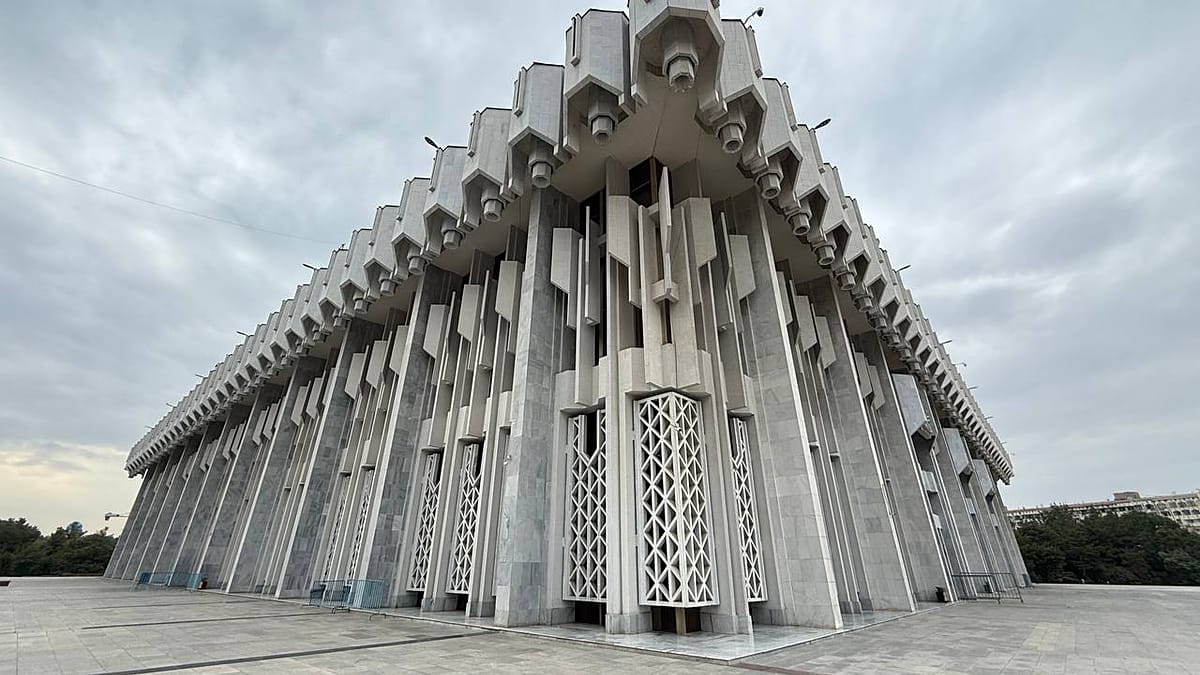
TASHKENT — Ten landmark modernist structures across Uzbekistan’s capital have been incorporated into a UNESCO World Heritage site, marking a major milestone in the preservation of Central Asia’s twentieth-century architectural heritage. The designated monuments reflect an era when architects synthesized international modernism with regional decorative motifs, traditional materials and passive cooling strategies adapted to the continental extremes of the steppe. According to reporting by Rushanabonu Aliakbarova, the listing anchors Tashkent’s urban identity in its post-war built environment, formally acknowledging the global cultural significance of an architectural movement that arose from disaster recovery and cultural reinvention.
Key facts
What happened
Uzbekistan’s long-running drive to secure international protection for its mid-century urban fabric culminated in the formal addition of ten modernist architectural landmarks to a UNESCO World Heritage site, as reported by Rushanabonu Aliakbarova. The decision validates an inventory of public buildings and civic spaces that defined Tashkent during the second half of the twentieth century.
The evaluated portfolio highlights a specific school of architectural design that flourished in Tashkent between the 1960s and 1980s. Rather than replicating the standardized prefabricated concrete typology common throughout other urban centres of the era, the architects working in Tashkent adapted modernist techniques to local conditions. Structural engineers and designers integrated traditional Central Asian elements, such as *panjara*—geometric openwork lattice screens—alongside custom ceramic reliefs, glazed mosaics and local stone facing.
Critically, the architecture addressed the demanding climate of Central Asia, where summer temperatures regularly surpass 40 degrees Celsius. The ten structures included in the UNESCO designation feature integrated passive cooling mechanisms, double-skin facades, brise-soleil sunshades and orientational strategies that channeled natural air currents. The formal heritage listing acknowledges these technical and artistic achievements, establishing stringent international conservation benchmarks for properties that had previously faced threats from urban encroachment and speculative redevelopment.
Why it matters
For decades, mid-to-late twentieth-century modernist architecture across the post-Soviet sphere occupied a precarious legal and cultural status. Often dismissed as relics of Soviet centralization or subjected to aggressive commercial remodelling, significant civic buildings were demolished, stripped of distinctive facades or reclad in inexpensive aluminium composite panels. The elevation of ten Tashkent properties to UNESCO World Heritage status fundamentally alters that trajectory for Central Asia, establishing an enforceable precedent that twentieth-century civic structures possess outstanding universal value on par with medieval madrassas and Silk Road fortresses.
The decision also carries immediate implications for municipal urban planning in Uzbekistan. Cities across Central Asia, including Tashkent, Almaty and Bishkek, have experienced rapid real estate booms, driven by private investment and municipal privatization schemes. In Tashkent alone, rapid development in recent years has exerted immense pressure on public land and historic neighbourhoods. A UNESCO inscription binds domestic authorities to the international Convention Concerning the Protection of the World Cultural and Natural Heritage, obligating national and municipal agencies to create buffer zones, prevent unsympathetic structural alterations and submit regular state-of-conservation monitoring reports.
Beyond urban planning, the designation provides a boost to cultural tourism. Uzbekistan’s tourism strategy has historically rested on ancient and medieval Silk Road destinations, predominantly Samarkand, Bukhara and Khiva. Incorporating Tashkent's modernist landscape into an internationally recognized heritage corridor reframes the capital city from a mere transit hub into a primary destination for enthusiasts of modern architecture, cultural history and urban design.
The background
To understand the significance of Tashkent’s modernist landscape, one must trace the city's transformation after April 26, 1966. At 5:23 a.m. that morning, a magnitude 5.2 earthquake struck directly beneath central Tashkent. While the official death toll remained relatively low due to the shallow focus and vertical shockwave, the tremors decimated the city's traditional mud-brick housing stock. Over 300,000 residents were left homeless in a matter of seconds, and roughly two million square metres of residential and public space were destroyed.
The disaster transformed Tashkent into the focal point of an expansive rebuilding campaign. Architects, engineers, craftspeople and construction brigades from every republic of the Soviet Union converged on the Uzbek capital. Rather than merely restoring the pre-existing grid, planners seized the opportunity to build a model socialist metropolis that could serve as a diplomatic and cultural showcase for the non-aligned nations of Asia, Africa and the Middle East.
During this intense rebuilding program, local Uzbek architects collaborated with visiting master planners from Moscow, Leningrad and other design institutes. Among the landmark outcomes were complex public structures that married monumental concrete forms with local artisanal traditions. Buildings were engineered to withstand seismic tremors of up to magnitude 9.0 on the MSK-64 scale. Decorative traditions rooted in Islamic geometric art found new life in concrete sun-breakers and monumental mosaics that decorated the facades of concert halls, state administration centres, university campuses and transport terminals, including the Tashkent Metro, which opened its first line in 1977.
In recent years, domestic and international cultural foundations, including the Uzbekistan Art and Culture Development Foundation, mounted systematic documentation projects, such as the "Tashkent Modernism XX/XXI" initiative. These efforts sought to catalogue, research and preserve modernist buildings across the metropolis, organizing scholarly conferences, publishing architectural maps and drafting the conservation dossiers required by UNESCO’s World Heritage Committee.
Reaction
While official diplomatic communiques and preservation statements directly addressing the newly published reporting have yet to be published in full, the inclusion of the landmarks reflects years of coordinated advocacy from architectural historians, conservationists and domestic heritage bodies. Specialized architectural forums and heritage organizations, including the International Council on Monuments and Sites (ICOMOS) and Docomomo International, have long campaigned for the systematic protection of Central Asian modernism, frequently pointing to Tashkent as one of the world's premier intact ensembles of post-war civic architecture.
Within Uzbekistan, heritage specialists and civil society groups dedicated to urban preservation are expected to welcome the international recognition, which provides legal and institutional leverage against private developers. Commercial developers and real estate consortiums active in central Tashkent will now have to navigate stricter zoning laws, buffer-zone restrictions and environmental oversight, shifting the balance of power between commercial urban renewal and historic conservation.
Regional commentators across Central Asia are also closely observing the development. In neighbouring Kazakhstan and Kyrgyzstan, where modernist buildings like the Republic Palace in Almaty or the historical museums in Bishkek have faced renovations that compromised their original architectural integrity, conservationists hope the UNESCO listing in Tashkent will catalyse comparable national protection policies across the wider region.
What we don't know yet
Despite the significance of the development, the initial reporting leaves critical administrative details unspecified. Most notably, the reporting does not provide the precise names of all ten individual landmarks selected for the inscription, nor does it specify whether the buildings were incorporated into an existing serial World Heritage site or inscribed as part of a newly created multi-component designation.
Furthermore, the exact boundaries of the protective buffer zones established around each of the ten properties remain unstated. The durability of any World Heritage site relies heavily on municipal enforcement of buffer zones, which restrict the height, density and architectural style of adjoining private construction. It is also unclear how national authorities plan to fund the structural restoration and maintenance required to bring all ten properties up to international conservation standards, especially given the specialized materials needed to restore weathered bespoke ceramics and concrete lattices.
What to watch
The immediate next step will be the formal publication of the inscription documentation by UNESCO and the Uzbek Ministry of Culture, which will disclose the finalized inventory of the ten properties, complete cadastral maps and binding management plans. Heritage observers will examine whether prominent icons—such as the Hotel Uzbekistan, the Chorsu Bazaar dome, the former Lenin Museum (now the State Museum of History of Uzbekistan) or the Palace of Arts—are among the officially protected group.
Domestically, observers should watch the legislative implementation of municipal decrees in Tashkent regarding demolition moratoriums and zoning protections around the designated zones. Any pending construction permits adjacent to modernist complexes will serve as a bellwether for how strictly local courts and zoning boards enforce UNESCO obligations.
Finally, the upcoming sessions of the UNESCO World Heritage Committee will warrant scrutiny, as the committee reviews initial state-of-conservation reports and decides whether other modern civic ensembles in Central Asia will be considered for comparable heritage status.
This account is based on original reporting by Rushanabonu Aliakbarova.
How this story was produced
This report was written by The Global Wire newsroom from reporting first published by Rushanabonu Aliakbarova. We verify the core facts against the original report, write our own account, and add the background and consequences a short wire item leaves out. Drafting is AI-assisted inside an editor-supervised pipeline, and every story is checked for accuracy of attribution, structure and duplication before it appears — full detail in our AI and funding disclosure.
Spotted an error? Tell us at corrections@horizonglobalnews.com and read our corrections policy or editorial standards.





Reader comments
Loading comments…