

U.S. Senator Accuses NIH of Withholding Research on Reported COVID-19 Vaccine Injuries
Sen. Ron Johnson alleged during a Senate hearing that federal health officials suppressed an observational study on post-vaccination neurological symptoms.
By The Global Wire Newsroom · Reported from ET Online
Link preview · horizonglobalnews.com
U.S. Senator Accuses NIH of Withholding Research on Reported COVID-19 Vaccine Injuries
Sen. Ron Johnson alleged during a Senate hearing that federal health officials suppressed an observational study on post-vaccination neurological symptoms.
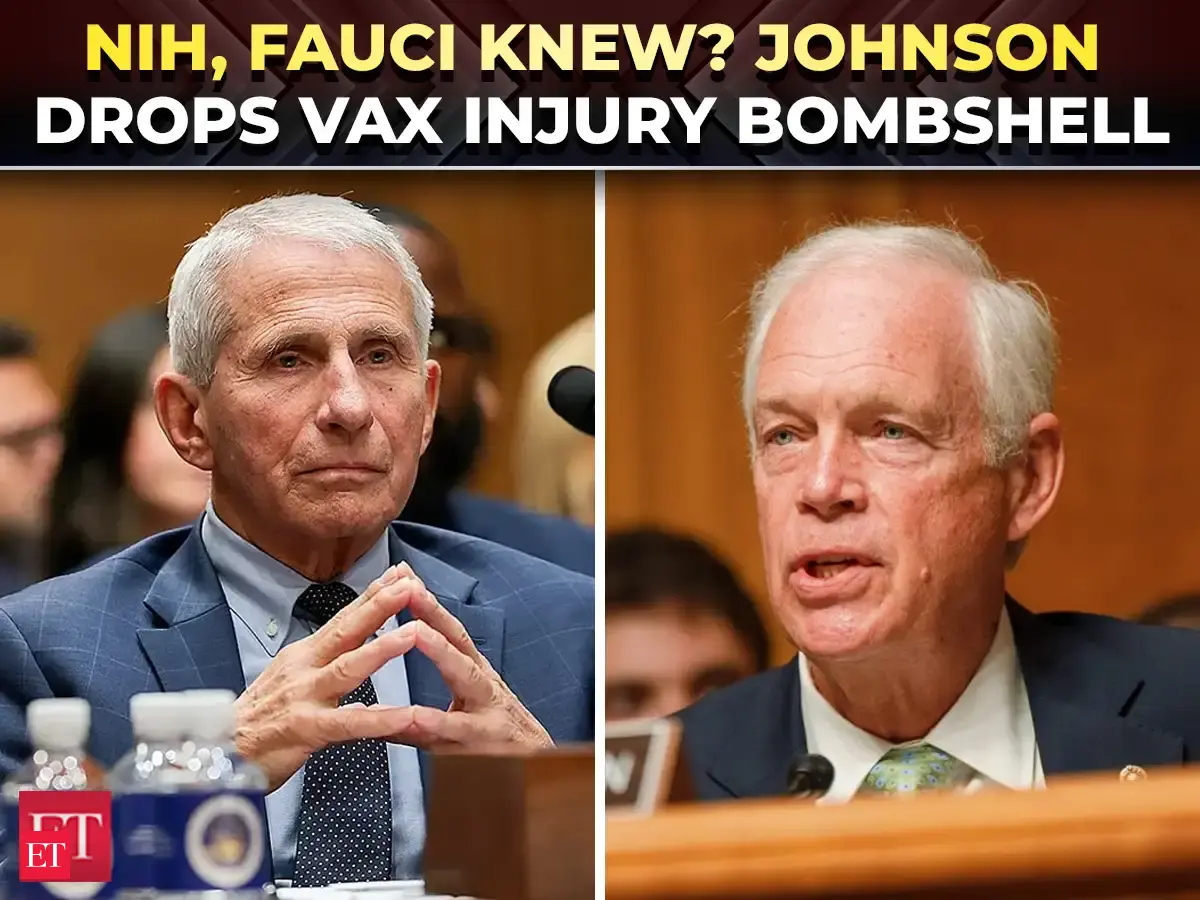
WASHINGTON — U.S. Senator Ron Johnson has accused the National Institutes of Health of suppressing clinical research detailing severe adverse health events reported by individuals following COVID-19 vaccination. Speaking during a Senate Finance Committee hearing on Sept. 15, the Wisconsin Republican alleged that high-ranking officials within the federal research agency intentionally withheld findings from an observational study led by Dr. Avindra Nath, a senior investigator at the National Institute of Neurological Disorders and Stroke. According to reporting by ET Online, Johnson claimed the agency concealed potential safety signals due to concerns over how the data might impact public perceptions of vaccine safety and national immunization campaigns.
Key facts
What happened
During the Sept. 15 hearing of the Senate Finance Committee, Senator Ron Johnson focused his remarks on the transparency and accountability of federal health agencies operating under the Department of Health and Human Services. Johnson stated that the National Institutes of Health (NIH) engaged in an active effort to conceal observational clinical data compiled by Dr. Avindra Nath, the Clinical Director at the National Institute of Neurological Disorders and Stroke (NINDS).
According to reporting by ET Online, Johnson asserted that Dr. Nath’s clinical work involved evaluating patients who experienced acute neurological complications, such as small fiber neuropathy, dysautonomia, and paresthesia, shortly after receiving COVID-19 immunizations. The study, which began in early 2021 as an exploratory examination of unusual patient presentations, sought to determine whether immune-mediated mechanisms were involved in the reported symptoms.
Johnson alleged that despite preliminary findings and clinical observations collected from affected individuals, NIH leadership prevented the timely release of the complete report. The senator stated that internal agency communications suggested officials were hesitant to publicize data that could be interpreted as challenging the safety profile of the vaccines during the peak of the public health response. Johnson argued that suppressing such research compromised scientific integrity and denied medical providers and patients critical information regarding potential rare post-vaccination complications.
The NIH has not publicly confirmed Johnson's characterization of internal decisions regarding Dr. Nath's research protocols. In prior public disclosures and medical literature contributions related to post-vaccination neurological evaluations, NIH researchers emphasized that observational studies on small patient groups are exploratory in nature, designed to generate hypotheses rather than establish definitive causal links between vaccines and specific medical conditions.
Why it matters
The allegations raised by Johnson touch upon fundamental principles governing public health communication, regulatory oversight, and scientific transparency during global health emergencies. When federal biomedical research bodies conduct evaluations of potential drug or vaccine side effects, public disclosure of findings is critical for clinical decision-making, enabling frontline physicians to recognize, diagnose, and treat rare adverse events.
If public health agencies defer or restrict the publication of observational safety data out of concern for public relations or vaccine confidence, it risks undermining long-term trust in public health institutions. Institutional credibility relies heavily on complete transparency regarding both the benefits and potential risks associated with medical countermeasures. Suppressing preliminary or exploratory scientific data can exacerbate public skepticism, fuel alternative narratives, and create institutional blind spots that delay clinical guidance for affected patients.
Conversely, public health administrators often face complex communication challenges when managing preliminary data from small, uncontrolled observational cohorts. Distinguishing between coincidental medical events occurring after vaccination and true biological causal relationships requires rigorous epidemiological studies. Prematurely releasing inconclusive observational findings without proper context can generate widespread alarm, suppress vaccination rates, and increase population-level vulnerability to preventable infectious diseases. Balancing these competing imperatives remains one of the most difficult challenges in modern public health governance.
The background
The controversy surrounding Dr. Avindra Nath's research stems from early efforts by federal scientists to investigate reports of persistent neurological symptoms following COVID-19 vaccination. Dr. Nath, a nationally recognized neurologist at NINDS, initiated an exploratory clinical evaluation in early 2021 after receiving inquiries from patients and physicians reporting symptoms such as burning pain, heart rate fluctuations, and sensory changes occurring days or weeks after immunization.
In the United States, vaccine safety monitoring relies on a multi-tiered surveillance system managed jointly by the Centers for Disease Control and Prevention (CDC) and the Food and Drug Administration (FDA). Primary components include the Vaccine Adverse Event Reporting System (VAERS), an open passive reporting database; V-safe, a smartphone-based active surveillance tool established during the COVID-19 rollout; and the Clinical Immunization Safety Assessment (CISA) Network, which provides clinical consultation for complex adverse events.
While passive reporting systems like VAERS collect thousands of unverified entries to detect potential statistical signals, formal clinical evaluations at institutions like the NIH involve deep phenotyping, tissue biopsies, blood antibody profiling, and autonomic function testing. Early observational studies conducted at NINDS evaluated roughly several dozen patients. Initial findings indicated that some individuals exhibited signs of immune-mediated nerve damage or dysautonomia, though researchers noted that such symptoms could also result from mild or asymptomatic viral infections, including SARS-CoV-2 itself.
Throughout the pandemic, public health authorities maintained that severe adverse events following COVID-19 vaccination were exceedingly rare, with confirmed risks primarily limited to specific conditions such as myocarditis and pericarditis associated with mRNA vaccines (manufactured by Pfizer-BioNTech and Moderna) in young males, and Thrombosis with Thrombocytopenia Syndrome (TTS) associated with viral vector vaccines (such as Johnson & Johnson's Janssen vaccine).
Senator Ron Johnson has consistently challenged federal health policies throughout the COVID-19 pandemic. As a senior member of the Senate Homeland Security and Governmental Affairs Committee and the Senate Finance Committee, Johnson has convened roundtable discussions, issued oversight letters, and requested internal agency documentation regarding federal vaccine mandates, injury reporting mechanisms, and public health communications.
Reaction
The statements made by Senator Johnson during the committee session reflect ongoing political and legislative scrutiny of federal health officials. Lawmakers advocating for enhanced oversight have called for the subpoena of internal emails, scientific drafts, and institutional communications between NIH directors and research personnel to determine whether publication timelines were intentionally altered.
The National Institutes of Health and the Department of Health and Human Services have repeatedly asserted that their scientific review processes are guided strictly by peer-review standards and methodological rigor. Public health advocates and infectious disease experts generally contend that internal scientific reviews, revisions, and methodological checks are standard procedure before clinical data is released to the scientific community or general public.
Patient advocacy groups representing individuals who report lingering health problems following vaccination have expressed frustration over the pace of research funding and clinical attention dedicated to post-vaccination syndrome. These groups have urged federal regulators to establish clear clinical diagnostic criteria and streamline access to financial relief through the Countermeasures Injury Compensation Program (CICP), the federal government's primary administrative mechanism for compensating individuals injured by covered medical countermeasures during a public health emergency.
What we don't know yet
Several critical questions remain unresolved regarding the specific claims presented during the hearing:
Understanding these details is essential to evaluating whether the delay in releasing the research was driven by political considerations, communication strategy, or standard scientific validation requirements.
What to watch
In the coming months, several key developments will indicate the trajectory of this legislative inquiry:
This report is based on reporting published by ET Online.
How this story was produced
This report was written by The Global Wire newsroom from reporting first published by ET Online. We verify the core facts against the original report, write our own account, and add the background and consequences a short wire item leaves out. Drafting is AI-assisted inside an editor-supervised pipeline, and every story is checked for accuracy of attribution, structure and duplication before it appears — full detail in our AI and funding disclosure.
Spotted an error? Tell us at corrections@horizonglobalnews.com and read our corrections policy or editorial standards.



Reader comments
Loading comments…