

FAA Enforces East Coast Airport Ground Stops Following Major Air Traffic System Failure
An equipment breakdown forced federal aviation regulators to pause departures across key East Coast facilities, disrupting travel in one of the nation's busiest air corridors.
By The Global Wire Newsroom · Reported from PBS News Hour
Link preview · horizonglobalnews.com
FAA Enforces East Coast Airport Ground Stops Following Major Air Traffic System Failure
An equipment breakdown forced federal aviation regulators to pause departures across key East Coast facilities, disrupting travel in one of the nation's busiest air corridors.
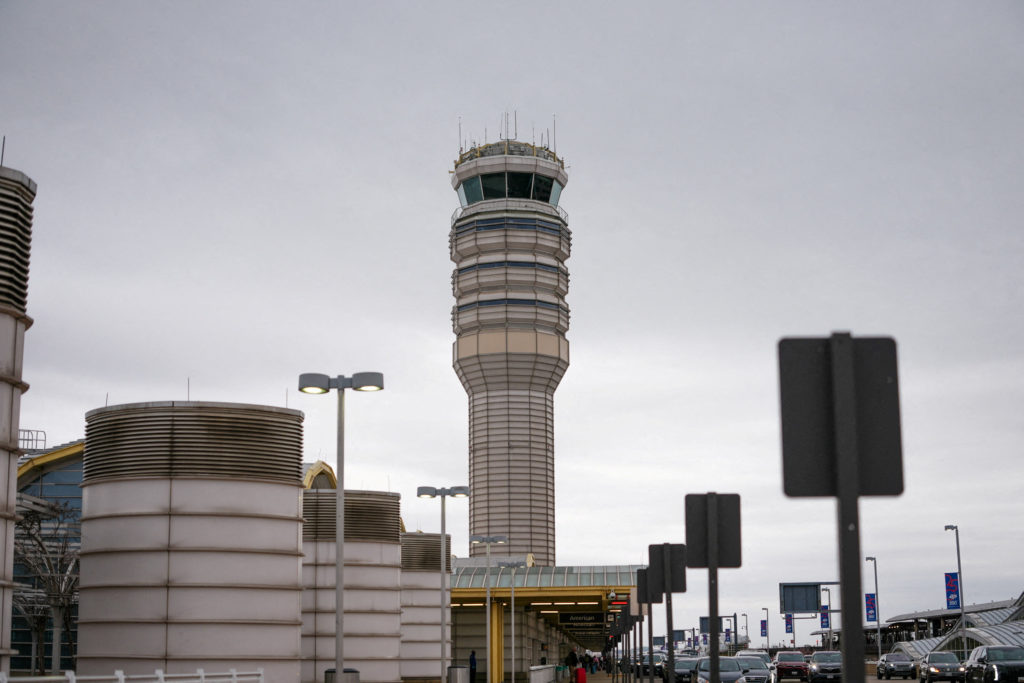
The Federal Aviation Administration imposed temporary ground stops across several prominent East Coast airports on September 21, 2026, after a critical equipment failure disrupted air traffic management capabilities. The unexpected operational halt stranded flights at origin gateways nationwide and created immediate delays throughout the eastern seaboard's tightly interconnected flight networks. According to reporting by PBS News Hour, federal regulators initiated the emergency traffic management measures to preserve safety standards while technical teams addressed the underlying hardware or software disruption. The incident highlights the acute vulnerability of U.S. civil aviation infrastructure when central communications, surveillance, or processing systems suffer sudden outages in high-density airspace corridors.
Key facts
What happened
The operational breakdown began on September 21, 2026, when an unspecified technical failure compromised critical FAA equipment serving the eastern United States, as reported by PBS News Hour. In response to the technical malfunction, FAA air traffic controllers implemented ground stops affecting a cluster of major airports along the East Coast.
Under standard aviation safety protocols, a ground stop is one of the most restrictive traffic management initiatives available to federal controllers. When an equipment failure reduces the operational capacity of air traffic control facilities or disables essential flight-tracking and communications gear, controllers halt departures at distant origin airports to prevent aircraft from entering congested or under-monitored airspace.
During the event, aircraft scheduled to depart for the impacted East Coast destinations were ordered to remain on the tarmac or at terminal gates nationwide. Meanwhile, airborne flights already en route were managed through secondary safety procedures, altitude separations, or holding patterns until safe landing sequences could be coordinated. Ground stops are designed as tactical interventions, giving network managers immediate relief from incoming traffic while engineers diagnose hardware failures, reboot corrupted server clusters, or activate redundant backup channels.
PBS News Hour reported that the ground stops were executed across multiple major hubs, though specific air traffic control facilities where the physical hardware or software failed were not immediately detailed by federal officials. Ground stops of this nature typically ripple across the national airspace system, causing cascading delays that persist long after the primary technical failure is resolved and flight movements resume.
Why it matters
The implementation of ground stops across East Coast airports carries wide-ranging financial, operational, and structural implications for airlines, passengers, and federal regulators. The eastern U.S. flight corridor represents one of the densest air transportation networks globally, handling thousands of commercial, cargo, and general aviation flights daily. Any sudden disruption in this region triggers immediate bottleneck effects that reverberate throughout domestic and international flight schedules.
For commercial airlines, an unexpected ground stop forces immediate logistical reshuffling. Aircraft that cannot depart on schedule miss their downstream rotations, leaving flight crews stranded out of position and causing secondary flight cancellations across distant hubs such as Chicago, Dallas, and Denver. Carriers face substantial financial losses from crew overtime, extra fuel consumption during ground idling or airborne holding patterns, and mandatory passenger accommodations under federal aviation consumer protection rules.
For travelers, equipment-driven ground stops mean severe travel delays, missed connecting flights, and prolonged gate ground times. Unlike weather-related disruptions, which can often be anticipated through meteorological modeling, technical system failures occur without warning, leaving airport operations staff and passengers with minimal lead time to adapt.
From a regulatory and national infrastructure perspective, the failure underlines ongoing questions regarding the resilience and modernization of the National Airspace System. The U.S. civil aviation sector relies on an intricate web of legacy hardware and modern digital networks to track aircraft, manage radio communications, and feed automated data to control towers. When central nodes fail, the system must default to restrictive safety buffers that sacrifice capacity to preserve absolute safety. Repeated or high-profile equipment failures draw intense legislative scrutiny from congressional transportation committees responsible for FAA reauthorization and technology funding.
The background
To contextualize the emergency measures taken by federal regulators, it is essential to understand how the FAA manages U.S. airspace and how past technical failures have shaped current operational protocols.
The FAA oversees more than 29 million square miles of airspace, managing traffic through 21 Air Route Traffic Control Centers, dozens of Terminal Radar Approach Control facilities, and hundreds of airport traffic control towers. The primary technical backbone for high-altitude traffic in the United States is the En Route Automation Modernization system, which processes flight plan data, tracks radar signals, and provides predictive separation tools to controllers. At lower altitudes surrounding busy metropolitan airports, approach facilities rely on Terminal Automation Modernization and Replacement architectures.
When any of these core systems—or the underlying FAA Telecommunications Infrastructure network that connects them—experiences an outage, safety regulations require controllers to widen the space between aircraft or halt incoming traffic entirely. A ground stop is governed by the FAA's System Operations Center in Warrenton, Virginia, which monitors network flow and issues binding traffic management initiatives across all domestic air carriers.
Historically, systemic equipment failures have led to major national disruptions and triggered political debates over infrastructure spending. In January 2023, a corrupt database file in the FAA's Notice to Air Missions system caused the first nationwide ground stop since September 11, 2001, grounding over 10,000 flights and prompting congressional hearings into FAA software redundancies. Similar regional disruptions occurred in prior years due to localized telecommunications cuts, radar computer glitches at regional control facilities in Florida and Virginia, and power supply failures at critical data centers.
The regulatory framework governing federal aviation infrastructure is codified under Title 49 of the United States Code. Congress periodically passes multi-year FAA reauthorization bills to fund the agency's Next Generation Air Transportation System modernization project, an ongoing multi-billion-dollar effort to transition air traffic management from ground-based radar systems to satellite-enabled GPS tracking and digital data communications. Despite decades of investment, aging sub-components and complex system integration challenges continue to present operational risks across the network.
Reaction
Following major air traffic disruptions of this nature, formal responses typically emerge across government agencies, commercial airline associations, passenger rights advocates, and congressional leaders. In prior instances of FAA equipment failures, the Secretary of Transportation and the FAA Administrator face immediate demands from lawmakers to publish detailed technical root-cause analyses and outline corrective steps to prevent recurring outages.
Airline industry trade organizations, such as Airlines for America, routinely call for accelerated modernizations of federal air traffic control systems, arguing that public infrastructure shortfalls place unfair operational and financial burdens on private air carriers and paying passengers. Congressional committees with oversight responsibility—specifically the Senate Commerce, Science, and Transportation Committee and the House Transportation and Infrastructure Committee—customarily schedule oversight hearings following major system outages to examine FAA tech budgets, contractor accountability, and backup redundancy protocols.
In the parallel national news events reported by PBS News Hour, corporate stakeholders and legal authorities issued distinct procedural moves. Regarding the media sector, twelve state attorneys general reached a formal antitrust settlement with Paramount concerning its high-profile acquisition of Warner Bros. Discovery, resolving state-level competitive concerns under federal and state antitrust statutes. In Texas, federal immigration authorities and local law enforcement initiated standard investigative procedures following an officer-involved shooting in Austin involving an ICE officer and a Venezuelan citizen.
What we don't know yet
Several critical details regarding the East Coast aviation failure remain undisclosed in initial reports. The specific component or subsystem that experienced the equipment failure has not been publicly identified by the FAA. It remains unclear whether the outage originated within primary radar processing hardware, telecommunications data lines, weather information streams, or central software databases.
Additionally, the exact duration of the ground stops and the total number of delayed or canceled flights across individual East Coast hubs have not been fully quantified by federal air traffic managers or commercial flight tracking databases. The specific identity of all affected airports—whether concentrated primarily in major northeastern hubs such as New York, Boston, and Washington or extending down to southeastern facilities—remains unconfirmed in initial disclosures.
In the corporate legal settlement involving Paramount and Warner Bros. Discovery, the specific financial or operational remedies agreed upon between Paramount and the twelve state attorneys general were not detailed in the preliminary wrap. Similarly, in the Austin immigration enforcement shooting, the underlying circumstances leading to the discharge of the officer's firearm and the medical condition of the Venezuelan national have not been fully reported.
What to watch
In the aftermath of the ground stops, key developments will determine the long-term operational and political consequences of the event. Technical investigators from the FAA's Air Traffic Organization will conduct a comprehensive post-incident review to pinpoint the root cause of the equipment failure and determine why automated redundancy systems did not prevent an operational ground stop.
Industry watchers will monitor flight recovery metrics over subsequent operational cycles to assess how quickly airlines clear backlog delays and reposition displaced aircraft and flight crews. Official FAA delay reports and Department of Transportation consumer protection metrics will eventually provide verified numbers on total affected flights and cumulative delay minutes.
On Capitol Hill, statements from leadership on the House Transportation and Infrastructure Committee and Senate Commerce Committee will indicate whether lawmakers intend to summon FAA technical directors for public testimony or mandate independent technical audits of the affected air traffic control facilities. Further disclosures regarding Paramount's antitrust settlement terms with state attorneys general and official law enforcement updates from Austin regarding the ICE shooting will also clarify the broader national news landscape.
This report is based on original news reporting from PBS News Hour.
How this story was produced
This report was written by The Global Wire newsroom from reporting first published by PBS News Hour. We verify the core facts against the original report, write our own account, and add the background and consequences a short wire item leaves out. Drafting is AI-assisted inside an editor-supervised pipeline, and every story is checked for accuracy of attribution, structure and duplication before it appears — full detail in our AI and funding disclosure.
Spotted an error? Tell us at corrections@horizonglobalnews.com and read our corrections policy or editorial standards.






Reader comments
Loading comments…