

Latino Turnout Propels Democrats to Historic Statewide Sweep in Texas
Democratic victories in the races for governor, lieutenant governor, and U.S. Senate end a three-decade Republican reign across the state's highest offices.
By The Global Wire Newsroom · Reported from Andrea Castillo
Link preview · horizonglobalnews.com
Latino Turnout Propels Democrats to Historic Statewide Sweep in Texas
Democratic victories in the races for governor, lieutenant governor, and U.S. Senate end a three-decade Republican reign across the state's highest offices.
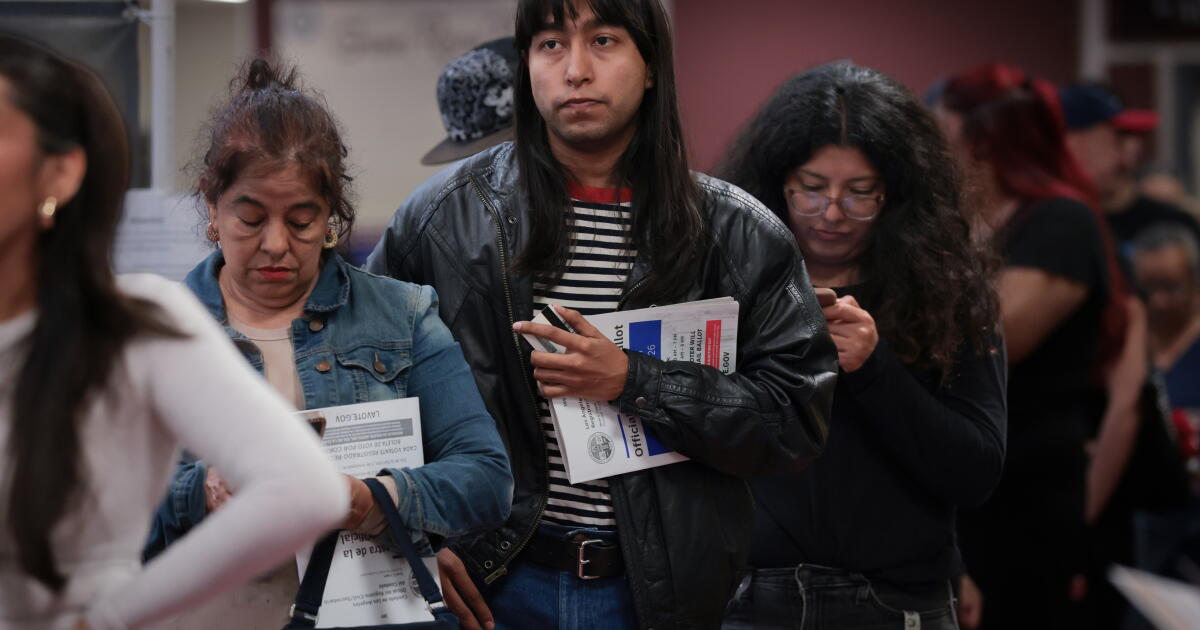
A decisive shift among Hispanic voters across South Texas and the San Antonio metropolitan corridor has delivered Democrats their most significant political breakthrough in modern Texas history, flipping the offices of governor, lieutenant governor, and the United States Senate in the 2026 midterm elections. The victories dismantle a Republican governing monopoly that has controlled every statewide executive position in Austin since the late 1990s, altering the balance of power in the nation's second-largest state and sending shockwaves through both national political parties.
Key facts
What happened
Democratic candidates mounted coordinated statewide campaigns that culminated on election night with triumphs in the state's most powerful executive offices and a pivotal seat in the upper chamber of the United States Congress. According to reporting by Andrea Castillo, the tipping point arrived through high turnout and decisive margins in heavily Hispanic communities along the international border and within the urban and suburban districts surrounding San Antonio.
For several election cycles, national strategists had debated whether the Texas borderlands were undergoing a durable realignment toward the Republican Party. During the 2020 presidential contest and the 2022 midterms, Republican candidates substantially narrowed margins or outright won traditionally Democratic counties along the Rio Grande, such as Zapata County, and increased their vote shares in populous border counties including Cameron, Hidalgo, and Webb. Republican organizers had directed substantial investments into localized community centers, faith-based outreach, and messaging centered on oil and gas employment, law enforcement, and border security.
In the 2026 midterms, however, that trajectory reversed. Voters across border-adjacent precincts turned out in elevated numbers to support the Democratic slate, overcoming the Republican margins in rural, Anglo-majority counties in East and West Texas that have historically insulated conservative candidates. Concurrently, majority-Latino precincts in Bexar County provided massive net vote totals for the Democratic candidates. The combination of restored border dominance and high urban-suburban turnout eroded the structural firewall that had protected statewide Republican officeholders for three decades, yielding outright victories for Democrats in the executive mansion, the presiding officer's chair of the Texas Senate, and the federal legislature.
Why it matters
This sweep fundamentally restructures the operational machinery of Texas government and reverberates across the national political landscape. Under the Texas Constitution of 1876, executive power is fragmented across a plural executive, but the governor and lieutenant governor together wield tremendous authority over public policy, judicial appointments, regulatory boards, and the legislative agenda.
The office of lieutenant governor is widely regarded as the most legislatively potent position in Austin. Serving as the constitutionally designated president of the 31-member Texas Senate, the lieutenant governor determines committee assignments, appoints committee chairs, and largely dictates which bills reach the Senate floor for debate. A Democratic lieutenant governor will alter the trajectory of state policy on public school funding, energy regulation, healthcare access, and taxation, effectively ending the conservative legislative conveyor belt that has defined Texas governance since 2003.
Nationally, the capture of a Texas U.S. Senate seat provides a major structural shift in federal balance-of-power calculations. Texas has not sent a Democrat to the United States Senate since Lloyd Bentsen concluded his tenure in January 1993, following the special election victory of Kay Bailey Hutchison. Flipping the seat alters the Senate's overall math, complicating Republican efforts to maintain or secure committee majorities and judicial confirmation leverage in Washington.
Furthermore, the result disrupts the conventional wisdom regarding the political evolution of the Hispanic electorate. Over recent years, both major parties treated the modest conservative drift of working-class Hispanic voters as a potentially permanent realignment. The Texas results demonstrate that this voting bloc remains highly competitive and responsive to localized mobilization, economic concerns, and specific campaign appeals, preventing either party from taking demographic groups for granted in future national coalitions.
The background
Texas was once an anchor of the Democratic Party's southern coalition throughout the late nineteenth and mid-twentieth centuries. The transition toward Republican dominance began with the 1961 special election victory of John Tower to the U.S. Senate and accelerated through the 1970s and 1980s with the election of Governor Bill Clements. The definitive watershed moment occurred in November 1994, when George W. Bush defeated incumbent Democratic Governor Ann Richards. Four years later, in November 1998, Republicans swept every statewide executive and judicial race on the ballot, including the lieutenant governorship won by Rick Perry.
Since that 1998 election, no Democrat had won a statewide contest in Texas, cementing the longest active single-party winning streak in the United States. During this period, the state underwent profound demographic change. According to data released by the United States Census Bureau from the 2020 census and subsequent American Community Survey updates, Hispanic residents officially became the largest demographic group in Texas around mid-2022, surpassing non-Hispanic white residents and accounting for more than 40 percent of the state's population of roughly 30 million people.
Despite this demographic growth, Democratic strategists repeatedly struggled to convert raw population numbers into statewide electoral victories. Challenges included lower voter turnout rates in off-year elections, extensive gerrymandering of state legislative and congressional maps following the 2021 redistricting cycle, and strong, reliable turnout from conservative voters in non-metropolitan counties. Following the 2020 cycle, in which Donald Trump made sharp gains in South Texas border communities, conservative groups poured resources into regional infrastructure, betting that cultural conservatism and economic concerns would permanently sever the border region from the Democratic coalition.
Reaction
Neither the Democratic victors nor the defeated Republican candidates have issued formal statements within the scope of the initial reporting by Andrea Castillo. Formal concessions, victory addresses, and statements from party chairs are expected over the coming hours at campaign headquarters in Austin, San Antonio, and Houston.
Within the Texas Capitol, legislative leaders in the Texas House of Representatives and the Texas Senate will have to adjust rapidly to the reality of split-party governance. The Texas Legislature convenes its 140-day regular biennial session in January of odd-numbered years, meaning lawmakers will arrive in Austin in January 2027 facing an executive branch governed by Democrats alongside a legislative branch whose partisan makeup depends on down-ballot outcomes.
National party committees are expected to analyze the returns intensely. Democratic National Committee leadership will point to Texas as proof of concept for sustained investment in non-traditional swing territory, while the Republican National Committee and conservative organizations are likely to initiate immediate post-mortem examinations into why their recent South Texas inroads collapsed at the top of the ticket.
What we don't know yet
The reporting provided establishes the victories in the three top races but leaves key technical and down-ballot details undetermined. It is not yet clear whether the margins achieved by the Democratic victors constitute absolute majorities or narrow pluralities in three-way contests featuring third-party or independent candidates. The complete county-by-county canvass numbers, which illustrate the precise swing percentages in border jurisdictions such as Starr, Zapata, and Webb counties compared to the 2022 and 2024 baselines, have not yet been released.
Additionally, the reporting does not delineate the outcomes of down-ballot races, including contests for the Texas House of Representatives, the state Senate, the Texas Supreme Court, the Court of Criminal Appeals, and the regulatory Texas Railroad Commission. The composition of the 150-member Texas House will determine whether the incoming administration faces unified resistance or a divided legislature capable of bipartisan compromise.
Finally, detailed demographic breakdowns by age, gender, and education levels among Hispanic voters remain unknown until comprehensive exit polling and voter file validation can be conducted by election analytics organizations in the weeks ahead.
What to watch
The immediate focus shifts to the administrative steps required by the Texas Election Code. County commissioners courts across Texas's 254 counties must meet to conduct local canvasses between November 11 and November 17, 2026. Following local certification, the official returns will be transmitted to the Texas Secretary of State's Elections Division in Austin, which will conduct the statewide canvass to finalize the results by early December.
Given the historic nature of the shift and the likely narrow margins in a state that regularly casts over 8 million ballots in midterm cycles, observers should monitor whether defeated candidates invoke Chapter 212 of the Texas Election Code to request and fund formal recounts, or Chapter 221 to mount election contests in state district court.
Heading into December and January, attention will pivot to transition teams formed by the governor-elect and lieutenant governor-elect. Key indicators of the new administration's governance strategy will include their appointments to executive agencies, policy proposals for the 2027 legislative budget, and how the new presiding officer of the Texas Senate negotiates procedural rules with a chamber accustomed to conservative control.
This report is based on original reporting published by Andrea Castillo on November 4, 2026.
How this story was produced
This report was written by The Global Wire newsroom from reporting first published by Andrea Castillo. We verify the core facts against the original report, write our own account, and add the background and consequences a short wire item leaves out. Drafting is AI-assisted inside an editor-supervised pipeline, and every story is checked for accuracy of attribution, structure and duplication before it appears — full detail in our AI and funding disclosure.
Spotted an error? Tell us at corrections@horizonglobalnews.com and read our corrections policy or editorial standards.



Reader comments
Loading comments…