

Democrats Target State Executive Control as Vote Counting Begins in Midterm Governors' Races
Ballot counting underway across multiple competitive states as Democrats seek to capture an elusive majority of the nation's 50 governorships following executive power clashes.
By The Global Wire Newsroom · Reported from SECTIONS Democrats press
Link preview · horizonglobalnews.com
Democrats Target State Executive Control as Vote Counting Begins in Midterm Governors' Races
Ballot counting underway across multiple competitive states as Democrats seek to capture an elusive majority of the nation's 50 governorships following executive power clashes.
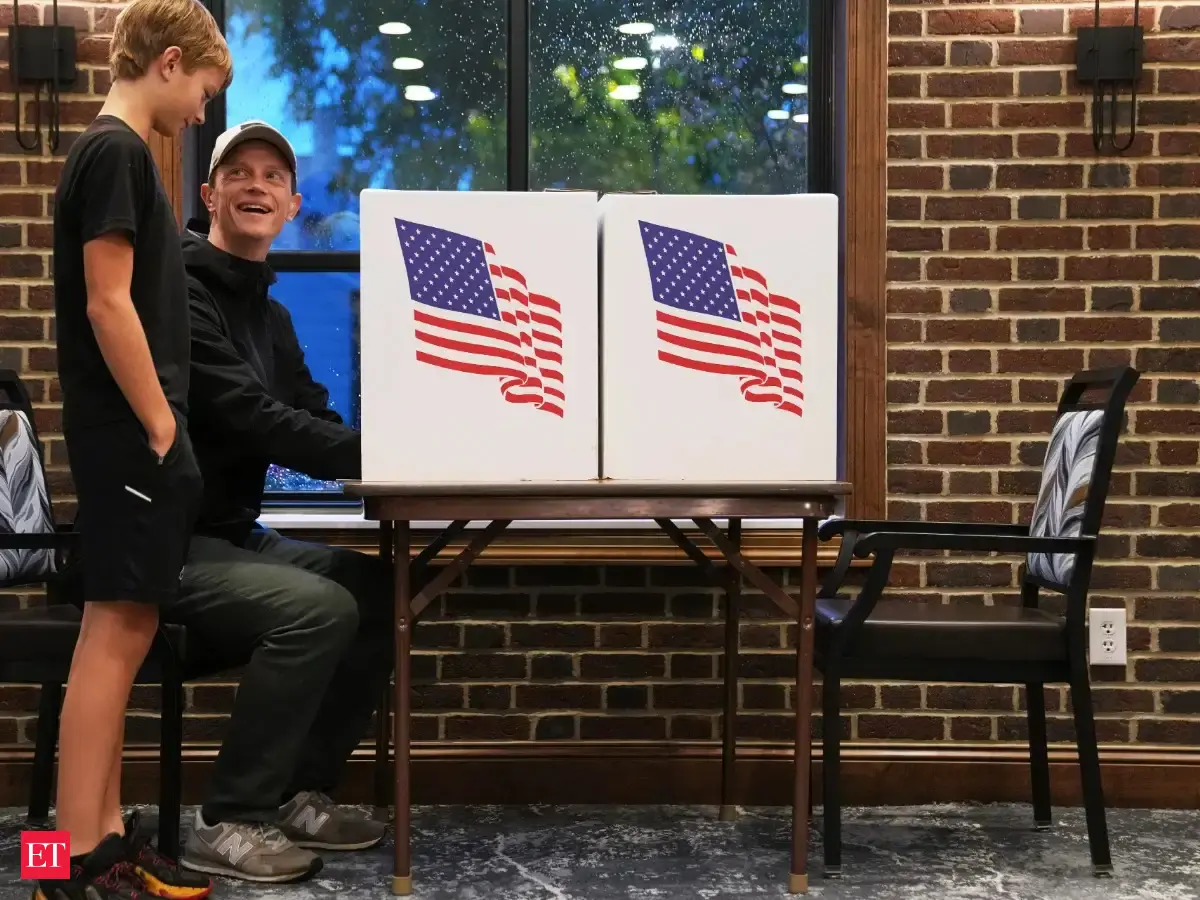
Election officials across several American states began tallying ballots in pivotal gubernatorial contests as the Democratic Party mounted an aggressive bid to secure a majority of state executive mansions, according to reporting by SECTIONS Democrats press. The effort marks a push to break a multi-cycle drought in holding executive control over more than half of the United States' statehouses. Driven by widespread voter friction surrounding economic and social policy, as well as prolonged political conflicts stemming from interactions with Donald Trump's political apparatus, the competitive races highlight how state-level leadership has become a primary battleground for national governance.
Key facts
What happened
During the midterm vote-counting window, election workers and municipal canvassers in critical states processed ballots to determine the outcomes of high-stakes gubernatorial elections. The reporting by SECTIONS Democrats press indicates that the Democratic campaign apparatus focused heavily on expanding its footprint in executive mansions nationwide, pursuing a numerical majority among the 50 state governors that has remained out of reach for years.
The competitive environment emerged across a diverse geographical map, with races characterized by sharp disagreements over the direction of state governance, public services, and regulatory authority. Campaigning across these jurisdictions took place under the shadow of persistent friction with federal entities and nationalized partisan conflicts, particularly revolving around former and ongoing political battles with Donald Trump. As poll closures triggered the reporting of initial counts, tight margins in key states reflected deep divisions within the electorate, driven by overlapping frustrations over kitchen-table economic conditions and state-level policy decisions.
While vote totals began accumulating, official outcomes remained contingent on the processing of in-person, absentee, and mail-in ballots across diverse statutory counting regimes. Democratic organizers sought to leverage candidate recruitment and targeted messaging to unseat incumbent executives and capture vacant seats, while opposing campaigns fought to maintain their geographic and executive leverage over state administrative machinery.
Why it matters
Governors in the United States occupy an exceptionally powerful constitutional role, functioning not merely as state administrators but as the primary architects of regional policy and counterweights to federal authority. Holding a majority of the 50 governorships—at least 26 seats—provides a political party with systemic advantages that reverberate far beyond individual state capitals.
At the executive level, governors wield extensive unilateral powers. They manage multi-billion-dollar state budgets, oversee public health apparatuses, direct national guard deployments, and appoint state supreme court justices, administrative department heads, and regulatory commissioners. When federal policy stalls due to gridlock in the United States Congress, state executives routinely step into the void by issuing executive orders that set standards on clean energy, labor enforcement, healthcare access, and corporate oversight. A party controlling a majority of state executives can establish coordinated regulatory networks that effectively compel national corporations to adapt to multi-state compliance pacts.
Furthermore, state governors play a decisive role in the administration and integrity of national elections. In many states, governors hold veto power over legislative redistricting maps that configure congressional boundaries for ten-year cycles. They also sign or veto statutes governing voting protocols, early voting timelines, voter identification requirements, and certification procedures for presidential electors. Controlling statehouses provides political parties with a durable institutional firewall against federal overreach or contested election results, determining whether state legal machinery cooperates with or challenges national administrative mandates.
The background
In the institutional structure of American federalism, the distribution of gubernatorial power has historically experienced sharp cyclical shifts. In most election cycles, 36 of the 50 states hold their gubernatorial elections during off-year midterm elections, while a smaller group of states conducts contests during presidential election years, and five states—Kentucky, Louisiana, Mississippi, New Jersey, and Virginia—elect governors in odd-numbered years. With the exceptions of New Hampshire and Vermont, which maintain two-year terms, governors in 48 states serve four-year terms.
Historically, the Democratic Party held commanding majorities of statehouses throughout the mid-to-late 20th century. However, the modern partisan landscape shifted decisively during the 2010 midterm elections, when Republicans captured dozens of state legislative chambers and elevated their gubernatorial total to over 30 statehouses. That expansion gave the Republican Party an entrenched structural advantage through the 2010 redistricting cycle, allowing state executives to implement conservative fiscal and administrative overhauls across the industrial Midwest and the Sun Belt.
Over the ensuing decade, Democrats gradually clawed back individual executive seats in traditional swing states such as Michigan, Wisconsin, and Pennsylvania, alongside gains in New Mexico and Kansas. Despite these incremental victories, the party remained short of an absolute majority among the 50 governors. The political friction intensifying these contests reached a peak during the presidency of Donald Trump, when Democratic governors frequently coordinated through legal challenges and interstate compacts to resist federal environmental rollbacks, immigration initiatives, and regulatory changes. Conversely, Republican executives aligned with Trump sought to curtail local administrative mandates and restrict federal oversight. These repeated confrontations transformed routine statehouse races into prominent proxy wars over the constitutional limits of state sovereignty and executive authority.
Reaction
Public statements and organized responses to the ongoing vote counting are expected to unfold through established political and legal channels as certified numbers materialize. National party committees, including the Democratic Governors Association (DGA) and the Republican Governors Association (RGA), are slated to convene press briefings to frame early results and assess the viability of their respective state platforms.
In contested jurisdictions where final counts remain pending, campaign officials from both major parties typically deploy legal teams to monitor canvassing boards and oversee ballot reconciliation processes. Gubernatorial candidates in closely divided states frequently communicate updates to their supporters through late-night media appearances, either claiming victory where margins appear decisive or counseling patience as municipal election boards complete their tabulations. Down-ballot candidates, business coalitions, and public-sector labor unions are also closely monitoring the results, as gubernatorial transitions dictate the future of collective bargaining legislation, commercial tax policy, and state infrastructure spending authorizations.
What we don't know yet
Significant gaps exist in the immediate reporting regarding specific outcomes across the electoral map. The initial summary provided by SECTIONS Democrats press does not enumerate which specific states formed the core of the Democratic majority push, nor does it identify individual candidates, raw vote totals, or percentage margins in any single jurisdiction.
Because ballot processing rules vary widely across state lines—with some jurisdictions counting pre-processed mail-in ballots immediately upon poll close and others prohibiting processing until after election day—the final tally in several tight contests may take days or weeks to officially certify. Consequently, it remains unknown whether Democrats have achieved their numerical goal of reaching 26 or more governorships, or whether Republican incumbents managed to defend vulnerable seats. In addition, potential recount thresholds, statutory audit requirements, and post-election litigation could delay definitive victory declarations in states decided by thin fractional margins.
What to watch
The trajectory of state executive governance will be determined by several concrete benchmarks over the coming days and weeks. Key data points to track include:
This report incorporates news reporting from SECTIONS Democrats press on the counting of midterm gubernatorial election votes and the Democratic Party's push to secure a majority of state executive offices.
How this story was produced
This report was written by The Global Wire newsroom from reporting first published by SECTIONS Democrats press. We verify the core facts against the original report, write our own account, and add the background and consequences a short wire item leaves out. Drafting is AI-assisted inside an editor-supervised pipeline, and every story is checked for accuracy of attribution, structure and duplication before it appears — full detail in our AI and funding disclosure.
Spotted an error? Tell us at corrections@horizonglobalnews.com and read our corrections policy or editorial standards.





Reader comments
Loading comments…