

Former Athletes Clinch Key Midterm Victories as Political Crossovers Face Mixed Outcomes
Electoral triumphs by Colin Allred, Mark Teixeira, and Josh Turek highlight the enduring appeal and varied fortunes of elite competitors transitioning to governance.
By The Global Wire Newsroom · Reported from Steve Henson
Link preview · horizonglobalnews.com
Former Athletes Clinch Key Midterm Victories as Political Crossovers Face Mixed Outcomes
Electoral triumphs by Colin Allred, Mark Teixeira, and Josh Turek highlight the enduring appeal and varied fortunes of elite competitors transitioning to governance.
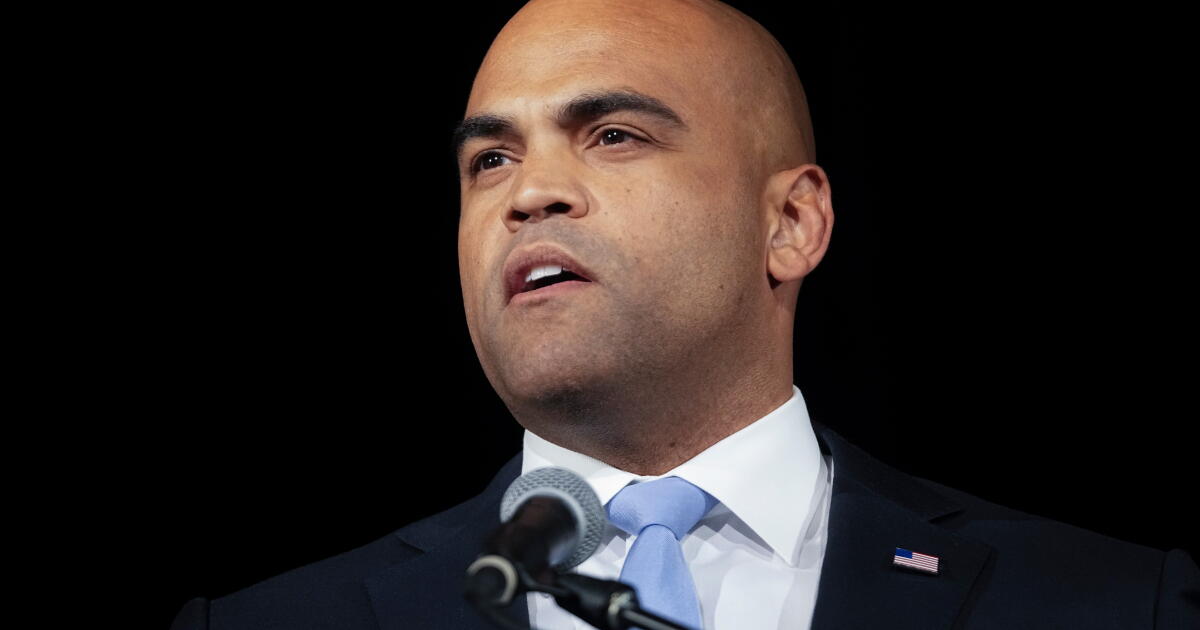
WASHINGTON — A fresh contingent of former competitive athletes secured public office in the latest midterm elections, demonstrating the persistent appeal of national sporting fame while underscoring the uneven track record of political neophytes entering high-stakes campaigns. Among those emerging victorious from their respective contests were former National Football League linebacker Colin Allred, former Major League Baseball infielder Mark Teixeira, and multi-time Paralympic medalist Josh Turek, navigating hyper-partisan environments to win support across diverse electorates.
Key facts
What happened
Election day delivered significant wins for several prominent sports figures who sought to convert their competitive credentials and athletic reputations into electoral mandates. According to reporting by Steve Henson, athletes competing in the midterms saw both triumphs and setbacks, with the victories of Colin Allred, Mark Teixeira, and Josh Turek illustrating the various pathways available to elite sports figures on the ballot.
Colin Allred, who played collegiate football at Baylor University before signing with the Tennessee Titans as an undrafted free agent linebacker, has spent the last decade building a formidable profile within Democratic politics. After suffering a career-ending injury in 2010, Allred earned a law degree from the University of California, Berkeley, worked within the Department of Housing and Urban Development during the Obama administration, and entered elective office by defeating a long-tenured Republican incumbent in suburban Dallas in 2018. His latest midterm campaign relied on a blend of moderate policy positioning, civil rights advocacy, and the natural coalition-building instincts cultivated during his athletic years.
Mark Teixeira entered the political arena from a contrasting background, possessing one of the most prominent profiles in modern Major League Baseball. A switch-hitting first baseman who played 14 seasons across major franchises—including the Texas Rangers, Atlanta Braves, Los Angeles Angels, and New York Yankees—Teixeira amassed more than 400 home runs, five Gold Glove Awards, and a 2009 World Series title. Following his retirement from baseball in 2016, Teixeira remained visible as an analyst on national sports networks and pursued substantial business and real estate developments. His transition to electoral competition drew heavily on his name identification and reputation as a disciplined, fiscally focused executive figure, enabling him to successfully rally voters in his bid.
Josh Turek represented an entirely distinct athletic narrative. A four-time Paralympian and two-time gold medalist with the United States men's national wheelchair basketball team, Turek spent decades competing at the pinnacle of international adaptive sports, including professional stints in European leagues. Having grown up with spina bifida, Turek leveraged his athletic resilience and deep community roots to make inroads into state-level politics. His successful midterm campaign followed an established pattern of door-to-door community engagement, where his personal story of overcoming disability and representing his country on the world stage resonated with a wide spectrum of local voters.
Yet the broader landscape remained unpredictable. While Allred, Teixeira, and Turek achieved victory, other sporting figures entering the political arena this cycle found that initial voter curiosity did not automatically translate into majorities on election night, as standard electoral dynamics—party loyalty, economic conditions, and localized issues—regularly overrode athletic celebrity.
Why it matters
The entry of elite athletes into public office carries immediate structural consequences for both political parties and governing institutions. For campaign strategists, former athletes offer an asset that ordinary political candidates often spend tens of millions of dollars attempting to manufacture: universal or regional name recognition combined with an established baseline of public goodwill. In modern political environments defined by intense polarization and widespread voter fatigue with traditional political archetypes, athletes often project a non-traditional image grounded in discipline, teamwork, and apolitical accomplishment.
However, the reality of governing presents severe challenges that sporting glory does not prepare candidates to resolve. Legislative bodies operate on procedural rules, coalition bargaining, and granular policy negotiations rather than executive decisiveness or physical prowess. When athletes take office, their voting records quickly erase the broad-based, nonpartisan affection they enjoyed as competitors. A home run or a game-saving tackle elicits universal applause from fans regardless of political ideology; a floor vote on tax structures, environmental regulation, or judicial appointments immediately alienates a substantial portion of that very same constituency.
Furthermore, the success of figures like Teixeira, Allred, and Turek reshapes recruitment strategies for both major political parties. When high-profile sports alumni demonstrate the ability to raise money independently and capture swing voters, party leadership increasingly looks to athletic arenas for prospective recruits, potentially bypassing traditional feeder systems such as municipal councils, state regulatory boards, and legal pipelines. This shift alters the types of professional backgrounds represented in the creation of statutory law.
The background
The crossover between American athletic culture and legislative politics has deep historical roots stretching back more than half a century. Both major parties have repeatedly recruited sports icons to capitalize on their cultural ubiquity and broad voter familiarity.
Among the earliest modern models of this transition was Jack Kemp, who quarterbacked the Buffalo Bills to two American Football League championships before winning a seat in the U.S. House of Representatives representing western New York in 1970. Kemp spent nearly two decades in Congress, served as Secretary of Housing and Urban Development, and became the Republican vice presidential nominee in 1996, championing supply-side economic theory. Similarly, Bill Bradley leveraged a legendary basketball career—winning collegiate national honors at Princeton, an Olympic gold medal, and two NBA championships with the New York Knicks—into a prestigious 18-year career representing New Jersey in the United States Senate, culminating in a competitive bid for the 2000 Democratic presidential nomination.
Baseball has offered comparable examples. Jim Bunning, a Hall of Fame pitcher who threw a perfect game for the Philadelphia Phillies in 1964, embarked on a lengthy second career in public life, serving in the Kentucky state legislature, the U.S. House of Representatives, and ultimately two terms in the U.S. Senate as a staunch conservative. Other notable crossovers have included Hall of Fame wide receiver Steve Largent, who served four terms in the U.S. House for Oklahoma; college football coach Tommy Tuberville, who won a U.S. Senate seat in Alabama; and Heath Shuler, a former NFL quarterback who served three terms as a moderate Democratic representative from North Carolina.
Yet the pipeline has also seen notable failures. Highly publicized candidacies, such as Heisman Trophy winner Herschel Walker's unsuccessful 2022 Senate bid in Georgia, demonstrated that extreme partisan scrutiny and personal controversies can rapidly nullify athletic reverence. Modern campaigns require candidates to master intricate policy platforms, endure relentless opposition research, and satisfy ideological activists within their primary electorates—tests that not all athletic figures have navigated with equal competence.
Reaction
Official reactions to the midterm outcomes reflected the partisan and organizational realities of the campaigns. Victorious candidates moved quickly to consolidate their wins, issuing customary statements thanking their field organizations, volunteer networks, and local constituents while promising to shift focus from partisan campaigning to constructive governance.
Party leadership organizations praised the winning candidates for their ability to run competitive races in critical battleground environments. Democratic committees lauded Allred's proven capacity to maintain coalition support, while Republican organizers cited Teixeira's successful campaign as an example of effectively deploying business experience and popular appeal to expand the party's reach. Disability rights advocates and adaptive sports organizations celebrated Turek's victory as a crucial milestone for representation, emphasizing the acute scarcity of elected officials with permanent physical disabilities serving in statehouses.
Political scientists and electoral analysts offered more sober assessments in regional media and academic panels. Analysts noted that while name recognition provides a decisive boost during primary contests and initial fundraising quarters, general election voters ultimately evaluate candidates through standard ideological and economic prisms. The mixed results observed across the country demonstrated to party recruiters that an athletic resume provides an initial foot in the door, but guarantees neither immunity from attack nor automatic victory at the ballot box.
What we don't know yet
Substantial details regarding the governing trajectories of these newly elected or re-elected sports figures remain undetermined. The reporting by Steve Henson did not specify the precise vote margins, total campaign expenditures, or demographic breakdowns of the individual districts in which these candidates prevailed, leaving open questions about the exact durability of their electoral coalitions.
Crucially, it remains unclear which specific legislative committees and policy portfolios Teixeira will seek or be assigned as he transitions into his new responsibilities. In legislative bodies, committee assignments largely dictate an official's practical influence over statutory drafting and agency oversight. For Allred, questions linger regarding his long-term statewide and national aspirations within the Democratic Party, and how his midterm performance will position him for future leadership roles. In Turek's case, observers will be watching whether his legislative focus remains primarily concentrated on local infrastructure, healthcare access, and disability rights, or expands into broader state budgetary and fiscal policy.
What to watch
The coming months will provide concrete indicators of how these athletic figures will perform as public officials. Key dates to watch include the formal convening of the new legislative sessions, typically occurring in January, when winning candidates take the oath of office and caucus leadership announces official committee rosters.
Observers should monitor the initial legislative packages filed by each official during the opening 100 days of the term. These early filings will reveal whether the former athletes intend to specialize in niche policy issues—such as youth sports safety, collegiate athlete compensation, veterans' rehabilitation, and physical fitness initiatives—or whether they will take front-and-center roles on sweeping macroeconomic, taxation, and regulatory debates.
Additionally, quarterly financial disclosures filed with state ethics commissions and the Federal Election Commission will shed light on whether their fundraising networks can be sustained beyond the initial momentum of their campaigns. As the newly elected officials face their first major floor votes, the pressure to conform to strict party discipline will serve as the ultimate test of whether their athletic independence can survive the realities of institutional politics.
Reporting from Steve Henson contributed to this article.
How this story was produced
This report was written by The Global Wire newsroom from reporting first published by Steve Henson. We verify the core facts against the original report, write our own account, and add the background and consequences a short wire item leaves out. Drafting is AI-assisted inside an editor-supervised pipeline, and every story is checked for accuracy of attribution, structure and duplication before it appears — full detail in our AI and funding disclosure.
Spotted an error? Tell us at corrections@horizonglobalnews.com and read our corrections policy or editorial standards.


Reader comments
Loading comments…