

Democrats Take Full Control of Congress in Midterms, Reshaping Balance of Power in Washington
Democratic victories in both the House and Senate establish divided government, setting up intense legislative battles and committee oversight for the Trump administration.
By The Global Wire Newsroom · Reported from economictimes.indiatimes.com
Link preview · horizonglobalnews.com
Democrats Take Full Control of Congress in Midterms, Reshaping Balance of Power in Washington
Democratic victories in both the House and Senate establish divided government, setting up intense legislative battles and committee oversight for the Trump administration.
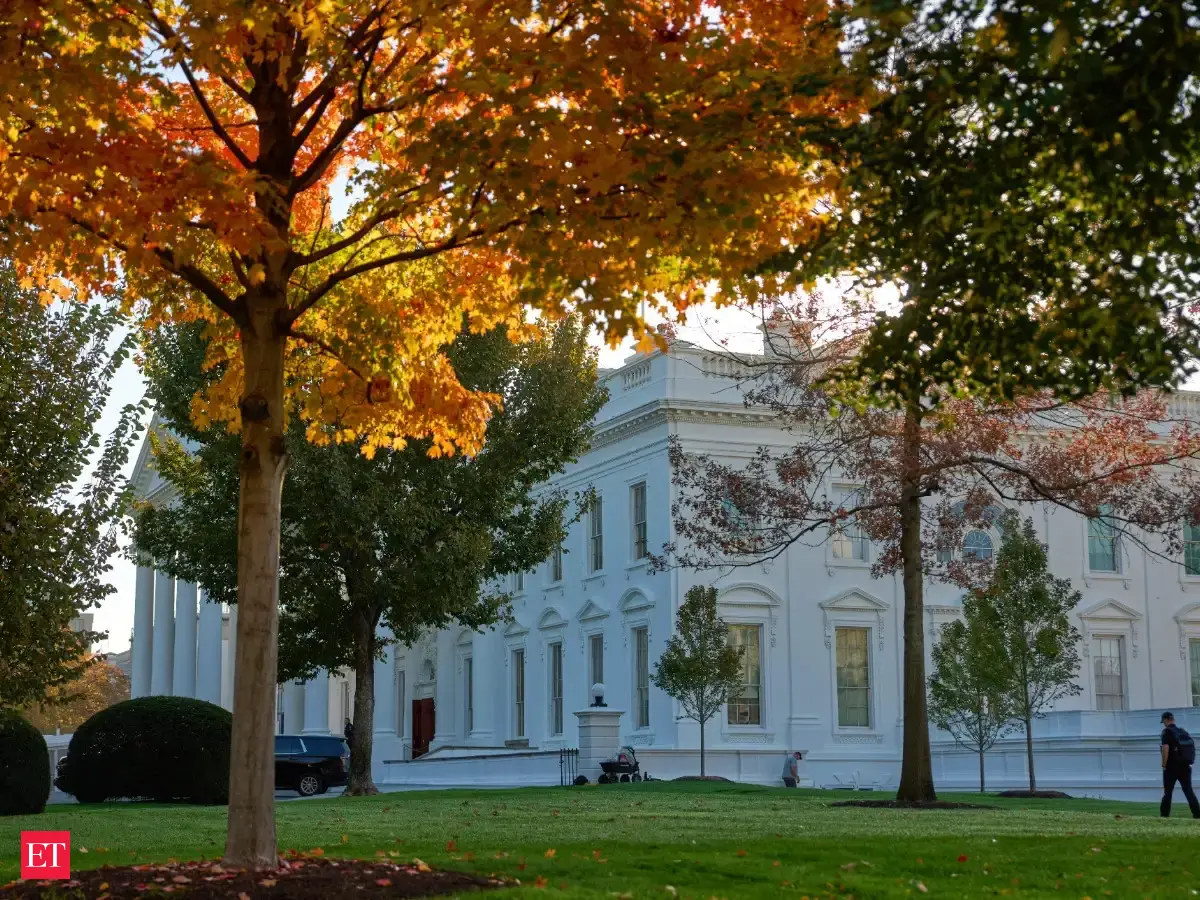
WASHINGTON — The Democratic Party has secured majority control of both chambers of the United States Congress following the 2026 midterm elections, dealing a sharp institutional blow to President Donald Trump's governing agenda and inaugurating a period of divided government in Washington. According to reporting by The Economic Times, the outcome places both the House of Representatives and the Senate under Democratic leadership, dismantling the unified Republican control that previously facilitated executive branch appointments and legislative priorities. The decisive shift hands the opposition party control of key committee chairmanships, legislative scheduling, and the constitutional purse strings, fundamentally altering the trajectory of federal policy and executive oversight for the remaining two years of the presidential term.
Key facts
What happened
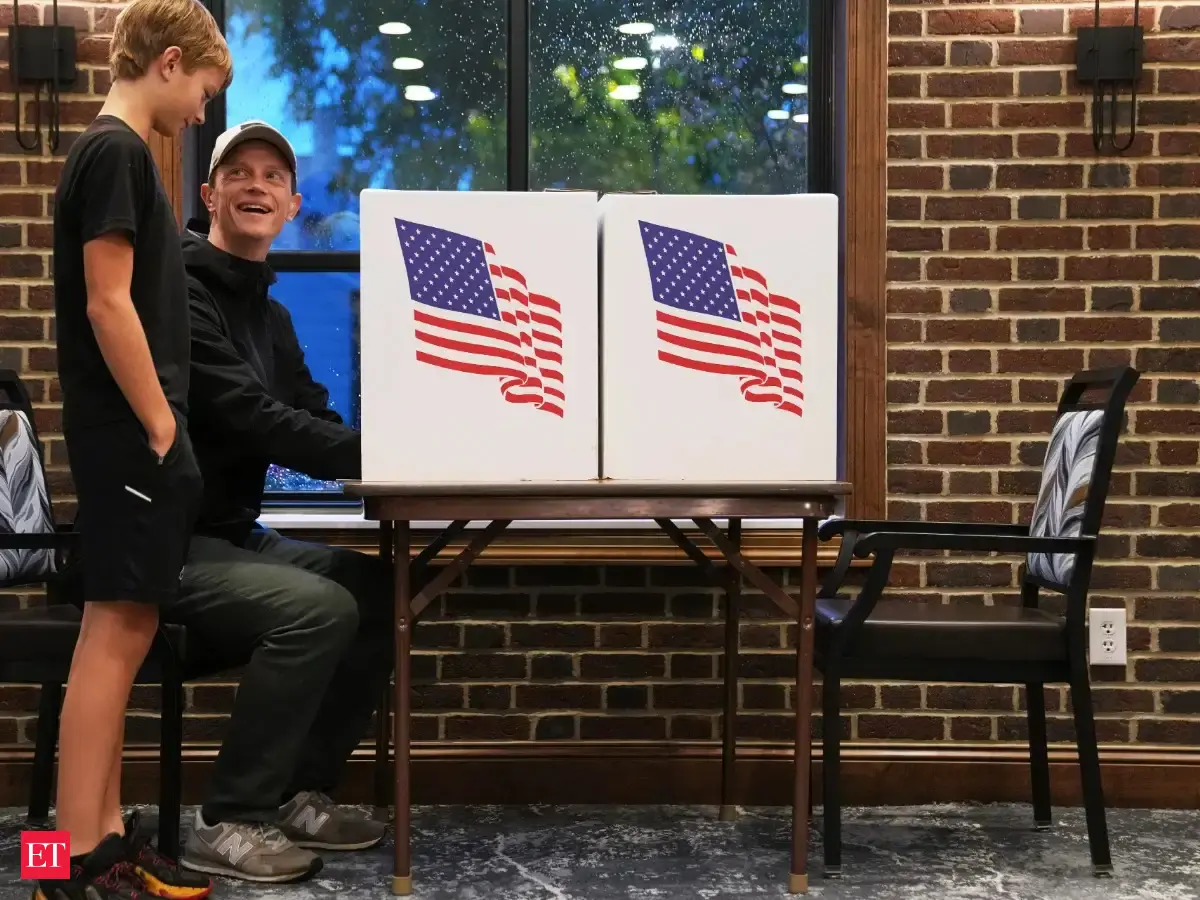
Across the country, voters cast ballots in federal races that determined all 435 voting seats in the House of Representatives and roughly one-third of the 100 seats in the Senate. As tabulations concluded, Democrats assembled the necessary seats to surpass the majority thresholds in both chambers, according to reporting by The Economic Times.
The transition of legislative authority resets the hierarchy of leadership in both wings of the Capitol. In the House of Representatives, Democrats will elect a new Speaker of the House and install committee leaders across influential panels, including the House Committee on Oversight and Accountability, the House Committee on the Judiciary, and the House Committee on Ways and Means. In the Senate, the incoming Democratic majority leader will assume control over floor scheduling, deciding which legislative proposals and executive branch nominations come up for debate and vote.
This outcome reflects a comprehensive rebuff of the sitting administration's political footprint. By flipping control of both chambers simultaneously, Democrats have created an institutional counterweight capable of halting administration-backed legislation, initiating expansive investigations into federal agencies, and utilizing budgetary reconciliation and discretionary spending bills to demand policy concessions.
Why it matters
Divided government fundamentally restructures the operational environment of the federal government, with direct ramifications for financial markets, domestic regulatory agencies, international allies, and ordinary citizens. Under Article I of the U.S. Constitution, all revenue-raising measures must originate in the House, and no federal expenditure can occur without statutory authorization enacted by Congress. With Democrats commanding both chambers, the Trump administration can no longer rely on partisan party-line votes to pass comprehensive domestic packages, tax adjustments, or statutory rollbacks.
For regulatory policy and corporate compliance, the transfer of gavels guarantees an immediate escalation in congressional oversight. Democratic committee chairs hold independent subpoena power, enabling them to compel documents and witness testimony regarding agency rulemakings, federal contracting, ethics enforcement, and executive branch decision-making. High-profile hearings are expected to examine administrative directives across departments such as the Treasury, Justice, Energy, and Homeland Security.
In the Senate, majority status carries unique constitutional duties. The Senate holds the exclusive power of "advice and consent" over federal judicial nominees and executive branch appointees under Article II, Section 2. A Democratic-led Senate effectively ends the frictionless confirmation of conservative judges to federal district courts, circuit courts of appeals, and potentially the Supreme Court. Nominees who lack bipartisan appeal or draw unified Democratic opposition can now be blocked indefinitely in committee or denied floor votes, forcing the White House to moderate its selections or leave vacancies unfilled.
On fiscal policy, Congress faces recurring statutory deadlines, including annual appropriations to fund the federal government and periodic adjustments to the statutory debt ceiling. Historically, divided control over fiscal negotiations elevates the risk of legislative stalemates, government shutdowns, and protracted stopgap continuing resolutions. Any omnibus spending package will now require extensive concessions to Democratic priorities on social spending, climate initiatives, and foreign aid.
The background
Midterm elections in American political history have consistently served as a national referendum on the sitting president, frequently resulting in substantial seat losses for the party occupying the White House. Since the post-Civil War era, midterms have repeatedly altered the architecture of presidential authority, beginning with foundational contests such as the 1866 midterms, when Radical Republicans secured veto-proof majorities that fundamentally constrained President Andrew Johnson during Reconstruction.
Throughout the twentieth and early twenty-first centuries, wave elections have frequently disrupted executive dominance. In the 1994 midterms, the "Contract with America" propelled Republicans to their first House majority in 40 years, dramatically curtailing President Bill Clinton's legislative agenda and forcing years of budget battles and entitlement compromises. Similarly, in the 2006 midterms, public dissatisfaction with the Iraq War enabled Democrats to regain both chambers during President George W. Bush’s second term, catalyzing intensive oversight of military operations and domestic surveillance programs.
The 2010 midterms produced a 63-seat net gain for House Republicans during President Barack Obama's first term, initiating six years of fiscal austerity conflicts and committee investigations. Eight years later, the 2018 midterm elections saw Democrats flip 41 House seats during President Trump’s first term in office, creating a formidable legislative roadblock that led directly to major congressional probes, budget impasses, and impeachment proceedings.
Flipping both the House and the Senate in the same midterm cycle, however, is a historically rare feat. Typically, staggered Senate election cycles—wherein only Class 1, Class 2, or Class 3 seats are contested in any given two-year cycle—insulate the upper chamber from national political swings. When a dual-chamber flip does occur, it strips the executive branch of both its legislative offensive capabilities and its defensive procedural shielding, leaving the administration reliant almost entirely on executive orders, administrative actions, and presidential vetoes.
Reaction
The immediate aftermath of a midterm power transfer reliably sparks intensive strategic realignments across both major political parties. Democratic leaders in both chambers are expected to convene party caucuses on Capitol Hill to formalize leadership slates, appoint committee leadership, and outline a unified legislative docket for the incoming Congress.
Within the Republican conference, the loss of both majorities triggers internal assessments regarding legislative strategy, campaign messaging, and executive coordination. Party leadership in both chambers must prepare for minority status, which reduces staffing budgets, alters committee seat ratios, and limits procedural maneuvers primarily to the Senate filibuster, which requires a 60-vote threshold to end debate on most ordinary legislation.
The White House and executive branch departments are expected to prepare their offices of legislative affairs and general counsel for an influx of congressional inquiries, oversight letters, and document requests. While the president maintains the constitutional veto power under Article I, Section 7 to reject bills passed by the new majorities, sustained cross-aisle cooperation will be mandatory if the administration seeks to pass must-pass authorizations, national defense appropriations, or emergency supplemental spending.
What we don't know yet
While The Economic Times established that Democrats won control of both the House and the Senate, critical operational details remain unverified in the available reporting. Most notably, the exact seat tallies and the precise margins of control in each chamber have not been specified. In both the House and the Senate, governing margins dictate legislative feasibility. A narrow, single-digit majority in the House requires near-unanimous internal party consensus to pass bills, empowering ideological factions within the Democratic caucus. Conversely, a wider margin would provide leadership with legislative flexibility.
In the Senate, the exact size of the Democratic majority is pivotal. It remains unstated whether Democrats achieved a simple operational majority of 51 seats (or a 50-seat tie broken by the vice presidency, which currently rests with Republicans) or a larger cushion. Crucially, unless Democrats hold at least 60 seats—an outcome vanishingly rare in modern politics—the legislative filibuster remains intact, meaning minority Republicans still retain procedural power to block regular bills from reaching a final vote.
Furthermore, the leadership rosters for the incoming Congress have not yet been formalized. The selection of individual committee chairs will determine the specific investigative targets, ranging from federal law enforcement practices to economic policy and foreign affairs.
What to watch
The formal transition of power will unfold across several mandatory constitutional and procedural benchmarks. In the near term, party caucuses will conduct internal organizational meetings in Washington to nominate the next Speaker of the House and elect majority and minority leaders, whips, and conference chairs for the 119th or subsequent Congress.
Attention will focus on January 3, the date mandated by the Twentieth Amendment to the Constitution for the formal convening of the new Congress. On that day, members-elect are sworn in, the House elects its Speaker on the floor, and both chambers adopt rules packages governing committee structures, subpoena authorities, and floor procedures.
Subsequent friction points will emerge during federal spending negotiations. Watch whether the outgoing Congress attempts to pass full-year appropriations during a lame-duck session or leaves government funding deadlines for the incoming Democratic majorities to manage. Early moves by incoming committee leaders to send formal preservation letters and document requests to cabinet agencies will signal the primary focus areas of congressional inquiries, providing the first clear view of how aggressively Capitol Hill intends to challenge the White House.
This account is based on reporting published by The Economic Times.
How this story was produced
This report was written by The Global Wire newsroom from reporting first published by economictimes.indiatimes.com. We verify the core facts against the original report, write our own account, and add the background and consequences a short wire item leaves out. Drafting is AI-assisted inside an editor-supervised pipeline, and every story is checked for accuracy of attribution, structure and duplication before it appears — full detail in our AI and funding disclosure.
Spotted an error? Tell us at corrections@horizonglobalnews.com and read our corrections policy or editorial standards.




Reader comments
Loading comments…