

Geoffrey Hinton Warns Congress Has One Year to Pass Federal AI Regulation
Computer scientist Geoffrey Hinton warns Congress faces a strict one-year timeline to pass AI regulations before gridlock and midterms derail legislative action, reporting by Chad Pergram shows.
By The Global Wire Newsroom · Reported from Chad Pergram
Link preview · horizonglobalnews.com
Geoffrey Hinton Warns Congress Has One Year to Pass Federal AI Regulation
Computer scientist Geoffrey Hinton warns Congress faces a strict one-year timeline to pass AI regulations before gridlock and midterms derail legislative action, reporting by Chad Pergram shows.
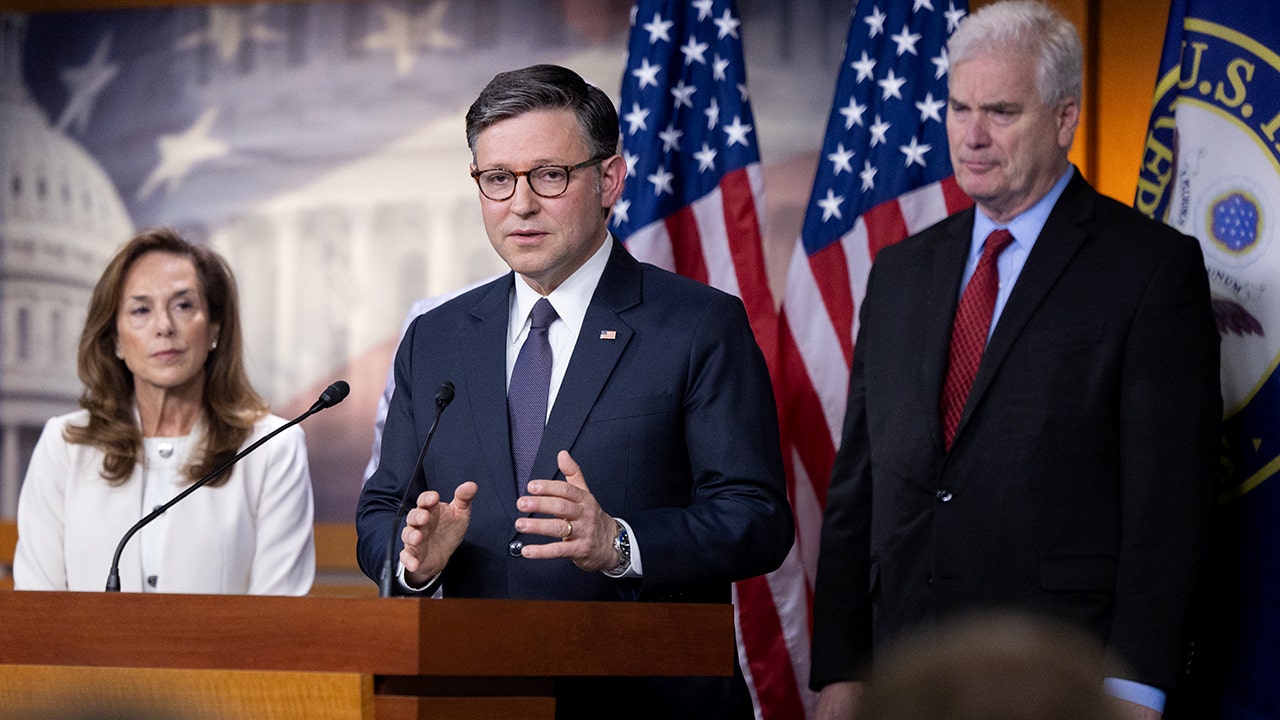
WASHINGTON — Computer scientist Geoffrey Hinton, widely recognized as one of the pioneering figures in modern artificial intelligence, has issued a direct warning to federal lawmakers, asserting that Congress has a maximum window of one year to enact national guardrails for AI technologies before advancements outpace legislative oversight. According to reporting by Capitol Hill correspondent Chad Pergram on September 21, 2026, this tight timeline faces formidable obstacles within the United States Congress, where systemic political gridlock and the looming calendar of the midterm elections threaten to stall critical policy work. As machine learning architectures rapidly evolve, the lack of timely federal action leaves the nation without unified regulatory standards for frontier models, algorithmic safety, or economic disruption.
Key facts
What happened
In a stark assessment of federal readiness, computer scientist Geoffrey Hinton conveyed that Congress has at most twelve months to establish meaningful statutory oversight for artificial intelligence technologies. As reported by Chad Pergram, Hinton's warning underscores a growing concern among leading computer scientists that the rapid velocity of machine learning research is compounding risks faster than the traditional legislative process can adapt.
Despite the explicit timeline provided by expert figures, the prospect of passing comprehensive federal AI legislation in the current session remains uncertain. Congress continues to navigate intense political friction, with narrow majorities and ideological divides complicating consensus on regulatory scope. According to Chad Pergram's reporting, the approaching midterm election season further compresses the available legislative window, as lawmakers increasingly pivot their focus toward campaigning, district events, and party priorities.
The legislative bottleneck leaves critical policy questions unaddressed. While individual committees have conducted exploratory hearings and received expert testimony, draft measures continue to face hurdles in advancing to full floor votes in either chamber. The result is a widening gap between the exponential technical progress reported by frontier labs and the procedural cadence of Capitol Hill.
Why it matters
The warning issued by Hinton carries significant implications for national governance, consumer protection, and economic stability. If Congress fails to pass comprehensive legislation within the twelve-month window identified by experts, the federal government risks losing its ability to proactively shape the development and deployment of synthetic intelligence systems. Exponential increases in computing power and algorithmic efficiency mean that future iterations of artificial intelligence models will be far more capable, autonomous, and integrated into critical infrastructure than current systems.
For the private sector, the absence of a federal legislative standard creates an increasingly fragmented regulatory landscape. In the vacuum of congressional action, individual U.S. states have begun enacting localized statutes governing algorithmic bias, deepfake dissemination, automated decision-making, and dataset transparency. This state-by-state patchwork forces technology companies to navigate conflicting legal standards across state lines, raising compliance costs for smaller startups while leaving consumers with unequal protections depending on their geographic jurisdiction.
Furthermore, delayed legislation impacts global competitiveness and normative leadership. Jurisdictions such as the European Union have already moved forward with comprehensive statutory frameworks like the EU Artificial Intelligence Act, setting global compliance standards that international firms must follow. Without clear congressional statutes, the United States risks forfeiting its ability to lead international efforts in establishing global ethical and operational norms for responsible artificial intelligence.
The background
Geoffrey Hinton, often referred to as a "godfather of AI," spent decades pioneering artificial neural networks and deep learning techniques, primarily at the University of Toronto and Google Brain. His foundational work earned him the ACM A.M. Turing Award in 2018 alongside Yoshua Bengio and Yann LeCun. In May 2023, Hinton publicly resigned from his position at Google to freely articulate his concerns regarding the existential and societal risks associated with unchecked machine intelligence, including mass job displacement, automated disinformation, and the potential loss of human control over superintelligent systems.
In response to rapid developments in generative artificial intelligence following the public release of advanced large language models in late 2022, federal officials attempted to establish administrative guidelines. In October 2023, President Joe Biden issued Executive Order 14110 on Safe, Secure, and Trustworthy Development and Use of Artificial Intelligence. The executive order directed federal agencies to establish safety benchmarks, mandated red-teaming reporting for large-scale model developers, and addressed privacy and national security risks. However, executive orders carry inherent legal limitations; they do not establish statutory law, cannot allocate new federal spending without congressional approval, and can be modified or revoked by subsequent presidential administrations.
On Capitol Hill, bipartisan efforts to craft lasting statutory regulations gained initial momentum during the 118th Congress. Senate Majority Leader Chuck Schumer convened a series of nine closed-door "AI Insight Forums" between September and December 2023, bringing together technology chief executives, civil rights leaders, labor representatives, and academic researchers to inform legislative proposals. Despite the introduction of numerous targeted bills—ranging from requirements for watermarking AI-generated media to establishing federal risk management frameworks—Congress was unable to pass comprehensive legislation due to fundamental disagreements over regulatory stringency, liability protections for software developers, and the jurisdictional authority of federal oversight bodies.
Reaction
Reaction to Hinton's warning reflects long-standing ideological divisions across Washington regarding technological regulation. Consumer protection advocates, digital ethics scholars, and labor organizations have consistently reinforced warnings regarding AI deployment, calling on Congress to enact mandatory safety audits, data privacy protections, and clear legal liabilities for commercial developers. These groups argue that voluntary commitments by technology companies are insufficient to protect the public from algorithmic harms and economic dislocation.
Conversely, technology industry associations and venture capital representatives have expressed caution regarding overly prescriptive federal mandates. Industry advocates argue that rigid statutory restrictions could stifle domestic innovation, impede economic growth, and place American technology firms at a disadvantage relative to global competitors. They advocate for flexible, risk-based frameworks that preserve technological development while addressing specific high-risk applications.
Within Congress, committee leaders tasked with technology, commerce, and national security oversight acknowledge the pressing timeline, but acknowledge the practical difficulties of passing complex legislation during an election year. Rank-and-file lawmakers remain divided on whether federal policy should focus primarily on preventing existential catastrophic risks or addressing immediate societal harms such as job loss, copyright infringement, and algorithmic discrimination.
What we don't know yet
Several critical questions remain unresolved as Congress considers its legislative path forward. First, it is currently unknown whether congressional leadership will attempt to package existing bipartisan AI bills into a single, sweeping regulatory framework or pursue incremental, specialized legislation attached to mandatory annual bills, such as the National Defense Authorization Act.
Second, lawmakers have not achieved consensus on the appropriate federal enforcement structure. It remains uncertain whether Congress will establish a dedicated federal agency to supervise advanced AI systems or delegate oversight authority to existing regulatory bodies such as the Federal Trade Commission, the Federal Communications Commission, and the Department of Commerce.
Third, the precise legal definitions and thresholds that would trigger statutory compliance for frontier AI models remain subject to debate. Gaps remain regarding how legislation would define computational boundaries, safety testing standards, and compliance exemptions for open-source AI projects.
What to watch
In the coming months, several key indicators will determine whether Congress can meet the timeline outlined by Hinton:
This report is based on original reporting by Capitol Hill correspondent Chad Pergram.
How this story was produced
This report was written by The Global Wire newsroom from reporting first published by Chad Pergram. We verify the core facts against the original report, write our own account, and add the background and consequences a short wire item leaves out. Drafting is AI-assisted inside an editor-supervised pipeline, and every story is checked for accuracy of attribution, structure and duplication before it appears — full detail in our AI and funding disclosure.
Spotted an error? Tell us at corrections@horizonglobalnews.com and read our corrections policy or editorial standards.


Reader comments
Loading comments…