

Trump Restrictions on CNN, MS NOW, and Politico Draw Warning from CPJ
CPJ Chief Executive Jodie Ginsberg warns that restricting credentials for three major news organizations reflects tactics commonly used by autocratic regimes to silence independent scrutiny.
By The Global Wire Newsroom · Reported from Amna Nawaz; Azhar Merchant
Link preview · horizonglobalnews.com
Trump Restrictions on CNN, MS NOW, and Politico Draw Warning from CPJ
CPJ Chief Executive Jodie Ginsberg warns that restricting credentials for three major news organizations reflects tactics commonly used by autocratic regimes to silence independent scrutiny.
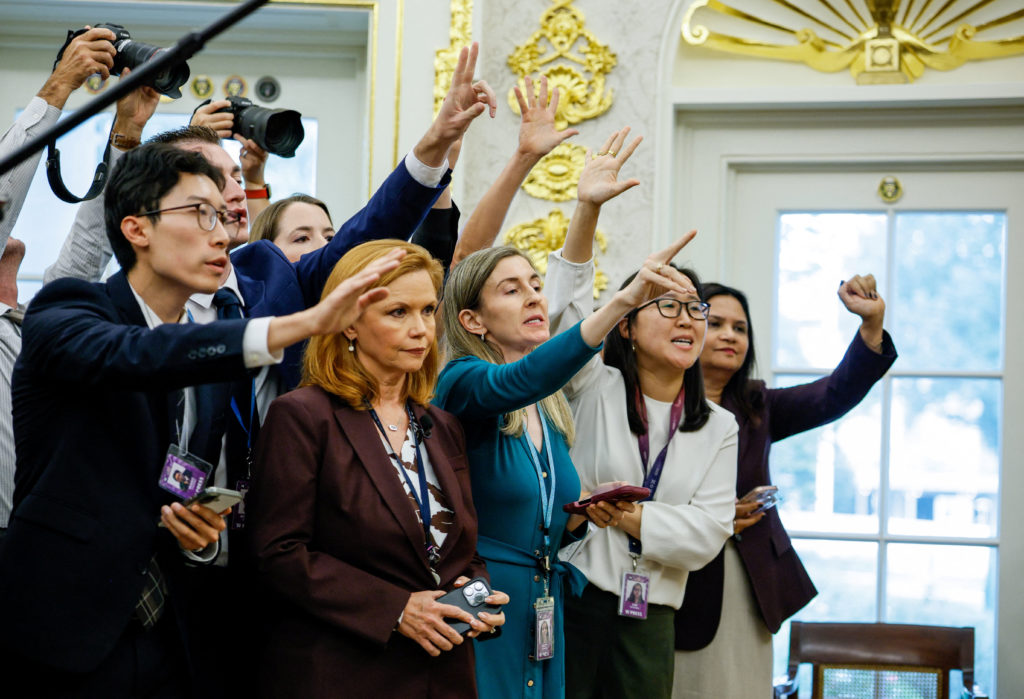
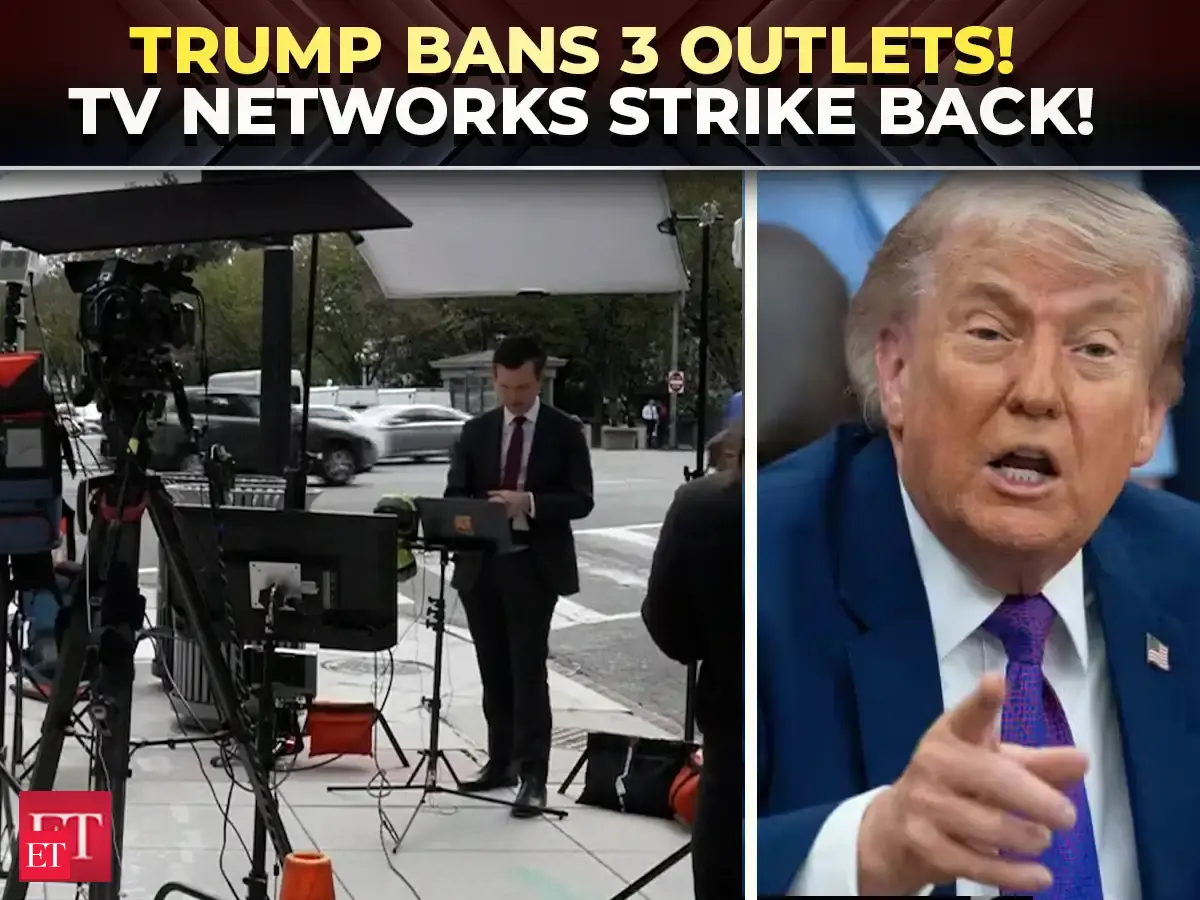
A decision by President Donald Trump to restrict access for reporters from CNN, MS NOW, and Politico to the White House has drawn strong condemnation from international media advocates, raising fresh constitutional and operational concerns over executive branch transparency. In an interview broadcast on September 21, 2026, Jodie Ginsberg, Chief Executive Officer of the Committee to Protect Journalists, warned that targeted bans on news organizations echo rhetorical and administrative strategies historically employed by autocratic rulers around the globe. The move marks a dramatic escalation in executive branch tensions with mainstream news organizations, targeting two major television networks and a prominent political news publication that regularly report on White House policy, personnel, and governance.
Key facts
What happened
The decision to exclude reporters from CNN, MS NOW, and Politico from White House press events represents a direct intervention in the customary access granted to credentialed news organizations. According to reporting by Amna Nawaz and Azhar Merchant, the restrictions effectively block journalists from these three prominent entities from participating in routine press briefings, pool coverage, and official executive events held within the White House complex.
In response to the administration's actions, Committee to Protect Journalists CEO Jodie Ginsberg addressed the development in a featured interview with Nawaz. Ginsberg analyzed the White House move not merely as a localized political dispute, but as part of an established global pattern where elected officials use state mechanisms to penalize media outlets that provide rigorous oversight.
During the exchange, Ginsberg emphasized that public attempts to delegitimize reputable news organizations and physically bar their reporters from official venues serve to erode public trust in journalism as an institution. By identifying CNN, MS NOW, and Politico for exclusion, the administration has created a distinct hierarchy of access that penalizes organizations producing critical or probing coverage, a tactic Ginsberg characterized as standard practice among authoritarian governments seeking to control public narratives.
Why it matters
The decision to ban specific news outlets from the White House carries immediate and far-reaching implications for executive accountability, legal precedent, and international diplomatic standing. At the core of democratic governance is the principle that press access to public officials should be conducted on an equal, non-discriminatory basis rather than conditioned upon favorable coverage.
Administratively, excluding CNN, MS NOW, and Politico disrupts the pooled reporting system that has governed White House coverage for decades. The press pool operates on behalf of the entire news media, sharing real-time dispatches, audio recordings, and video footage from space-constrained venues like the Oval Office or Air Force One. Restricting major media entities from participating in this system degrades the breadth and independence of information reaching the public.
Economically and operationally, targeted bans force news organizations to allocate substantial legal and financial resources to contest executive exclusions. It also creates a chilling effect across the broader press corps, raising concerns that other outlets could face similar retaliation if their reporting displeases executive leadership.
From a global perspective, actions taken by the United States presidency set a powerful benchmark for international behavior. When the American executive branch revokes press credentials based on editorial content, it severely undermines U.S. diplomatic authority when protesting press freedom violations abroad, such as the imprisonment, harassment, or censorship of journalists by autocratic regimes in Russia, Turkey, China, or Egypt.
The background
Tensions between the White House and the independent press corps have a long history in American politics, but formal attempts to revoke access passes from specific outlets have repeatedly run afoul of federal court rulings. Under established White House press practices, credentials known as hard passes are issued to qualified journalists who undergo security background checks by the United States Secret Service, enabling them to enter the White House complex daily.
During Donald Trump's first presidential term, the administration repeatedly clashed with national news outlets. In November 2018, the White House revoked the press credential of CNN Chief White House Correspondent Jim Acosta following a contentious press conference. CNN and the Reporters Committee for Freedom of the Press immediately filed a federal lawsuit in the U.S. District Court for the District of Columbia. Federal Judge Timothy J. Kelly issued a temporary restraining order requiring the White House to restore Acosta's pass, ruling that the administration had violated Acosta's Fifth Amendment rights to due process by revoking his pass without clear standards or an opportunity to appeal.
Following the Acosta ruling, the White House established formal rules of decorum for press conferences. However, in August 2019, the administration suspended the press pass of Playboy correspondent Brian Karem. Karem sued, and the U.S. Court of Appeals for the District of Columbia Circuit subsequently affirmed that executive branch officials cannot arbitrarily strip press credentials without providing explicit, pre-announced rules and formal procedural due process.
The Committee to Protect Journalists, founded in 1981 and headquartered in New York, is an independent non-profit organization that monitors press freedom violations worldwide. CPJ tracks physical threats, legal harassment, imprisonment, and state censorship against journalists globally, compiling annual reports on imprisoned reporters and issuing alerts on legislative or executive overreach.
Reaction
The public characterization of the decision by CPJ's Jodie Ginsberg highlights a mounting wave of concern among media defense organizations. Ginsberg's comments reflect widespread alarm across press advocacy groups, which consistently maintain that selective credentialing violates constitutional standards.
While official legal actions were still being evaluated at the time of initial reporting, historical precedent indicates that professional media associations will mobilize a swift response. The White House Correspondents' Association, an independent organization representing the White House press corps since 1914, traditionally resists executive attempts to dictate which outlets may cover the president. The association has historically advocated for open access and managed the pool rotation system to ensure non-partisan inclusion.
Legal organizations dedicated to press freedom, including the Reporters Committee for Freedom of the Press and the Knight First Amendment Institute at Columbia University, are anticipated to issue formal statements and offer legal support to the targeted news outlets. Furthermore, legal scholars and constitutional lawyers are expected to analyze the ban against established D.C. Circuit case law, which heavily restricts arbitrary executive credential revocations.
On Capitol Hill, congressional leaders and members of the House and Senate Judiciary Committees are likely to divide along party lines over the issue, with oversight committees potentially requesting briefings regarding White House Press Office credentialing policies.
What we don't know yet
Several critical operational and legal details regarding the administration's decision remain unconfirmed based on the initial reporting:
What to watch
In the coming days, several key developments will indicate how this constitutional and legal confrontation unfolds:
This report is based on reporting and interview coverage conducted by journalists Amna Nawaz and Azhar Merchant.
How this story was produced
This report was written by The Global Wire newsroom from reporting first published by Amna Nawaz; Azhar Merchant. We verify the core facts against the original report, write our own account, and add the background and consequences a short wire item leaves out. Drafting is AI-assisted inside an editor-supervised pipeline, and every story is checked for accuracy of attribution, structure and duplication before it appears — full detail in our AI and funding disclosure.
Spotted an error? Tell us at corrections@horizonglobalnews.com and read our corrections policy or editorial standards.

Reader comments
Loading comments…