

US Air Force to Trim Autonomous Drone Wingman Contenders in Shift Toward Prototypes
The U.S. Air Force plans to narrow its field of Collaborative Combat Aircraft developers from nine to six next year as the program transitions to prototype testing.
By The Global Wire Newsroom · Reported from Jijo Malayil
Link preview · horizonglobalnews.com
US Air Force to Trim Autonomous Drone Wingman Contenders in Shift Toward Prototypes
The U.S. Air Force plans to narrow its field of Collaborative Combat Aircraft developers from nine to six next year as the program transitions to prototype testing.
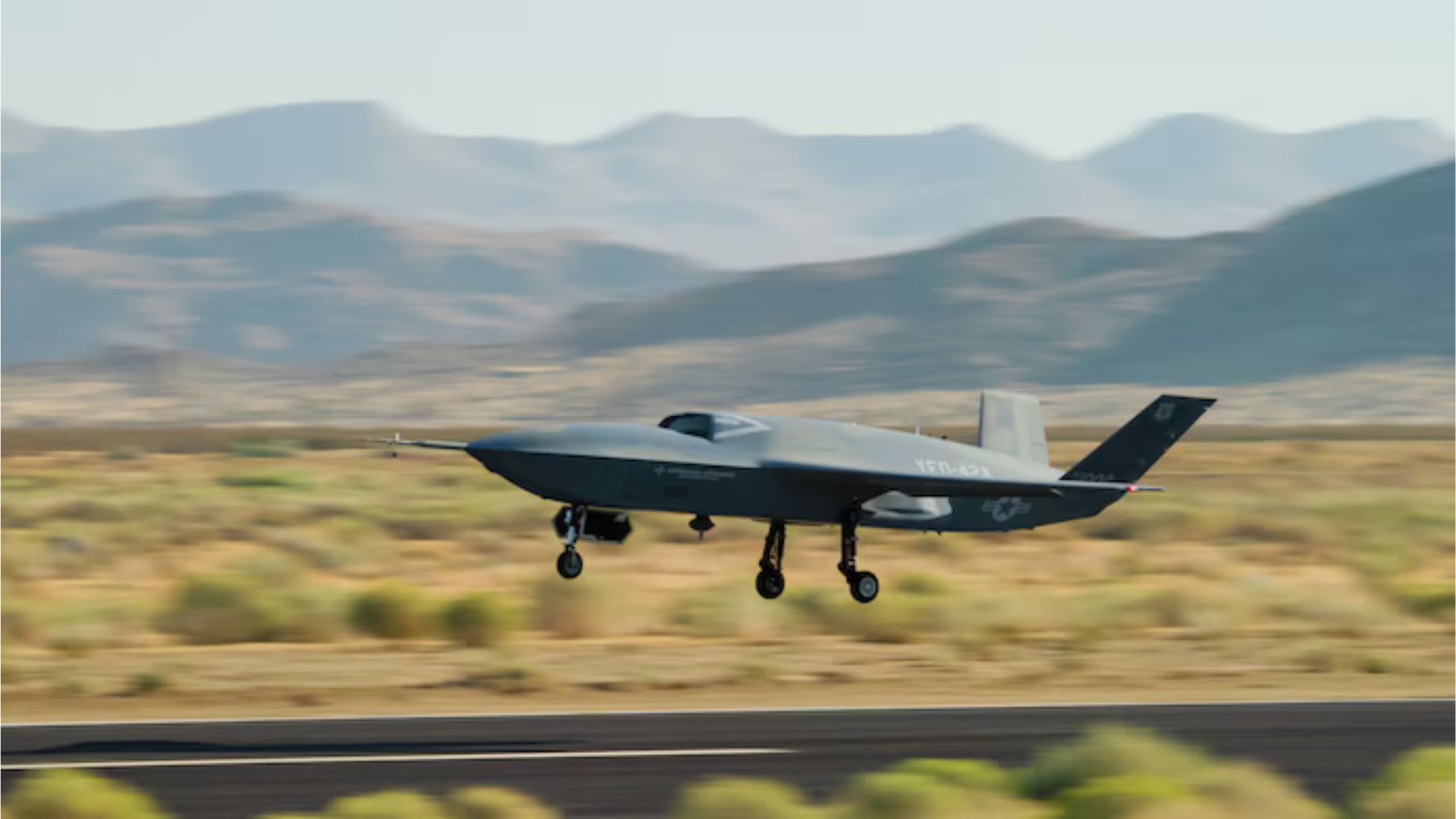
The United States Air Force is accelerating its efforts to integrate artificial intelligence and uncrewed platforms into front-line tactical aviation, moving closer to operationalizing autonomous wingmen. In a key milestone for military aerospace procurement, the service plans to pare down its current roster of nine defense contractors to six next year as part of its Collaborative Combat Aircraft program. The initiative, designed to pair traditional piloted fighter jets with highly capable, lower-cost robotic aircraft, is rapidly transitioning from theoretical design frameworks and digital modeling toward tangible prototype production.
Narrowing the Field to Drive Innovation
The planned reduction from nine contenders to six represents a critical juncture in the acquisition lifecycle of the Collaborative Combat Aircraft (CCA) initiative, according to reporting by Jijo Malayil. By narrowing the field, military leadership aims to focus development funding and oversight on the most promising design concepts while maintaining a competitive environment among defense manufacturers.
The strategy reflects a broader shift in how the defense department approaches advanced technological acquisitions. Rather than selecting a single contractor early in the development cycle, the Air Force is employing an incremental downselect process. This structure allows defense officials to evaluate competing airframe designs, autonomous control software systems, and manufacturing methodologies under rigorous comparative standards. The upcoming phase will see the remaining six developers push their concepts into physical prototype stages, bridging the gap between computer-assisted engineering and real-world flight performance.
Rethinking Tactical Aviation Architecture
At the core of the drone wingman program is the concept of crewed-unmanned teaming, a tactical doctrine designed to overhaul how air power is projected in heavily defended airspaces. Under this operational model, human pilots flying advanced crewed fighters will act as flight leads or command hubs for small formations of uncrewed, highly autonomous drone wingmen.
These secondary aircraft are engineered to perform a wide variety of high-threat missions that traditionally put human crews at extreme risk. Equipped with specialized modular payloads, autonomous wingmen can serve as forward-deployed sensor nodes, extending the detection range and situational awareness of the primary aircraft. They are also being designed to carry additional air-to-air or air-to-surface munitions, execute electronic warfare strikes to disrupt enemy radar networks, or operate as decoys to draw defensive fire away from crewed formations.
By distributing sensor systems, strike capabilities, and defensive countermeasures across multiple uncrewed platforms, military planners hope to significantly complicate an adversary’s targeting calculations, turning individual combat aircraft into resilient networks of aerial power.
Modern Warfare and the Need for Scalability
The drive to field autonomous wingmen stems from evolving global security challenges and the increasing complexity of modern air defense systems. Advanced anti-access and area-denial networks have rendered contested airspace far more dangerous, while the financial cost of producing state-of-the-art piloted stealth fighters has climbed significantly.
To address this reality, air force strategists are placing heavy emphasis on the concept of affordable mass. Modern crewed stealth fighters represent substantial financial investments and require years of flight training for human operators. Losing even a single platform carries high economic and operational consequences. Collaborative Combat Aircraft, by contrast, are designed to be produced at a fraction of the cost, making them attritable—meaning they can be committed to dangerous combat environments where risking a human pilot or a high-cost crewed jet would be prohibitive.
Furthermore, building mass through autonomous platforms allows armed forces to rapidly expand their operational fleet size without encountering the traditional bottleneck of pilot recruitment and lengthy training pipelines. The capacity to produce uncrewed airframes at scale provides a vital mechanism to sustain long-term force projection.
Bridging Software and Hardware Requirements
As the program advances toward physical prototyping, participating aerospace companies face complex engineering and computational challenges. Unlike traditional military aircraft acquisition, where mechanical engineering and airframe aerodynamics are the primary focal points, the success of the autonomous wingman concept relies equally on software development.
The artificial intelligence powering these aircraft must be capable of operating safely and effectively in dynamic, communication-degraded environments. In combat scenarios where enemy forces deploy heavy electronic jamming, autonomous wingmen must retain sufficient onboard processing capability to make real-time tactical decisions, execute pre-programmed mission directives, and maintain flight safety without constant command inputs from a human pilot or ground station.
Simultaneously, manufacturing processes must support rapid, cost-effective assembly. The Air Force has prioritized open-architecture design principles, enabling sensors, software algorithms, and hardware components to be upgraded modularly over time. The transition from nine competitors to six will serve as a key evaluation of which manufacturers can deliver hardware designs that balance operational performance with high-rate, affordable production.
The Horizon for Autonomous Flight Trials
The scheduled downselect next year marks the beginning of an intensive phase of physical flight testing and evaluation. The selected six contractors will be tasked with turning digital blueprints into fully functional demonstrator aircraft capable of validating basic airworthiness, flight envelope characteristics, and autonomous control interfaces.
Subsequent stages of development will likely require these prototype aircraft to demonstrate seamless interoperability with existing air combat systems and perform simulated tactical missions alongside piloted jets. As flight trials progress, the Air Force will further evaluate the field to eventually select winning designs for full-scale production and operational deployment.
The progression toward physical prototypes underscores a transformative period in military aviation, marking a definitive move away from sole reliance on human-piloted formations toward integrated fleets of crewed and autonomous combat aircraft.
This article is based on reporting originally published by Jijo Malayil.
How this story was produced
This report was written by The Global Wire newsroom from reporting first published by Jijo Malayil. We verify the core facts against the original report, write our own account, and add the background and consequences a short wire item leaves out. Drafting is AI-assisted inside an editor-supervised pipeline, and every story is checked for accuracy of attribution, structure and duplication before it appears — full detail in our AI and funding disclosure.
Spotted an error? Tell us at corrections@horizonglobalnews.com and read our corrections policy or editorial standards.
Reader comments
Loading comments…