

Supreme Court Halts Student ID Use for New Hampshire Voters Ahead of Midterms
A high court ruling reinstates a state restriction signed by Governor Kelly Ayotte, eliminating college credentials as valid identification at polling places.
By The Global Wire Newsroom · Reported from economictimes.indiatimes.com
Link preview · horizonglobalnews.com
Supreme Court Halts Student ID Use for New Hampshire Voters Ahead of Midterms
A high court ruling reinstates a state restriction signed by Governor Kelly Ayotte, eliminating college credentials as valid identification at polling places.
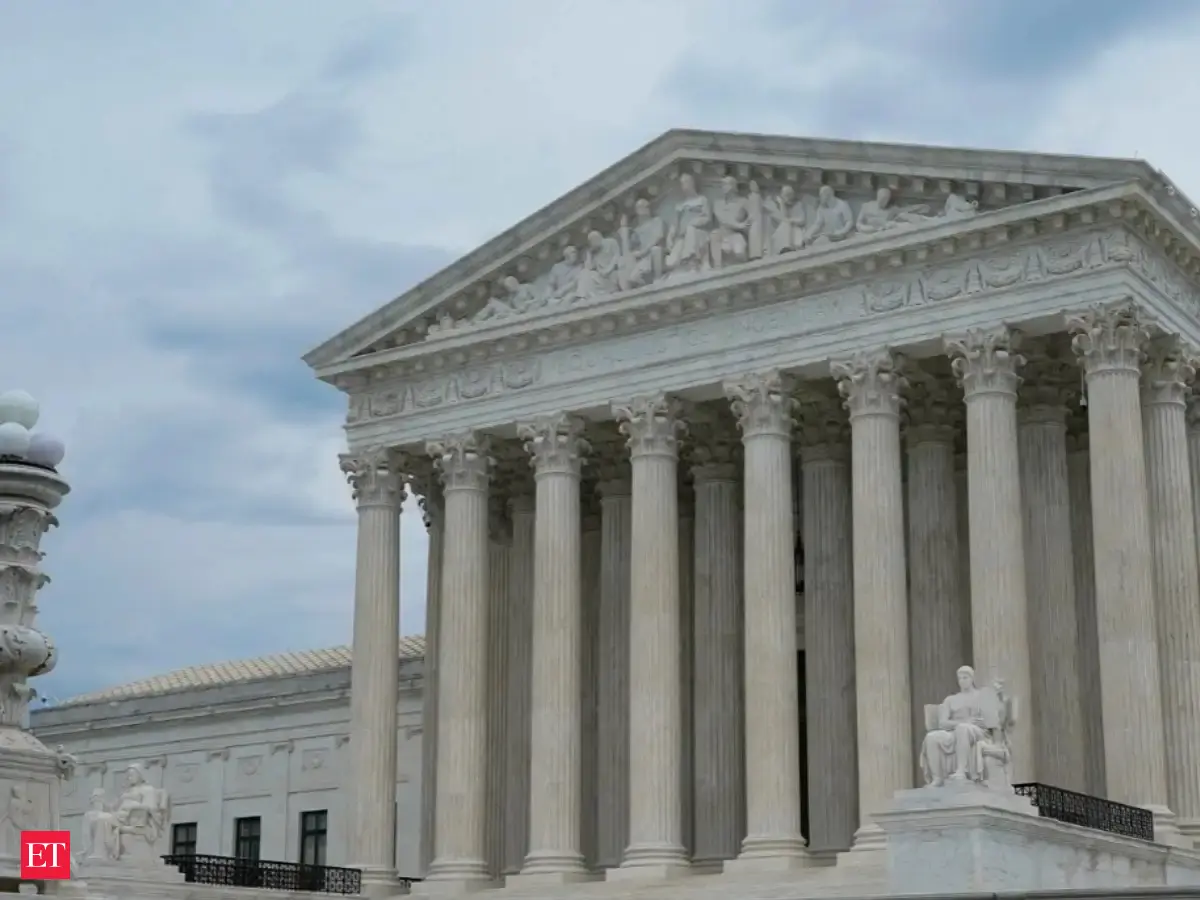
WASHINGTON — The Supreme Court has ruled that student identification cards will not be accepted as valid voter identification in New Hampshire, clearing the way for the state to enforce a statute signed by Governor Kelly Ayotte that disqualifies campus credentials just weeks before midterm election balloting begins. The emergency order overturns a previous determination by a federal district judge who had permitted the use of student credentials at polling stations while legal challenges progressed through the federal judiciary. The intervention by the nation's highest court alters the identification standards for thousands of collegiate voters across the Granite State as municipal election clerks finalize precinct operations for the upcoming vote.
Key facts
What happened
According to reporting by The Economic Times, the legal conflict culminated when the Supreme Court addressed the dispute over New Hampshire's revised election verification criteria. The statutory change at the center of the dispute originated in legislation enacted by Governor Kelly Ayotte, which formally removed collegiate identification cards from the statutory inventory of government-approved voter verification materials.
Following the enactment of the measure, civil rights organizations and voting rights advocates initiated litigation in federal court, arguing that the exclusion of student credentials imposed an unconstitutional burden on young voters and ran counter to federal protections. A federal district judge initially found merit in the challengers' arguments, issuing an order that recognized student identification cards as acceptable credentials to prevent disenfranchisement during the upcoming election cycle.
State officials appealed the lower court's injunction, requesting emergency intervention from higher federal courts to allow the state law to take effect as written. The legal dispute moved rapidly onto the Supreme Court's emergency docket. In its ruling, the Supreme Court stayed the lower court's order, effectively permitting New Hampshire election officials to enforce the restriction against student IDs immediately.
As a consequence of the order, local election moderators, supervisors of the checklist, and ballot clerks across New Hampshire's 234 towns and cities must enforce the prohibition on student credentials when checking in registered voters and processing same-day voter registrations at polling stations.
Why it matters
The immediate consequence of the Supreme Court's order falls directly on the state's significant collegiate electorate. New Hampshire is home to major higher education institutions, including the University of New Hampshire in Durham, Dartmouth College in Hanover, Keene State College, Plymouth State University, and numerous private colleges. In several legislative districts and municipal wards, students constitute a decisive share of the voting-age population. Removing student cards from the approved identification list creates an immediate administrative obstacle for students who do not hold a New Hampshire driver's license or a non-driver state identification card.
Beyond administrative hurdles, the ruling carries clear political consequences. College-heavy wards in New Hampshire historically exhibit distinct voting patterns, frequently leaning toward Democratic candidates in both state legislative races and federal contests. In closely contested general elections—where state legislative seats are regularly decided by margins of fewer than a dozen votes—any procedural barrier that depresses student turnout or introduces friction at the check-in table can shift outcomes.
The decision also intersects with broader national debates concerning the "Purcell principle," a legal doctrine stemming from the 2006 Supreme Court ruling in Purcell v. Gonzalez. The doctrine cautions federal judges against changing state election rules close to an election to prevent voter confusion and logistical disarray. By intervening to vacate the district court's injunction weeks before the election, the Supreme Court reaffirmed the principle that federal trial courts face high thresholds when attempting to alter state-enacted voting statutes in the final weeks of a campaign.
The background
For more than two decades, New Hampshire has served as a primary legal battleground over college student ballot access. Because the state allows same-day voter registration and does not levy a broad-based personal income tax or general sales tax, state lawmakers have long scrutinized the legal residency status of temporary or transitional populations, particularly out-of-state college students.
In 1979, the U.S. Supreme Court affirmed in Symm v. United States that college students have the constitutional right under the Twenty-Sixth Amendment to register and vote in the communities where they attend school, provided they consider that community their legal domicile during their studies. Despite this precedent, state legislatures across the country have steadily adjusted documentary verification laws to regulate student participation.
New Hampshire previously permitted the use of student identification cards issued by accredited post-secondary institutions located within the state under its photo voter identification framework, which took effect in 2012. Under that system, voters presenting an approved student ID could verify their identity, while individuals lacking acceptable identification were permitted to vote by executing a challenged voter affidavit and having their photograph taken by an election official.
Over subsequent legislative sessions, lawmakers introduced a succession of tightening measures. Senate Bill 3 in 2017 revised domicile verification requirements for voters registering within thirty days of an election. In 2018, House Bill 1264 modified statutory definitions of residency, establishing that individuals who register to vote in New Hampshire are legally classified as residents for motor vehicle licensing purposes, requiring them to transfer their driver's licenses and vehicle registrations within 60 days.
More recently, legislative efforts advanced to eliminate affidavits and phase out student IDs entirely. The measure signed by Governor Kelly Ayotte represented the latest iteration of this legislative campaign, seeking to standardize photo identification around state-issued licenses, non-driver IDs, U.S. passports, military identification, and select federal documentation. While proponents characterize these laws as essential safeguards designed to enhance public confidence and ensure ballot security, voting access advocates argue they disproportionately target young citizens who may not own vehicles or possess costly alternative government documents.
Similar legal battles have unfolded nationally. States including Idaho, Ohio, and Wisconsin have either restricted or heavily conditioned the use of student IDs in recent years, prompting federal lawsuits grounded in the Equal Protection Clause of the Fourteenth Amendment and the Twenty-Sixth Amendment's prohibition on age-based voting discrimination.
Reaction
Following the decision, state election administrators and local municipal clerks face the immediate task of updating training materials for poll workers before the polls open. While the wire summaries do not include direct quotes from the litigation parties, state officials who supported the statute have consistently defended photographic identification measures in court filings, asserting that uniform standards prevent voter fraud and simplify the verification duties of local volunteers.
Voting rights organizations, civil liberties advocates, and nonpartisan student civic engagement networks are expected to issue emergency voter education advisories across campuses. In comparable post-ruling scenarios, student governments and civic groups typically mobilize resources to assist students in obtaining approved alternative documentation, such as U.S. passports, or coordinating transportation to local Department of Motor Vehicles offices for state-issued non-driver identification cards.
Legal scholars and advocacy groups are also expected to critique the Supreme Court's intervention via its emergency docket, raising procedural concerns about significant election alterations being sanctioned through unsigned orders without full oral arguments or comprehensive written opinions.
What we don't know yet
The full administrative scope of the Supreme Court's order leaves several critical operational questions unanswered. The initial reporting does not specify whether the Supreme Court accompanied its order with a written majority rationale or whether any justices filed dissenting opinions. The precise breakdown of the justices' votes remains unstated in the initial summaries.
Furthermore, the summaries do not clarify what fallback mechanisms, if any, will remain available on Election Day for students who arrive at precincts unaware of the high court's decision. It is currently unverified whether voters lacking alternative state photo identification will be provided provisional ballots, permitted to complete identity verification affidavits, or turned away entirely without recourse. The exact interplay between the disqualified student ID provision and New Hampshire's same-day voter registration infrastructure remains an operational unknown for poll workers on the ground.
Finally, the reporting does not disclose the timetable for the underlying merits lawsuit. Because emergency orders address temporary injunctive relief rather than final statutory validity, it remains unclear when the federal district court or the First Circuit Court of Appeals will conduct full hearings on the constitutional merits of Governor Ayotte's statute.
What to watch
In the immediate term, observers must monitor directives issued by the New Hampshire Secretary of State's office and the New Hampshire Department of Justice's Election Law Unit. Official guidance sent to town moderators will dictate exactly how poll greeters and checklist supervisors treat student voters on Election Day.
On the campuses of institutions like the University of New Hampshire, Dartmouth, and state universities, watch for logistical efforts by student unions and campus administrations to inform students of alternative acceptable identification. Observers will also track whether wait times at local polling places in university towns increase due to confusion over the updated document rules.
Following Election Day, voter turnout metrics in student-dense wards will provide empirical data on the policy's statistical impact compared to prior midterm cycles. Over the longer horizon, attention will return to the federal district court as the constitutional challenge against the exclusion of student IDs resumes through ordinary legal channels.
This report incorporates details originally reported by economictimes.indiatimes.com.
How this story was produced
This report was written by The Global Wire newsroom from reporting first published by economictimes.indiatimes.com. We verify the core facts against the original report, write our own account, and add the background and consequences a short wire item leaves out. Drafting is AI-assisted inside an editor-supervised pipeline, and every story is checked for accuracy of attribution, structure and duplication before it appears — full detail in our AI and funding disclosure.
Spotted an error? Tell us at corrections@horizonglobalnews.com and read our corrections policy or editorial standards.





Reader comments
Loading comments…