

Cyprus Allocates €59.4 Million Tourism Budget as Inbound Arrivals Decline
Deputy Tourism Minister Kostas Koumis outlines spending priorities to counter a 5.6 percent dip in visitors and insulate the island from regional volatility.
By The Global Wire Newsroom · Reported from Kyriacos Nicolaou
Link preview · horizonglobalnews.com
Cyprus Allocates €59.4 Million Tourism Budget as Inbound Arrivals Decline
Deputy Tourism Minister Kostas Koumis outlines spending priorities to counter a 5.6 percent dip in visitors and insulate the island from regional volatility.
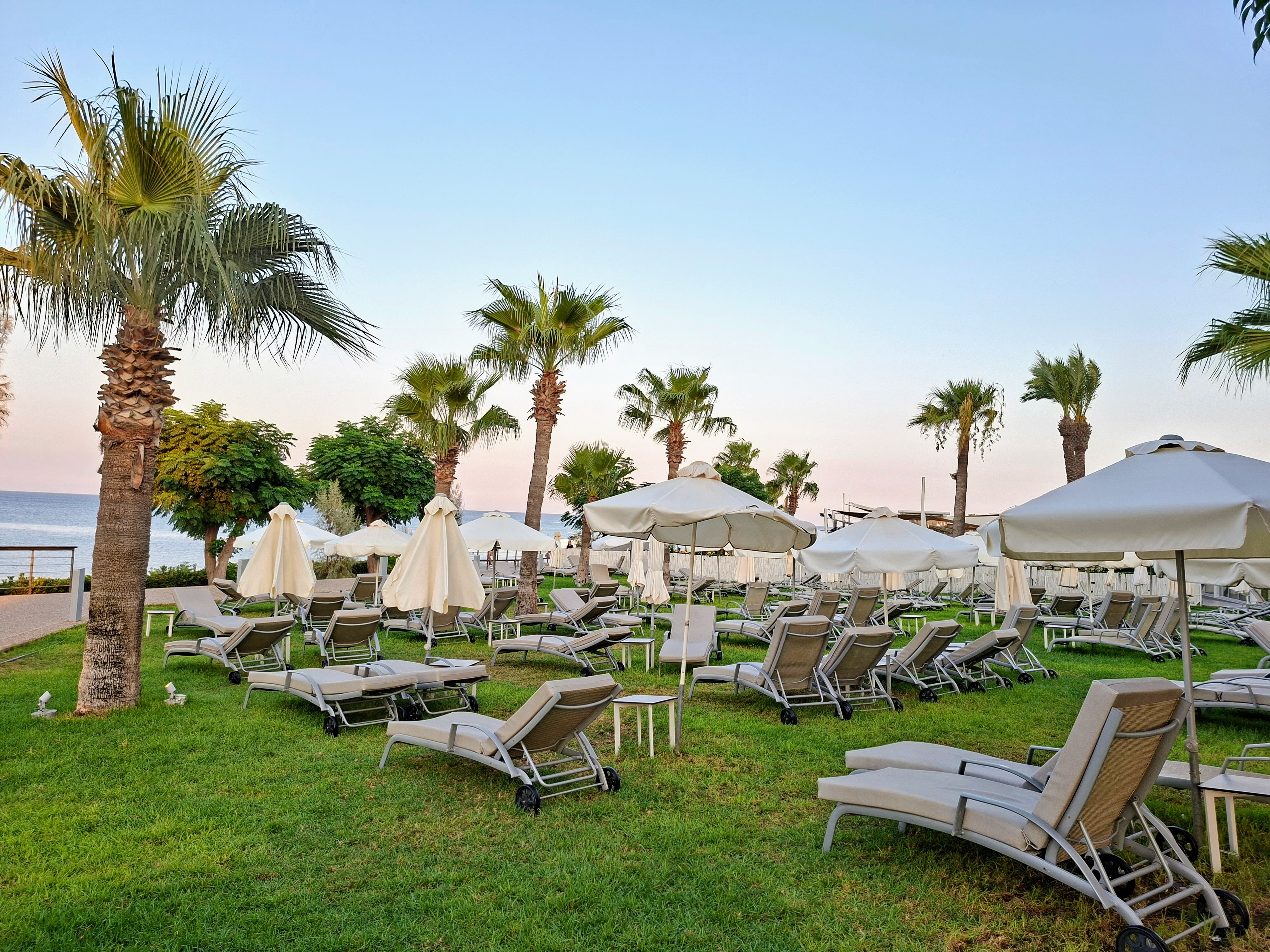
NICOSIA — The Republic of Cyprus will direct a substantial portion of its proposed €59.4 million tourism budget toward overseas marketing campaigns and diversifying local travel experiences, as the Mediterranean island seeks to steady its flagship industry following a 5.6 percent decline in tourist arrivals over the first nine months of the year. Presenting the funding blueprint to lawmakers on Friday, Deputy Minister of Tourism Kostas Koumis cautioned that positive performance in international travel cannot be taken for granted amid persistent geopolitical instability and macroeconomic headwinds across core European origin markets. While the contraction represents an improvement over steeper losses recorded earlier in the year, tourism authorities are retooling their strategy to sustain long-term demand and reduce the island's vulnerability to external shocks.
Key facts
What happened
Deputy Minister Kostas Koumis formally delivered the tourism authority's financial framework for the upcoming fiscal cycle, setting expenditure at €59.4 million, according to reporting by journalist Kyriacos Nicolaou. Addressing parliamentary overseers, Koumis detailed how state funds would be mobilized to revitalize an industry navigating a complex operating environment. The central pillar of the strategy involves deploying a major share of the total capital toward aggressive promotional activities abroad alongside initiatives intended to enrich domestic tourism offerings beyond conventional summer beach holidays.
During his presentation, Koumis revealed that inbound passenger numbers across the initial three quarters dropped by 5.6 percent compared with the equivalent nine-month stretch of the prior year. However, the minister underscored that this contraction reflects a notable stabilization relative to the steeper slide experienced during the spring and early summer months. The late-season rebound allowed Cyprus to recoup significant ground, though aggregate volume remained depressed against historical comparative periods.
Koumis emphasized that the government must abandon assumptions that Cyprus will automatically capture Mediterranean travel flows. Instead, the ministry plans to use its allocated financial reserves to actively stimulate foreign bookings, negotiate airline connectivity, and finance structural enhancements that encourage holidaymakers to spend across rural, cultural, and sports sectors rather than solely within coastal enclaves.
Why it matters
For the Cypriot economy, shifts in tourist footfall carry profound macroeconomic implications. Tourism and its associated supply chains—including hospitality, food service, domestic transport, and retail—typically contribute between 15 and 20 percent of the island's gross domestic product, while employing tens of thousands of workers across coastal districts such as Famagusta, Paphos, Limassol, and Larnaca. When visitor volumes contract by more than five percent, the fiscal ripple effects touch municipal revenues, bank asset quality in commercial real estate, and government tax receipts.
A sustained reduction in holidaymakers risks eroding profit margins for local hotel operators already contending with elevated electricity costs, high food inflation, and upward pressure on wages. If inbound visitor demand weakens, hoteliers often resort to late-season price discounting, which preserves nominal occupancy rates but compresses yields per available room. Furthermore, the shortfall in summer revenue complicates winter servicing of debt facilities acquired during post-pandemic refurbishments.
Beyond domestic business margins, the state's decision to deploy significant public capital into promotional subsidies highlights the high cost of maintaining national visibility in an increasingly saturated Mediterranean market. Competitors including Greece, Turkey, Spain, and Egypt are competing aggressively for the same pool of price-conscious European travelers. By assigning public money to product enrichment, Cypriot authorities are attempting to shift the country away from low-margin package tourism toward higher-spending niches such as culinary routes, agritourism, wellness retreats, and athletic training camps, thereby building economic resilience against regional downturns.
The background
Cyprus has spent much of the past decade managing volatility across its inbound feeder markets. Historically, the island maintained an intense reliance on two dominant source countries: the United Kingdom and the Russian Federation. In peak years prior to 2020, British holidaymakers accounted for roughly a third of all international arrivals, while Russian visitors comprised upwards of 20 percent of total traffic, particularly in coastal centers like Ayia Napa and Limassol.
That balance was disrupted following the February 2022 Russian invasion of Ukraine. In accordance with European Union sanctions, Cyprus shuttered its airspace to commercial Russian flights, eliminating hundreds of thousands of traditional leisure travelers virtually overnight. To replace that volume, the Deputy Ministry of Tourism—an executive agency established in 2019 to replace the legacy Cyprus Tourism Organisation—embarked on an aggressive diversification initiative. The ministry targeted expansion across secondary European territories, securing expanded flight routes from Poland, Germany, France, Scandinavia, and neighboring Israel.
However, regional security crises have created new complications. Proximity to the Middle East has periodically depressed overall regional booking confidence, while conflicts in the Levant disrupted one of the island's fastest-growing inbound markets, Israel, which had emerged as the second-largest feeder country behind the United Kingdom. Coupled with prolonged economic stagnation and reduced consumer discretionary spending in major Western European economies, Cyprus faced an uphill battle entering the current travel season.
The Deputy Ministry operates under the direct oversight of the Cypriot Council of Ministers and must submit its annual allocations to the House of Representatives for approval. The proposed €59.4 million envelope reflects the state's ongoing commitment to buffer the hospitality ecosystem through state-backed promotional partnerships with overseas tour operators, cooperative airline marketing pacts, and domestic upgrade grants.
Reaction
While complete parliamentary debate transcripts have not yet been released following Koumis's briefing, tourism industry stakeholders and legislative representatives are preparing to scrutinize the allocation of the €59.4 million budget. Hoteliers represented by bodies such as the Cyprus Hotel Association (PASYXE) and the Association of Cyprus Tourist Enterprises (STEK) routinely press the administration for broader electricity tariff subsidies, labor market relaxations to address structural staff shortages, and stronger winter flight incentives.
Lawmakers sitting on the parliamentary financial and trade committees are expected to examine whether the ministry's focus on overseas marketing delivers a measurable return on investment, particularly given the 5.6 percent shortfall in arrivals. Opposition deputies frequently raise concerns regarding the geographic concentration of state support, arguing that mountain communities and rural wine villages receive far less tangible funding than coastal resorts.
Consumer advocacy groups and retail merchant associations have similarly urged the ministry to ensure that "product enrichment" translates into direct benefits for local shopkeepers and independent restaurateurs, rather than remaining confined to major all-inclusive hotel compounds that limit visitor spending in municipal centers.
What we don't know yet
The briefing provided broad figures on budget totals and net arrivals, but several critical dimensions of the tourism sector's fiscal performance remain undisclosed. Officials did not specify the total financial revenue generated during the nine-month period, leaving it unclear whether higher average daily expenditure per visitor managed to offset the 5.6 percent numerical decline in passenger volume.
Furthermore, the exact breakdown of how the €59.4 million will be split between digital promotion, international trade fairs, airline incentives, and capital grants for product enrichment was not fully delineated in the preliminary disclosures. Details regarding which specific origin markets experienced the steepest drops—and which, if any, posted compensatory growth—also remain absent from the top-line summary.
Finally, the government has not clarified the extent to which autumn and winter flight schedules will be preserved by European carriers. Because seasonal flight cancellations often undermine efforts to lengthen the tourism calendar beyond October, the exact viability of the ministry's shoulder-season enrichment strategy cannot be fully evaluated until scheduled winter airline capacity data is released.
What to watch
The primary milestone ahead is the formal vote by the Cyprus House of Representatives on the state budget, where lawmakers will debate amendments to the Deputy Ministry of Tourism's funding proposals before the close of the legislative session. Observers will monitor whether parliamentary factions attempt to attach riders or reallocate funds toward specific regional development projects.
In the coming weeks, the Statistical Service of Cyprus (Cystat) is scheduled to publish comprehensive quarterly revenue data and detailed country-of-origin matrices for the full summer season. Those metrics will show whether per-capita tourist spending held steady despite the aggregate passenger drop, offering a clearer picture of hotel profitability.
Industry analysts will also watch airline scheduling announcements for the spring and summer of the coming year. Critical indicators will include whether low-cost carriers such as Ryanair, Wizz Air, and easyJet expand route frequencies into Larnaca and Paphos international airports, or if aircraft delivery delays and rising aviation emissions fees lead operators to redeploy capacity elsewhere in Europe.
This report is based on original reporting by Kyriacos Nicolaou.
How this story was produced
This report was written by The Global Wire newsroom from reporting first published by Kyriacos Nicolaou. We verify the core facts against the original report, write our own account, and add the background and consequences a short wire item leaves out. Drafting is AI-assisted inside an editor-supervised pipeline, and every story is checked for accuracy of attribution, structure and duplication before it appears — full detail in our AI and funding disclosure.
Spotted an error? Tell us at corrections@horizonglobalnews.com and read our corrections policy or editorial standards.






Reader comments
Loading comments…