

Prabowo Demands National Disaster Masterplan as Indonesia Faces Concurrent Crises
Indonesian President Prabowo Subianto has ordered a comprehensive emergency framework as the archipelago struggles with a fatal earthquake, volcanic unrest, and wildfires.
By The Global Wire Newsroom · Reported from CNA
Link preview · horizonglobalnews.com
Prabowo Demands National Disaster Masterplan as Indonesia Faces Concurrent Crises
Indonesian President Prabowo Subianto has ordered a comprehensive emergency framework as the archipelago struggles with a fatal earthquake, volcanic unrest, and wildfires.
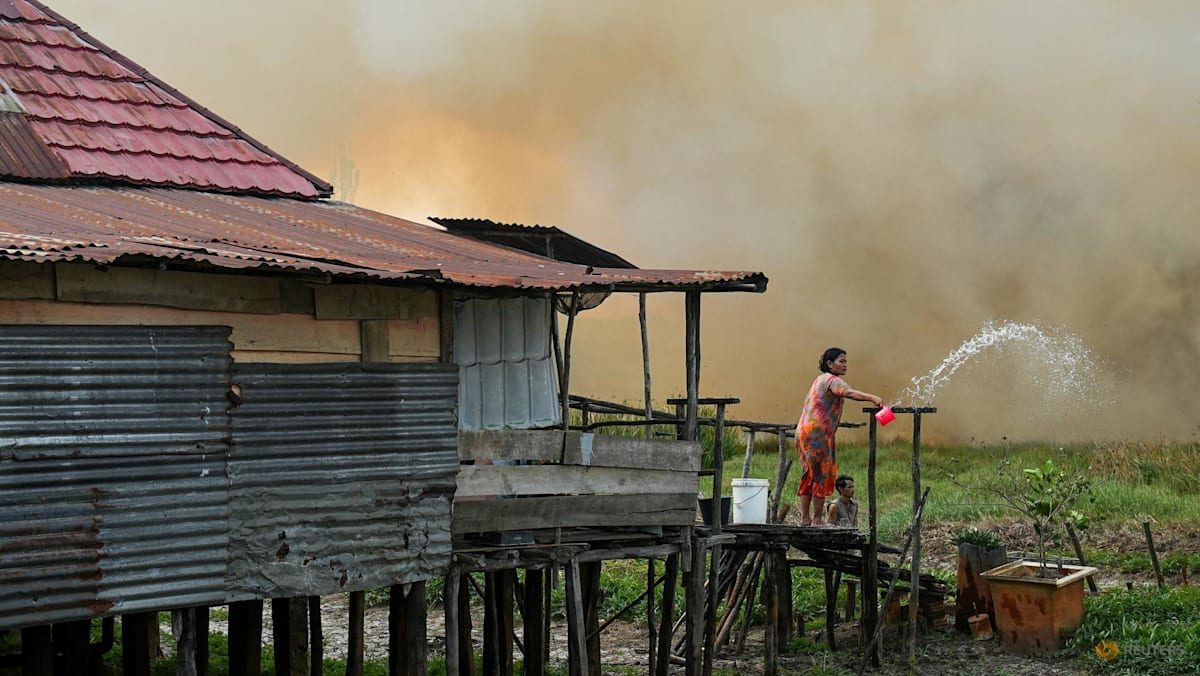
JAKARTA — Indonesian President Prabowo Subianto has instructed government ministers and national emergency managers to formulate a new disaster mitigation masterplan as the country confronts a rapid succession of natural disasters, according to reporting by Channel NewsAsia. The presidential mandate follows a period of compound hazards across the archipelago, including the aftermath of a fatal earthquake, heightened volcanic activity at several sites, and persistent forest and land fires. The initiative seeks to unify the nation's fragmented emergency response mechanisms, establish clearer protocol chains between federal and provincial authorities, and accelerate infrastructure fortification across vulnerable island communities.
Key facts
What happened
The presidential order comes amid an unusually intense convergence of natural hazards that has stretched regional emergency resources thin across multiple Indonesian provinces, according to reporting by CNA. In the country's seismic zones, local authorities are continuing search, rescue, and rehabilitation operations following a fatal earthquake that damaged housing stock and municipal infrastructure. Concurrently, volcanologists have maintained elevated warning levels at several active peaks where interior magma movement and gas emissions have forced localized evacuations and restricted airspace access.
Compounding these geological threats, persistent forest and land vegetation fires have flared across fire-prone territories, particularly within peatland areas where subterranean burning can resist standard surface suppression techniques. Local firefighting units, supported by military personnel and disaster management crews, have been deployed to establish containment lines and execute water-bombing operations.
In response to these overlapping emergencies, President Prabowo directed relevant Cabinet ministers—including leaders overseeing security, environmental management, social affairs, and public works—to consolidate their risk assessment models into a single, binding masterplan. According to CNA, the directive emphasizes moving away from reactive emergency relief toward structured, long-term hazard reduction. The planned masterplan is expected to establish clear standards for early warning system maintenance, enforce stricter land-use regulations in geologically unstable or fire-prone zones, and outline dedicated funding pipelines for municipal disaster readiness.
Why it matters
The convergence of seismic, volcanic, and environmental hazards highlights the severe systemic vulnerabilities facing the world's fourth most populous nation. When multiple disasters strike simultaneously, national emergency reserves are divided, transport corridors are disrupted, and supply chains for basic necessities like clean water, temporary shelter, and medical supplies face severe strain. For millions of residents living near active fault lines, volcanic hazard corridors, or flammable peatlands, the lack of a cohesive, modern mitigation framework directly translates into delayed aid delivery and prolonged socio-economic recovery periods.
Financially, unmitigated natural hazards exact a heavy toll on Indonesia's national budget. Rebuilding damaged public infrastructure and providing emergency welfare transfers drains resources that would otherwise support long-term economic development programs. Furthermore, the persistent forest and land fires carry significant international and environmental consequences. The destruction of carbon-rich peat ecosystems releases massive volumes of greenhouse gases into the atmosphere while generating airborne particulate pollution—often referred to regionally as transboundary haze—that can degrade air quality across neighboring Southeast Asian nations, including Singapore, Malaysia, and Brunei.
From a governance standpoint, President Prabowo's instruction serves as an implicit acknowledgement that Indonesia's existing disaster response architecture remains too reactive. Establishing a standardized, legally enforceable masterplan could force provincial and regency governments to align their municipal zoning laws with national hazard maps, potentially limiting construction on high-risk slopes or illegal land-clearing in protected forestry reserves.
The background
Indonesia's extreme susceptibility to natural hazards is a direct consequence of its complex tectonic and geographical setting. The country sits atop the Pacific Ring of Fire, a horseshoe-shaped belt of high seismic and volcanic activity where the Indo-Australian, Eurasian, Pacific, and Philippine Sea tectonic plates continuously collide and subduct. This geological environment feeds approximately 120 active volcanoes—the highest density of active volcanic centers in the world—and generates thousands of seismic tremors every year, ranging from imperceptible micro-earthquakes to catastrophic megathrust events.
Historically, major disaster events have repeatedly reshaped Indonesian governance and emergency policy. The catastrophic 2004 Indian Ocean earthquake and tsunami, which killed over 160,000 people in Aceh province alone, exposed critical deficiencies in national readiness and led to the passage of Disaster Management Law No. 24 of 2007. This legislation formally established the National Disaster Management Agency (Badan Nasional Penanggulangan Bencana, or BNPB) as the central coordinating authority for emergency operations. Subsequent events—such as the 2006 Yogyakarta earthquake, the 2018 Palu earthquake, tsunami, and soil liquefaction disaster, and the 2021 Mount Semeru eruption—further demonstrated the need for continuous technological updates to the nation's early warning infrastructure, managed primarily by the Meteorology, Climatology, and Geophysics Agency (BMKG).
Wildfires present a distinct, recurring seasonal crisis in Indonesia, largely linked to agricultural practices. For decades, land-clearing via burn methods—often utilized by smallholders and commercial enterprises alike to clear palm oil and timber plantations—has ignited vast tracts of dry peatland, particularly during seasonal dry spells or El Niño weather patterns. Major fire events in 1997, 2015, and 2019 destroyed millions of hectares of land, generated severe public health crises across Southeast Asia, and resulted in billions of dollars in economic losses.
President Prabowo Subianto, who assumed office in October 2024 following his presidential election victory earlier that year, inherited these long-standing structural challenges. His call for a comprehensive masterplan reflects a broader political ambition to centralize national strategic planning and modernize state infrastructure during his five-year term.
Reaction
Following President Prabowo's order, executive agencies and provincial leaders are expected to convene joint planning sessions to outline operational responsibilities, according to established administrative procedures. Officials from the BNPB and BMKG are anticipated to lead the technical drafting process, incorporating real-time satellite imagery, seismic sensor data, and regional hazard mapping into the proposed framework.
Environmental advocacy groups and urban planning experts in Jakarta have historically called for greater accountability and stricter enforcement of spatial planning laws, urging the administration to ensure the masterplan addresses illegal deforestation and unregulated building codes rather than focusing solely on post-disaster logistics. Regionally, diplomatic observers in neighboring Southeast Asian capitals will monitor the wildfire mitigation components closely, as effective fire suppression remains a key benchmark for regional compliance under the ASEAN Agreement on Transboundary Haze Pollution.
What we don't know yet
While CNA reported President Prabowo's instruction to draft the new masterplan, several crucial operational details remain unconfirmed. The official reporting has not specified the precise timeline for the plan's completion, nor has the government publicly detailed the financial budget allocated to implement its recommendations once finalized.
Furthermore, specific figures regarding total casualties, displaced populations, and aggregate monetary damage resulting from the recent earthquake, volcanic eruptions, and ongoing wildfires have not been fully quantified in the preliminary disclosures. It also remains unclear to what extent the new masterplan will supersede or modify existing long-term frameworks, such as the national disaster management masterplan previously outlined for the 2015–2045 period, or how the central government intends to enforce local compliance among semi-autonomous regency and provincial authorities.
What to watch
In the coming weeks and months, key developments will indicate whether President Prabowo's directive results in substantive policy reform. Observers should watch for the formal submission of the draft masterplan to the Cabinet and the House of Representatives (DPR), where lawmakers will evaluate any required legislative revisions or supplemental budget appropriations.
Additionally, technical updates from the Centre for Volcanology and Geological Hazard Mitigation (PVMBG) regarding volcanic alert statuses, alongside daily hot-spot tracking reports from BMKG, will determine the immediate operational strain on emergency personnel. Monitoring weather developments—specifically the onset of seasonal rainfall patterns across Sumatra and Kalimantan—will reveal whether ambient moisture will naturally extinguish ongoing land fires or if active suppression measures must be escalated. Internationally, upcoming regional ASEAN ministerial meetings on environmental management will provide a platform to assess regional coordination on disaster response and transboundary haze prevention.
This report is based on original reporting by CNA.
How this story was produced
This report was written by The Global Wire newsroom from reporting first published by CNA. We verify the core facts against the original report, write our own account, and add the background and consequences a short wire item leaves out. Drafting is AI-assisted inside an editor-supervised pipeline, and every story is checked for accuracy of attribution, structure and duplication before it appears — full detail in our AI and funding disclosure.
Spotted an error? Tell us at corrections@horizonglobalnews.com and read our corrections policy or editorial standards.





Reader comments
Loading comments…