

Murkowski Crosses Party Lines to Back Democrat Kreiss-Tomkins for Alaska Governor
Alaska's senior Republican senator rejects Donald Trump's preferred gubernatorial candidate, throwing her support behind former Democratic state lawmaker Jonathan Kreiss-Tomkins.
By The Global Wire Newsroom · Reported from Alex Nitzberg
Link preview · horizonglobalnews.com
Murkowski Crosses Party Lines to Back Democrat Kreiss-Tomkins for Alaska Governor
Alaska's senior Republican senator rejects Donald Trump's preferred gubernatorial candidate, throwing her support behind former Democratic state lawmaker Jonathan Kreiss-Tomkins.
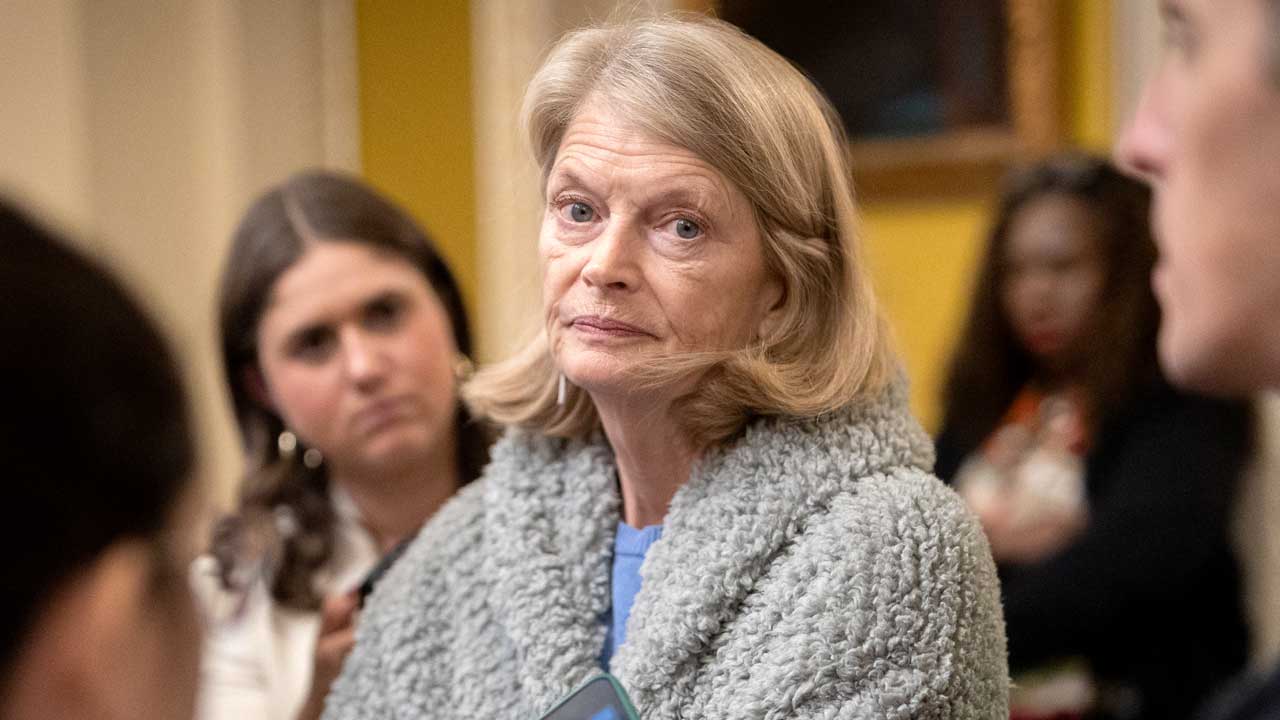
Republican U.S. Sen. Lisa Murkowski of Alaska has endorsed Democratic gubernatorial candidate Jonathan Kreiss-Tomkins, breaking party ranks in the state's upcoming race for governor and rejecting a competing candidate backed by Donald Trump. The move, reported by Alex Nitzberg, sets up another high-profile clash between Alaska's senior senator and the national wing of the Republican Party aligned with Trump.
Key facts
What happened
According to reporting by Alex Nitzberg, Sen. Lisa Murkowski made public her decision to support former state Rep. Jonathan Kreiss-Tomkins in his bid for the Alaska governorship. In doing so, Murkowski chose to bypass the Republican candidate who secured the formal endorsement of Donald Trump.
The decision places Murkowski in direct opposition to national Republican party leadership and the Trump-aligned faction that has sought to reshape Alaska's executive branch. While sitting senators routinely endorse candidates from their own political parties in gubernatorial contests, Murkowski has historically diverged from standard partisan protocol, relying on an independent coalition of moderate Republicans, independents, Alaska Native voters, and centrist Democrats.
Kreiss-Tomkins entered the gubernatorial field as one of the state's most prominent younger Democratic figures. First elected to the Alaska House of Representatives in November 2012 at age 23, he represented District 35 in Southeast Alaska for a decade before stepping aside ahead of the 2022 legislative elections. During his legislative tenure, he focused on rural policy, fisheries management, and civil engagement initiatives, frequently collaborating across the aisle in the Alaska House's bipartisan governing coalitions.
Murkowski's endorsement arrived ahead of the state's nonpartisan primary, an electoral milestone that will determine which four candidates advance to the ranked-choice general ballot in November.
Why it matters
Murkowski's intervention in the gubernatorial election carries substantial weight across Alaska's political landscape, where party labels often carry less predictive power than individual candidate coalitions and regional loyalty. Because Alaska uses an open top-four primary system followed by ranked-choice voting, an endorsement from a high-profile Republican for a Democratic contender can fundamentally reshape voter preferences and tabulation transfers.
In a ranked-choice system, voters rank candidates in order of preference. If no candidate secures more than 50 percent of the first-choice votes, the lowest-ranking candidates are systematically eliminated, and their ballots are redistributed to voters' subsequent preferences until a candidate achieves an absolute majority. Murkowski's backing of Kreiss-Tomkins signals to moderate Republicans, nonpartisan voters, and political independents—who collectively form the largest share of registered voters in Alaska—that crossing traditional party boundaries is permissible. This dynamic could supply Kreiss-Tomkins with the second- and third-choice rankings necessary to build an eventual majority against a Trump-endorsed conservative.
Nationally, the endorsement reinforces Murkowski's standing as one of the most independent members of the U.S. Senate. Having repeatedly clashed with Trump over judicial confirmations, legislative strategy, and executive authority, Murkowski's open opposition to his handpicked gubernatorial selection highlights the persistent rift between traditional, institution-minded Republicans and the populist wing that dominates much of the contemporary national party.
The background
Alaska's modern political history has long been defined by nonconformist politics and tension between local priorities and federal authority. Murkowski herself has survived multiple attempts by conservative party activists to remove her from office. In 2002, she was appointed to the U.S. Senate by her father, then-Governor Frank Murkowski, before winning a full six-year term in 2004. In 2010, she was defeated in the Republican primary by conservative challenger Joe Miller, who was backed by the Tea Party movement and former Governor Sarah Palin.
Rather than conceding, Murkowski launched a historic general election write-in campaign, defeating Miller and Democratic nominee Scott McAdams in November 2010. That victory marked only the second time in modern U.S. Senate history that a candidate won a Senate seat via a write-in campaign, the first being Strom Thurmond of South Carolina in 1954. The triumph solidified Murkowski's unique political base, which relies on a durable alliance of moderate urban voters and Alaska Native corporations and tribal organizations.
Murkowski's relationship with Donald Trump has remained strained for nearly a decade. In 2017, she was one of three Republican senators—alongside John McCain of Arizona and Susan Collins of Maine—who voted against the repeal of the Affordable Care Act. In February 2021, she was one of seven Senate Republicans who voted to convict Trump during his second impeachment trial following the January 6 attack on the U.S. Capitol.
Trump actively targeted Murkowski during her 2022 re-election bid, endorsing former Alaska Department of Administration commissioner Kelly Tshibaka. However, the 2022 contest was conducted under the state's new electoral system, established through Ballot Measure 2 in November 2020. That ballot initiative replaced closed party primaries with a single open primary and introduced ranked-choice voting for general elections. In that race, Murkowski defeated Tshibaka after receiving substantial preference transfers from Democratic and independent voters whose first choices had been eliminated.
Murkowski has previously crossed party lines in state races. In 2022, she endorsed Democratic Representative Mary Peltola over Republican candidates Sarah Palin and Nick Begich III in the special and general elections for Alaska's sole seat in the U.S. House of Representatives. Kreiss-Tomkins, during his time in Juneau, was also known for participating in multipartisan governing arrangements, a recurring feature of the Alaska Legislature where Democrats, independents, and moderate Republicans frequently form working majorities to control committee assignments and legislative agendas.
Reaction
The announcement reported by Alex Nitzberg immediately reframed the dynamics of the gubernatorial campaign, prompting renewed debate within state political circles. Donald Trump and his political action committees have routinely attacked Republican officials who endorse Democratic candidates, and the former president is widely expected to criticize Murkowski's intervention through official statements and appearances on conservative media platforms.
The Alaska Republican Party has repeatedly censured Murkowski in previous years for her votes on federal judicial appointments, the 2021 impeachment trial, and her support for non-Republican candidates. The state party's State Central Committee has historically discouraged members from endorsing outside the party ticket and is likely to face pressure from conservative grassroots organizations to issue a formal rebuke.
Democratic leaders and campaign supporters of Kreiss-Tomkins have viewed Murkowski's backing as a pivotal development capable of broadening his reach into rural and center-right constituencies across the state. Kreiss-Tomkins has centered much of his public identity on cross-ideological institution-building, having spent years running civic projects aimed at increasing youth and rural civic engagement.
What we don't know yet
Several key elements of the gubernatorial race remain unsettled following the initial reports. The reporting by Alex Nitzberg did not detail whether Murkowski plans to campaign in person alongside Kreiss-Tomkins, appear in televised or digital advertising on his behalf, or provide financial assistance through her leadership political action committee, the Arctic PAC.
It is also unclear how Murkowski intends to instruct her supporters regarding subsequent rankings on the general election ballot. In Alaska's ranked-choice system, prominent endorsements often include explicit recommendations on how voters should rank down-ballot options—specifically whether Murkowski will advise voters to rank an alternative, more moderate Republican in the second position or leave the remainder of the ballot blank.
Furthermore, the exact field of primary candidates remains subject to formal certification deadlines, and polling detailing the immediate impact of Murkowski's cross-party endorsement on primary voting intentions has yet to be conducted.
What to watch
Moving forward, political observers will monitor formal campaign finance disclosures filed with the Alaska Public Offices Commission (APOC) and the Federal Election Commission (FEC) to measure any fundraising shift following Murkowski's public endorsement. Contributions from business groups, labor unions, and Alaska Native corporations will serve as a bellwether for whether the business community follows Murkowski's lead.
Observers will also watch for formal statements and scheduled rallies from Donald Trump and the Republican candidate he has selected to back, specifically to see if the national party invests heavily in Alaska's media markets to neutralize Murkowski's local influence.
Finally, the performance of both Kreiss-Tomkins and the Trump-backed contender in Alaska's nonpartisan top-four primary will provide the first hard metric of voter sentiment under the ranked-choice system, testing whether Murkowski's personal brand continues to hold sway over Alaska's fiercely independent electorate.
This article includes details based on original reporting by Alex Nitzberg.
How this story was produced
This report was written by The Global Wire newsroom from reporting first published by Alex Nitzberg. We verify the core facts against the original report, write our own account, and add the background and consequences a short wire item leaves out. Drafting is AI-assisted inside an editor-supervised pipeline, and every story is checked for accuracy of attribution, structure and duplication before it appears — full detail in our AI and funding disclosure.
Spotted an error? Tell us at corrections@horizonglobalnews.com and read our corrections policy or editorial standards.



Reader comments
Loading comments…