

Australia Begins First Innings at Newlands Chasing South Africa's 329 on Day Two
Travis Head and Matt Renshaw take to the crease in Cape Town as Australia launches its reply to South Africa's first-innings total of 329 in the third Test.
By The Global Wire Newsroom · Reported from Roy Ward; Daniel Brettig
Link preview · horizonglobalnews.com
Australia Begins First Innings at Newlands Chasing South Africa's 329 on Day Two
Travis Head and Matt Renshaw take to the crease in Cape Town as Australia launches its reply to South Africa's first-innings total of 329 in the third Test.
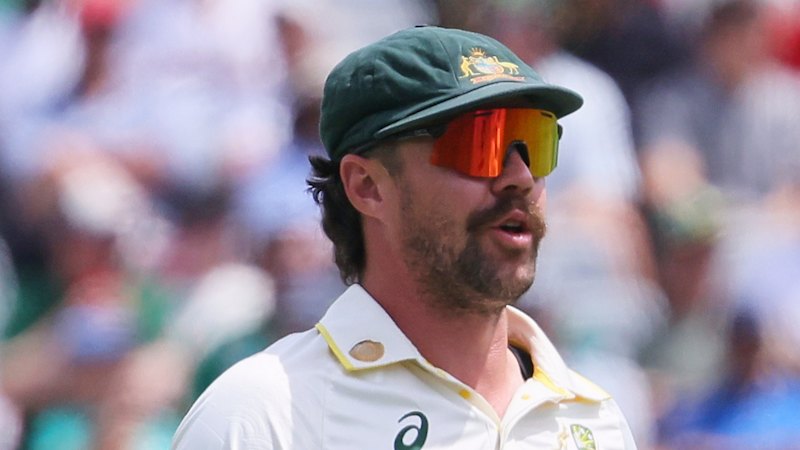
Australia's national cricket team commenced its first innings on day two of the third Test against South Africa at Newlands Cricket Ground in Cape Town, with batters Travis Head and Matt Renshaw walking out to face a first-innings deficit of 329 runs. The encounter marks a pivotal juncture in the five-day contest, with the visitors tasked with navigating the home side's bowling attack following the conclusion of South Africa's opening batting effort. Play resumed on the second morning under standard five-day Test conditions, with the Australian top order seeking to establish stability on a Cape Town surface that traditionally evolves significantly between the initial sessions and the latter stages of the match.
Key facts
What happened
According to reporting by Roy Ward and Daniel Brettig, play on day two of the third Test in Cape Town transitioned to Australia's first innings after South Africa concluded its time at the crease with 329 runs on the board. With the home side's innings closed, Australian batters Travis Head and Matt Renshaw walked out to the middle to open the visiting team's response.
The game arrived at this position following a full opening day of competition in which South Africa established its competitive baseline. Upon the termination of the host nation's innings early on the second day, the responsibility shifted entirely to the Australian batting order. Head and Renshaw took their positions at the crease to confront South Africa's pace and spin reserves, aiming to reduce the 329-run margin. The reporting indicates that the match entered this second-day phase with the Australian side facing the tactical demand of building partnerships while managing the wear and atmospheric conditions characteristic of the Newlands venue.
Why it matters
A first-innings total of 329 represents a substantial benchmark in modern Test cricket, placing measurable pressure on the side batting second. In five-day international fixtures, conceding more than 300 runs in the first innings historically requires the chasing team to bat for at least four to five sessions to secure parity, thereby avoiding a significant first-innings deficit that could dictate the tactical trajectory of days three, four, and five.
For Australia, establishing a steady opening stand through Head and Renshaw is critical to blunting the initial impact of the new ball. When opening or top-order partnerships fail early against a 300-plus total, middle orders are forced into defensive containment rather than constructive stroke play, increasing the probability of conceding a first-innings lead. Conversely, if Australia exceeds South Africa's 329, the visiting side gains the opportunity to dictate terms during the fourth innings, when pitch deterioration at Newlands frequently accelerates.
Beyond the immediate tactical battle in Cape Town, bilateral Test matches carry significant broader structural implications. Under the International Cricket Council (ICC) World Test Championship framework, each individual Test match awards crucial championship points—12 points for an outright victory, four for a draw, and zero for a defeat, calculated against penalty deductions for slow over-rates. Performance in overseas tours, particularly against top-tier bowling attacks in South African conditions, directly determines qualifying standings for the biennial World Test Championship final. A series outcome in South Africa carries both financial prestige and sporting ranking points that affect scheduling and commercial rights valuations across international cricket administration.
The background
The cricketing rivalry between Australia and South Africa is among the most intensely contested in international sport, spanning more than a century of competitive fixtures since their first official Test meeting in 1902. Over decades of competition, series played on South African soil have been characterized by high-velocity pace bowling, steep bounce, and abrasive surfaces that test the technical discipline of touring batting lineups.
Newlands Cricket Ground, situated beneath Table Mountain in Cape Town, is one of the world's most historic sporting venues, having hosted its first Test match in March 1889. The venue maintains a distinct identity within South African cricket. While high-veld venues such as the Wanderers in Johannesburg and SuperSport Park in Centurion typically offer rapid pace and lateral movement off the seam throughout all five days, Newlands often exhibits a more composite character. Pitch preparation in Cape Town frequently allows for early assistance to fast bowlers, followed by relatively fair batting conditions across days two and three, before reverse swing and spin become determining factors as the pitch dries under coastal sunshine.
The deployment of Travis Head and Matt Renshaw highlights Australia's ongoing structural balancing of its top order. Both left-handed batters have represented Australia across multiple international tours, bringing contrasting approaches to the crease. Renshaw, who debuted at the international level in November 2016 against South Africa in Adelaide, is recognized for conventional defensive discipline, leave-judgment outside off-stump, and an ability to occupy the crease over extended periods. Head, who debuted in Test cricket in October 2018 against Pakistan, has developed a reputation for counter-attacking scoring, often shifting momentum through rapid boundary production when opposition bowlers err in line or length.
Recent bilateral tours between these two nations have carried elevated competitive scrutiny. Test series hosted in South Africa require touring units to withstand hostile bowling spells from fast bowlers operating at speeds exceeding 140 kilometers per hour, alongside reverse-swinging older balls that test middle-order defenses.
Reaction
While the live reporting from Roy Ward and Daniel Brettig did not include formal post-session press conference statements at the time of publication, public and technical scrutiny is focused squarely on how the team managements handle this phase of the game. Formal evaluations will emerge through accredited media conferences conducted at the conclusion of day two, where designated players or assistant coaches from both Cricket Australia and Cricket South Africa will address journalists in the Newlands media center.
In typical post-day protocol, team spokespersons analyze the efficiency of the opening bowling spells, pitch behavior, and the tactical decisions made regarding field placements and bowling changes. Broadcast commentators and analysts covering the tour are expected to assess whether South Africa's 329 represents a par score or an above-average total given the prevailing humidity and overhead conditions in Cape Town on the second morning.
What we don't know yet
The concise reporting available from the ground leaves several operational and statistical details unconfirmed. The exact composition of South Africa's 329-run innings—including the individual high scorers, the duration of their innings in overs, and the specific wicket distribution among Australia's bowling attack—was not detailed in the initial dispatch. It is similarly unstated whether South Africa lost its final wickets rapidly on the second morning or concluded its innings via an overnight declaration.
Furthermore, the initial dispatch does not specify the health status of the pitch, the number of overs remaining in day two's play, or any weather interruptions that might affect the scheduled 90 overs. Crucially, the precise state of the series entering this third Test remains unstated in the source reporting, leaving open whether the contest serves as a series decider or a dead rubber following earlier results in the tour schedule.
What to watch
The immediate development to monitor is the survival and scoring rate of Travis Head and Matt Renshaw across the remainder of the morning and afternoon sessions of day two. Observers will track how effectively the Australian pair negotiates the initial 20-to-30-over period against the new Kookaburra ball, which traditionally offers the greatest seam movement and carry.
Subsequent focus will turn to South Africa's tactical adjustments once the ball loses its initial hardness. Observers will monitor how early South African captaincy introduces spin into the attack and whether signs of variable bounce or reverse swing begin to manifest before the tea interval. The progression toward stumps on day two will indicate whether Australia can establish a foundation capable of challenging South Africa's 329 or whether the home side will make decisive inroads into the visiting batting lineup.
This account is based on original reporting by sports journalists Roy Ward and Daniel Brettig.
How this story was produced
This report was written by The Global Wire newsroom from reporting first published by Roy Ward; Daniel Brettig. We verify the core facts against the original report, write our own account, and add the background and consequences a short wire item leaves out. Drafting is AI-assisted inside an editor-supervised pipeline, and every story is checked for accuracy of attribution, structure and duplication before it appears — full detail in our AI and funding disclosure.
Spotted an error? Tell us at corrections@horizonglobalnews.com and read our corrections policy or editorial standards.





Reader comments
Loading comments…