

Lula Secures Brazil Runoff Victory Over Flávio Bolsonaro Amid Global Diplomatic Shifts
Brazil's presidential runoff outcome delivers a critical setback to transnational populist networks and alters the diplomatic landscape between Washington and Latin America.
By The Global Wire Newsroom · Reported from Kathleen Culliton
Link preview · horizonglobalnews.com
Lula Secures Brazil Runoff Victory Over Flávio Bolsonaro Amid Global Diplomatic Shifts
Brazil's presidential runoff outcome delivers a critical setback to transnational populist networks and alters the diplomatic landscape between Washington and Latin America.
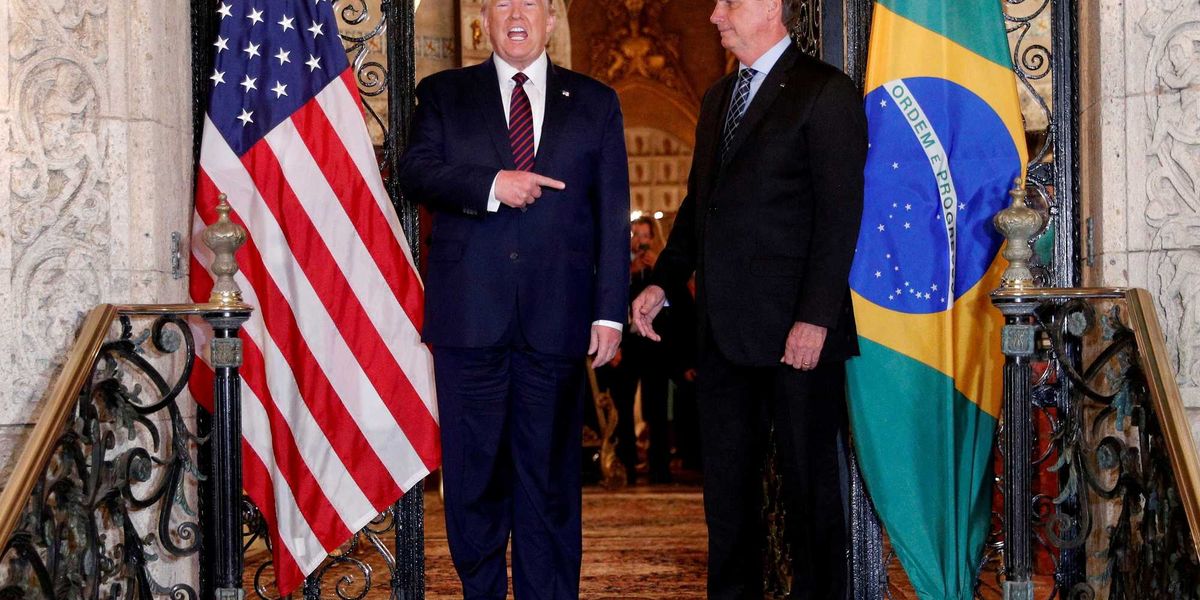
BRASÍLIA — Brazilian President Luiz Inácio Lula da Silva has secured re-election in a high-stakes presidential runoff, defeating conservative challenger Senator Flávio Bolsonaro and retaining leadership of Latin America's largest economy. The electoral outcome caps an intensely polarized campaign that pitted Lula’s governing leftist coalition against the political apparatus built by the Bolsonaro dynasty. Beyond Brazil’s borders, the result reverberated immediately through regional and international corridors, dealing a significant strategic defeat to former U.S. President Donald Trump and an aligned network of right-wing nationalist leaders who had closely eyed Brasília as the ideological centerpiece of their international coalition, according to reporting by Raw Story.
Key facts
What happened
Brazil’s national runoff concluded after weeks of relentless campaigning across the country's diverse geopolitical regions. Following a competitive first round in which neither candidate secured an outright majority, Lula and Flávio Bolsonaro advanced to the head-to-head vote. Lula anchored his re-election campaign on poverty reduction programs, multilateral diplomatic leadership, defense of democratic institutions, and stringent enforcement of environmental protections in the Amazon biome. Flávio Bolsonaro, a sitting federal senator representing the state of Rio de Janeiro, campaigned on deregulation, public security crackdowns, conservative social values, and an explicit pledge to revive the economic and ideological doctrines championed by his father.
The contest took place under rigorous oversight by Brazil’s Superior Electoral Court (Tribunal Superior Eleitoral, or TSE), which oversees voting operations across all 26 states and the Federal District. The court deployed electronic voting machines to hundreds of thousands of precincts nationwide, providing rapid preliminary tabulations. As official counts confirmed Lula’s victory, the result marked a definitive repudiation of the Bolsonaro family's immediate attempt to recapture the Planalto Palace. According to political analysts cited by Raw Story, the loss of Brazil removes what foreign policy strategists regarded as the single most consequential prospective ally for Trump’s broader international agenda.
Why it matters
The retention of power by Lula fundamentally reshapes geopolitical alignments across the Western Hemisphere and alters the trajectory of international climate and economic governance. Brazil possesses a gross domestic product exceeding $2 trillion and commands substantial sway within major multilateral groupings, including the BRICS bloc, the G20, and the Southern Common Market (Mercosur). A victory by Flávio Bolsonaro would have established a direct, sympathetic conduit between Brasília and conservative nationalist movements in the United States and Europe, potentially fracturing regional consensus on multilateral treaties and carbon reduction targets.
Lula’s continued stewardship ensures that Brazil remains firmly anchored in international climate agreements, notably the Paris Climate Accord, while sustaining federal enforcement mechanisms against illegal deforestation in the Amazon basin. For global agricultural and commodity markets, the result guarantees policy continuity regarding trade relations with China, Brazil's largest export partner, as well as the European Union. Furthermore, the outcome directly weakens the global infrastructure of conservative populism. Analysts noted to Raw Story that Trump’s movement relied heavily on cultivating like-minded executive partners across Latin America and Europe. Denying the Bolsonaro dynasty a return to the presidency deprives Trump and his allies of their most populous, resource-rich regional anchor, complicating their efforts to coordinate international pushbacks against global regulatory, legal, and trade frameworks.
The background
To understand the significance of this runoff, one must examine the turbulent modern history of Brazilian executive politics and its close synchronization with ideological movements in the United States. Luiz Inácio Lula da Silva, a former metalworker and trade union leader, originally governed Brazil for two terms from 2003 through 2010. His presidency was celebrated globally for lifting tens of millions of citizens out of extreme poverty via targeted social welfare programs such as Bolsa Família. However, the subsequent decade plunged Brazil into severe political and economic turbulence. The expansive "Operação Lava Jato" (Operation Car Wash) corruption investigation snared dozens of prominent politicians across the political spectrum, culminating in the controversial imprisonment of Lula in 2018 and barring him from that year's presidential contest.
The resulting political vacuum enabled the ascent of Jair Bolsonaro, a former army captain and longtime federal deputy who capitalized on widespread anti-establishment sentiment, rising street violence, and evangelical political mobilization. Jair Bolsonaro’s 2019–2022 presidency established intimate ties with the Trump administration, mirroring Trump's rhetoric, skepticism of multilateral institutions, and hostility toward legacy press outlets. When Lula’s convictions were annulled by Brazil’s Supreme Federal Court in 2021 due to procedural violations and judicial bias, Lula re-entered political life, narrowly unseating Jair Bolsonaro in the historic October 2022 general election.
Following that defeat, Brazilian authorities initiated comprehensive investigations into the Bolsonaro administration's conduct, focusing on suspected electoral subversion, attacks on electronic voting integrity, and the January 8, 2023, assault on the Three Powers Plaza in Brasília. Brazil’s electoral tribunal subsequently barred Jair Bolsonaro from seeking public office until 2030, disqualifying him from the ballot. Deprived of its founder, the family’s political machine rallied around Flávio Bolsonaro, the eldest son and an experienced legislative operative, to reclaim executive power. Flávio Bolsonaro sought to unify traditional center-right business interests with staunch ideological conservatives, positioning his campaign as a referendum on Lula’s economic stewardship and international stance.
Reaction
Official reactions began to materialize as official confirmation of the results spread through national and international capitals. Lula spoke to jubilant supporters, emphasizing national reconciliation, the protection of democratic norms, and the necessity of stable social programs. He reiterated Brazil’s sovereignty in setting domestic and foreign policy, signaling an intention to maintain balanced engagements with Beijing, Brussels, and Washington.
Within the conservative camp, the defeat produced immediate deliberations regarding the future of the Bolsonarista movement. Observers anticipate formal assessments from congressional leaders affiliated with the Liberal Party (PL), which remains the largest single voting bloc in the National Congress. In Washington and international conservative circles, reaction is expected to center on the erosion of ideological allies abroad. Figures aligned with Donald Trump’s political network have routinely framed Latin American left-of-center governments as strategic adversaries, and formal statements regarding the outcome are anticipated from congressional committees and foreign policy advisory groups monitoring Latin American affairs.
What we don't know yet
Several critical elements following the runoff remain unclarified in available accounts. First, the precise national vote margin between Lula and Flávio Bolsonaro has not been fully detailed in early reporting, leaving unresolved the exact degree of legislative leverage Lula will command entering his next mandate. Second, it remains unclear whether Flávio Bolsonaro and the leadership of the Liberal Party will offer a full, unreserved concession or pursue procedural challenges through the Superior Electoral Court, following the contentious rhetoric that marked prior cycles. Third, specific ministerial appointments for the forthcoming term—particularly the stewardship of the Ministry of Finance and the Ministry of Foreign Affairs—have yet to be announced. The composition of Lula’s cabinet will dictate whether his administration pursues more aggressive fiscal redistribution or maintains market-oriented fiscal guardrails.
What to watch
In the coming days and weeks, attention will turn toward key benchmarks that will define Brazil’s legislative and economic stability. Observers will closely monitor the formal certification of election results by the Superior Electoral Court to ensure an orderly post-election certification devoid of civil unrest or logistical blockades. A primary indicator will be the response of financial markets: the exchange rate of the Brazilian real against the U.S. dollar and trading on the B3 stock exchange in São Paulo will reflect investor confidence in Lula's fiscal framework.
Legislatively, attention will center on negotiations between the executive branch and the "Centrão," the powerful, fluid coalition of center-right congressional parties whose support Lula must secure to pass budgetary allocations and statutory reforms. On the international stage, observers should watch the upcoming schedule of regional diplomatic summits, where Lula is expected to interface with international counterparts and formally consolidate Brazil’s reasserted foreign policy posture. The reactions of both the White House and prominent U.S. congressional leaders will provide immediate insight into how bilateral cooperation on climate, trade, and regional security will proceed under sustained left-of-center governance in Brasília.
This account incorporates reporting originally published by Raw Story.
How this story was produced
This report was written by The Global Wire newsroom from reporting first published by Kathleen Culliton. We verify the core facts against the original report, write our own account, and add the background and consequences a short wire item leaves out. Drafting is AI-assisted inside an editor-supervised pipeline, and every story is checked for accuracy of attribution, structure and duplication before it appears — full detail in our AI and funding disclosure.
Spotted an error? Tell us at corrections@horizonglobalnews.com and read our corrections policy or editorial standards.



Reader comments
Loading comments…