

Egyptian Lawmakers Back Military Mandate to Defend Saudi Borders Amid Houthi Surge
Egypt’s parliament has authorized armed forces deployments to assist Saudi Arabia defensively, balancing Gulf security commitments against historical caution over direct intervention in Yemen.
By The Global Wire Newsroom · Reported from SECTIONS Egypt approves military support
Link preview · horizonglobalnews.com
Egyptian Lawmakers Back Military Mandate to Defend Saudi Borders Amid Houthi Surge
Egypt’s parliament has authorized armed forces deployments to assist Saudi Arabia defensively, balancing Gulf security commitments against historical caution over direct intervention in Yemen.
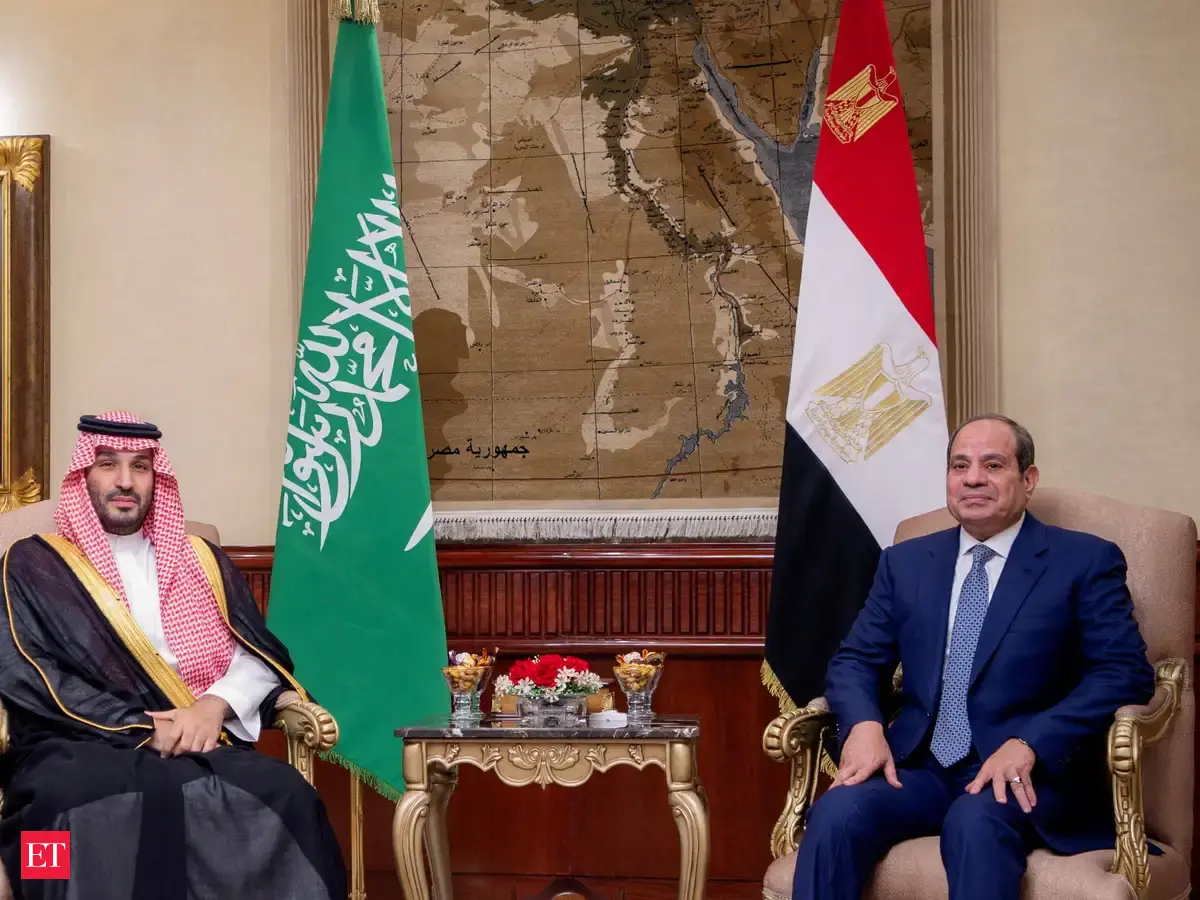
CAIRO — Egypt’s parliament has granted authorization for the armed forces to provide military assistance to Saudi Arabia in response to intensifying cross-border threats from Yemen’s Houthi movement. The legislative measure, passed following a formal request submitted by Egyptian President Abdel Fattah al-Sisi, establishes a legal mandate for Cairo to assist in defending sovereign Saudi territory against external attacks. According to reporting by SECTIONS, the scope of Cairo’s prospective operational footprint is anticipated to prioritize protective deployments, potentially encompassing limited ground contingents stationed inside the kingdom, while specifically precluding offensive combat operations inside Yemeni territory itself.
Key facts
What happened
President Abdel Fattah al-Sisi approached the Egyptian House of Representatives seeking formal assent to dispatch military elements abroad under the republic's constitutional framework for collective regional security. The executive submission came in direct response to an escalation in projectile launches, drone incursions, and security threats directed from Yemeni territory toward Saudi Arabian population centers and vital infrastructure.
Following closed-door consultations and review of national security assessments, Egyptian lawmakers endorsed the defense authorization, as reported by SECTIONS. The decision grants the executive branch and the General Command of the Egyptian Armed Forces legal clearance to coordinate operational tasks directly with the Royal Saudi Armed Forces.
Crucially, parliamentary deliberations defined clear parameters around the deployment envelope. The approved mandate establishes that Egyptian involvement is designed around territorial defense, with an emphasis on reinforcing Saudi defensive lines, bolstering specialized air defense networks, and contributing limited ground support units to high-priority areas within the kingdom if requested by Riyadh. It deliberately stops short of sanctioning expeditionary offensive assaults into Yemeni sovereign territory, reflecting Cairo's calculated doctrine of containment and border defense rather than renewed ground entanglement in the Arabian Peninsula.
Why it matters
The parliamentary vote represents a critical juncture for Middle Eastern security architecture and maritime stability, carrying extensive implications for international shipping lanes, regional balance of power, and bilateral economic pacts. Egypt operates the largest standing conventional military force in the Arab world, fielding hundreds of thousands of active-duty personnel alongside advanced armored and air defense capabilities. By formally backing Riyadh with potential boots on the ground within Saudi borders, Cairo sends an unmistakable deterrent signal to regional state and non-state actors that Gulf territorial integrity remains tied to Egyptian core doctrine.
For global energy and commercial markets, security across the Arabian Peninsula and the adjoining Red Sea corridor is paramount. The Bab el-Mandeb strait, located between Djibouti, Eritrea, and Yemen, handles roughly 12 percent of worldwide maritime trade and substantial flows of seaborne crude oil before vessels transit northbound toward the Suez Canal. Persistent maritime interdictions and aerial strikes by Houthi forces have repeatedly forced major shipping consortia to reroute around Africa's Cape of Good Hope. This diversion increases maritime transit times by 10 to 14 days per voyage, spikes container shipping rates, and severely degrades Egypt’s foreign exchange revenues derived from Suez Canal tolls, which typically generate billions of dollars annually for the Egyptian treasury.
Furthermore, the strategic convergence deepens the reciprocal relationship between Cairo and Riyadh. Egypt has long relied on billions of dollars in central bank deposits, fuel credits, and foreign direct investment pledges from Saudi Arabia and fellow Gulf Cooperation Council members to stabilize its domestic macroeconomy, replenish foreign currency reserves, and manage debt obligations. By delivering hard-power defensive assurances in Riyadh's hour of escalating military friction, Cairo cements its status as an indispensable security guarantor for the Gulf monarchies.
The background
Egypt and Saudi Arabia share a prolonged defense partnership anchored in mutual security treaties, including the 1950 Arab League Joint Defense and Economic Cooperation Treaty, yet the memory of past entanglements has long conditioned Cairo's military restraint. During the North Yemen Civil War from 1962 to 1967, President Gamal Abdel Nasser committed as many as 70,000 Egyptian troops to defend the republican government against royalist factions backed by Riyadh. That five-year counterinsurgency campaign resulted in the loss of thousands of Egyptian soldiers, drained Egypt’s treasury, and severely degraded military readiness immediately preceding the June 1967 Six-Day War. The historical trauma of that intervention, frequently referred to by military historians as 'Egypt's Vietnam,' created an enduring reluctance within the Egyptian General Intelligence Directorate and General Command against participating in open-ended foreign ground wars.
When a Saudi-led coalition intervened in Yemen in March 2015 under Operation Decisive Storm to reinstate the internationally recognized government of President Abdrabbuh Mansur Hadi after the Houthis captured Sanaa, Cairo pledged nominal solidarity. However, Egyptian contributions remained largely confined to naval patrols securing the southern entrance to the Red Sea, modest aerial surveillance, and staff officer liaison roles. Despite substantial financial and political pressure from Riyadh at the time, President al-Sisi consistently avoided dispatching Egyptian infantry or armored divisions into the Yemeni interior, repeatedly declaring that Egyptian forces are charged with defending the nation's borders and protecting fraternal Gulf partners only against direct territorial aggression.
Procedurally, dispatching Egyptian military forces abroad requires compliance with Article 152 of Egypt's 2014 Constitution. Under this article, the president serves as the Supreme Commander of the Armed Forces but cannot declare war or send military personnel on combat missions outside national borders without the approval of a two-thirds majority in the House of Representatives, following consultation with the National Defense Council. In July 2020, parliament invoked this provision to authorize military action in neighboring Libya to protect Egypt’s western border against extremist militia infiltration. The current parliamentary authorization for Saudi Arabia follows this established legal mechanism, ensuring constitutional legitimacy for prospective foreign troop deployments.
Reaction
Neither the Egyptian Ministry of Foreign Affairs nor the Saudi Ministry of Defense immediately published the classified protocols detailing the timeline, size, or precise basing locations of incoming Egyptian military units following the vote. Within Egyptian parliamentary corridors, committee leaders underscored that the legislative action aligns fully with Cairo's constitutional obligations and historical responsibility toward pan-Arab security, reiterating the long-standing maxim articulated by President al-Sisi that the security of the Gulf is an integral extension of Egypt’s own national security.
Authorities representing the Houthi administration in Sanaa have not issued a formal diplomatic response through official organs, though leadership figures within the movement have historically warned regional nations against expanding their military footprint in support of the Saudi-led coalition. Formal diplomatic statements are anticipated from the Gulf Cooperation Council Secretariat in Riyadh, which regularly convenes ministerial meetings to evaluate regional deterrence postures. Observers also anticipate formal monitoring by the United Nations Office of the Special Envoy of the Secretary-General for Yemen, which continues to pursue durable ceasefire mechanisms across the peninsula to prevent wider regional contagion.
What we don't know yet
Key operational and tactical dimensions of the deployment authorization remain undisclosed in available reporting. The public record does not specify the exact volume of ground troops authorized to deploy, the prospective branches involved—such as mechanized infantry, engineering units, or tactical air defense batteries—nor the designated garrisons within the kingdom where Egyptian forces would be stationed. Whether Egyptian units would be deployed in proximity to the rugged southwestern border regions of Jazan, Asir, and Najran, or stationed at central air bases and strategic logistical hubs farther from the front lines, remains unconfirmed.
Furthermore, the exact triggers that would transition this parliamentary mandate from an administrative authorization into an active deployment on the ground are unclear. It is not publicly verified whether the deployment is conditional upon specific intelligence thresholds, an official bilateral military pact signed between Riyadh and Cairo, or an immediate request by Saudi authorities for emergency troop reinforcement. The financial framework underwriting the deployment, including logistics funding, transport, and equipment maintenance, has likewise not been detailed by either capital.
What to watch
The primary indicator of implementation will be the scheduling of high-level bilateral military talks between Egyptian Chief of Staff Lieutenant General Osama Askar and his Saudi counterparts in Riyadh or Cairo to negotiate the technical status of forces agreement. Observers should track joint defense council communiqués and official gazette notifications regarding executive decrees authorizing initial troop movements. Satellite imagery of strategic border garrisons and air defense installations across southern Saudi Arabia will also provide verifiable physical indicators of expanded foreign basing arrangements.
Diplomatically, the development will test ongoing regional de-escalation tracks, including the delicate diplomatic détente between Saudi Arabia and Iran mediated by Beijing in March 2023, as well as United Nations-brokered talks aimed at concluding the Yemeni civil conflict. Observers should watch closely for Houthi operational shifts in the southern Red Sea and Gulf of Aden, specifically whether heightened rhetoric translates into direct targeting of commercial vessels with Egyptian registry or interests. Finally, subsequent sessions of Egypt’s House of Representatives will warrant monitoring for any budgetary allocations or defense appropriation amendments tied to overseas operational expenditures.
This report is based on coverage originally published by SECTIONS.
How this story was produced
This report was written by The Global Wire newsroom from reporting first published by SECTIONS Egypt approves military support. We verify the core facts against the original report, write our own account, and add the background and consequences a short wire item leaves out. Drafting is AI-assisted inside an editor-supervised pipeline, and every story is checked for accuracy of attribution, structure and duplication before it appears — full detail in our AI and funding disclosure.
Spotted an error? Tell us at corrections@horizonglobalnews.com and read our corrections policy or editorial standards.




Reader comments
Loading comments…