

Three Bodies Found in Balochistan as Quetta Disappearance Protests Pass 6,300 Days
The discovery of three deceased men across Kech and Buleda coincides with ongoing demonstrations by families demanding answers over forced disappearances in Pakistan's restive southwestern province.
By The Global Wire Newsroom · Reported from Monica Singh
Link preview · horizonglobalnews.com
Three Bodies Found in Balochistan as Quetta Disappearance Protests Pass 6,300 Days
The discovery of three deceased men across Kech and Buleda coincides with ongoing demonstrations by families demanding answers over forced disappearances in Pakistan's restive southwestern province.
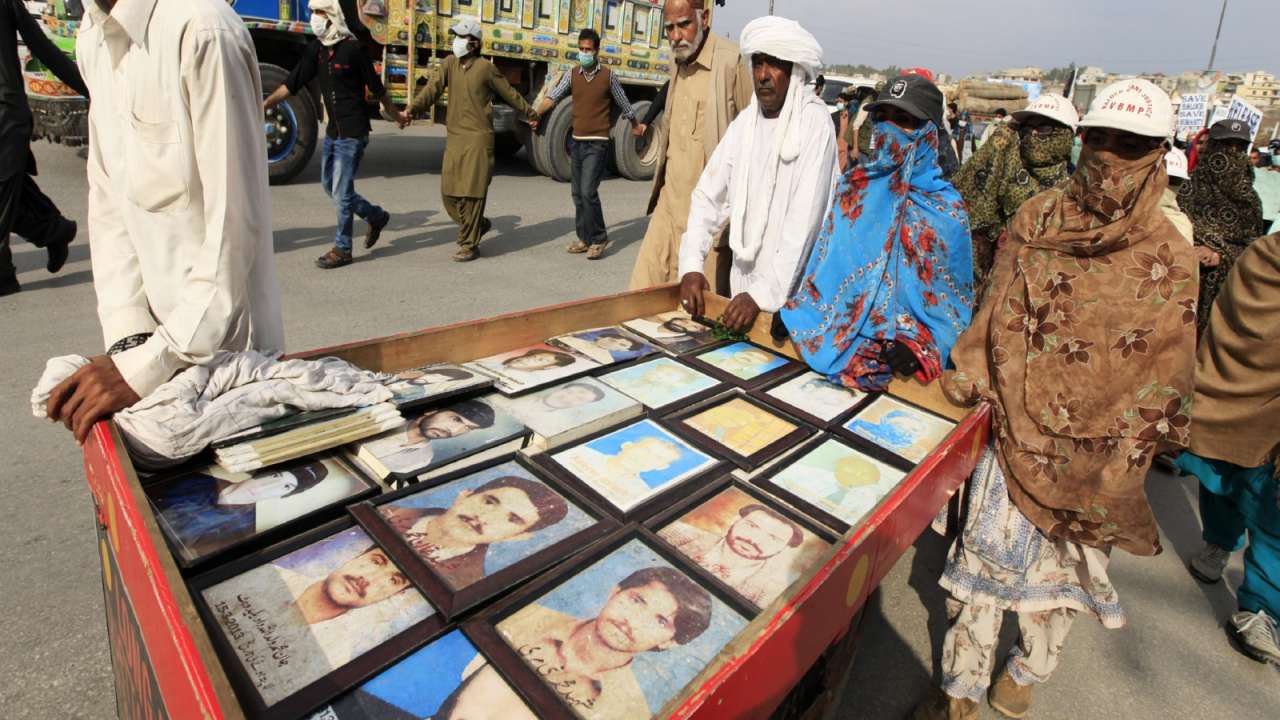
The bodies of three men, including a young man abducted earlier in the week, were recovered across two locations in southwestern Pakistan's Kech district, escalating public outrage in Balochistan as long-running demonstrations against forced disappearances passed their 6,397th consecutive day. The body of Adeel Baloch was located in Kech three days after he was reported missing, while authorities recovered two additional unidentified bodies in the nearby area of Buleda, according to regional reporting. The grim discoveries arrive amidst a sustained human rights crisis in Pakistan's largest and most sparsely populated province, where civilian advocacy groups and families have spent nearly two decades demanding an accounting of thousands of individuals who have vanished under disputed circumstances.
Key facts
What happened
According to reporting by journalist Monica Singh, the body of Adeel Baloch was located in Kech three days after his abduction by unidentified actors. Local sources confirmed that Baloch had vanished abruptly, prompting alarm among his relatives before his remains were discovered. Concurrently, regional authorities recovered two other deceased individuals in Buleda, a sub-tehsil located within the same district of Makran division. Details regarding the identities, ages, and causes of death of the two individuals found in Buleda have not yet been fully established or publicly disclosed by local police.
Local law enforcement and emergency workers transferred the remains for post-mortem examination, a standard procedural step that routinely faces logistical constraints in rural Balochistan due to under-resourced medical facilities. In similar past instances across Makran, bodies discovered in remote ravines or roadside locations have frequently exhibited physical trauma, including gunshot wounds and evidence of blunt-force torture, though official autopsy reports in this specific incident remain pending.
The recovery of the three bodies directly coincided with a symbolic milestone in the provincial capital of Quetta. Approximately 700 kilometers northeast of Kech, relatives organized under the banner of the Voice for Baloch Missing Persons (VBMP) marked the 6,397th consecutive day of their permanent protest demonstration outside the Quetta Press Club. The protest camp, maintained uninterrupted through rotating shifts of elderly parents, wives, and children of missing individuals, stands as one of the longest continuous peaceful sit-ins in South Asian history.
Why it matters
These discoveries carry profound consequences for internal security, civil liberties, and political stability across Pakistan. For ordinary residents of Balochistan, the cycle of extrajudicial detention and subsequent discovery of bodies—often described by human rights monitors as the state's "kill-and-dump" policy—destroys civic trust in the judicial apparatus and civil institutions. When individuals vanish and subsequently turn up dead in desolate areas, it signals to local communities that regular due process and constitutional safeguards under Pakistan's 1973 Constitution have collapsed.
The situation also bears direct implications for international investors, regional infrastructure, and geopolitical corridors. Balochistan forms the geographic backbone of the multi-billion-dollar China-Pakistan Economic Corridor (CPEC), anchored by the deep-sea port of Gwadar, which is directly adjacent to Kech district. Continued civil alienation and unchecked violence undermine attempts to stabilize the Makran coastline and surrounding transport arteries. For international human rights bodies, the persistent pattern of forced disappearances tests the credibility of Pakistan’s commitments under the United Nations International Covenant on Civil and Political Rights (ICCPR) and the Convention against Torture, both of which Pakistan has ratified. Persistent state-level denial combined with a complete lack of independent accountability risks escalating low-intensity conflict into wider insurrection, hardening anti-state sentiment among younger generations of ethnic Baloch citizens.
The background
Balochistan has been convulsed by five distinct insurgent waves since the accession of the princely state of Kalat to Pakistan in 1948. The current phase, which erupted in the early 2000s under the military regime of General Pervez Musharraf, accelerated sharply following the August 2006 killing of veteran Baloch nationalist leader Nawab Akbar Bugti during an army operation in Kohlu. Since then, ethnic Baloch militant factions, including the Balochistan Liberation Army (BLA) and the Balochistan Liberation Front (BLF)—which maintains a strong operational foothold in Kech and Makran—have waged an asymmetric campaign against Pakistani security forces and state infrastructure.
In response, Pakistani state security apparatuses, notably the paramilitary Frontier Corps (FC), military intelligence wings, and regional counter-terrorism departments, have relied heavily on extrajudicial detention and covert operations. The phenomenon of enforced disappearances expanded rapidly after 2009. That same year, local activists founded the Voice for Baloch Missing Persons, led by Qadeer Baloch, known colloquially as Mama Qadeer, whose own son was abducted and later found dead. In 2013 and 2014, Mama Qadeer and Farzana Majeed led a historic 3,000-kilometer protest foot march from Quetta to Islamabad via Karachi to demand judicial accountability.
Successive Pakistani federal administrations have pledged to resolve the issue, establishing a Commission of Inquiry on Enforced Disappearances in 2011 headed by retired Justice Javed Iqbal. While the commission has officially recorded over 10,000 complaints, human rights organizations—including the Human Rights Commission of Pakistan (HRCP) and Amnesty International—have consistently criticized the body as toothless, noting that it has failed to secure criminal convictions against a single member of the military or intelligence agencies responsible for unlawful abductions. Meanwhile, peaceful mass movements, such as the Baloch Yakjehti Committee (BYC) led by Dr. Mahrang Baloch, have organized mass rallies and long marches to Islamabad, only to face baton charges, mass arrests, and administrative intimidation.
Reaction
While the provincial government of Balochistan and federal authorities in Islamabad had not issued formal public statements immediately following the recoveries in Kech and Buleda, past incidents indicate an established division of institutional responses. Provincial administration officials typically classify such occurrences as matters for local police inquiry, occasionally attributing unclaimed bodies to internal feuds between competing militant factions or counter-insurgent proxy groups.
Conversely, Baloch civil rights organizations, nationalist political parties like the National Party and Balochistan National Party (BNP-Mengal), and independent legal advocacy groups routinely condemn such killings as blatant state-sanctioned extrajudicial murders. Demonstrators at the Quetta Press Club camp used the occasion to restate their longstanding demand that the Supreme Court of Pakistan take suo motu notice of recurring extrajudicial executions in the Makran division and direct law enforcement agencies to produce all detainees before regular courts of law.
International monitoring organizations, including Human Rights Watch and the United Nations Working Group on Enforced or Involuntary Disappearances (WGEID), are expected to include these developments in ongoing assessments of fundamental rights compliance in Pakistan, where state security forces have historically operated with complete legal immunity behind anti-terrorism legislation and national security mandates.
What we don't know yet
Significant factual gaps surround the circumstances of these deaths. First, official medical autopsies confirming the definitive cause of death, time of demise, and whether torture was inflicted prior to the deaths of Adeel Baloch and the two unnamed individuals in Buleda have not been published by provincial health authorities.
Second, the formal identities and family backgrounds of the two men found in Buleda remain unknown to the public; it is unclear whether they were cataloged on existing civil society databases of missing persons or represented unrelated local fatalities. Third, no state institution, militant group, or paramilitary contingent has claimed responsibility or offered an official narrative concerning the detentions. Finally, the exact jurisdiction handling the investigation remains ambiguous, as rural areas in Balochistan are historically split between "A-Areas" policed by regular civil police and "B-Areas" overseen by the tribal Levies Force, a bifurcation that frequently impedes forensic handling and judicial accountability.
What to watch
In the coming weeks, several specific developments will signal the trajectory of this crisis:
This account is based on original reporting by Monica Singh.
How this story was produced
This report was written by The Global Wire newsroom from reporting first published by Monica Singh. We verify the core facts against the original report, write our own account, and add the background and consequences a short wire item leaves out. Drafting is AI-assisted inside an editor-supervised pipeline, and every story is checked for accuracy of attribution, structure and duplication before it appears — full detail in our AI and funding disclosure.
Spotted an error? Tell us at corrections@horizonglobalnews.com and read our corrections policy or editorial standards.



Reader comments
Loading comments…