

Hundreds of Palestinian Families Displaced in Hebron Following Military Raid
Israeli security forces ordered roughly 250 families from their homes in Hebron following a fatal attack on troops, marking a sharp escalation in West Bank security operations.
By The Global Wire Newsroom · Reported from Malay Mail
Link preview · horizonglobalnews.com
Hundreds of Palestinian Families Displaced in Hebron Following Military Raid
Israeli security forces ordered roughly 250 families from their homes in Hebron following a fatal attack on troops, marking a sharp escalation in West Bank security operations.
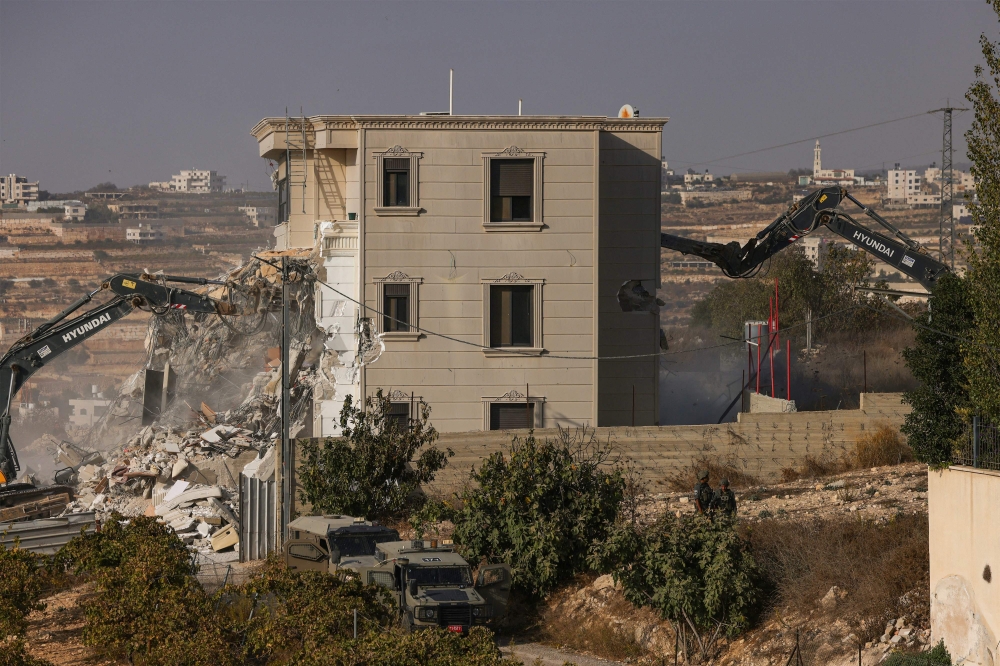
Israeli military units moved into the occupied West Bank city of Hebron on Saturday, ordering an estimated 250 Palestinian families to evacuate their residences, with numerous evictions taking place during overnight hours. The large-scale military sweep unfolded in the immediate aftermath of a lethal assault directed at Israeli soldiers stationed in the area, according to reporting by the Malay Mail. The coordinated operation represents one of the most abrupt population displacements within the municipal perimeter of Hebron in recent months, shuttering residential quarters and amplifying tensions throughout the southern district of the Palestinian territory.
Key facts
What happened
According to reporting by the Malay Mail, Israeli security personnel initiated a sweeping military push into Hebron early on Saturday, quickly establishing cordons across designated sectors of the urban center. Soldiers moved street by street, delivering sudden evacuation directives to resident families. In multiple instances, armed units knocked on doors and instructed inhabitants to abandon their apartments during nocturnal hours, allowing minimal opportunity to assemble personal belongings, identification documents, or basic supplies.
Witnesses and local monitors indicated that the sweeps were initiated in direct response to a fatal assault targeting Israeli soldiers operating within the sector. While military spokespersons confirmed the tactical response to the fatal engagement, authorities did not immediately release an exhaustive manifest detailing the tactical units involved or the precise legal instruments invoked to execute the mass removals. By midday Saturday, approximately 250 households—representing well over a thousand civilian residents, given average family sizes in the district—found themselves displaced from their domestic quarters.
Military checkpoints surrounding the affected zones were reinforced, restricting access for humanitarian vehicles, municipal crews, and domestic observers. Streets typically populated by pedestrian traffic and merchant stalls were cleared of civilians as armored transports and foot patrols took up strategic positions along thoroughfares. Families ordered out into the streets sought refuge with extended relatives in neighboring districts of the city, while community centers and municipal authorities attempted to coordinate emergency assistance under conditions of strict travel constraints.
Why it matters
The abrupt expulsion of roughly 250 households carries profound ramifications for the administrative and human landscape of the West Bank. Beyond the immediate humanitarian disruption facing hundreds of displaced civilians, the action signifies an acute shift in how military authorities respond to insurgent violence inside urban population centers. In standard security practice, counter-insurgency responses typically target specific structures associated with identified suspects. The broad displacement of entire residential clusters across an urban neighborhood indicates an operational shift toward wide-area containment, an approach that human rights organizations and legal scholars frequently challenge as a form of collective punishment prohibited under Article 33 of the Fourth Geneva Convention.
From a civic and political vantage point, Hebron serves as a perennial bellwether for the wider Israeli-Palestinian conflict. Disruption within its boundaries rarely remains localized; it routinely destabilizes civil administration, interrupts local economic chains, and inflames community anger across the West Bank's southern governorates. For local governance, the sudden arrival of hundreds of displaced residents places an acute strain on municipal services, healthcare delivery, and basic emergency infrastructure already operating under severe budgetary restrictions. The episode also elevates diplomatic scrutiny on military governance in the West Bank at a moment when regional stability is exceptionally delicate, raising immediate questions about the scope of emergency authority exercised by commanding officers on the ground.
The background
To understand the significance of the operation, one must examine the unique and fraught administrative architecture of Hebron. Located approximately 30 kilometers south of Jerusalem, Hebron is the largest Palestinian city in the West Bank and the only one with an Israeli settlement enclave entrenched directly within its historic core. Under the 1997 Hebron Protocol—an agreement negotiated between Israel and the Palestine Liberation Organization as part of the Oslo interim framework—the municipality was split into two distinct administrative zones: H1 and H2.
Under this bilateral arrangement, the Palestinian Authority assumed civil and security control over H1, which encompasses roughly 80 percent of the urban area and the majority of its Palestinian population. Conversely, the H2 zone, accounting for the remaining 20 percent, was placed under direct Israeli military authority for security administration, while the Palestinian Authority retained responsibility for civil services to Palestinian residents living there. H2 encompasses the Old City, the historic commercial hubs, and the religious site known to Muslims as the Ibrahimi Mosque and to Jews as the Cave of the Patriarchs. Over the subsequent decades, the Israeli military instituted severe movement restrictions within H2, including the closure of the primary commercial artery of Al-Shuhada Street, the construction of dozens of permanent military checkpoints, and the restriction of vehicular and pedestrian access to safeguard roughly 800 to 1,000 Israeli settlers residing amidst tens of thousands of Palestinians.
Over decades of occupation, military actions in Hebron have consistently been shaped by this close geographic proximity between civilian populations and armed personnel. Following moments of armed escalation—such as the 1994 massacre of 29 Palestinian worshippers by an Israeli settler, or recurring stabbing, vehicular, and shooting attacks against soldiers and settlers over recent years—the Israeli military has periodically imposed localized curfews, sealed residential streets with concrete barriers, and carried out intensive search-and-arrest operations. The displacement of an entire cohort of 250 families simultaneously, however, represents a severe escalation beyond the conventional checkpoint closures and targeted house raids that have historically defined routine security enforcement in the southern West Bank.
Reaction
Official Palestinian institutions and municipal representatives are expected to lodge formal diplomatic protests with international bodies, including the United Nations Special Coordinator for the Middle East Peace Process (UNSCO) and the United Nations Office for the Coordination of Humanitarian Affairs (OCHA). Palestinian legal organizations and civil defense leaders routinely document such operations, preparing dossiers to challenge the legality of emergency evacuation orders in Israeli civil and military courts.
Within Israel, military authorities typically defend such operations as operational imperatives necessary to apprehend armed attackers, uncover weapons caches, and eliminate ongoing tactical threats to security personnel. Senior defense officials are expected to brief parliamentary oversight committees on the nature of the ambush that triggered the raid. Meanwhile, Israeli human rights organizations, such as B'Tselem and Yesh Din, typically issue independent assessments condemning mass removals of civilian populations, arguing that such orders violate international humanitarian law by penalizing non-combatants for the acts of armed groups. International partners, including European Union delegations and the United States Department of State, are anticipated to call for restraint and the swift return of civilian families to their dwellings.
What we don't know yet
Significant elements of the situation remain unverified due to the rapid execution of the operation and restricted access to the cordoned neighborhoods. First, the precise tactical nature of the lethal attack on Israeli soldiers—including the number of casualties, the specific unit involved, and the identity or organizational affiliation of the attackers—has not been fully disclosed in available accounts. It remains unclear whether the assailants were killed, captured, or remain at large within the urban perimeter.
Second, the legal mechanism underpinning the displacement orders has not been clarified. It is not currently known whether the military issued temporary tactical closure directives for the duration of an ongoing sweep, or whether long-term administrative seizure orders were delivered to property owners. Without official documentation from the Israeli Civil Administration, the expected duration of the displacement remains completely undetermined, leaving the affected families uncertain whether they will be permitted to return in hours, days, or weeks. Finally, the exact material condition of the vacated residences—and whether any demolitions or structural takeovers have taken place—cannot yet be independently confirmed.
What to watch
The development of this crisis will depend on several critical indicators over the coming days. Observers should watch closely for statements from the Israel Defense Forces (IDF) clarifying whether the evacuation orders represent an open-ended exclusion zone or a transient tactical operation linked directly to an active manhunt. Any announcement regarding the formal establishment of a closed military zone will determine how long the 250 displaced families are barred from their properties.
Additionally, international humanitarian agencies operating in the West Bank, particularly OCHA and the International Committee of the Red Cross (ICRC), will likely attempt to conduct needs assessments and distribute emergency shelter supplies. The degree of access granted by military authorities to these humanitarian convoys will serve as an indicator of whether conditions in the cordoned sectors are stabilizing or deteriorating. Finally, observers must monitor whether the incident sparks sympathetic demonstrations, armed clashes, or widespread commercial strikes across other major West Bank cities, such as Nablus, Jenin, and Ramallah, which could indicate a wider regional reaction to the events in Hebron.
This account is based on reporting published by the Malay Mail.
How this story was produced
This report was written by The Global Wire newsroom from reporting first published by Malay Mail. We verify the core facts against the original report, write our own account, and add the background and consequences a short wire item leaves out. Drafting is AI-assisted inside an editor-supervised pipeline, and every story is checked for accuracy of attribution, structure and duplication before it appears — full detail in our AI and funding disclosure.
Spotted an error? Tell us at corrections@horizonglobalnews.com and read our corrections policy or editorial standards.





Reader comments
Loading comments…