

California Man Charged With Murder After Claiming Wife Was Detained by ICE
Gurinder Gill faces homicide charges in California after investigators found the burned, buried body of his wife, nurse Jasmine Gill, debunking claims of federal immigration detention.
By The Global Wire Newsroom · Reported from India Today World Desk
Link preview · horizonglobalnews.com
California Man Charged With Murder After Claiming Wife Was Detained by ICE
Gurinder Gill faces homicide charges in California after investigators found the burned, buried body of his wife, nurse Jasmine Gill, debunking claims of federal immigration detention.
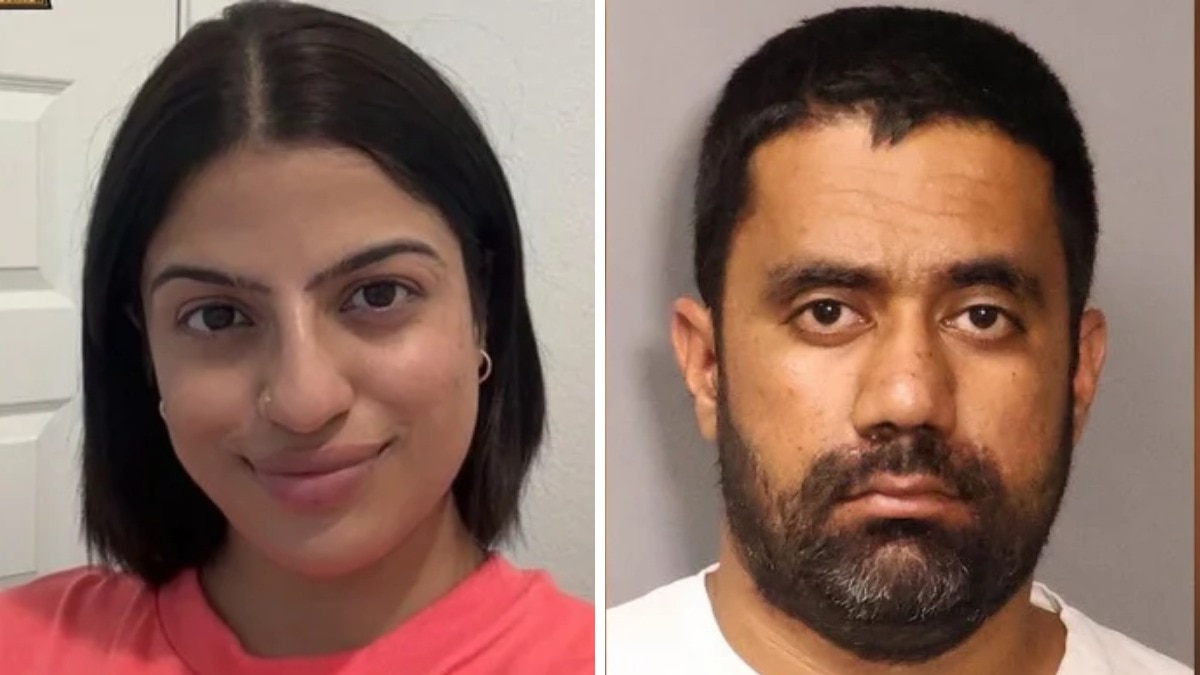
California law enforcement authorities have arrested and charged an Indian-origin resident, Gurinder Gill, with the murder of his wife, Jasmine Gill, after a homicide investigation dismantled his fabricated assertion that federal immigration agents had seized her. According to reporting by India Today, investigators discovered the burned and buried remains of Jasmine Gill, an India-born registered nurse, shortly after scrutinizing Gurinder Gill's claim that she had been detained by U.S. Immigration and Customs Enforcement (ICE). The subsequent discovery of the physical crime scene led prosecutors to file formal murder charges against him.
Key facts
What happened
According to reporting by India Today, the case began to unfold when Jasmine Gill was reported missing from her California residence. In the initial period following her disappearance, Gurinder Gill provided an explanation designed to divert inquiries away from their home: he asserted that federal agents from ICE had taken his wife into custody.
Because federal civil immigration arrests and administrative detentions follow strictly documented institutional protocols, local law enforcement investigators routinely cross-reference such assertions against federal detention rosters. When inquiries with the Department of Homeland Security produced no record of any operation, administrative warrant, or custodial intake involving Jasmine Gill, detectives shifted their focus directly to Gurinder Gill and the couple's domestic environment.
Investigative steps eventually directed search teams to an outdoor location where personnel uncovered a clandestine burial site. Upon excavating the site, forensic technicians recovered human remains that had been subjected to severe burning before being interred. The remains were subsequently identified as those of Jasmine Gill. Following the recovery of the physical evidence and the formal discrediting of the federal abduction narrative, California authorities took Gurinder Gill into custody and formally charged him with murder.
Why it matters
This case highlights an acute, systemic vulnerability within diaspora and immigrant communities: the strategic exploitation of immigration enforcement apparatuses as a cover for domestic violence and fatal intimate-partner crimes. For immigrant families, the prospect of an abrupt detention by federal authorities carries inherent plausibility due to heightened enforcement rhetoric and complex legal documentation frameworks. By invoking the name of ICE, an abusive partner can plausibly explain a sudden disappearance to neighbors, extended family members in foreign jurisdictions, and community peers, delaying missing-person reports and buying crucial time to destroy physical evidence.
Furthermore, the case carries significant professional and community resonance within the Indian diaspora in the United States, where health care workers—particularly registered nurses—represent a vital and growing demographic. When an essential worker disappears under violent circumstances, it reverberates across health systems, diaspora professional networks, and immigrant advocacy groups. Legally, the introduction of fire and clandestine burial creates severe procedural consequences under California criminal law. Under the state's penal framework, actions taken to burn and bury a homicide victim routinely introduce aggravating circumstances, elevate charges toward first-degree murder with premeditation, and provide powerful circumstantial evidence of consciousness of guilt during preliminary hearings and jury trials.
The background
Intimate partner homicides in the United States account for a substantial percentage of violent deaths among women, with the federal Centers for Disease Control and Prevention historically documenting that nearly half of female homicide victims are killed by a current or former male intimate partner. Within foreign-born populations, immigrant women face compounded barriers to safety, including linguistic isolation, unfamiliarity with local municipal legal systems, and deep-seated fears that contacting local police could jeopardize their residency status or trigger deportations for themselves or their relatives.
In California, state legislation such as the California Values Act (Senate Bill 54), enacted in 2017, explicitly restricts local and state law enforcement agencies from using public resources to assist federal civil immigration enforcement. The legislation was passed precisely to reassure immigrant community members that reporting crimes, seeking protection orders, or calling emergency services would not result in deportation. Despite these protections, public perception often lags statutory reality, leaving individuals susceptible to deception by abusers who claim that municipal authorities cooperate directly with federal detention wings.
When a person is taken into custody by ICE's Enforcement and Removal Operations (ERO), standard protocol requires processing through federal administrative facilities, entry into the centralized Online Detainee Locator System, and documentation through Form I-213 (Record of Deportable/Inadmissible Alien). Because this paper trail is immediate and accessible to law enforcement liaisons, attempting to use ICE detention as an alibi is historically short-lived under formal police scrutiny. Disappearance claims involving false allegations against state actors frequently unravel within days, yet perpetrators continue to employ them in an effort to explain why a victim’s telephone is turned off, why their workplace remains unnotified, and why travel plans have ceased.
Reaction
The initial reporting by India Today did not include formal public statements from Gurinder Gill’s defense counsel, regional prosecutorial offices, or extended family members. In high-profile homicide cases involving foreign nationals, documented procedural reactions typically follow standard diplomatic and civic channels.
Under Article 36 of the Vienna Convention on Consular Relations, detained foreign nationals have the right to communicate with their home country’s consular officials. The Indian Embassy in Washington, D.C., along with the Consulate General of India in San Francisco—which maintains jurisdiction over Northern California and several western states—frequently monitors cases involving the deaths or arrests of Indian citizens. Consular posts regularly request status updates from local law enforcement agencies to ensure due process and to facilitate the repatriation of human remains or assist surviving family members abroad with legal representation and estate matters.
Within local communities, immigrant rights coalitions and domestic violence prevention organizations routinely respond to such disclosures by reiterating available crisis resources. Legal aid clinics emphasize that under the Violence Against Women Act (VAWA) and through U-visa and T-visa programs, non-citizen victims of domestic violence have access to statutory protections regardless of their spouse’s immigration posture or threats.
What we don't know yet
Significant investigative and evidentiary details remain unaddressed in the available reporting. Crucially, the specific California municipality and county superior court handling the prosecution were not identified in the initial wire account, leaving the identity of the presiding judge, assigned district attorney, and public defender unknown.
Forensic details also remain unreleased. The local coroner’s office has not publicly disclosed the definitive medical cause of death, nor has it clarified whether Jasmine Gill died prior to the burning or if thermal injuries contributed directly to her death—a distinction that heavily influences whether prosecutors can file specialized statutory enhancements such as torture or murder by lying in wait under California Penal Code Section 190.2. Furthermore, the timeline between when Jasmine Gill was last seen alive, when the ICE claim was made, and when her remains were unearthed has not been fully established, nor have authorities revealed the specific ownership or jurisdiction of the land where her body was buried.
What to watch
The trajectory of the case will be determined by several upcoming legal and forensic benchmarks in the California court system:
This account is based on original reporting by the India Today World Desk.
How this story was produced
This report was written by The Global Wire newsroom from reporting first published by India Today World Desk. We verify the core facts against the original report, write our own account, and add the background and consequences a short wire item leaves out. Drafting is AI-assisted inside an editor-supervised pipeline, and every story is checked for accuracy of attribution, structure and duplication before it appears — full detail in our AI and funding disclosure.
Spotted an error? Tell us at corrections@horizonglobalnews.com and read our corrections policy or editorial standards.





Reader comments
Loading comments…