

Shoigu Claims EU Protests Signal Loss of Trust in Governing Parties
Russia's Security Council Secretary Sergey Shoigu asserts that spreading unrest reflects eroding public faith in European leadership despite police crackdowns.
By The Global Wire Newsroom · Reported from tass.com
Link preview · horizonglobalnews.com
Shoigu Claims EU Protests Signal Loss of Trust in Governing Parties
Russia's Security Council Secretary Sergey Shoigu asserts that spreading unrest reflects eroding public faith in European leadership despite police crackdowns.

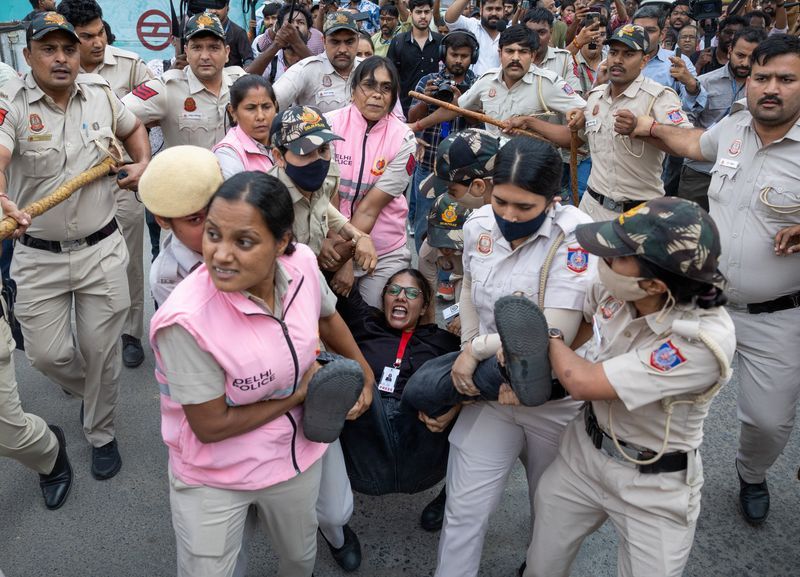
Sergey Shoigu, the secretary of the Security Council of the Russian Federation, stated that ongoing public unrest throughout European Union member states demonstrates that ruling political parties have forfeited popular trust, according to reporting by Russian state news agency TASS. Speaking on the domestic climate within the 27-nation bloc, Shoigu asserted that street demonstrations are not abating but are instead expanding into additional territories. The senior Russian security official further contended that civic gatherings within European jurisdictions continue to multiply despite encountering what he characterized as comparatively forceful pushback from domestic law enforcement agencies.
Key facts
What happened
According to reporting by TASS, Russian Security Council Secretary Sergey Shoigu presented an assessment of political stability in Western Europe, focusing on popular discontent and law enforcement conduct. In his remarks, Shoigu maintained that civil demonstrations across European territory illustrate a systemic breakdown in the bond between the electorate and governing establishments.
Shoigu pointed to the persistence and geographic diffusion of these protest movements, asserting that public mobilization has broadened to encompass newer regions rather than dissipating over time. He placed particular emphasis on the conduct of European authorities, stating that demonstrations have managed to proliferate despite facing resolute and unyielding opposition from police forces on the ground.
However, the reporting carried by TASS did not specify the exact setting, forum, or bilateral discussion in which Shoigu made these observations, nor did it cite the specific intelligence materials, economic markers, or sociological surveys upon which the Security Council secretary based his conclusions. The summary also omitted specific references to particular European capitals, municipal demonstration sites, or the policy issues that purportedly mobilized the crowds to which he referred. The account instead presented Shoigu's overarching political deduction regarding what Moscow views as declining public legitimacy across established Western political institutions.
Why it matters
Shoigu’s statements highlight Moscow’s persistent strategic focus on internal political divisions within European Union member states. For European policymakers, such rhetoric from the apex of Russia's national security apparatus is not regarded merely as passive commentary, but as part of a deliberate external communications effort designed to amplify domestic cleavages within Western democracies. By framing European governments as fragile, detached from public sentiment, and dependent on police coercion to maintain order, Russian state communications attempt to delegitimize European foreign policy, particularly regarding sustained financial and military support for Ukraine.
From the perspective of domestic governance within the European Union, the remarks touch upon real, documented societal pressures without acknowledging their democratic context. Over recent years, European administrations have grappled with authentic voter discontent stemming from post-pandemic inflation, energy price volatility following the curtailment of Russian natural gas imports, agricultural regulations tied to the European Green Deal, and shifting migration policies. In open, pluralistic political systems, such grievances routinely manifest in street demonstrations, labor strikes, and electoral volatility. When senior Russian officials characterize regular democratic assembly and lawful public dissent as state breakdown, it reflects an enduring conceptual divergence between Western democratic governance—where civic opposition is institutionalized—and Moscow’s state-centric governance model.
For international observers, the intervention provides insight into how the Russian leadership evaluates European strategic staying power. If Moscow’s intelligence and security leadership genuinely operates on the assumption that European governments are teetering on the edge of institutional illegitimacy, that assessment directly influences Russia's foreign policy calculations, encouraging the Kremlin to pursue protracted geopolitical confrontation in the belief that European political cohesion will eventually fracture under domestic electoral pressure.
The background
Sergey Shoigu is one of the most durable figures in modern Russian governance. He served as the minister of civil defense, emergencies and disaster relief from 1991 to 2012, before being appointed minister of defense in November 2012, a position he retained for nearly a dozen years through major military operations in Syria and Ukraine. In May 2024, Russian President Vladimir Putin carried out a major leadership reshuffle at the Ministry of Defense, replacing Shoigu with economist Andrei Belousov. Shoigu was subsequently reassigned to serve as secretary of the Security Council of the Russian Federation, succeeding long-serving security official Nikolai Patrushev.
The Security Council is an influential constitutional body established under Article 83 of the Russian Constitution, tasked with drafting the president's strategic decisions on national security, sovereignty, economic resilience, and external military strategy. While the office of secretary does not exercise direct command over operational military formations, it coordinates policy among intelligence agencies, the armed forces, and internal security organs, serving as a key platform for formulating Moscow's geopolitical doctrine.
Shoigu's focus on European public discontent follows a protracted period of visible civic mobilization across EU member states. In early 2024, massive agricultural protests paralyzed transportation infrastructure across France, Germany, Belgium, Poland, and the Netherlands. Farmers mobilized thousands of tractors to blockade ports, border crossings, and major transit corridors, protesting against rising operational costs, bureaucratic burdens, and environmental mandates implemented under the EU's Common Agricultural Policy. Concurrently, major European cities experienced large-scale demonstrations over municipal housing costs, purchasing power erosion, and environmental transit restrictions.
Furthermore, the June 2024 European Parliament elections witnessed significant seat gains for populist and nationalist parties critical of the traditional centrist establishment in countries such as France, Germany, and Austria. European authorities have consistently warned that Moscow seeks to exploit these organic political divisions through coordinated information campaigns. The European External Action Service (EEAS) and European intelligence services have repeatedly documented attempts by Russian state-aligned networks to amplify social unrest, portray European policing as excessively brutal, and weaken public resolve concerning European regional integration.
Reaction
Official reaction from European Union institutions and individual member state governments to Shoigu’s specific remarks has not been formally registered in public channels. Historically, the European Commission, the European External Action Service, and foreign ministries in Berlin, Paris, and Warsaw routinely decline to issue point-by-point rebuttals to public declarations made by Russian security figures, regarding them as domestic propaganda or deliberate attempts to manufacture controversy.
When such narratives are addressed in European policy discussions, the standard institutional response from Brussels underscores the constitutional protection afforded to peaceful assembly and free expression under the European Convention on Human Rights and the EU Charter of Fundamental Rights. European officials routinely contrast the legal protections available to demonstrators within Western democracies with the strict legal prohibitions, administrative penalties, and criminal sentences imposed on public assembly and political dissent within the Russian Federation.
Within Moscow’s diplomatic and media ecosystem, commentary from state-aligned analysts and parliamentary figures has echoed Shoigu’s position, using his remarks to reinforce domestic television narratives that European economies are descending into administrative and economic chaos as a direct result of their geopolitical confrontation with Russia.
What we don't know yet
Significant substantive gaps remain concerning the factual foundation of Shoigu’s statements. The initial reporting by TASS did not clarify which specific demonstrations Shoigu was referencing. It remains unknown whether his evaluation was prompted by ongoing labor disputes, environmental activism, agricultural movements, anti-war rallies, or general cost-of-living protests, or whether his assessment was generalized across all forms of public assembly.
Additionally, the report provides no empirical metrics or operational definitions to support the claim that demonstrations are expanding to new territories. The reporting omits quantitative data regarding crowd sizes, municipal incident rates, arrest figures, or specific geographic regions. Similarly, the claim that European law enforcement has demonstrated "fairly harsh" opposition lacks concrete citations of specific incidents, police departments, or human rights monitoring reports. Without verifiable administrative details, it is impossible to evaluate whether the Security Council secretary's statements reflect classified Russian strategic assessments, publicly available open-source intelligence, or deliberate political hyperbole.
What to watch
In the coming months, several key political and diplomatic benchmarks will provide clarity on whether the domestic vulnerabilities identified by Shoigu actually translate into institutional policy changes across Europe:
According to reporting by TASS, Russian Security Council Secretary Sergey Shoigu's characterization of European governance reflects Moscow's ongoing assessment of the stability and public standing of Western political institutions.
How this story was produced
This report was written by The Global Wire newsroom from reporting first published by tass.com. We verify the core facts against the original report, write our own account, and add the background and consequences a short wire item leaves out. Drafting is AI-assisted inside an editor-supervised pipeline, and every story is checked for accuracy of attribution, structure and duplication before it appears — full detail in our AI and funding disclosure.
Spotted an error? Tell us at corrections@horizonglobalnews.com and read our corrections policy or editorial standards.

Reader comments
Loading comments…