

Trump Campaigns in Iowa to Bolster Republicans in Battleground Midterm Races
President Donald Trump visits Iowa to reinforce Republican candidates as shifting political dynamics and voter concerns over administration policies challenge party standing in the state.
By The Global Wire Newsroom · Reported from Nandita Bose
Link preview · horizonglobalnews.com
Trump Campaigns in Iowa to Bolster Republicans in Battleground Midterm Races
President Donald Trump visits Iowa to reinforce Republican candidates as shifting political dynamics and voter concerns over administration policies challenge party standing in the state.
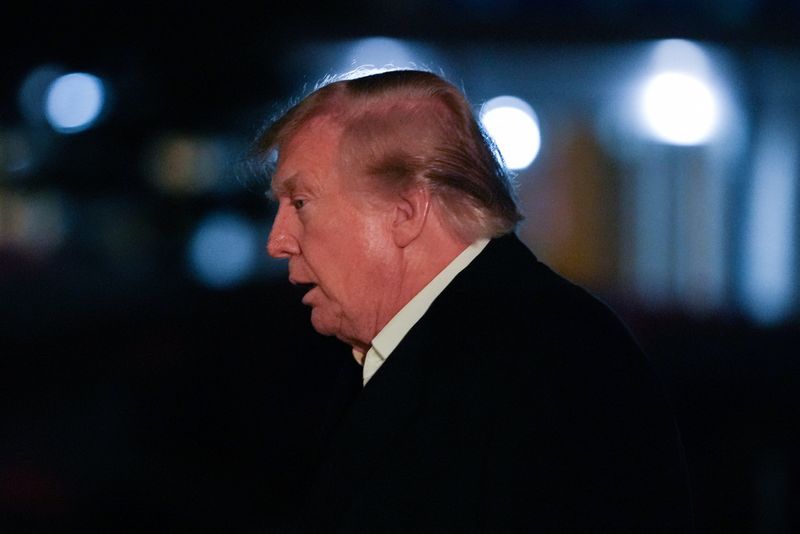
SIOUX CITY, Iowa — President Donald Trump traveled to Iowa on Thursday for a series of campaign appearances designed to reinforce Republican candidates facing competitive contests ahead of the upcoming election, according to reporting by Reuters. The Midwestern state, which supported Trump by a margin of approximately 13 percentage points two years earlier, has emerged as an unexpectedly demanding political battleground for the party. A combination of local economic anxieties connected to federal trade policy, fluctuating presidential approval ratings, and energized opposition organizing has placed several key federal and state offices under heightened pressure, prompting the administration to allocate valuable late-campaign travel time to a jurisdiction once viewed as firmly secure.
Key facts
What happened
President Donald Trump's arrival in Iowa marks a concerted effort by the White House and the national party apparatus to defend seats in a region that served as a cornerstone of his previous electoral coalition, according to reporting by Reuters. The itinerary centered on high-turnout rally events intended to generate local media coverage, galvanize conservative turnout, and shore up enthusiasm among core rural constituencies.
Throughout the current cycle, nonpartisan election analysts and internal party polling have registered declining margins for several Republican candidates across the state's congressional districts and statewide offices. While Iowa previously rewarded the president with an expansive double-digit victory, subsequent public opinion surveys have shown increased ambivalence, particularly among independent voters in suburban communities surrounding Des Moines, Cedar Rapids, and the Quad Cities.
The public appearances were designed to deliver a direct appeal to agricultural communities, small-business owners, and blue-collar industrial workers who turned out heavily in the preceding election. During such stops, the administration typically emphasizes broad themes such as tax reductions, judicial appointments, regulatory relief, and domestic energy production, while urging rank-and-file partisans to disregard negative polling trends and participate heavily at the ballot box.
Simultaneously, the decision to schedule presidential travel to Iowa during the final stretch before the election highlights operational decisions inside the national campaign strategy. Presidential appearances consume significant resources, time, and security coordination. Deploying the head of state to an area carried comfortably two years ago reflects a defensive tactical posture, acknowledging that seats once considered durable safe havens now require direct presidential intervention to prevent partisan erosion.
Why it matters
Iowa has traditionally served as a barometer for broader political, social, and economic currents throughout the American Midwest. The state features a balance of rural agricultural counties, mid-sized manufacturing hubs, and growing suburban residential zones. When political volatility emerges in Iowa, it frequently signals parallel vulnerabilities for governing coalitions across neighboring states such as Wisconsin, Minnesota, Illinois, and Missouri.
For agricultural markets and rural economies, the political contest is inextricably bound to international trade and federal farm support. Iowa ranks among the premier producers of corn, soybeans, and pork in the United States. When the federal government enacts aggressive tariff regimes or confronts international trade partners, overseas retaliatory levies routinely target agricultural exports. Farmers faced with depressed commodity prices, disrupted export logistics, and storage bottlenecks have expressed heightened wariness regarding the long-term viability of protracted trade conflicts, even while federal aid programs attempt to offset losses.
Beyond regional economics, the races contested across Iowa carry direct implications for the legislative balance of power in Washington. The partisan distribution of seats in the United States House of Representatives and the United States Senate often hinges on a handful of competitive battleground districts. If opposition candidates manage to capture congressional seats across Iowa, it significantly increases the likelihood of a shift in legislative majorities. A split government would constrain the executive branch's capacity to pass statutory policy, approve fiscal appropriations without concession, or advance comprehensive regulatory overhauls, while also exposing executive agencies to vigorous oversight hearings and subpoena investigations.
The background
Iowa's contemporary political trajectory is characterized by notable shifts between the two major American parties. Throughout the late twentieth century and the early 2000s, Iowa was widely regarded as one of the country's preeminent purple swing states. It favored Democratic presidential candidates in six out of seven presidential elections from 1988 through 2012, twice backing Barack Obama by significant margins. In 2008, Obama carried Iowa by nearly 10 percentage points, benefiting from substantial youth turnout, strong performance in university towns like Iowa City and Ames, and durable support among working-class voters along the Mississippi River.
That consensus shifted dramatically during the subsequent presidential contest. Donald Trump's populist political platform, focused on industrial protectionism, stricter border enforcement, and deep skepticism toward global trade accords, resonated across Iowa's rural counties and non-metropolitan towns. Voters in historically Democratic-leaning counties along the eastern border swung by margins exceeding 20 percentage points toward the Republican ticket, culminating in Trump's approximately 13-point statewide triumph. That result led many national political strategists to conclude that Iowa had completed a structural realignment, transforming from an unpredictable swing state into a dependable Republican bastion.
However, maintaining that expanded electoral coalition has proven structurally challenging during the governing phase. Midwestern agricultural interests rely fundamentally on access to foreign markets, particularly China, Canada, and Mexico. When national policies prioritized tariff disputes and the renegotiation of trade pacts, regional farm organizations cautioned that long-term market access could be permanently compromised. Furthermore, rapid population growth and shifting voting patterns in suburban precincts around Polk and Dallas counties have created localized counterweights to rural conservative strength, mirroring national trends where college-educated suburban voters have increasingly distanced themselves from populist political rhetoric.
Reaction
Political reactions surrounding the presidential visit reflect the sharp tactical divisions defining the race. Republican candidates and party organizers in Iowa welcomed the high-profile surrogate stop, viewing the president's visit as an indispensable instrument for maximizing rural voter turnout, generating volunteers, and stimulating campaign contributions during the decisive concluding window before voting concludes.
State party leaders have consistently argued that the president's foundational policies—including comprehensive domestic tax reductions, aggressive reductions in federal environmental mandates, and the nomination of conservative judges to federal district, appellate, and supreme courts—align directly with the core interests of Iowa families and rural enterprises. They contend that any polling softness is temporary and will be offset by robust election-day participation from rural voters who may not interact consistently with standard survey methodologies.
Conversely, Democratic campaign organizations and allied political action committees have framed the high-level presidential trip as definitive evidence that Republican incumbents are on the defensive in territory they should theoretically control with ease. Opponents have pointed to the volatility in farm incomes, the cost of healthcare premiums, and the uncertainty surrounding international export markets as direct consequences of White House policies. Democratic candidates running in contested congressional districts have utilized the presidential appearance to raise campaign funds, energizing their own donor networks and framing the election as a critical opportunity to restore statutory checks and balances within the federal government.
What we don't know yet
The ultimate impact of the presidential visit involves several unresolved variables that cannot be determined until votes are formally tabulated. Chief among these is the net effect of presidential appearances on suburban and moderate voters. While large rallies undeniably elevate excitement among enthusiastic supporters in rural counties, they can simultaneously serve as a mobilizing catalyst for opposition voters, particularly in competitive suburban school districts and urban centers.
Additionally, the available reporting does not clarify the exact private polling numbers that compelled national campaign strategists to allocate scarce late-stage travel hours to Iowa rather than other tightly contested states like Florida, Pennsylvania, or Arizona. It remains unclear whether the stop was requested by specific congressional candidates struggling to hold suburban seats or whether it was intended as a broad regional effort to influence adjacent media markets in eastern Nebraska, southern Minnesota, or western Illinois.
Another significant unknown is the extent to which federal agricultural stabilization subsidies and emergency market payments have succeeded in neutralizing farmer dissatisfaction over tariffs. Agricultural balance sheets vary substantially depending on commodity specialization, enterprise size, and debt load, making it difficult to quantify how rural economic stress will translate into individual voting decisions in small precinct halls.
What to watch
In the immediate wake of the campaign stop, observers should monitor public polling disclosures and late-stage campaign finance reports filed with the Federal Election Commission. These filings provide verifiable empirical data detailing whether the event generated a demonstrable surge in small-dollar financial contributions or forced candidates to adjust their scheduled television and digital advertising reservations in the Des Moines, Cedar Rapids, and Sioux City media markets.
Turnout metrics in early voting and absentee ballot requests represent another essential indicator. In Iowa, county auditors regularly publish figures detailing early ballot returns by registered party affiliation. Significant deviations from historical participation baselines in heavily populated suburban counties, compared to rural agricultural precincts, will offer an early signal of which party's mobilization mechanism is operating more effectively.
Finally, the ultimate metric will arrive on election night when returns are certified across Iowa's congressional districts and statewide contests. Watching the vote differentials in counties that swung dramatically toward the Republican column two years prior will demonstrate whether the populist realignment remains durable or whether political volatility has returned Iowa to its historical standing as a genuine battleground state.
This account draws on initial reporting and campaign event coverage provided by Reuters.
How this story was produced
This report was written by The Global Wire newsroom from reporting first published by Nandita Bose. We verify the core facts against the original report, write our own account, and add the background and consequences a short wire item leaves out. Drafting is AI-assisted inside an editor-supervised pipeline, and every story is checked for accuracy of attribution, structure and duplication before it appears — full detail in our AI and funding disclosure.
Spotted an error? Tell us at corrections@horizonglobalnews.com and read our corrections policy or editorial standards.


Reader comments
Loading comments…