

Bukele Rejects Identification of Remains Transferred in Haiti as Missing Salvadorans
Salvadoran officials refute claims that remains handed over at Port-au-Prince belong to four citizens missing since an October 18 gang ambush.
By The Global Wire Newsroom · Reported from ABC News
Link preview · horizonglobalnews.com
Bukele Rejects Identification of Remains Transferred in Haiti as Missing Salvadorans
Salvadoran officials refute claims that remains handed over at Port-au-Prince belong to four citizens missing since an October 18 gang ambush.
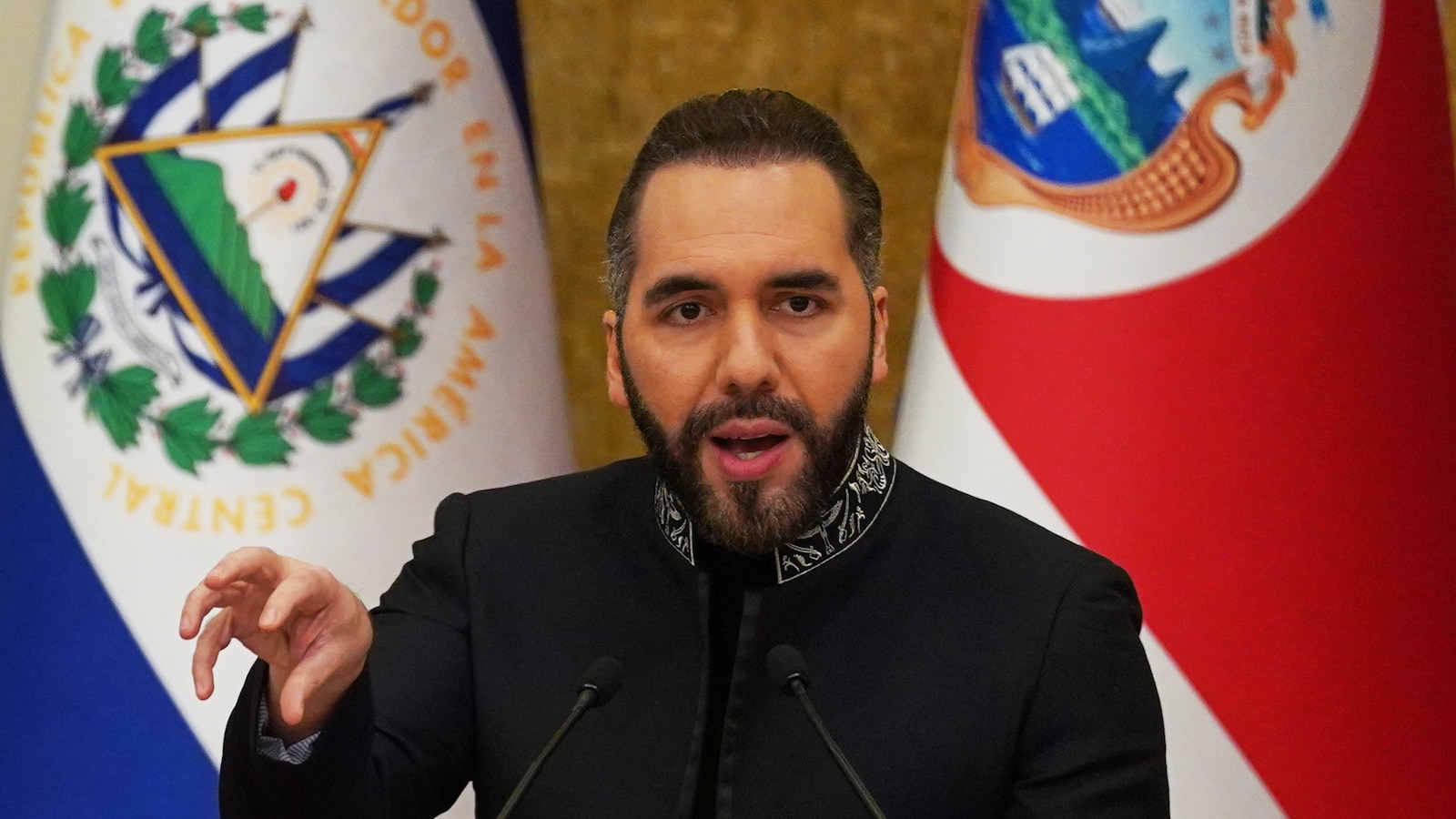
Salvadoran President Nayib Bukele has rejected assertions that human remains transferred to Salvadoran military personnel at an airport in Haiti belong to four Salvadoran nationals who vanished following an armed gang ambush a week earlier. The statement followed a transfer of remains conducted at the international airport in Port-au-Prince, where Salvadoran defense elements have been stationed, leaving the fate of the missing individuals unresolved and underscoring the severe operational chaos confronting foreign personnel and local authorities in the Caribbean nation.
Key facts
What happened
According to reporting by ABC News, the crisis originated on October 18, when four Salvadoran nationals came under fire in an attack attributed to armed Haitian gangs. Following the ambush, the four individuals were reported missing in an environment where gang coalitions exercise authority over the vast majority of Port-au-Prince, routinely conducting kidnappings, armed assaults, and territorial blockades.
Days after the disappearance, Haitian authorities or local intermediaries arranged to hand over human remains to Salvadoran military teams stationed at the airport in Port-au-Prince, the primary logistics and operational hub for international security elements and diplomatic missions operating in the country. Following an inspection of the delivered remains, President Bukele issued a public denial, stating that the bodies transferred to his armed forces did not match the four missing Salvadoran nationals.
Neither the Salvadoran presidency nor Haitian law enforcement provided an immediate public accounting of the physical or forensic criteria used by Salvadoran personnel to make that determination. The rejection of the remains at the airport hub highlights the extreme difficulty of coordinating law enforcement operations, casualty identification, and chain of custody in a capital city where institutional infrastructure has largely disintegrated. With the identification refuted, the four Salvadorans continue to be classified as missing, while the true identity of the individuals whose bodies were delivered to the airport remains unestablished.
Why it matters
This standoff over the identification of recovered remains carries acute operational and diplomatic implications for international personnel operating inside Haiti. Over the past two years, Haiti has descended into an unprecedented security vacuum, in which gang federations control an estimated 80 percent or more of Port-au-Prince. The inability of local institutions to reliably recover, preserve, and identify bodies underscores the profound breakdown of the Haitian state's forensic, judicial, and law enforcement machinery.
For El Salvador, the episode tests the regional security footprint of the Bukele administration. Bukele has built immense domestic popularity and international attention on his hardline domestic security policies, which crushed street gangs in El Salvador under a sustained state of emergency that began in March 2022. Extending operational capabilities abroad, however, exposes Salvadoran personnel to the realities of a completely hollowed-out state where foreign forces operate without the extensive domestic surveillance, territorial control, and legal architecture available to them in San Salvador.
Furthermore, the confusion over the transferred remains demonstrates the extreme hazards facing civilian contractors, security personnel, and foreign nationals in Haiti. When attacks occur, the absence of secure corridors, reliable medical evacuation, and trustworthy municipal services means that even recovering personnel or confirming casualties requires hazardous negotiations, transfers near contested zones, and makeshift verification procedures.
The background
Haiti has faced escalating political, humanitarian, and security turmoil since the July 2021 assassination of President Jovenel Moïse at his private residence. In the political vacuum that followed, armed gangs expanded rapidly, coalescing into powerful federations such as the G9 Family and Allies and later the Viv Ansanm alliance. These coalitions systematically overran police stations, seized control of commercial ports, orchestrated mass prison breaks, and forced the closure of Toussaint Louverture International Airport for extended periods throughout early 2024.
In response to urgent appeals from Haitian transitional authorities and the United Nations, the UN Security Council authorized the deployment of the Multinational Security Support (MSS) mission under Resolution 2699 in October 2023. Led primarily by Kenyan police officers, the mission began deploying contingents to Port-au-Prince in mid-2024 to assist the Haitian National Police in securing critical infrastructure, including government facilities, maritime ports, and the international airport.
El Salvador's involvement in the broader international response has developed alongside Bukele's vocal commentary on Haiti's security collapse. In early 2024, Bukele publicly stated that his administration could resolve Haiti's gang crisis if granted the authority and international backing to do so, pointing to his own controversial but statistically transformative domestic crackdown. El Salvador subsequently committed personnel to assist international security efforts in Haiti, focusing on logistical and specialized support functions. This placed Salvadoran military elements on the ground in Port-au-Prince, operating alongside other international partners under conditions of persistent danger.
Operating in Port-au-Prince, however, presents logistical hurdles distinct from Central American security operations. The Haitian National Police has suffered from systemic underfunding, desertions, and severe equipment shortages, leaving it unable to hold territory once cleared. Gangs frequently use burning barricades, sniper fire, and drone surveillance to interdict movement between neighborhoods. In such an operating theater, even recovering casualties from an ambush site can require days of indirect coordination or dangerous tactical maneuvers.
Reaction
The public reaction to the incident has centered on President Bukele's direct statement disputing the identification of the remains. While Bukele utilized official channels to dismiss the handover, the Salvadoran government did not immediately issue a detailed technical report explaining the methodology used to rule out a match, such as biometric records, dental analysis, or rapid genetic testing.
Official reaction from Haitian transitional authorities, including the Transitional Presidential Council and the leadership of the Haitian National Police, has remained muted. International bodies operating in the country, including the United Nations Integrated Office in Haiti (BINUH) and leadership from the MSS mission, routinely refrain from commenting on individual national contingents' bilateral recovery efforts until formal investigative reports are concluded. Diplomatic observers anticipate that the Salvadoran legislative assembly and regional security partners will seek clarification on the exact role and operating parameters of the Salvadoran personnel who came under attack.
What we don't know yet
Several fundamental elements of the incident remain unverified. It is not publicly known what professional capacity the four missing Salvadorans were serving in when they were ambushed on October 18—specifically whether they were active-duty military personnel assigned to multinational operations, private security contractors, technical advisers, or civilians. The precise geographical location and tactical circumstances of the October 18 gang ambush have likewise not been detailed by Salvadoran or Haitian authorities.
Crucially, the current status of the four missing individuals remains unknown. It is unclear whether they were captured and are being held for ransom by gang leaders, whether they were killed and their bodies concealed, or whether they managed to evade capture. Additionally, authorities have not disclosed who actually transferred the remains to the airport, where those bodies were originally recovered, or whose remains were delivered to the Salvadoran military teams.
What to watch
In the coming days, attention will focus on any formal forensic statements issued by the Salvadoran Ministry of National Defense or the Institute of Legal Medicine regarding the physical evidence evaluated at the airport. Observers will also monitor whether Salvadoran authorities deploy additional resources or negotiate through local intermediaries to ascertain the location of the missing personnel.
Developments within Haiti's security landscape will also depend on how gang alliances respond to foreign military activity near their strongholds. Any direct operational attempt by Salvadoran or multinational forces to recover missing personnel in gang-held neighborhoods could trigger sharp tactical clashes. Finally, the incident may influence future commitments from other international partners considering troop or police contributions to multinational operations in Haiti, highlighting the immense physical risks and institutional challenges awaiting any personnel deployed to Port-au-Prince.
This account is based on original reporting by ABC News.
How this story was produced
This report was written by The Global Wire newsroom from reporting first published by ABC News. We verify the core facts against the original report, write our own account, and add the background and consequences a short wire item leaves out. Drafting is AI-assisted inside an editor-supervised pipeline, and every story is checked for accuracy of attribution, structure and duplication before it appears — full detail in our AI and funding disclosure.
Spotted an error? Tell us at corrections@horizonglobalnews.com and read our corrections policy or editorial standards.



Reader comments
Loading comments…