

Senate Judiciary Hearing Explodes Over Minnesota Non-Profit Fraud Oversight
Lawmakers clashed sharply during a Senate Judiciary Committee hearing examining supervisory breakdowns and state-level accountability in multi-million-dollar Minnesota fraud schemes.
By The Global Wire Newsroom · Reported from ET Online
Link preview · horizonglobalnews.com
Senate Judiciary Hearing Explodes Over Minnesota Non-Profit Fraud Oversight
Lawmakers clashed sharply during a Senate Judiciary Committee hearing examining supervisory breakdowns and state-level accountability in multi-million-dollar Minnesota fraud schemes.
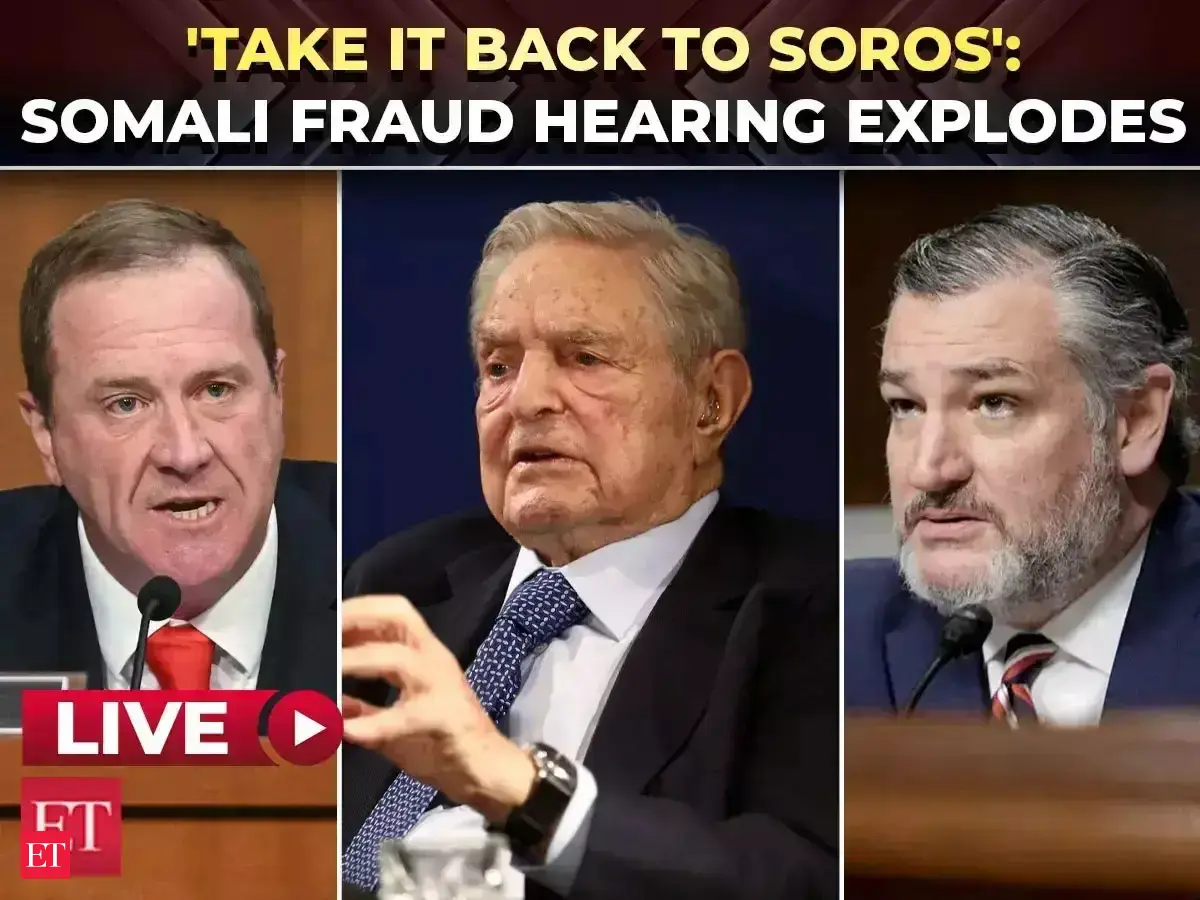
WASHINGTON — Tensions flared in the Senate Judiciary Committee on Capitol Hill as Republican lawmakers sharply confronted a witness over supervisory failures and alleged state complicity in expansive federal program fraud schemes operating across Minnesota. During a contentious exchange reported by ET Online, Sen. Ted Cruz of Texas accused senior Minnesota Democratic officials of turning a blind eye to red flags as non-profit networks siphoned millions of taxpayer dollars intended for social safety net programs. The confrontation underscores how prolonged legal fallout from the largest pandemic-era relief scandals in the United States continues to reverberate through congressional oversight committees, intensifying national scrutiny over state executive administration and federal grant management.
Key facts
What happened
During a designated oversight session of the Senate Judiciary Committee, lawmakers turned their attention to the structural enforcement breakdowns that permitted systemic fraud in federally funded Minnesota welfare programs. According to reporting by ET Online, the proceedings escalated when Sen. Ted Cruz challenged an invited witness over institutional ties and supervisory negligence, repeatedly pressing the individual to answer direct inquiries regarding administrative inaction.
Cruz alleged that high-ranking Minnesota state officials were informed of irregular expenditures and compliance red flags within non-profit distribution networks but failed to intervene decisively. The Texas Republican contended that political considerations and bureaucratic inertia allowed coordinated networks, including groups associated with Minnesota's Somali community organizations, to siphon massive volumes of public assistance funds before federal law enforcement intervened.
Witness questioning grew particularly adversarial as Republican senators pressed the panelist regarding financial backing and affiliations with philanthropic organizations, including initiatives funded by liberal billionaire George Soros. Committee members demanded explanations for how multi-million-dollar grant programs operated for months without standard verification protocols. The hearing featured sharp interruptions, with lawmakers demanding straightforward responses to questions regarding who inside Minnesota state government bore ultimate responsibility for disbursing public money despite persistent irregularities.
Why it matters
Congressional committee hearings of this nature carry significant policy, fiscal, and administrative consequences that extend well beyond the hearing room. When federal block grants and welfare allocations are compromised at scale, public trust in foundational social safety nets suffers severe erosion. Federal social welfare appropriations rely on cooperative federalism, wherein Washington distributes funding through agencies like the United States Department of Agriculture and the Department of Health and Human Services, while individual states shoulder the responsibility of auditing and monitoring distribution partners.
When state-level gatekeeping collapses, legitimate beneficiaries—such as impoverished children, elderly residents, and low-income working families—bear the systemic fallout. Extensive fraud exposes public programs to aggressive federal clawbacks, stringent regulatory restrictions, and potential spending caps imposed by skeptical lawmakers. For taxpayers, hundreds of millions of unrecovered dollars represent unmitigated fiscal loss during an era of mounting federal deficits and heightened budget scrutiny.
Moreover, the political dimensions are substantial. Minnesota executive leadership, including Gov. Tim Walz and administrative agency commissioners, faces continuing reputational and political challenges regarding governance competence. The allegations fuel ongoing partisan battles over whether state regulators avoided rigorous auditing out of fear of public backlash, negligence, or institutional paralysis. The dynamic forces federal granting agencies to fundamentally reassess their reliance on self-reporting non-profit vendors.
The background
To understand the intensity of the Senate hearing, it is necessary to examine the broader context of federal welfare fraud investigations in Minnesota over recent years. The central reference point is the sprawling prosecution surrounding Feeding Our Future, a non-profit organization based in St. Anthony, Minnesota. Beginning in 2022, the U.S. Attorney's Office for the District of Minnesota and the Federal Bureau of Investigation initiated indictments against 70 individuals in connection with an alleged $250 million scheme to defraud the Federal Child Nutrition Program.
The scheme originated when emergency administrative flexibilities were introduced during the COVID-19 pandemic, relaxing in-person monitoring requirements for meal distribution sites. Operators across dozens of newly formed or affiliated non-profit sites submitted fraudulent invoices claiming to have served tens of thousands of meals daily to local children. Instead, federal prosecutors revealed that co-conspirators fabricated rosters of fictitious children and laundered stolen funds into luxury real estate, foreign properties, high-end vehicles, and commercial shell entities, with substantial sums traced internationally to East Africa, Turkey, and Dubai.
While federal prosecutors achieved dozens of convictions and guilty pleas between 2023 and 2024, the administrative handling by the Minnesota Department of Education became an intense subject of state legislative inquiry and independent audit. The state agency maintained that it attempted to stop payments in 2020 and 2021 but was restrained by state court proceedings initiated by the non-profit. However, a subsequent review by Minnesota's Office of the Legislative Auditor found that the Department of Education’s oversight of the program was inadequate and that administrators failed to enforce standard compliance mechanisms or adequately inspect suspicious operations.
Compounding these nutrition program issues, federal and state investigators in Minnesota later opened reviews into housing stabilization assistance and Medicaid-funded autism therapy centers, examining whether similar lax administrative hurdles enabled parallel billing fraud. These cascading revelations elevated local administrative shortcomings into a prominent national debate over public funds management and regulatory enforcement.
Reaction
The confrontational hearing triggered strong responses along familiar partisan lines within Congress and state political organizations. Democratic members of the committee criticized the aggressive questioning format, arguing that Republican lawmakers were weaponizing complex criminal fraud cases to advance political narratives and unjustly stigmatize entire immigrant communities. Progressive lawmakers maintained that the primary culprits in these schemes were already being systematically prosecuted, convicted, and imprisoned by the federal Department of Justice.
Minnesota state agency officials have historically defended their conduct by pointing out that state civil regulators lack the subpoena power and covert investigative tools of federal law enforcement agencies like the FBI and the Internal Revenue Service. Representatives for Minnesota administrative departments have repeatedly asserted that staff operated within the legal constraints imposed by existing state statutes and judicial orders.
Conversely, congressional Republicans insisted that administrative accountability cannot end with the criminal sentencing of individual conspirators. Lawmakers argued that cabinet-level administrators and state governors who oversaw the disbursement of compromised funds must be held accountable for neglecting fiduciary duties. Outside legal and public integrity organizations noted that the hearing reflects a broader mandate for Congress to strengthen federal statutory oversight over how individual states manage federal pass-through funds.
What we don't know yet
Several critical questions remain unresolved following the Judiciary Committee's exchange. The primary reporting does not disclose the official identity, title, or institutional affiliation of the specific witness who appeared before the panel, leaving unclear whether the individual was testifying as an independent policy researcher, a legal advocate, or a former compliance officer. Consequently, the concrete connection between the witness's organizational backers and the operational mechanics of the Minnesota fraud schemes remains unspecified.
Additionally, the precise legislative remedies the Senate committee intends to pursue remain unarticulated. While senators voiced strong criticism, it remains uncertain whether the committee plans to draft formal subpoenas for Minnesota state officials, introduce binding statutory revisions to federal grant oversight laws, or refer specific administrative figures for federal ethics inquiries. Finally, the full fiscal accounting of how much stolen money has been permanently lost versus successfully reclaimed through federal civil asset forfeiture procedures continues to be an open question across multiple ongoing court proceedings.
What to watch
Observers of federal oversight and state governance should monitor several key milestones in the months ahead. First, watch for whether the Senate Judiciary Committee issues formal requests for production of records or subpoenas directed at the Minnesota Department of Education, the Minnesota Department of Human Services, and executive staff members of the governor's office. Such actions would mark an escalation from informational hearings to an active congressional investigation.
Second, federal court dockets in the U.S. District Court for the District of Minnesota will continue to yield sentencing hearings and trials for remaining defendants, potentially introducing newly unsealed evidence detailing internal communications with state regulators. Third, federal auditors from the Government Accountability Office and agency Inspectors General are scheduled to release updated assessments on pandemic-era relief oversight, which could provide Congress with concrete benchmarks to overhaul pass-through grant requirements for state-administered welfare programs nationwide.
Reporting from ET Online contributed to this report.
How this story was produced
This report was written by The Global Wire newsroom from reporting first published by ET Online. We verify the core facts against the original report, write our own account, and add the background and consequences a short wire item leaves out. Drafting is AI-assisted inside an editor-supervised pipeline, and every story is checked for accuracy of attribution, structure and duplication before it appears — full detail in our AI and funding disclosure.
Spotted an error? Tell us at corrections@horizonglobalnews.com and read our corrections policy or editorial standards.




Reader comments
Loading comments…