

Senate Hearing Sparks Clash Over Autopen Usage and Biden White House Decision-Making
Republican lawmakers pressed questions over executive authority and staff decision-making during a contentious Senate Judiciary Committee hearing focused on former President Joe Biden.
By The Global Wire Newsroom · Reported from ET Online
Link preview · horizonglobalnews.com
Senate Hearing Sparks Clash Over Autopen Usage and Biden White House Decision-Making
Republican lawmakers pressed questions over executive authority and staff decision-making during a contentious Senate Judiciary Committee hearing focused on former President Joe Biden.
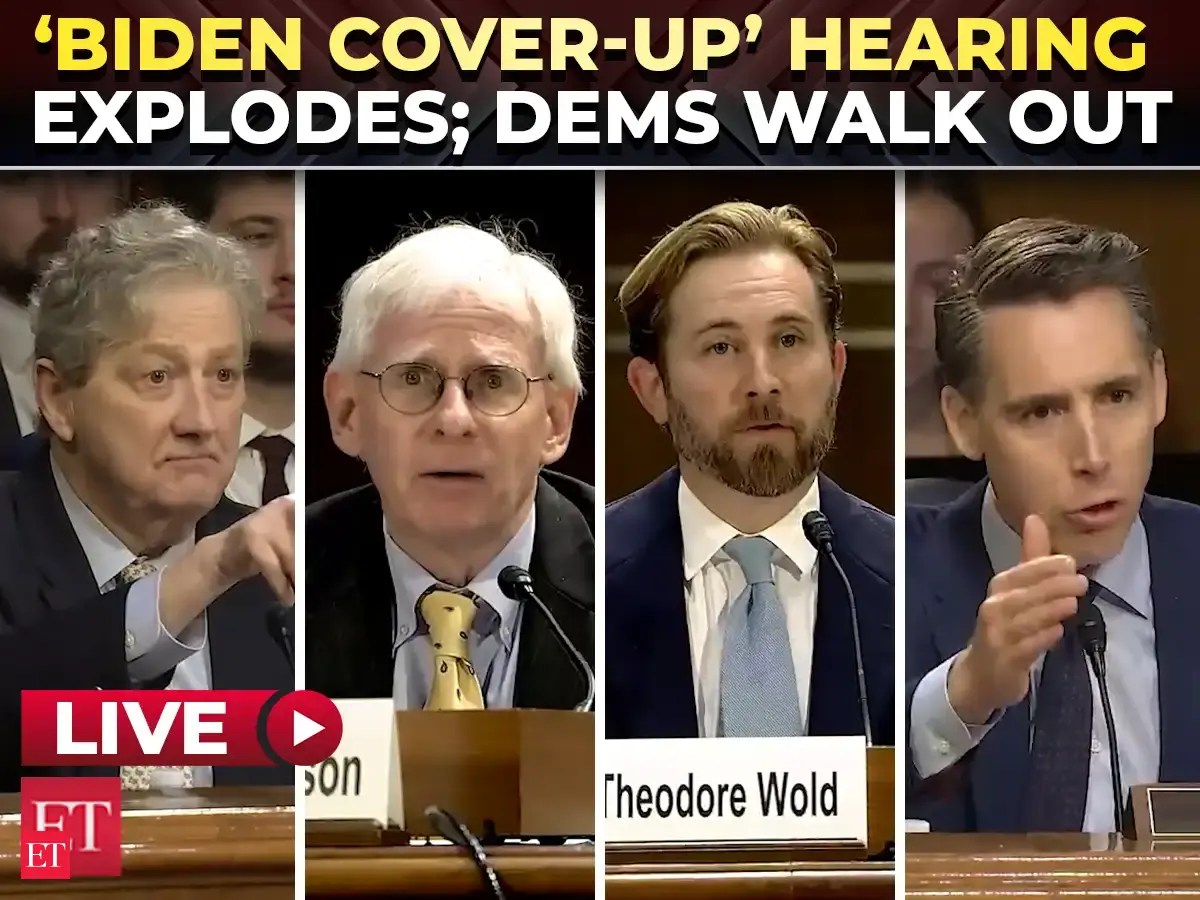
WASHINGTON — Sharp partisan divisions surfaced during a Senate Judiciary Committee hearing on Capitol Hill as Republican lawmakers pressed allegations that staff members and Democratic officials shielded questions surrounding the cognitive health of former President Joe Biden. The proceedings centered on executive governance, delegation of constitutional duties, and the administration's use of mechanical signature devices, known as autopens, to execute official instruments. The exchanges underscored enduring political and constitutional friction surrounding the operational mechanics of the modern executive branch and the extent to which presidential authority can be exercised by proxy.
Key facts
What happened
During a convened oversight session of the Senate Judiciary Committee, Republican members interrogated the command structure of the Biden administration, raising formal questions about the day-to-day handling of executive decisions, according to reporting by ET Online. The proceedings grew heated as Republican senators alleged that top Democratic officials and senior White House staff engaged in a coordinated effort to suppress public and congressional scrutiny of Biden's mental acuity.
At the center of the dispute was testimony and debate over the mechanical autopen, a device long utilized by executive agencies to apply an authorized facsimile of the president's signature to high volumes of correspondence, proclamations, commissions, and enacted legislation. Lawmakers questioned whether the tool had been employed in instances where the chief executive might not have personally deliberated on the underlying actions.
Senator Josh Hawley delivered a pointed challenge during the session, pressing for specific records detailing the chain of custody and authorization protocols that governed executive signatures. Hawley questioned whether unverified staff members or unelected advisors exercised functional authority under the mantle of the presidency, demanding an explicit accounting of who directed the administration's key policies. Democratic members pushed back against the line of inquiry, characterizing the assertions as partisan political theater designed to re-litigate past campaigns rather than conduct rigorous oversight of federal legal policy.
Why it matters
The dispute before the Senate Judiciary Committee touches upon fundamental constitutional doctrines regarding the non-delegable responsibilities of the American presidency. Under Article II of the United States Constitution, executive power is vested solely in an individual officer: the President of the United States. While cabinet secretaries, agency administrators, and White House aides operate with significant delegated authority across the federal bureaucracy, distinct constitutional acts—including signing bills passed by Congress, issuing executive orders, granting pardons, and commanding the armed forces—require the direct, informed will of the commander-in-chief.
If questions persist regarding whether official presidential instruments were executed without explicit presidential direction, the dispute creates potential avenues for legal challenges against administrative rules, appointments, and executive directives. Litigants affected by contested federal policies frequently seek procedural irregularities to challenge government actions in federal courts. Beyond immediate litigation, the debate highlights the lack of clear statutory transparency guidelines governing how presidential staffs verify and archive proof of direct presidential intent. For citizens and institutions subject to federal regulation, clarity regarding the authenticity and direct authority behind executive actions remains an indispensable pillar of the rule of law.
The background
The operational use of the autopen in the executive branch is neither novel nor historically unique to the Biden administration, though its application to constitutional duties has long generated legal debate. Mechanical signature devices have been utilized by American presidents since the administration of Harry S. Truman in the late 1940s, primarily to handle the vast volumes of ceremonial proclamations, routine diplomatic greetings, and public correspondence that cross the White House desk.
For decades, conventional legal interpretation held that the actual signing of enrolled bills passed by Congress required the president's physical signature with a traditional pen. That convention shifted formally in 2005 during the administration of President George W. Bush. In a 29-page memorandum issued by the Department of Justice's Office of Legal Counsel (OLC), then-Deputy Assistant Attorney General Howard C. Nielson Jr. concluded that the signing requirement under Article I, Section 7 of the U.S. Constitution does not mandate a personal physical signing. The OLC concluded that a president may legally direct a subordinate to apply the presidential signature via an autopen, provided the president has formed the subjective intent to approve the measure and has expressly authorized the specific signing.
President Barack Obama became the first chief executive to rely formally on that legal interpretation to sign an act of Congress into law. In May 2011, while attending a Group of Eight summit in Deauville, France, Obama authorized White House staff in Washington to affix his signature via autopen to a four-year extension of key provisions of the USA PATRIOT Act just minutes before statutory authority expired. He employed the device again in 2013 to sign an extension of the fiscal cliff tax compromise while vacationing in Hawaii. Although conservative legal advocacy groups and congressional critics raised objections at the time, no federal court invalidated the statutes.
Congressional scrutiny regarding Biden's staff operations intensified following the February 2024 release of Special Counsel Robert Hur's report on the handling of classified documents. The report described Biden as an elderly man with memory lapses, prompting sustained oversight demands from House and Senate Republicans concerning the day-to-day management of the West Wing.
Reaction
The committee exchanges drew immediate, sharply polarized responses along party lines. Republican senators asserted that congressional oversight bodies possess a constitutional obligation to verify the integrity of executive decision-making. Lawmakers aligned with Hawley contended that the public is entitled to know whether unelected aides exercised authority reserved exclusively for the elected president, arguing that administrative transparency is vital for public trust.
Senate Democrats defended the former administration, dismissing the autopen allegations as speculative and unsubstantiated. Democratic members argued that routine administrative mechanisms were being politicized to distract from substantive policy debates. Committee Democrats pointed to decades of bipartisan precedent affirming that presidential staff regularly handle ministerial execution tasks after receiving direct presidential approval.
Legal scholars and former executive branch counsels also entered the public discussion, noting that while the OLC memo permits mechanical signing, the legal validity of such actions relies entirely on the chain of verifiable presidential intent. Analysts noted that congressional committees have broad constitutional latitude under Article I to investigate the administrative practices of executive agencies, though attempts to breach executive privilege surrounding confidential discussions between a president and senior advisors face stringent judicial tests.
What we don't know yet
Several substantive evidentiary questions remain unanswered following the committee's initial hearing. The available reporting does not specify whether the committee obtained internal White House logs, cryptographic communications, or contemporaneous staff records demonstrating that specific bills or executive orders were signed without direct presidential authorization.
It also remains unverified which specific documents or actions are under active committee scrutiny, and whether committee investigators have secured direct testimony from the White House staff secretary—the official traditionally responsible for maintaining custody of presidential documents and overseeing signature procedures. Furthermore, it is unclear whether the committee plans to issue formal subpoenas to former executive office aides to establish a definitive timeline of how signature authorizations were conveyed, leaving the factual threshold between routine administrative execution and potential procedural overreach unresolved.
What to watch
The trajectory of the investigation will largely be determined by subsequent procedural steps taken by the Senate Judiciary Committee. Observers will monitor whether committee leadership authorizes formal depositions or issues subpoenas for White House staff secretary records, communications logs, and operational guidelines governing executive signature delegations.
Additionally, federal court dockets represent a critical indicator. Watch for whether conservative public-interest legal foundations or corporate entities subject to contested executive orders introduce autopen-related procedural challenges in pending administrative law cases. Finally, attention will focus on whether lawmakers introduce corrective statutory measures—such as amendments to the Presidential Records Act or federal statutory authentication rules—that would mandate explicit written or biometric verification protocols whenever a mechanical device is employed to enact federal legislation.
Reporting from ET Online served as the informational basis for this account of the Senate Judiciary Committee proceedings and the surrounding congressional debates.
How this story was produced
This report was written by The Global Wire newsroom from reporting first published by ET Online. We verify the core facts against the original report, write our own account, and add the background and consequences a short wire item leaves out. Drafting is AI-assisted inside an editor-supervised pipeline, and every story is checked for accuracy of attribution, structure and duplication before it appears — full detail in our AI and funding disclosure.
Spotted an error? Tell us at corrections@horizonglobalnews.com and read our corrections policy or editorial standards.



Reader comments
Loading comments…