

FBI Chief Kash Patel Clashes With House Lawmakers Over Jeffrey Epstein Investigative Records
A confrontational exchange between FBI Director Kash Patel and Representative Jamie Raskin highlights long-running legal and political battles over Jeffrey Epstein records.
By The Global Wire Newsroom · Reported from ET Online
Link preview · horizonglobalnews.com
FBI Chief Kash Patel Clashes With House Lawmakers Over Jeffrey Epstein Investigative Records
A confrontational exchange between FBI Director Kash Patel and Representative Jamie Raskin highlights long-running legal and political battles over Jeffrey Epstein records.
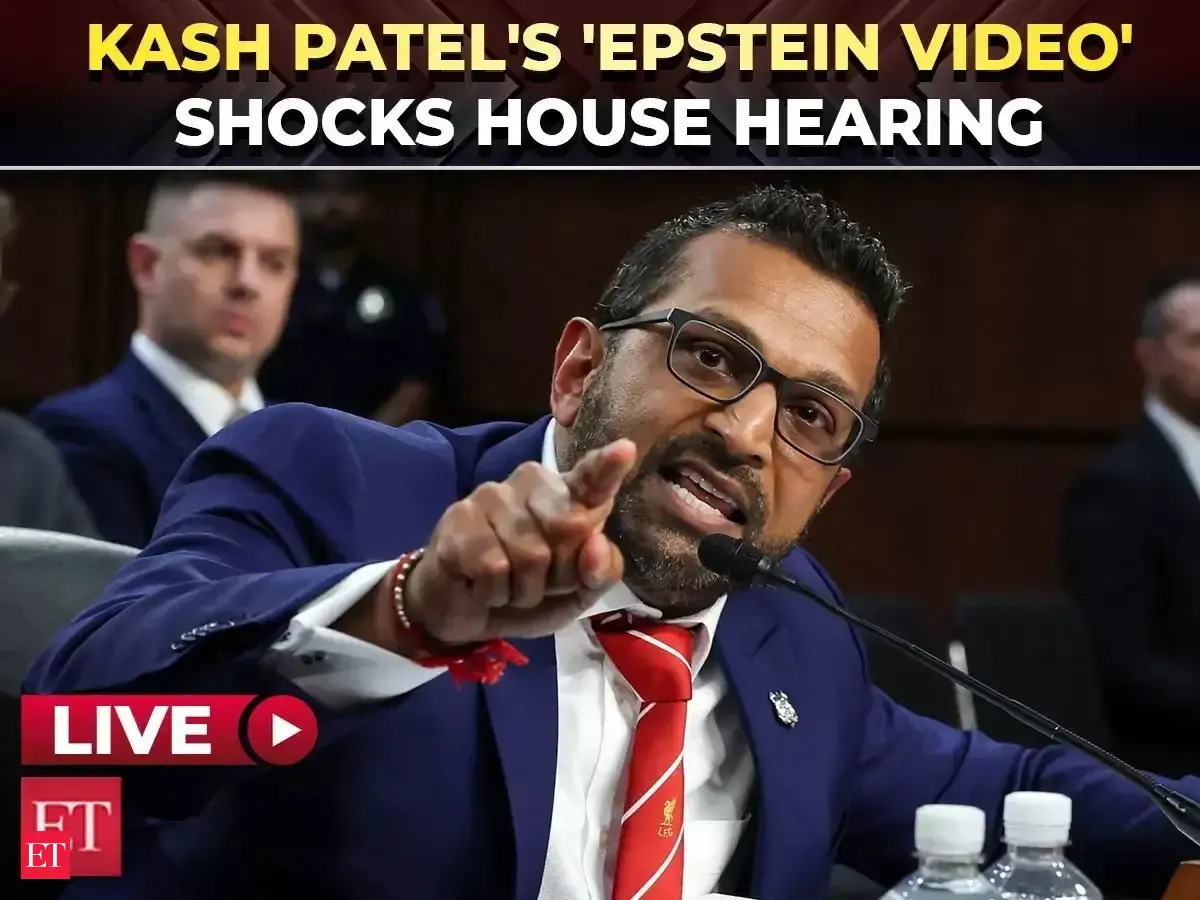
Federal Bureau of Investigation Director Kash Patel clashed sharply with lawmakers during a contentious United States House of Representatives committee hearing on Capitol Hill, delivering an aggressive response when challenged regarding his prior public statements on the Jeffrey Epstein sex-trafficking investigation. The confrontation intensified when Representative Jamie Raskin, a senior Democratic member of the House, pressed Patel on his previous assertions demanding the immediate and comprehensive disclosure of names connected to Epstein's network. In response to video and audio records introduced by Raskin highlighting those earlier commitments, Patel declared to the committee that he was prepared to identify specific individuals, setting off an abrupt escalation in an inquiry centered on federal transparency, executive authority, and the management of sensitive criminal files.
Key facts
What happened
During a formal oversight hearing on Capitol Hill, House lawmakers convened to question FBI Director Kash Patel regarding bureau administration, policy choices, and active investigative files. The session shifted into a volatile confrontation when Representative Jamie Raskin, a Maryland Democrat who serves in senior committee leadership, directed the panel's focus toward the historical records surrounding Jeffrey Epstein, the convicted sex offender who died in federal custody in 2019.
Raskin structured his questioning around past public appearances and media broadcasts in which Patel, speaking prior to assuming the leadership of the nation's premier domestic law enforcement agency, had vehemently advocated for releasing unredacted government materials relating to Epstein. As part of his cross-examination, Raskin presented recorded excerpts featuring Patel's own previous statements, asking why the full compendium of individuals associated with Epstein had not been made publicly available under Patel's administrative leadership.
Faced with the archival footage, Patel reacted forcefully to Raskin's line of inquiry. Rather than declining to address the matter under standard Department of Justice procedural protocols, Patel issued a sharp retort, stating, "You want names? I’ll give you names," and proceeding to introduce claims regarding the case directly into the legislative record. The exchange disrupted the conventional question-and-answer format of the proceeding, prompting rapid back-and-forth interruptions between the witness table and the committee dais as members sought to parse whether Patel was speaking in his formal capacity as FBI director, offering operational disclosures, or referencing external political figures.
Why it matters
The public confrontation between the director of the Federal Bureau of Investigation and a senior member of Congress carries substantial implications for the rule of law, the integrity of federal prosecutions, and the constitutional limits of congressional oversight. Under longstanding United States legal practice, the Department of Justice and the FBI enforce strict protocols designed to prevent the extrajudicial naming of uncharged third parties who appear in investigative case files. These policies exist to safeguard constitutional due process, prevent irreparable reputational harm, and protect ongoing intelligence operations. When the sitting director of the FBI openly suggests naming individuals in an open congressional setting outside of a formal court indictment, it signals a dramatic potential departure from institutional norms that have governed federal law enforcement for decades.
Furthermore, the exchange reflects the growing collision between populist demands for transparency and the statutory machinery of the American criminal justice system. The public interest in the Epstein case is virtually unprecedented, spanning international jurisdictions and touching prominent figures in finance, academia, philanthropy, and government. However, the legal framework governing federal materials is highly restrictive. Federal criminal investigators routinely compile tips, allegations, flight logs, interview summaries, and third-party references that are never corroborated to the standard required for a criminal charge. If federal agency heads use congressional hearings as venues to selectively publicize names extracted from unadjudicated investigative files, it risks transforming federal law enforcement archives into political weapons, undermining public confidence in the impartial administration of justice.
For citizens and legal observers, the dispute underscores the acute tension facing officials who transition from private political commentary to the executive leadership of sensitive intelligence and investigative bodies. The statutory constraints of the office limit an official's ability to execute political promises made on external media platforms, creating institutional friction with lawmakers charged with conducting executive branch oversight.
The background
The political battle over the Epstein files originates in one of the most scrutinized criminal sagas in modern American legal history. Jeffrey Epstein was first indicted in Florida in 2006 on state solicitation charges following an extensive local police investigation involving dozens of underage victims. That prosecution concluded with a highly controversial 2008 non-prosecution agreement negotiated with federal prosecutors, which permitted Epstein to plead guilty to state prostitution offenses, serve a 13-month jail sentence with work-release privileges, and register as a sex offender, while immunizing potential co-conspirators from federal charges in the Southern District of Florida.
Federal prosecutors in the Southern District of New York reopened the matter more than a decade later, arresting Epstein in July 2019 on federal sex-trafficking charges involving minors. Epstein was detained without bail at the Metropolitan Correctional Center in lower Manhattan. On August 10, 2019, Epstein was found dead in his cell. The New York City chief medical examiner ruled the death a suicide by hanging, an outcome that prompted widespread public skepticism, numerous official reviews, and intense political scrutiny of federal prison administration.
Following Epstein's death, the Southern District of New York prosecuted his longtime associate, British socialite Ghislaine Maxwell. In December 2021, a federal jury convicted Maxwell on five federal counts, including sex trafficking of a minor and transporting a minor with intent to engage in criminal sexual activity; she was subsequently sentenced to 20 years in federal prison in June 2022.
Concurrently, vast collections of investigative documents became subject to civil litigation in the Southern District of New York, most notably in Giuffre v. Maxwell, a defamation lawsuit filed by victim Virginia Giuffre. Beginning in January 2024, Senior U.S. District Judge Loretta Preska oversaw the gradual unsealing of hundreds of legal filings, flight records, and deposition excerpts. While these judicial releases unsealed the identities of dozens of prominent individuals, court officials repeatedly noted that inclusion in civil filings did not signify criminal wrongdoing or complicity in Epstein's offenses.
Separately, executive branch investigative files remain tightly controlled. Under Rule 6(e) of the Federal Rules of Criminal Procedure, the disclosure of grand jury testimony and evidence is strictly prohibited absent a specific judicial order. Additionally, Freedom of Information Act exemptions routinely shield records compiled for law enforcement purposes when disclosure could constitute an unwarranted invasion of personal privacy. Prior to his appointment, Kash Patel built a national profile as a congressional investigator, defense official, and media commentator who repeatedly criticized the Department of Justice for concealing public-interest records, arguing that bureaucratic classifications were being utilized to shield politically connected figures.
Reaction
The exchange between Patel and Raskin produced immediate, polarized responses across Capitol Hill. Committee members and outside observers divided sharply over whether Patel's declarations represented an overdue challenge to institutional secrecy or an inappropriate breach of prosecutorial protocol.
House Democrats aligned with Representative Raskin expressed deep concern over Patel's demeanor and rhetoric, emphasizing that statutory oversight requires precise answers rather than combative declarations. Democratic committee aides and legal ethicists noted that invoking third-party names from executive law enforcement files in an open hearing risks violating internal Department of Justice guidelines and basic due process principles, pointing out that Patel had not clarified whether the names he referenced were derived from verified criminal indictments or uncorroborated investigative leads.
Conversely, Republican lawmakers and conservative defenders of Patel praised his aggressive posture, contending that entrenched federal bureaucracies have spent years stonewalling legitimate public and legislative requests for full transparency regarding Epstein’s network. Patel's allies argued that the director was responding to an unfair political trap laid by Raskin, who they claimed was using past recordings to embarrass the director rather than engaging in constructive oversight of the bureau's modern investigative priorities.
Legal scholars and former federal prosecutors who monitored the hearing voiced caution. Several former Justice Department officials emphasized that sitting directors are legally bound to protect the confidentiality of ongoing investigations and that any unauthorized disclosure of grand jury materials or uncharged witness identities could expose the agency to legal challenges and compromise institutional credibility.
What we don't know yet
Several critical factual and procedural questions remain unresolved in the wake of the hearing. Foremost is the exact nature of the names Patel referenced in his declaration. The public record does not clarify whether Patel was referring to individuals currently under active federal investigation, names already unsealed through past civil litigation in the Southern District of New York, or uncharged figures whose identities remain protected under federal grand jury rules.
It is also unclear whether the FBI has prepared an official, legally vetted compendium of documents for formal submission to the House committee, or whether Patel's comments were an off-the-cuff response to Raskin's presentation of archival footage. Furthermore, the committee record has not yet established whether Patel intends to invoke executive privilege or law enforcement deliberative privilege to restrict the disclosure of underlying FBI interview notes (commonly designated as Form FD-302s). Finally, observers do not yet know whether the committee will issue a formal subpoena compelling the production of specific Epstein-related files, or how the Department of Justice’s Office of Legal Counsel would evaluate such an order in light of Rule 6(e) constraints.
What to watch
In the coming weeks, attention will center on whether the House committee formally requests or subpoenas the materials referenced during Patel's testimony. The official committee transcript and any subsequent written questions for the record will serve as the initial test of whether Patel's verbal assertions will be backed by formal agency documentation. Lawmakers typically submit written follow-up inquiries within days of a major hearing, obligating the FBI's Office of Congressional Affairs to deliver formal written responses.
Observers will also watch for reactions from the broader Department of Justice, particularly whether federal prosecutors or the attorney general issue clarifying statements regarding the legal boundaries of disclosing historical grand jury evidence. Concurrently, any movement in pending federal Freedom of Information Act lawsuits seeking additional Epstein files will determine whether judicial rulings supersede administrative decisions regarding document declassification. The next scheduled oversight appearances of senior federal law enforcement officials will provide an immediate barometer of whether congressional scrutiny of the Epstein files will expand into a broader legislative inquiry.
This account is based on original reporting by ET Online.
How this story was produced
This report was written by The Global Wire newsroom from reporting first published by ET Online. We verify the core facts against the original report, write our own account, and add the background and consequences a short wire item leaves out. Drafting is AI-assisted inside an editor-supervised pipeline, and every story is checked for accuracy of attribution, structure and duplication before it appears — full detail in our AI and funding disclosure.
Spotted an error? Tell us at corrections@horizonglobalnews.com and read our corrections policy or editorial standards.



Reader comments
Loading comments…