

Pentagon Outlines Plan to Sustain Combat Forces for 90 Days Without Civilian Logistics
The United States military is advancing plans to operate for up to three months fully insulated from commercial power, fuel, and transport networks.
By The Global Wire Newsroom · Reported from Prabhat Ranjan Mishra
Link preview · horizonglobalnews.com
Pentagon Outlines Plan to Sustain Combat Forces for 90 Days Without Civilian Logistics
The United States military is advancing plans to operate for up to three months fully insulated from commercial power, fuel, and transport networks.
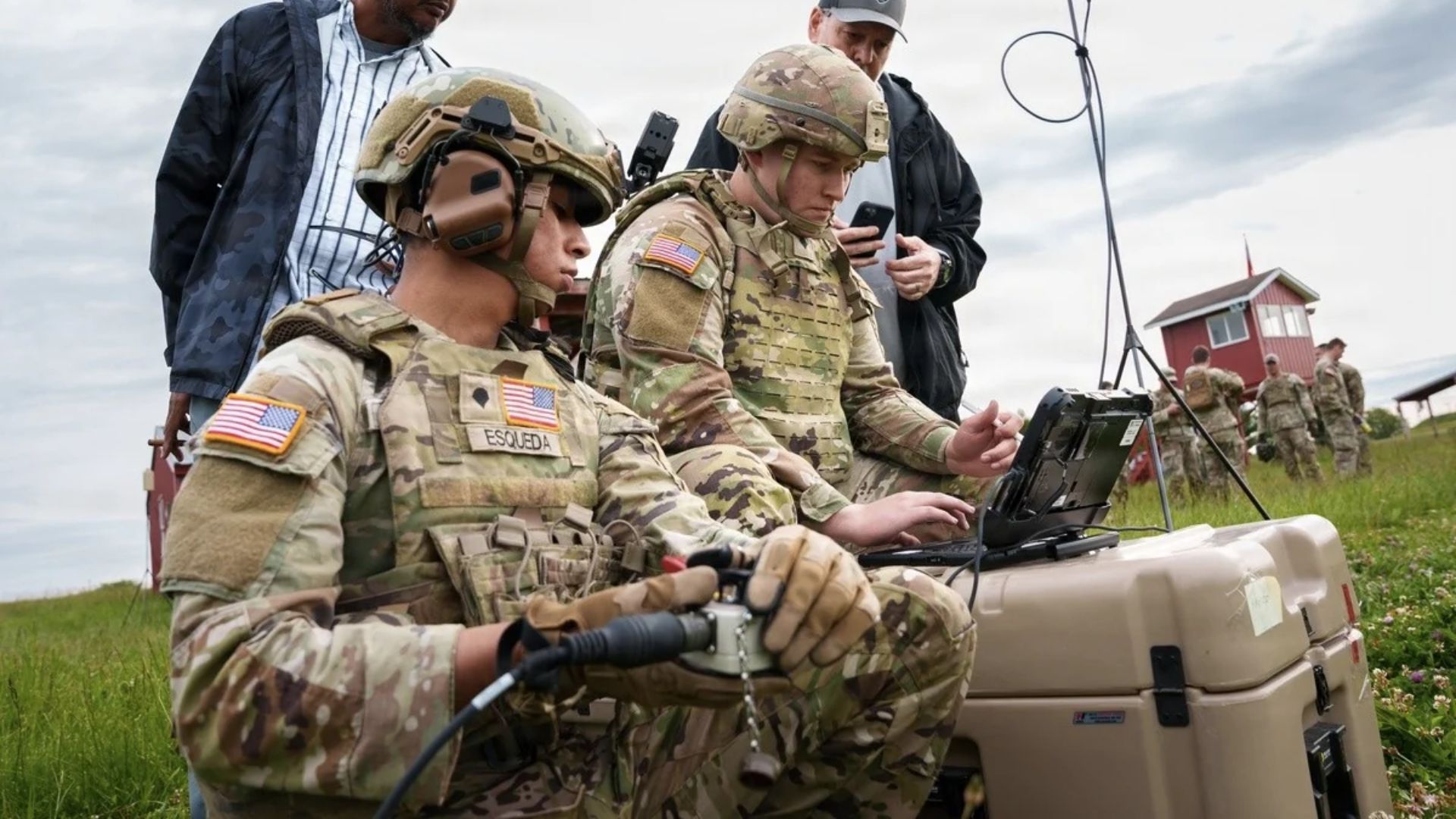
WASHINGTON — The United States military is preparing operational frameworks designed to sustain armed forces for up to 90 days completely severed from civilian infrastructure and external commercial supply chains during a major international crisis, according to defense reporting. The broad initiative addresses growing vulnerabilities in modern defense logistics, where military installations and operational commands have become deeply intertwined with private-sector utilities, commercial transportation networks, and just-in-time global supply routes that adversaries could sever in the opening hours of a high-end conflict.
Key facts
What happened
U.S. defense planners have established operational requirements aimed at preparing American armed forces to survive and fight for up to three months in an environment where routine commercial and civilian lifelines are entirely unavailable, according to reporting by defense journalist Prabhat Ranjan Mishra. The strategic effort is designed to counter the assumption, prevalent across decades of post-Cold War operations, that U.S. forces would operate from secure domestic bases and dispatch forces through uncontested international sea and air lanes.
Under the framework, defense planners are focusing on insulating both overseas expeditionary commands and domestic launchpads from catastrophic disruptions. These disruptions include potential state-sponsored cyberattacks against the North American electrical grid, kinetic strikes or blockades targeting commercial shipping lines, and electronic warfare directed at commercial satellite communications. The objective is to ensure that tactical formations, command nodes, and maintenance units can absorb an initial shock, execute theater war plans, and conduct follow-on operations for 90 days before requiring resupply from commercial channels or civilian utilities.
The directive represents a fundamental shift in defense resupply architecture. Rather than treating logistical support as an administrative function delegated largely to commercial contractors, civilian transportation lines, and domestic utility providers, the military is moving toward closed-loop sustainment models. This includes building self-contained microgrids on military installations, expanding tactical water and energy generation, and redesigning theater distribution to rely solely on protected, military-controlled assets.
Why it matters
The pivot toward a 90-day autonomous operational capability carries profound strategic and financial consequences for defense policy, federal budgeting, and civilian industrial planning. For more than thirty years, the Department of Defense adopted commercial supply-chain efficiency practices, embracing "just-in-time" delivery systems to minimize warehousing costs and reduce military inventory overhead. While this system achieved cost efficiencies during counterinsurgency campaigns in Iraq and Afghanistan, where U.S. forces enjoyed undisputed air dominance and secure logistics lines, it left the armed services structurally vulnerable to high-intensity peer conflict.
In modern combat scenarios, particularly against adversaries equipped with advanced anti-ship missiles, long-range precision fires, and sophisticated offensive cyber units, commercial logistics become an immediate target. Civilian merchant mariners, commercial container vessels, and non-military cargo aircraft cannot be ordered into heavily contested combat zones without extreme risk, nor are civilian utility networks in the United States fortified against military-grade cyber sabotage. If commercial transport and municipal power networks fail, military operations risk grinding to a halt within days unless units possess organic, self-contained stockpiles.
Achieving 90 days of isolated endurance requires a massive capital reallocation. The Pentagon will need to shift billions of dollars from procurement of front-line combat platforms toward unglamorous logistics assets: hardening fuel storage, purchasing redundant equipment, expanding ammunition stockpiles, and fielding expeditionary energy systems. For domestic communities surrounding major military bases, this decoupling may also redefine local utility coordination, prompting defense installations to detach from regional power authorities to run dedicated, self-sustaining microgrids.
The background
Throughout the Cold War, the U.S. military operated under the assumption that logistics would be contested from the outset of hostilities. Formations like the U.S. Army's European commands maintained extensive forward-deployed depots, such as the War Reserve Stocks and prepositioned equipment sets, designed to sustain fighting formations for weeks against Soviet forces while reinforcement convoys crossed the North Atlantic. Logistics were viewed as an integral, armed military competency, protected by dedicated combat units.
Following the collapse of the Soviet Union in 1991, defense reviews sought a "peace dividend" by privatizing non-core military functions. Commercial contractors took charge of base operations, long-distance freight forwarding, base life support, and equipment maintenance. The Pentagon leaned into arrangements such as the Civil Reserve Air Fleet (CRAF) and the Voluntary Intermodal Sealift Agreement (VISA), which legally obligate participating commercial airlines and shipping lines to support military mobilizations. Concurrently, domestic military bases decommissioned coal and diesel power plants, tying their daily operations entirely into regional civilian electrical grids.
By the time the Pentagon released its 2018 and 2022 National Defense Strategies, the security environment had radically shifted toward strategic competition with China and Russia. Analytical studies and war games conducted by defense think tanks and service branches consistently revealed a critical vulnerability: American forces in the Indo-Pacific and Europe ran out of critical munitions, aviation fuel, and spare parts within days of an outbreak of hostilities. Furthermore, the Defense Logistics Agency (DLA) and U.S. Transportation Command (USTRANSCOM) found that commercial shipping assets had deteriorated in capacity, while adversary strike capabilities could easily target primary logistical hubs such as Guam, Okinawa, and domestic embarkation ports. This prompted the Joint Chiefs of Staff to formalize the "Joint Concept for Contested Logistics," laying the intellectual groundwork for the current 90-day resilience target.
Reaction
While institutional reactions to the reporting are still developing across official channels, defense logistics experts and military planners have long warned that the Pentagon's dependence on commercial systems created an unacceptable strategic vulnerability. Congressional committees responsible for armed services and defense appropriations have frequently questioned whether the current merchant fleet and commercial supply infrastructure could survive hostile action, repeatedly pushing the services to audit critical supply chains.
Lawmakers on defense oversight committees are expected to scrutinize the cost and feasibility of establishing 90-day reserves, particularly regarding the expansion of the Defense Logistics Agency's war reserve accounts. Civilian utility providers and private supply-chain contractors are also anticipated to seek clarity on how the policy will impact public-private partnerships, base utility privatization contracts, and commercial logistics agreements that have generated billions of dollars in federal service revenue over recent decades.
Allied defense ministries in Europe and the Indo-Pacific will follow the implementation closely. Because U.S. operational plans are deeply integrated with coalition partners who often rely on American sustainment and commercial transport channels, any unilateral U.S. pivot toward closed-loop, isolated supply lines will force allied militaries to re-examine their own logistical independence.
What we don't know yet
Several major operational and policy details remain unaddressed in the available reporting. Most significantly, it is unclear whether the 90-day self-sufficiency mandate applies equally to all service branches, or if it prioritizes forward-deployed units in theaters like the Indo-Pacific Command (INDOPACOM) over continental U.S. forces. The physical cost and physical footprint of stockpiling 90 days of advanced precision munitions, parts, fuel, and medical supplies for every major combat formation would require historic capital expenditures.
Furthermore, the reports do not specify the precise mechanisms the military plans to use to replace civilian infrastructure. While forward bases can deploy microgrids, atmospheric water generators, and small nuclear reactors, the timeline for procuring and fielding these technologies at scale remains uncertain. It is also unknown whether this plan mandates complete physical isolation from civilian utilities during peacetime exercises, or if it represents an emergency posture activated only during elevated readiness conditions.
Finally, the status of current commercial partnerships remains unclarified. It is not yet established whether programs such as the Maritime Security Program or civilian sealift readiness agreements will be restructured, phased down, or retained strictly for secondary, non-contested resupply phases.
What to watch
The key indicator of how aggressively this 90-day standard is being integrated will be the Pentagon’s upcoming budget justification documents and the annual National Defense Authorization Act (NDAA). Observers should watch for line-item expansions within the Defense Logistics Agency's working capital funds, the Army's Prepositioned Stocks (APS) accounts, and the Navy’s auxiliary sealift procurement programs.
Specific programmatic milestones will also provide concrete evidence of implementation. These include large-scale "Black Start" exercises at major domestic installations—drills where military bases deliberately cut ties with local municipal power grids to test their ability to sustain full combat-support flight and command operations entirely on emergency microgrids. In overseas theaters, joint exercises like Valiant Shield in the Pacific or Defender Europe will serve as testing grounds, specifically whether units are forced to operate under strict simulated cutoffs from host-nation civilian ports, local fuel pipelines, and commercial telecommunications.
Legislative action surrounding defense supply-chain security will provide another checkable metric, particularly regarding domestic manufacturing requirements for critical components and expanded stockpiling of rare earth elements, pharmaceuticals, and solid rocket motors necessary to maintain a 90-day operational reserve.
This report is based on reporting published by defense correspondent Prabhat Ranjan Mishra.
How this story was produced
This report was written by The Global Wire newsroom from reporting first published by Prabhat Ranjan Mishra. We verify the core facts against the original report, write our own account, and add the background and consequences a short wire item leaves out. Drafting is AI-assisted inside an editor-supervised pipeline, and every story is checked for accuracy of attribution, structure and duplication before it appears — full detail in our AI and funding disclosure.
Spotted an error? Tell us at corrections@horizonglobalnews.com and read our corrections policy or editorial standards.





Reader comments
Loading comments…