

Israel Prepares Advanced AIP Submarine INS Drakon for Naval Fleet Integration
Built by ThyssenKrupp Marine Systems, the 2,400-ton Dolphin II-class vessel provides extended submerged endurance and enhanced strategic capabilities.
By The Global Wire Newsroom · Reported from Prabhat Ranjan Mishra
Link preview · horizonglobalnews.com
Israel Prepares Advanced AIP Submarine INS Drakon for Naval Fleet Integration
Built by ThyssenKrupp Marine Systems, the 2,400-ton Dolphin II-class vessel provides extended submerged endurance and enhanced strategic capabilities.
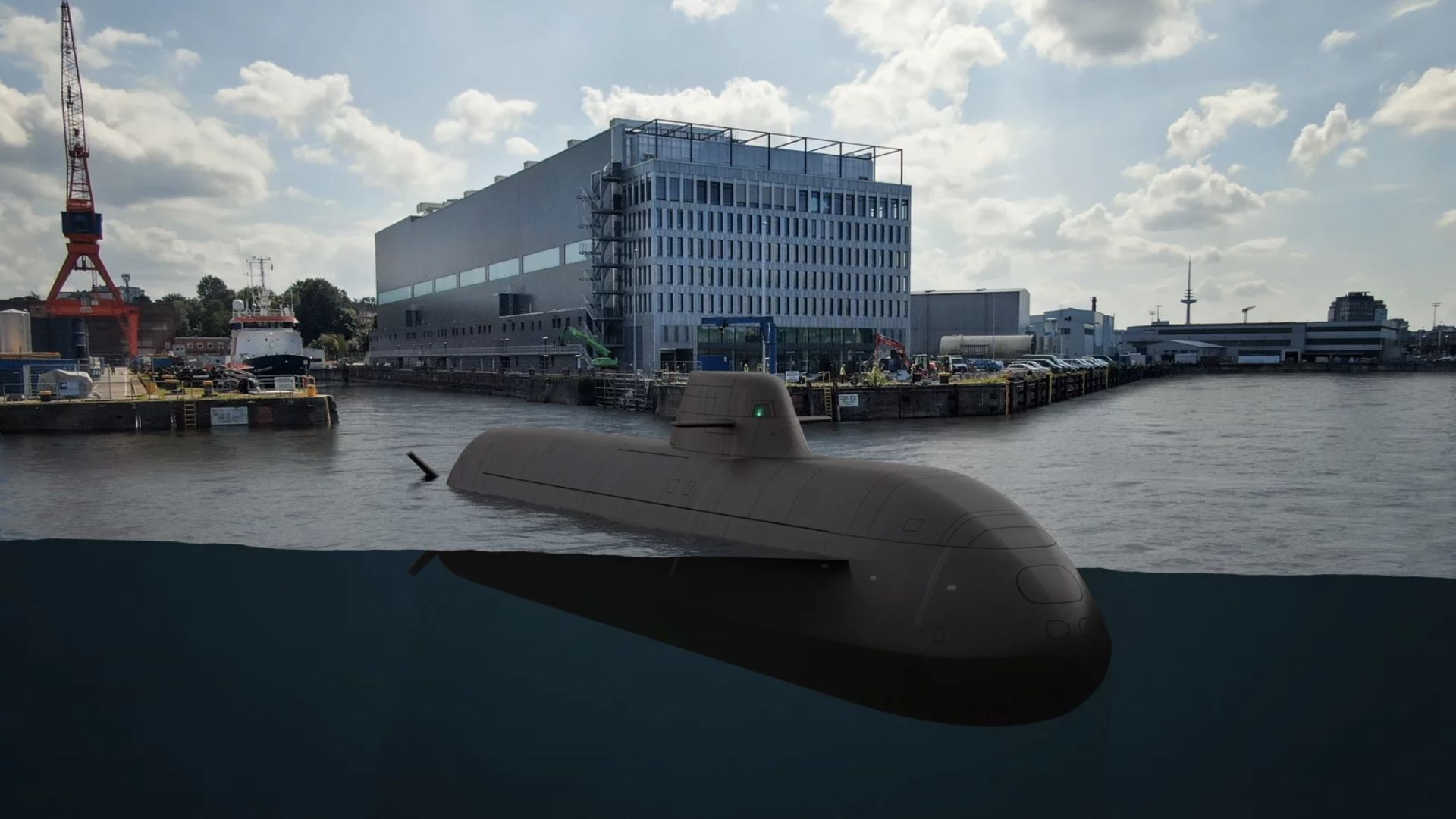
The Israeli Navy has expanded its undersea operations with the advancement of INS Drakon, a 2,400-ton attack submarine featuring air-independent propulsion (AIP) built by German manufacturer ThyssenKrupp Marine Systems. The vessel represents the third and final submarine produced under the upgraded AIP-equipped Dolphin II series at the Howaldtswerke-Deutsche Werft shipyard in Kiel, Germany. Engineered to deliver enhanced underwater endurance and stealth, INS Drakon stands among the most complex conventional submarines built by the German shipyard. Its operational readiness comes as maritime security across the Eastern Mediterranean, the Red Sea, and surrounding Middle Eastern chokepoints remains under intense military scrutiny, providing Israeli defense forces with long-range underwater surveillance and strategic strike capacity.
Key facts
What happened
The completion and sea testing of INS Drakon mark the final stage of a major naval procurement contract between Israel and German defense builder ThyssenKrupp Marine Systems. Manufactured at the historic Howaldtswerke-Deutsche Werft facility in Kiel, INS Drakon is the third AIP-equipped vessel of the modified Dolphin II class, joining INS Tanin and INS Rahav, according to reporting by Prabhat Ranjan Mishra.
With a submerged displacement of approximately 2,400 tons, INS Drakon is considerably larger than original first-generation Dolphin-class vessels. The core engineering milestone of the Dolphin II program is its air-independent propulsion architecture, which utilizes fuel cell modules to generate electrical current without drawing atmospheric oxygen. This system eliminates the need for frequent surface snorkeling—the process wherein conventional diesel submarines must surface or extend a snorkel to run diesel engines, recharge onboard batteries, and clear exhaust gases, exposing the vessel to radar and optical detection.
Technical profiles from TKMS identify the modified Dolphin II design as one of the most technologically intricate non-nuclear submarine classes ever constructed. Naval analysts observing the vessel during sea trials in the Baltic Sea noted significant structural alterations, most notably an elongated sail. Naval architects attribute this enlarged superstructure to the installation of specialized internal launch tubes or enhanced command and communications equipment tailored for long-range strike systems.
Following preliminary trials in German waters, the submarine undergoes final outfitted trials and transit procedures to join the Israeli Navy's 7th Flotilla at Haifa Naval Base, where full operational integration takes place.
Why it matters
The arrival of INS Drakon carries substantial implications for maritime strategy and power projection across the Middle East. For non-nuclear navies, air-independent propulsion provides capabilities approaching those of nuclear-powered attack submarines at a fraction of the cost and acoustic footprint. By relying on fuel cells that combine stored liquid oxygen and hydrogen, AIP-equipped vessels can remain submerged continuously for weeks rather than days, drastically reducing their thermal and acoustic signatures against modern anti-submarine warfare sensors.
From a national security perspective, military analysts consider Israel's submarine fleet to be a core pillar of its strategic deterrence architecture. The operational range and submerged endurance of INS Drakon allow the Israeli Navy to sustain covert surveillance, intelligence gathering, and deterrence patrols far beyond domestic coastal waters, including the Red Sea, the Bab el-Mandeb Strait, and the broader Indian Ocean region.
Furthermore, defense analysts widely assess that the Dolphin II class is designed to support sea-launched cruise missiles. The inclusion of an expanded sail on INS Drakon reinforces analyst consensus that the vessel is configured to deploy advanced standoff strike weapons, providing a survivable, sea-based second-strike capability that operates independently of land-based military infrastructure.
From an industrial perspective, the construction of INS Drakon highlights the advanced capabilities of the German naval shipbuilding sector. By integrating air-independent power plants and customized weapon compartments into a non-nuclear hull, TKMS has demonstrated how modern conventional submarines can offer strategic flexibility for regional military powers.
The background
The development of Israel's modern submarine arm is rooted in decades of strategic defense collaboration between Germany and Israel. The initial Dolphin-class program began in 1991, resulting in the commissioning of INS Dolphin, INS Leviathan, and INS Tekumah between 1999 and 2000. Those original vessels displaced approximately 1,900 tons submerged and relied on standard diesel-electric propulsion, requiring periodic surface snorkeling to recharge lead-acid battery banks.
Seeking greater submerged endurance and expanded operational payload, the Israeli Ministry of Defense placed an order with TKMS in 2006 for two enlarged Dolphin II-class submarines fitted with Siemens Proton Exchange Membrane (PEM) fuel cell AIP systems. That order produced INS Tanin, delivered in 2012, and INS Rahav, delivered in 2015. A follow-on contract for a third AIP-equipped vessel, designated INS Drakon, was finalized in 2011.
The German federal government has historically provided financial subsidies covering a portion of the construction costs for Israeli submarine orders as part of its bilateral security commitment. These defense exports undergo evaluation and approval by the German Federal Security Council and the Federal Ministry for Economic Affairs and Climate Action to ensure compliance with export laws.
During its construction phase in Kiel, INS Drakon underwent design revisions that extended its hull length and altered its sail module beyond the parameters of its sister ships. These custom modifications delayed initial delivery schedules but yielded a hull uniquely optimized for advanced strategic payloads.
INS Drakon represents the final vessel of the Dolphin series before TKMS transitions to building the next-generation Dakar class. In January 2022, Israel signed a €3 billion agreement with TKMS for three Dakar-class submarines. Incorporating a completely redesigned hull and an enlarged sail structure derived from lessons learned during the INS Drakon project, the Dakar class will eventually replace the first-generation Dolphin vessels as they approach retirement over the coming decade.
Reaction
Although official military statements regarding submarine operational parameters remain strictly classified, naval leaders and shipbuilding officials have noted the technical importance of the program. Engineering teams at ThyssenKrupp Marine Systems have characterized the Dolphin II class as a peak achievement in conventional naval architecture, highlighting its silent running characteristics and high system integration density.
Defense analysts across international security institutions emphasize that the deployment of INS Drakon reinforces Israel's undersea dominance in the Levantine Basin. Experts point out that amid ongoing instability along critical maritime trade routes, naval planners have increasingly relied on covert submarine operations over surface combatants for intelligence gathering and strategic readiness.
Regional security observers also pay close attention to German defense export approvals, noting that the addition of extended-endurance AIP platforms alters the underwater tactical balance across Eastern Mediterranean and Middle Eastern maritime zones.
What we don't know yet
Several technical and operational aspects of INS Drakon remain undisclosed due to military confidentiality policies:
What to watch
This report is based on original reporting by Prabhat Ranjan Mishra.
How this story was produced
This report was written by The Global Wire newsroom from reporting first published by Prabhat Ranjan Mishra. We verify the core facts against the original report, write our own account, and add the background and consequences a short wire item leaves out. Drafting is AI-assisted inside an editor-supervised pipeline, and every story is checked for accuracy of attribution, structure and duplication before it appears — full detail in our AI and funding disclosure.
Spotted an error? Tell us at corrections@horizonglobalnews.com and read our corrections policy or editorial standards.
Reader comments
Loading comments…