

Hong Kong Jails Three Tiananmen Vigil Organizers Under National Security Law
A Hong Kong court has sentenced three Tiananmen vigil activists to between five and seven years in prison under national security laws, prompting international criticism.
By The Global Wire Newsroom · Reported from Sertac Aktan
Link preview · horizonglobalnews.com
Hong Kong Jails Three Tiananmen Vigil Organizers Under National Security Law
A Hong Kong court has sentenced three Tiananmen vigil activists to between five and seven years in prison under national security laws, prompting international criticism.
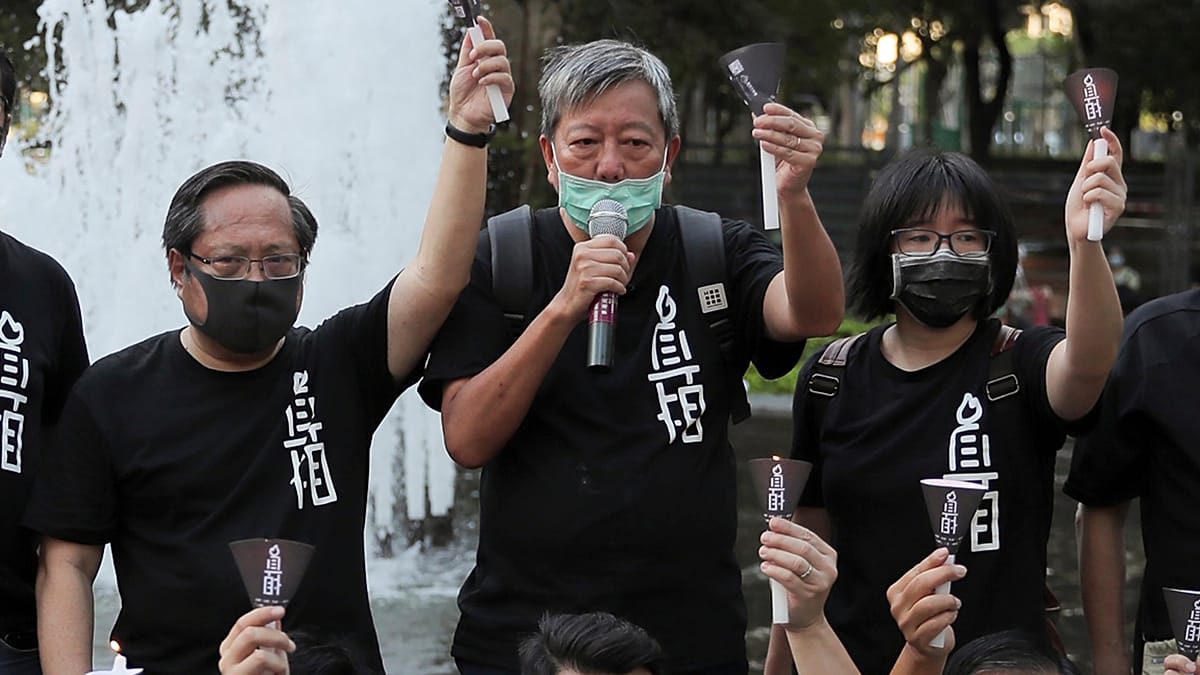
A High Court panel in Hong Kong has sentenced three prominent pro-democracy activists to prison terms ranging from five to seven years under the territory's national security framework, concluding a pivotal legal battle over public assembly and historical memory in the Chinese special administrative region. According to reporting by news outlet Sertac Aktan on September 11, 2026, the sentences were delivered following convictions under national security legislation enacted by Beijing. The defendants were core leaders of the organization behind Hong Kong's annual June 4 candlelight vigil, which for three decades served as the largest public commemoration on Chinese soil honoring the victims of the 1989 military crackdown in Beijing’s Tiananmen Square. The court's decisions have prompted swift international condemnation, underlining the ongoing friction between foreign governments advocating for civil rights and Beijing’s enforcement of political compliance.
Key facts
What happened
The sentencing concludes a protracted prosecution targeting the remaining public figures of Hong Kong’s traditional pro-democracy movement. According to reporting by Sertac Aktan, the judicial panel imposed sentences of five to seven years after finding the three defendants guilty under national security laws that prohibit actions determined to undermine state authority.
Throughout the legal proceedings, prosecution lawyers argued that organizing public memorials for the 1989 Tiananmen Square casualties constituted an explicit attempt to subvert the political power of the central government in Beijing. The prosecution highlighted the mission statement of the organizing group, which advocated for democratic reforms across mainland China, as evidence of national security offenses.
Defense attorneys countered that the defendants were exercising fundamental constitutional guarantees, including rights to free speech, political expression, and peaceful assembly codified under Hong Kong’s Basic Law and international human rights treaties.
The sentencing took place under tight security at the High Court. Diplomatic representatives from multiple Western consulates sat alongside journalists and observers in the gallery. Upon receiving their sentences, the defendants remained composed in the dock, expressing adherence to their core values before security officers escorted them into custody to begin serving their prison terms.
Why it matters
The judicial outcomes establish a major legal precedent regarding the boundaries of free expression and historical commemoration in Hong Kong under national security governance. By categorizing organized public remembrance as a national security violation, the ruling effectively codifies the prohibition of historical narratives that conflict with official state accounts.
For Hong Kong civil society, the imprisonment of these veteran organizers removes key individuals who continued to advocate for political accountability. This development leaves civic groups with limited options, forcing remaining organizations to dissolve, self-censor, or operate entirely from overseas locations.
For the international community and global commercial sector, the decision raises ongoing questions about Hong Kong’s legal predictability and commitment to judicial independence under the "One Country, Two Systems" framework. International corporate entities operating within the region rely heavily on transparent legal systems and the unrestricted flow of information. Prosecutions of non-violent political figures under security statutes risk deterring foreign investment, prompting professional departures, and triggering potential diplomatic sanctions from foreign governments.
The background
To understand the legal significance of the convictions, it is necessary to examine the historical role Hong Kong maintained following June 4, 1989. On that day, the Chinese military forcibly suppressed student-led pro-democracy demonstrations in Beijing, leading to widespread loss of life. Shortly thereafter, civic leaders in Hong Kong established the Hong Kong Alliance in Support of Patriotic Democratic Movements of China to support mainland dissidents and sustain public memory of the crackdown.
For thirty years, Hong Kong stood as the sole territory under Chinese sovereignty where large-scale, public memorials for the Tiananmen Square victims could lawfully occur. Every June 4 from 1990 to 2019, tens of thousands of citizens gathered at Victoria Park, holding candles and making public speeches. These gatherings served as a prominent illustration of the civil liberties guaranteed to Hong Kong under the 1984 Sino-British Joint Declaration and the city's mini-constitution, the Basic Law, following the 1997 transfer of sovereignty from Great Britain to China.
The political environment changed rapidly following extensive anti-government protests in 2019. In response, China's National People’s Congress Standing Committee imposed the National Security Law on Hong Kong on June 30, 2020. The law criminalized four broad categories of conduct: secession, subversion, terrorism, and collusion with foreign forces. Following its implementation, police prohibited the annual June 4 vigil, citing public health restrictions during the pandemic and subsequent security considerations. Security forces raided the Alliance's museum in September 2021, seizing historical artifacts, arresting organizers, and prompting the group's formal dissolution later that month. In March 2024, Hong Kong enacted further domestic national security legislation under Article 23 of the Basic Law, expanding state enforcement powers.
Reaction
The announcement of the sentences generated strong responses from international bodies and foreign officials, as reported by Sertac Aktan. Representatives from the United Nations High Commissioner for Human Rights expressed deep concern over the long prison sentences, emphasizing that public expression and peaceful assembly are protected under the International Covenant on Civil and Political Rights, which applies to Hong Kong.
Human rights organizations, including Amnesty International and Human Rights Watch, issued statements criticizing the judicial outcomes. Advocacy groups argued that using security laws to penalize historical commemoration violates established international standards for human rights.
Diplomats and officials from several Western governments, including the United Kingdom, the United States, and member states of the European Union, called for the release of the imprisoned activists. Foreign officials noted that the proceedings undermine commitments made regarding Hong Kong’s high degree of autonomy. In contrast, representatives for the Hong Kong government and the Chinese Ministry of Foreign Affairs defended the court's actions, maintaining that the judiciary acted independently based on statutory law and that all individuals are equal under the law.
What we don't know yet
Several aspects of the case and its long-term consequences remain unresolved. It is currently unconfirmed whether the defense lawyers will file appeals against the convictions or the lengths of the sentences in the Court of Appeal or the Court of Final Appeal.
Additionally, specific details regarding the exact detention facilities and health support provided to the convicted activists remain unannounced. Given the age and health profiles of certain long-standing political figures in Hong Kong, custody conditions remain a matter of focus for monitoring groups.
It is also unclear whether local prosecutors will seek additional charges against the individuals or related organizers under the Article 23 security legislation enacted in 2024. Furthermore, the specific nature of potential diplomatic or economic policy responses from foreign governments remains to be determined.
What to watch
In the coming months, specific milestones will determine the trajectory of this issue. Observers will track statutory filing deadlines to see if formal appeal notices are submitted by defense counsel to higher courts.
On the international stage, attention will focus on upcoming sessions of multilateral organizations, such as the United Nations Human Rights Council, to evaluate whether member states introduce formal motions or diplomatic declarations regarding judicial actions in Hong Kong.
Locally, future June 4 anniversaries will indicate how security regulations are enforced on the ground. Observers will watch whether residents attempt spontaneous individual acts of remembrance in public spaces and how law enforcement authorities respond to symbolic displays or digital posts within the territory.
This report is based on coverage provided by news outlet Sertac Aktan.
How this story was produced
This report was written by The Global Wire newsroom from reporting first published by Sertac Aktan. We verify the core facts against the original report, write our own account, and add the background and consequences a short wire item leaves out. Drafting is AI-assisted inside an editor-supervised pipeline, and every story is checked for accuracy of attribution, structure and duplication before it appears — full detail in our AI and funding disclosure.
Spotted an error? Tell us at corrections@horizonglobalnews.com and read our corrections policy or editorial standards.


Reader comments
Loading comments…