

Hong Kong Investors Moderate Return Targets Amid Regional AI Surge, Natixis Finds
A survey by Natixis Investment Managers reveals Hong Kong investors are tempering profit targets even as artificial intelligence momentum lifts expectations across Asia.
By The Global Wire Newsroom · Reported from Daisy Wu
Link preview · horizonglobalnews.com
Hong Kong Investors Moderate Return Targets Amid Regional AI Surge, Natixis Finds
A survey by Natixis Investment Managers reveals Hong Kong investors are tempering profit targets even as artificial intelligence momentum lifts expectations across Asia.
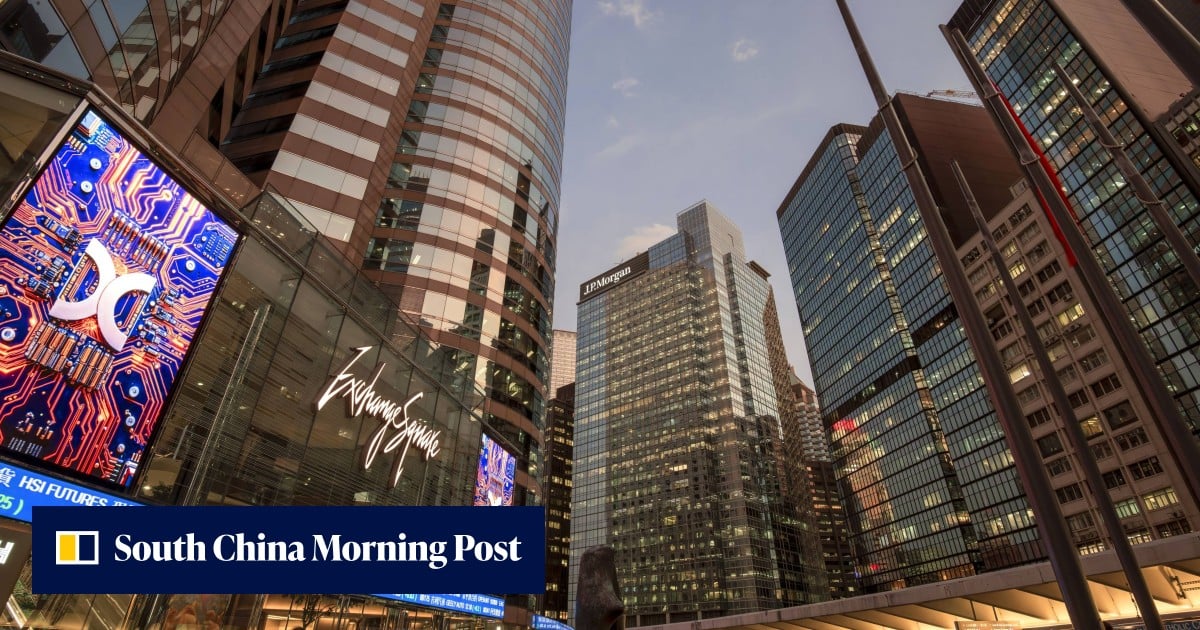
Investors in Hong Kong are adopting a markedly cautious approach to their investment portfolios, tempering anticipated rates of return even as excitement surrounding artificial intelligence drives aggressive expectations across the wider Asian region, according to survey findings released by Natixis Investment Managers in October.
While market participants throughout Asia-Pacific have upgraded their portfolio forecasts on the back of rapid advances and commercial deployment in semiconductor manufacturing, cloud infrastructure, and generative software, individuals in Hong Kong are opting for financial restraint. Market participants in the territory continue to target returns that outpace broader benchmark indices, but they are doing so with subdued long-term yield projections, demonstrating an acute awareness of regional economic crosscurrents and the enduring volatility that has defined local asset classes in recent years.
Key facts
What happened
The findings, detailed in reporting by Daisy Wu, emerge from Natixis Investment Managers' assessment of individual investor attitudes across the Asia-Pacific territory. The asset manager's regional research underscores a distinct sentiment split between Hong Kong and neighboring financial centers.
Across multiple Asian markets—particularly those with heavy exposure to advanced hardware supply chains such as Taiwan, South Korea, and Japan—investors have substantially raised their annual portfolio return expectations. This surge in optimism has been fueled primarily by the global race to build and deploy artificial intelligence systems, which has generated substantial earnings growth for semiconductor fabricators, memory manufacturers, and specialized electronics suppliers.
In Hong Kong, however, that technological enthusiasm has met a wall of pragmatic caution. Although participants surveyed in the Special Administrative Region express a strong desire to generate excess returns—seeking to outperform standard financial benchmarks through active asset allocation—their overall targets remain grounded. Rather than projecting double-digit windfalls reminiscent of speculative bull cycles, Hong Kong respondents are deliberately calibrating their expectations downward, signaling that they do not anticipate an effortless, uninterrupted advance across broad market indices.
This deliberate moderation reflects a local investing culture that has experienced several successive years of asset price compression, forcing wealth managers and individual investors alike to account for systemic risk, interest rate pressures, and persistent valuation headwinds.
Why it matters
The moderation of return expectations among Hong Kong investors carries direct consequences for the multi-trillion-dollar wealth management industry centered in the territory. Hong Kong ranks among the world's preeminent cross-border wealth management hubs, competing directly with centers like Singapore, Zurich, and London for private capital. When individual investors recalibrate their anticipated yields, their asset allocation behaviors shift in fundamental ways.
First, lowered return expectations typically prompt a rotation out of highly speculative financial instruments and into defensive, income-generating vehicles. For wealth management institutions and private banks operating in Central and Kowloon, this transition necessitates a pivot away from high-beta thematic growth equities toward structured income products, multi-asset allocation strategies, and high-quality fixed income. When clients demand market-beating performance while simultaneously anticipating modest baseline returns, portfolio managers face heightened pressure to deliver alpha without taking on outsized tail risk.
Second, the data underscores a widening psychological disconnect within Asian capital markets. In jurisdictions heavily weighted toward hardware technology, retail and institutional flows have concentrated heavily in a small basket of high-flying semiconductor and electronics names. If Hong Kong investors remain reluctant to embrace this euphoria, capital pools originating from the city are less likely to participate in frothy, momentum-driven rallies, potentially sheltering local portfolios should a valuation correction strike the global technology sector.
Finally, realistic return expectations can provide macroeconomic stability. When investors align their long-term financial plans with conservative return models, household balance sheets become more resilient against asset price volatility, reducing the risk of forced deleveraging during market drawdowns.
The background
To understand why Hong Kong investors have diverged from the broader Asian optimism, it is necessary to examine the unique structural position of the city's capital markets over the past half-decade.
Hong Kong's primary equity benchmark, the Hang Seng Index, has endured an extended period of structural turbulence. Unlike regional peers that experienced explosive equity growth driven by tech hardware exports, the Hong Kong exchange is heavily weighted toward mainland Chinese commercial banks, property developers, state-owned energy conglomerates, and domestic consumer technology platforms. From early 2021 through early 2024, the Hang Seng Index experienced prolonged downward pressure, driven by a deep regulatory realignment across the mainland's consumer tech sector and a comprehensive debt crisis among private real estate developers.
Simultaneously, Hong Kong operates under the Linked Exchange Rate System, established in October 1983, which pegs the Hong Kong dollar to the United States dollar within a tight band of 7.75 to 7.85 HKD per USD. Because of this monetary framework, the Hong Kong Monetary Authority (HKMA) must mirror the monetary policy decisions of the United States Federal Reserve, regardless of local economic conditions. When the Federal Reserve undertook aggressive interest rate hikes beginning in March 2022 to combat domestic inflation, Hong Kong was forced to import those high interest rates at a time when its domestic commercial real estate and retail sectors were struggling to recover from pandemic-era disruptions.
High domestic borrowing costs elevated mortgage payments for local property owners, caused prime residential real estate prices to decline by more than 25 percent from their 2021 peaks, and prompted substantial capital outflows into high-yielding bank deposits. While the mainland Chinese authorities initiated wide-ranging economic support packages and monetary easing in late 2024, local investors remain tempered by years of repeated market downturns.
Consequently, while global investors celebrated the meteoric rise of artificial intelligence pioneers, Hong Kong market participants watched the phenomenon through the lens of a domestic economy grappling with high debt servicing costs, depressed real estate values, and an evolving retail landscape.
Reaction
While official responses from statutory regulatory bodies such as the Securities and Futures Commission (SFC) or the Hong Kong Monetary Authority are rarely issued in direct response to individual sentiment surveys, market practitioners in the region have acknowledged the underlying sentiment shifts captured in the Natixis data.
Independent wealth advisors and portfolio managers in Hong Kong frequently report that their client conversations are dominated by capital preservation and risk management rather than unchecked capital appreciation. Asset management houses operating under the Hong Kong Investment Funds Association (HKIFA) umbrella have increasingly tailored their offerings to reflect this sober sentiment, launching conservative dividend-focused funds, short-duration bond strategies, and covered-call vehicles designed to generate incremental yield in range-bound markets.
In regional financial forums, analysts note that the sentiment gap between Hong Kong and technology-centric markets like Seoul and Taipei illustrates the difference between economies benefiting directly from the immediate hardware capital expenditure boom and those tied to consumer demand and services. Economists and market strategists will monitor upcoming industry gatherings, including regional private banking conferences, to assess whether international wealth managers plan to reweight their promotional efforts toward defensive assets for their Hong Kong client bases.
What we don't know yet
Several critical elements of the survey findings and their downstream implications remain unspecified in the initial reporting. Most notably, the precise numerical figures defining Hong Kong investors' return expectations—specifically the average expected percentage return per annum compared to the regional Asian average—have not been fully detailed. Without these concrete baseline figures, it is difficult to determine the exact magnitude of the expectation gap between Hong Kong and other regional jurisdictions.
Additionally, the available reporting leaves open questions regarding the demographic and wealth tiers included in the survey sample. It remains unclear whether the conservative sentiment is uniform across ultra-high-net-worth individuals, family offices, and mass-affluent retail investors, or whether it is concentrated primarily among retail accounts that have experienced personal real estate losses. Furthermore, the survey details do not specify the precise timeframe over which respondents expect to achieve market-beating returns, nor do they delineate which specific benchmark indices investors are seeking to outperform.
What to watch
In the coming months, several distinct indicators will determine whether Hong Kong investors maintain their cautious stance or succumb to the broader regional optimism. The most immediate variable is the trajectory of central bank interest rates. As the Federal Reserve adjusts its benchmark federal funds rate, the HKMA will adjust its base rate in lockstep, influencing the Hong Kong Interbank Offered Rate (HIBOR). A sustained drop in HIBOR would reduce borrowing costs across the territory, potentially alleviating real estate balance sheet pressures and unlocking capital currently idling in cash time deposits.
Market observers should also closely track capital flows moving through the Mutual Market Access programs, particularly the Southbound Stock Connect, which measures mainland Chinese capital buying Hong Kong-listed shares. If institutional and retail inflows from the mainland accelerate sustainably, boosting liquidity across the Hang Seng Tech Index, Hong Kong investors may gradually recalibrate their yield targets upward.
Finally, corporate earnings results from Chinese mega-cap technology firms will serve as a crucial barometer. If domestic artificial intelligence monetization, cloud infrastructure growth, and consumer enterprise demand begin to show tangible, durable top-line revenue expansion comparable to Western counterparts, the structural foundation for Hong Kong equity valuations could shift, testing the longevity of the territory's current investment conservatism.
*This report synthesizes and expands upon initial findings reported by Daisy Wu regarding the Natixis Investment Managers regional investor survey.*
How this story was produced
This report was written by The Global Wire newsroom from reporting first published by Daisy Wu. We verify the core facts against the original report, write our own account, and add the background and consequences a short wire item leaves out. Drafting is AI-assisted inside an editor-supervised pipeline, and every story is checked for accuracy of attribution, structure and duplication before it appears — full detail in our AI and funding disclosure.
Spotted an error? Tell us at corrections@horizonglobalnews.com and read our corrections policy or editorial standards.




Reader comments
Loading comments…