

NASA Solid-State Battery Survives Severe Deep-Freeze Testing for Lunar Missions
Experimental battery technology survives temperatures of -274°F and operates at -112°F, offering a potential breakthrough for long-duration power on future Moon missions.
By The Global Wire Newsroom · Reported from Neetika Walter
Link preview · horizonglobalnews.com
NASA Solid-State Battery Survives Severe Deep-Freeze Testing for Lunar Missions
Experimental battery technology survives temperatures of -274°F and operates at -112°F, offering a potential breakthrough for long-duration power on future Moon missions.
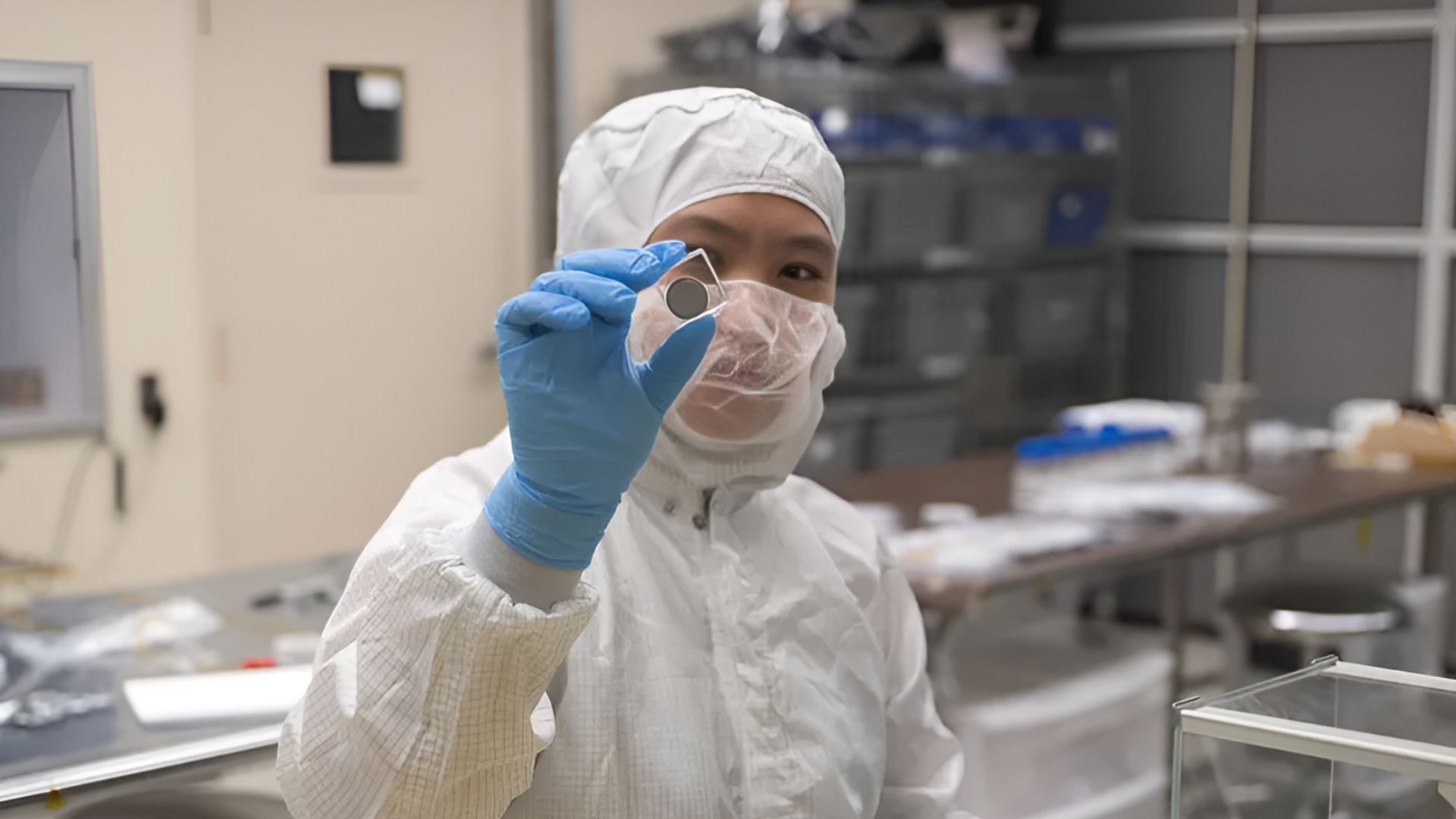
Engineers at the National Aeronautics and Space Administration have reached an important milestone in energy storage technology for deep-space exploration, demonstrating that an advanced solid-state battery can endure and function under the extreme freezing conditions expected on the lunar surface. In thermal environmental testing designed to simulate the harsh conditions of future space missions, the experimental solid-state battery cell survived non-operational cold exposure down to minus 274 degrees Fahrenheit (minus 170 degrees Celsius) and demonstrated active electrical capability at temperatures as low as minus 112 degrees Fahrenheit (minus 80 degrees Celsius), according to reporting by Neetika Walter. The test results mark a major technical step toward resolving one of spaceflight's most persistent challenges: maintaining compact, reliable electrical power during the prolonged, sub-zero dark of the lunar night without depending on heavy, power-hungry active heating systems.
Key facts
What happened
During laboratory environmental testing designed to simulate deep-space thermal environments, engineers subjected an experimental solid-state battery cell to severe thermal stress to evaluate both its mechanical durability and electrical performance under deep freezing conditions. Deep-space thermal chambers were used to drop ambient temperatures to levels far below those encountered in typical Earth-based laboratory environments or low-Earth orbit missions.
The evaluation was divided into two distinct testing phases: structural survival during passive cold storage and operational electrical performance under extreme thermal suppression. In the survival phase, the solid-state battery was exposed to non-operational cold temperatures dropping to minus 274 degrees Fahrenheit (minus 170 degrees Celsius). This phase tested whether the physical interfaces, internal solid electrolyte layers, and electrode materials could endure severe thermal contraction without cracking, delaminating, or experiencing structural failure. The battery cell successfully survived this extreme cold soak without catastrophic structural degradation.
Following the non-operational cold exposure, engineers evaluated the cell's active electrical performance across decreasing temperature thresholds. According to reporting by Neetika Walter, the solid-state battery successfully discharged electrical current and operated at temperatures as low as minus 112 degrees Fahrenheit (minus 80 degrees Celsius). In traditional lithium-ion batteries, exposure to sub-zero temperatures causes liquid electrolytes to thicken and freeze, which drastically increases internal resistance and halts electrochemical reactions. Demonstrating that a solid-state cell can conduct ions and deliver electrical power at minus 112 degrees Fahrenheit confirms that solid-state electrolyte materials can maintain sufficient ionic mobility under conditions that would completely disable conventional battery chemistries.
Why it matters
Mass and thermal control represent two of the most stringent constraints in deep-space engineering. Launching hardware beyond low-Earth orbit requires high propellant mass, making every kilogram allocated to payload structures, power systems, and scientific payloads subject to strict limitations. Conventional space missions using standard lithium-ion batteries are forced to allocate substantial mass and power to active thermal management systems. Because conventional liquid electrolytes freeze at sub-zero temperatures—leading to physical cell expansion, internal short circuits, and complete battery failure—spacecraft must be wrapped in heavy insulation and equipped with electrical heaters or radioisotope heating units.
The successful testing of a solid-state battery surviving minus 274 degrees Fahrenheit and operating at minus 112 degrees Fahrenheit provides space mission architects with a way to simplify spacecraft power systems. Solid-state technology eliminates volatile liquid electrolytes entirely, utilizing solid ceramic, glass, or polymer layers to conduct ions between electrodes. This structural change removes the physical risk of electrolyte freezing and allows for significantly higher energy density, yielding more watt-hours of electrical storage per kilogram of battery mass than standard lithium-ion designs.
For robotic rovers, landers, and stationary scientific instruments deployed to the lunar south pole or within permanently shadowed craters, reduced thermal overhead directly translates into expanded operational capability. Reducing or eliminating the need for heavy heating hardware frees critical mass budgets for scientific instruments, drill equipment, and communication systems. Furthermore, surviving non-operational exposure to minus 274 degrees Fahrenheit provides essential risk mitigation. If a lunar rover loses power or experiences a thermal system interruption during the two-week lunar night, its solid-state energy storage system can survive the cold soak intact and resume normal operations when sunlight returns, preventing total mission failure.
The background
The thermal environment on the Moon is among the most severe in the solar system, characterized by extreme temperature swings caused by the absence of a thermal-regulating atmosphere. During the lunar day, surface temperatures near the equator can rise above 250 degrees Fahrenheit (121 degrees Celsius). During the lunar night—which lasts approximately 14 Earth days, or nearly 354 hours—surface temperatures plummet to roughly minus 200 to minus 250 degrees Fahrenheit (minus 130 to minus 157 degrees Celsius). At the lunar poles, deep impact craters contain permanently shadowed regions where direct sunlight has been absent for billions of years; in these areas, temperatures can drop as low as minus 410 degrees Fahrenheit (minus 246 degrees Celsius).
Historically, deep-space probes and long-duration lunar payloads designed to endure extended dark periods relied on radioisotope heater units (RHUs) or radioisotope thermoelectric generators (RTGs) containing decaying plutonium-238 to maintain internal temperatures. However, plutonium supplies are expensive, tightly restricted, and subject to complex regulatory frameworks. Solar-powered surface missions, such as NASA's Mars Exploration Rovers, historically faced severe operational hazards when cold conditions reduced battery capacity and threatened thermal survival.
To solve these constraints, NASA has invested in advanced battery research through initiatives such as the Solid-state Architecture Batteries for Enhanced Rechargeability and Safety (SABERS) activity, conducted within the agency's Transformational Tools and Technologies project. While commercial battery research for terrestrial electric vehicles focuses heavily on low-cost mass production, aerospace solid-state battery development prioritizes extreme thermal resistance, mechanical safety under launch stresses, radiation tolerance, and high energy density. Advanced solid-state designs aim to deliver energy densities approaching 500 watt-hours per kilogram—nearly double that of conventional aerospace lithium-ion batteries—while eliminating thermal runaway risks associated with flammable liquid electrolytes.
Reaction
Although formal public declarations from commercial space companies and international space partners were not included in the initial report, aerospace engineers and planetary science researchers regard extreme-cold energy storage as a fundamental technology for long-term lunar exploration. Space agencies and commercial contractors participating in NASA's Artemis program—which aims to establish a sustained, long-term human presence on the Moon—are actively evaluating robust power architectures capable of enduring the lunar night.
Private spaceflight companies participating in NASA's Commercial Lunar Payload Services (CLPS) program face tight mass budgets and demanding thermal survival requirements for landers and rovers sent to the lunar south pole. For thermal engineers and spacecraft power designers across the commercial sector, the demonstration of solid-state cell survival at minus 274 degrees Fahrenheit provides an encouraging technical benchmark. Spacecraft engineering teams are expected to analyze the testing data to assess how solid-state power systems could reduce internal heater power requirements, simplify thermal shielding designs, and lower overall mission failure risks for surface payloads.
What we don't know yet
While the initial laboratory results represent a promising milestone, several key technical details regarding the battery's performance and design remain unspecified in available reporting:
What to watch
In the coming months and years, several key development milestones will indicate how effectively solid-state energy storage transitions from environmental test chambers into operational spaceflight hardware:
This report is based on original reporting by Neetika Walter.
How this story was produced
This report was written by The Global Wire newsroom from reporting first published by Neetika Walter. We verify the core facts against the original report, write our own account, and add the background and consequences a short wire item leaves out. Drafting is AI-assisted inside an editor-supervised pipeline, and every story is checked for accuracy of attribution, structure and duplication before it appears — full detail in our AI and funding disclosure.
Spotted an error? Tell us at corrections@horizonglobalnews.com and read our corrections policy or editorial standards.



Reader comments
Loading comments…