

Cuba Welcomes UN Envoy Expelled by US Following Headquarters Altercation
Havana has received a diplomat expelled by United States authorities after a heated incident at the United Nations in New York.
By The Global Wire Newsroom · Reported from ABC News
Link preview · horizonglobalnews.com
Cuba Welcomes UN Envoy Expelled by US Following Headquarters Altercation
Havana has received a diplomat expelled by United States authorities after a heated incident at the United Nations in New York.
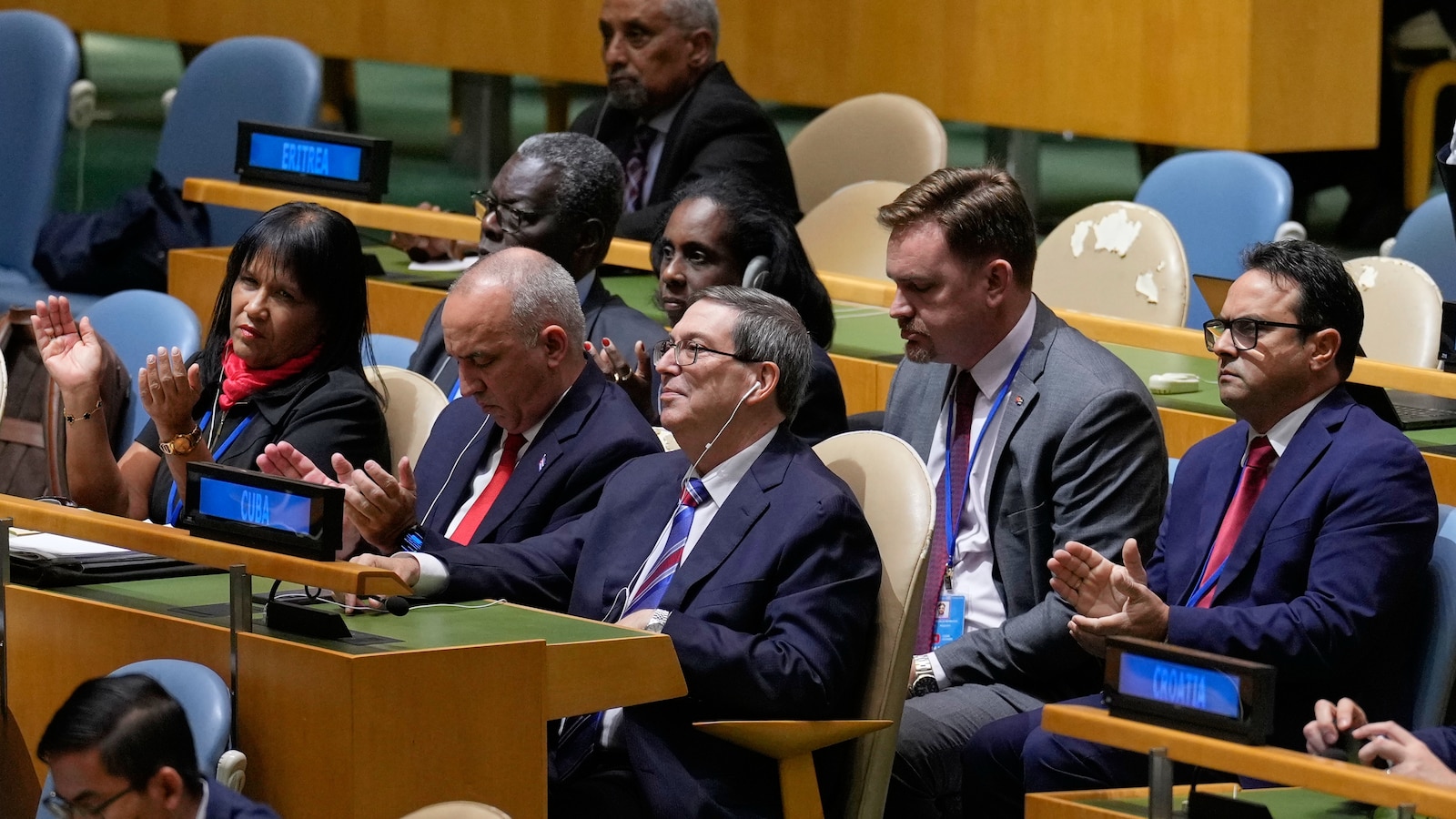
Cuba has received a member of its diplomatic mission to the United Nations back in Havana following an expulsion ordered by the United States government, which cited an unusual confrontation at the global body's headquarters in New York. The arrival of the expelled official in the Cuban capital marks the latest flare-up in long-strained bilateral ties between Washington and Havana, underscoring the delicate legal and diplomatic framework that governs the conduct of foreign envoys accredited to the United Nations under United States host-country obligations.
Key facts
What happened
According to reporting by ABC News, the United States issued an expulsion order targeting a member of Cuba's permanent mission to the United Nations following an intense confrontation inside the United Nations headquarters complex in Manhattan. Following the directive from American authorities, the diplomat departed the United States and arrived in Havana, where Cuban officials organized a welcome to receive the envoy home.
While the exact sequence of the dispute inside the United Nations complex has not been fully detailed, the episode was characterized as an unusual altercation that prompted swift administrative intervention by the United States. Under standard diplomatic operating procedures, foreign personnel accredited to missions in New York are assigned to represent their home governments at the multilateral body rather than directly to the government of the United States. When host authorities decide that a foreign representative has engaged in conduct warranting departure, they invoke specific host-country mechanisms rather than a standard bilateral persona non grata declaration.
The swift return of the official to Havana indicates that the expulsion timeline was executed promptly. In international statecraft, such departures typically occur under strict deadlines, often spanning 48 to 72 hours, once the host country's Department of State transmits formal diplomatic notes to the target mission and the Executive Office of the United Nations Secretary-General.
Why it matters
The forced removal of an accredited diplomat from United Nations grounds carries institutional implications that extend far beyond the bilateral friction between Washington and Havana. At the center of the episode is the integrity of the 1947 United Nations Headquarters Agreement, the binding treaty between the United States and the world organization that guarantees unhindered access and diplomatic protection for delegates sent to conduct multilateral work, even when those delegates represent states that maintain adversarial relations with the host government.
For the diplomatic corps operating in New York, any expulsion raises legal and procedural concerns about the threshold at which the host country can exercise sovereign police powers against accredited foreign envoys. When Washington takes punitive steps against delegates from nations such as Cuba, Iran, Russia, or Venezuela, it frequently triggers formal debate within the United Nations Committee on Relations with the Host Country. Delegations routinely scrutinize whether the United States is fulfilling its treaty commitments or using its geographical position to apply political pressure.
For citizens and observers of United States-Cuba relations, the incident compounds an already fraught dynamic. Formal diplomatic relations between the two neighbors, restored in 2015 after more than five decades of severance, have steadily deteriorated over the past decade. Diplomatic expulsions shrink the already narrow avenues for official dialogue, jeopardizing working-level coordination on critical mutual interests such as migration, maritime safety, border enforcement, and regional disaster response.
The background
The presence of Cuban diplomats in New York has been a perennial source of diplomatic tension since the 1959 Cuban Revolution led by Fidel Castro. Washington severed formal diplomatic relations with Havana in January 1961, followed shortly thereafter by the imposition of a comprehensive economic, financial, and trade embargo in 1962. For more than fifty years, the Cuban Permanent Mission to the United Nations served as Havana's sole official diplomatic footprint on United States soil, functioning as a primary listening post and diplomatic operational base in North America.
During this protracted period of estrangement, the United States routinely restricted Cuban United Nations delegates to a 25-mile travel radius centered on Columbus Circle in Manhattan, a rule designed to limit their movements strictly to the geographic perimeter necessary to conduct official United Nations business. Similar radius restrictions have historically been applied to diplomats from other adversarial nations.
In December 2014, United States President Barack Obama and Cuban President Raúl Castro announced a historic breakthrough to normalize bilateral relations, culminating in the formal reopening of the United States Embassy in Havana and the Cuban Embassy in Washington in July 2015. However, this period of diplomatic thaw proved brief.
Beginning in late 2016 and 2017, the United States reported unexplained health incidents affecting American diplomatic personnel in Havana, leading the Trump administration to drastically downsize its embassy staff in Cuba and expel 15 Cuban diplomats from Washington in October 2017. Washington subsequently placed Cuba back on the United States State Sponsor of Terrorism list in January 2021 and instituted hundreds of targeted economic sanctions, reversing the regulatory easing initiated under the Obama administration.
Multilateral clashes involving Cuban envoys at the United Nations have precedent. In October 2018, Cuban diplomats staged a vocal, coordinated disruption during a meeting of the United Nations Economic and Social Council chamber organized by the United States to highlight the plight of Cuban political prisoners. Cuban representatives banged on desks, chanted slogans, and shouted into microphones, completely drowning out the proceedings and drawing sharp condemnation from American officials. In September 2019, the United States Department of State ordered the expulsion of two members of Cuba's United Nations mission, accusing them of engaging in unspecified influence operations deemed harmful to United States national security and restricting the remainder of the delegation to the island of Manhattan.
Under Section 13(b) of the 1947 Headquarters Agreement, the United States cannot require accredited United Nations personnel to leave the country without the approval of the Secretary of State, and only after consultations with the member state concerned or the United Nations Secretary-General.
Reaction
Official reaction to the incident reflects the deep ideological divide between the two governments. In Havana, Cuban state officials and colleagues welcomed the returned diplomat, framing the arrival as the homecoming of a dedicated public servant subjected to unjust host-nation coercion. Such receptions have historically been utilized by the Cuban government to project defiance against United States foreign policy and to signal political solidarity with state personnel abroad.
The Cuban Ministry of Foreign Affairs typically uses international platforms, including the United Nations General Assembly, to register formal complaints against United States host-country administration, accusing Washington of abusing its geographical advantages and violating the Vienna Convention on Diplomatic Relations alongside the United Nations Headquarters Agreement.
The United States Department of State has traditionally defended its authority to act against foreign delegates whose behavior disrupts public order or breaches the conduct expected of accredited representatives, maintaining that host-country sovereignty permits necessary measures to address direct altercations or security threats within its borders. United Nations officials, including representatives for the Secretary-General, generally refrain from taking sides publicly in bilateral clashes, consistently urging host nations and accredited missions to resolve disputes through established administrative and committee mechanisms.
What we don't know yet
Several key facts surrounding the incident remain undisclosed in the available reporting. The identity, official title, and specific diplomatic portfolio of the expelled Cuban official have not been released. Furthermore, the precise nature of the confrontation inside the United Nations complex remains unclarified, leaving unanswered whether the incident involved verbal hostility, physical contact, or an interruption of an official diplomatic session.
It is also unclear which other parties participated in the altercation, whether United States personnel, international security staff, or representatives of another foreign delegation were directly involved. On the procedural side, it remains unknown whether the United States Department of State engaged in the formal consultations with the United Nations Secretariat stipulated by the 1947 Headquarters Agreement prior to issuing the expulsion order, or whether Cuba plans to demand an extraordinary hearing of the United Nations Committee on Relations with the Host Country to challenge the legality of the removal.
What to watch
In the coming days and weeks, diplomatic monitors will look for formal notifications and public exchanges between the two nations and international bodies. A key indicator of escalation will be whether the Cuban government decides to execute reciprocal measures against American diplomatic staff assigned to the United States Embassy in Havana, a step that would further degrade bilateral diplomatic channels.
Attention will also turn to the United Nations Committee on Relations with the Host Country, an official body that convenes periodically to address complaints regarding visa denials, movement limits, and expulsions imposed by the United States on foreign delegations. If Cuba formally requests an emergency meeting of the committee, it will provide a public record of the legal arguments and specific allegations underpinning the confrontation.
Additionally, observers will monitor the annual proceedings of the United Nations General Assembly, where Cuba consistently introduces its long-standing draft resolution condemning the United States economic embargo. Debates around that resolution provide Havana with its highest-profile international stage to denounce American administrative actions and rally diplomatic support from the broader international community.
This report is based on original reporting by ABC News.
How this story was produced
This report was written by The Global Wire newsroom from reporting first published by ABC News. We verify the core facts against the original report, write our own account, and add the background and consequences a short wire item leaves out. Drafting is AI-assisted inside an editor-supervised pipeline, and every story is checked for accuracy of attribution, structure and duplication before it appears — full detail in our AI and funding disclosure.
Spotted an error? Tell us at corrections@horizonglobalnews.com and read our corrections policy or editorial standards.


Reader comments
Loading comments…