

White House Reviews Military Options as Pentagon Prepares New Plans for Iran
President Donald Trump convened senior defense officials as military planners presented updated strike packages, according to reporting by The Wall Street Journal.
By The Global Wire Newsroom · Reported from Erik De La Garza
Link preview · horizonglobalnews.com
White House Reviews Military Options as Pentagon Prepares New Plans for Iran
President Donald Trump convened senior defense officials as military planners presented updated strike packages, according to reporting by The Wall Street Journal.
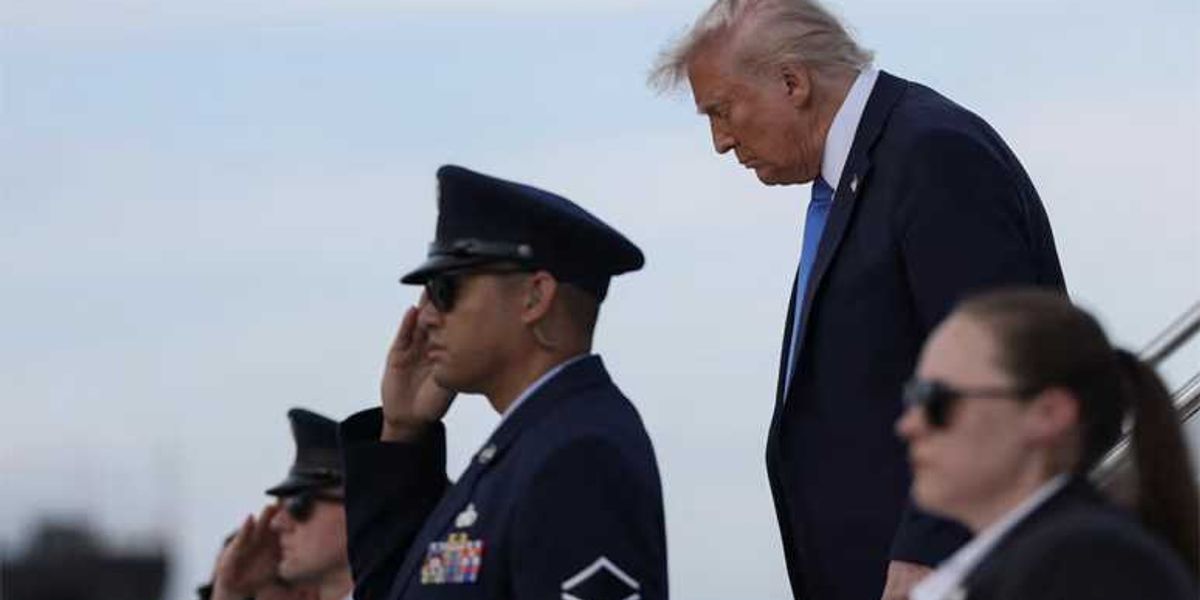
President Donald Trump received a high-level classified military briefing on Thursday concerning potential combat operations against Iran, as defense officials presented options for another round of major strikes, according to reporting by The Wall Street Journal. The session featured a rare in-person presentation by Adm. Brad Cooper, the commander overseeing American forces in the Middle East, signaling an intensification of operational planning amid prolonged hostilities and elevated regional friction across the Persian Gulf and surrounding waterways.
Key facts
What happened
During a closed-door meeting at the White House on Thursday, President Donald Trump gathered senior defense aides to review operational assessments regarding the Middle East, according to reporting by The Wall Street Journal. The briefing included direct testimony and mission blueprints delivered by Adm. Brad Cooper, the senior military leader managing naval and theater-wide deployments in the area of responsibility.
In-person presentations by combatant commanders or their primary theater operational chiefs at the White House are typically reserved for pivotal tactical junctures or when a major escalation in force posture is under active consideration. Staff officers from the Pentagon and the Joint Staff accompanied the session to walk through tactical contingencies, logistics requirements, and prospective counter-responses from Tehran.
According to the reporting, the military leadership laid out potential target sets designed to degrade Iranian defensive networks, retaliate for persistent hostilities against American or allied interests, and blunt the operational capacity of the Islamic Revolutionary Guard Corps (IRGC). Planners detailed the risks of collateral engagement, intelligence confidence intervals, and the precise munitions required to neutralize hardened or underground facilities.
While the presentation offered a structured menu of offensive operations, participants did not announce whether Trump authorized an immediate order to strike. Instead, the options remain on the table as administration officials deliberate the timing, geopolitical ramifications, and strategic goals of executing another overt military campaign.
Why it matters
Any decision by the commander in chief to authorize direct kinetic action against Iran carries immediate, systemic implications for global security, energy commerce, and American foreign policy. The Persian Gulf remains one of the world's most sensitive transit choke points, through which roughly one-fifth of global petroleum liquids pass daily via the Strait of Hormuz. Sustained hostilities in the waterway routinely drive up maritime insurance premiums, disrupt tanker traffic, and introduce severe volatility into global crude benchmark pricing.
Beyond energy markets, an escalation of direct strikes risks igniting a broader regional war that could draw in regional allies, including Israel and Gulf Cooperation Council states, while exposing thousands of U.S. service members stationed across Iraq, Syria, Bahrain, Jordan, and Qatar to asymmetric retaliatory barrages. Iran maintains an extensive arsenal of short-, medium-, and intermediate-range ballistic missiles, alongside thousands of one-way attack unmanned aerial vehicles, designed specifically to overwhelm regional air defense batteries.
Domestically, renewed offensive strikes without explicit congressional authorization would likely ignite a sharp constitutional debate on Capitol Hill over the War Powers Resolution of 1973. While successive administrations have cited Article II executive authorities or legacy Authorizations for Use of Military Force (AUMF) to conduct limited retaliatory actions, a protracted or large-scale bombing campaign against a sovereign military establishment tests the limits of executive power and forces lawmakers into contentious budget and oversight showdowns.
The background
Tensions between Washington and Tehran have followed an escalatory trajectory across multiple presidential administrations, characterized by cycles of economic sanctions, proxy skirmishes, and covert sabotage. During Donald Trump's first term in the White House, the administration withdrew the United States in May 2018 from the Joint Comprehensive Plan of Action (JCPOA), the multilateral accord designed to restrict Iran's nuclear enrichment activities in exchange for sanctions relief. In its place, the administration instituted a "maximum pressure" campaign that imposed thousands of economic designations on Iranian financial institutions, oil exports, and shipping firms.
Tensions reached a historic flashpoint in January 2020, when a U.S. drone strike in Baghdad killed Maj. Gen. Qasem Soleimani, commander of the IRGC's elite Quds Force. Iran answered days later by launching dozens of ballistic missiles at Ain al-Asad airbase in Iraq, injuring more than 100 American service members with traumatic brain injuries. Although that confrontation did not tip into a total regional conflagration, it established a pattern of direct military friction that supplanted decades of indirect conflict.
United States Central Command (CENTCOM), established in 1983 to protect American strategic interests across the Middle East, Central Asia, and parts of South Asia, maintains continuous air, naval, and ground task forces in the region. Its maritime component, the U.S. 5th Fleet based in Manama, Bahrain, patrols the Persian Gulf, Red Sea, Gulf of Oman, and northern Arabian Sea. In recent years, CENTCOM has increasingly focused on countering the proliferation of Iranian-manufactured loitering munitions, ballistic missiles, and remote-controlled maritime attack boats deployed by Tehran and allied regional militias, including the Houthi movement in Yemen and various factions in Iraq and Syria.
Adm. Brad Cooper has played an instrumental role in shaping the Pentagon's tactical stance in the theater, having previously served as commander of U.S. Naval Forces Central Command and the 5th Fleet before ascending to leadership within the unified combatant command structure. His leadership has emphasized the integration of unmanned surface vessels, advanced artificial intelligence tracking systems, and multinational maritime security coalitions.
Reaction
The White House and the Pentagon declined to provide public details on the specific contents of the intelligence briefing, maintaining standard policies against discussing classified operational options. Defense officials typically stress that command leadership consistently updates the president on defensive measures and contingency operations across every geographic theater.
In Tehran, state media and foreign ministry representatives had not issued an immediate formal response to the reports of the briefing at the time of publication. Iranian officials have historically warned in official forums, including the United Nations Security Council, that any direct military attack against Iranian territory, sovereign assets, or senior personnel would trigger immediate, symmetrical counterstrikes against U.S. bases and interests across the Middle East.
On Capitol Hill, congressional leaders are expected to demand classified notifications from the White House if the administration prepares to cross the threshold into sustained combat operations. Members of the House and Senate Armed Services Committees routinely review CENTCOM threat postures, and any imminent escalation is likely to provoke calls from both parties for explicit briefings on legal authorities and mission parameters.
What we don't know yet
Several critical elements regarding the scope and timeline of potential operations remain undisclosed. First, the reporting does not identify the specific operational threshold that would trigger an order to strike, leaving it unclear whether the Pentagon prepared plans for an immediate punitive raid or developed proactive strike packages for deployment only if Iranian forces cross defined red lines.
Second, the precise categories of targets presented to Trump were not made public. Military planners often draw up tiered target matrices, which can encompass air defense installations, radar sites, weapons manufacturing depots, naval vessels, or hardened command-and-control facilities located on mainland Iran. It is not publicly known whether the briefing focused on kinetic strikes inside Iran's sovereign borders or targeted Iranian-backed proxies and naval elements operating in international waters and neighboring nations.
Finally, the degree of coordination with international allies remains unconfirmed. It is not clear whether regional partners hosting American forces have agreed to allow their airspace or bases to be used for offensive sorties against Iranian targets, an arrangement that carries immense diplomatic and defensive consequences for host nations.
What to watch
Observers of Middle East defense dynamics will monitor several clear indicators to gauge whether military action is imminent. The primary factor is U.S. force posture in the region. Major air or sea operations typically necessitate the deployment or repositioning of carrier strike groups, amphibious ready groups, guided-missile cruisers, and additional squadrons of fourth- and fifth-generation fighter aircraft such as F-35s, F-15Es, and F-16s, along with air defense batteries like Patriot and THAAD systems to shield American installations.
Another benchmark to watch is official communications from the Department of Defense, including notices to airmen (NOTAMs) and maritime navigation warnings in the Persian Gulf and Red Sea, which often foreshadow heightened operational activity. On Capitol Hill, any sudden scheduling of closed-door briefings for the "Gang of Eight"—the bipartisan leadership of the House, Senate, and intelligence committees—frequently precedes significant overseas military actions.
Diplomatic movements among regional governments will also signal shifting risk assessments. High-level visits between Washington, Jerusalem, Riyadh, and other regional capitals often accelerate prior to coordinated deterrence measures. Simultaneously, monitoring the frequency of drone and missile tracking over regional transit corridors will provide insight into whether Tehran is adjusting its own combat readiness posture.
This report is based on original reporting published by The Wall Street Journal, alongside wire accounts detailing presidential deliberations with senior military commanders.
How this story was produced
This report was written by The Global Wire newsroom from reporting first published by Erik De La Garza. We verify the core facts against the original report, write our own account, and add the background and consequences a short wire item leaves out. Drafting is AI-assisted inside an editor-supervised pipeline, and every story is checked for accuracy of attribution, structure and duplication before it appears — full detail in our AI and funding disclosure.
Spotted an error? Tell us at corrections@horizonglobalnews.com and read our corrections policy or editorial standards.




Reader comments
Loading comments…