

Meloni Rebukes Milan Court After Release of Suspect Tied to Street Unrest
The Italian prime minister called the decision shameful, reigniting executive clashes with the judiciary over public order.
By The Global Wire Newsroom · Reported from ET Online
Link preview · horizonglobalnews.com
Meloni Rebukes Milan Court After Release of Suspect Tied to Street Unrest
The Italian prime minister called the decision shameful, reigniting executive clashes with the judiciary over public order.
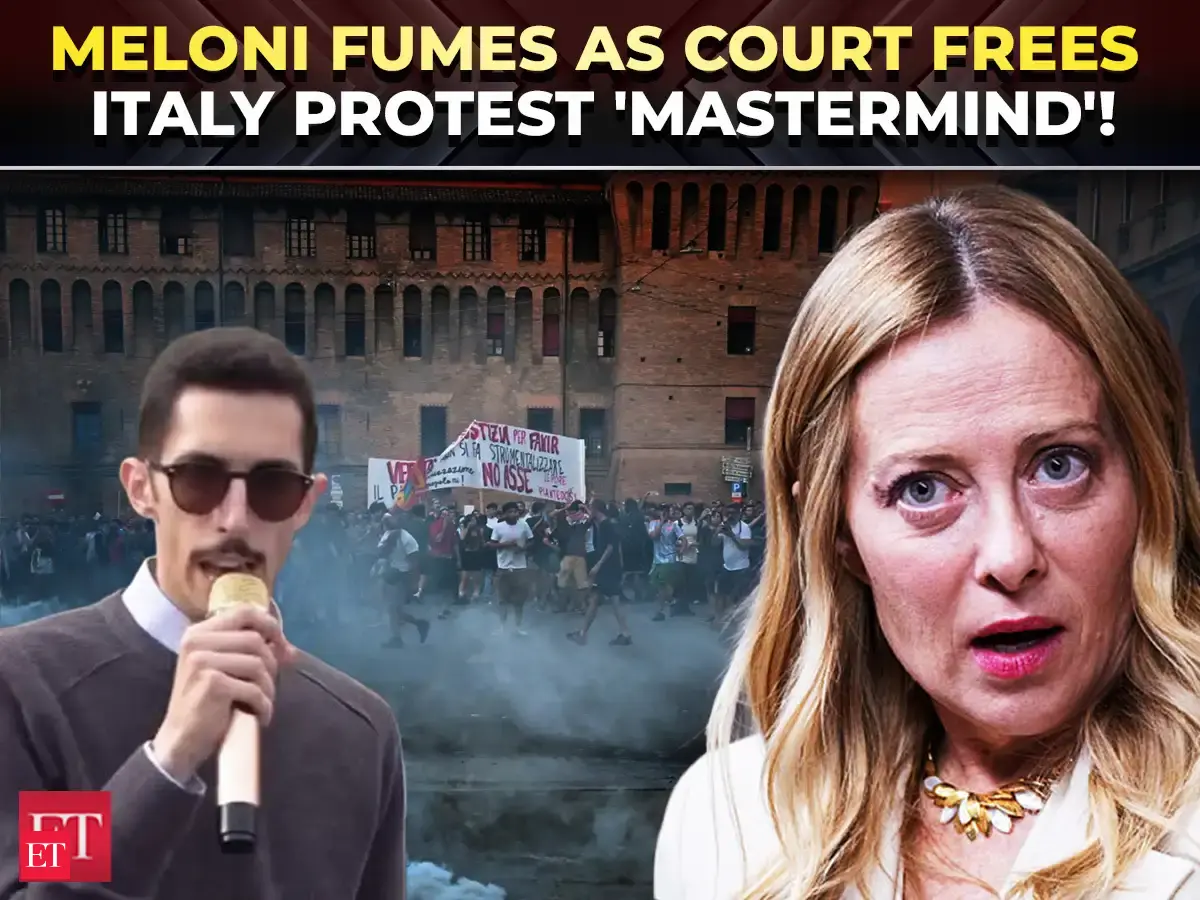
ROME — Italian Prime Minister Giorgia Meloni has sharply criticized a Milan court's decision to release a suspect identified as Youssef, who had been detained in connection with recent street demonstrations and public unrest. Meloni denounced the judicial ruling as "shameful," elevating an individual magistrate's pre-trial detention decision into a high-stakes national political dispute over public safety, policing standards, and the constitutional boundaries between Italy's executive branch and its independent judiciary.
Key facts
What happened
According to reporting by ET Online, judicial authorities in Milan ordered the release from custody of a suspect identified as Youssef, whom law enforcement had linked to street unrest and violent clashes during demonstrations. Investigators and prosecutors had treated the individual as a central figure in the disturbances, with initial characterizations framing him as a coordinator or leading organizer behind the disruption.
Following his detention, the case was reviewed by a Milan judge tasked with determining whether the suspect met the strict statutory criteria required for pre-trial detention under Italian criminal procedure. Upon reviewing the evidence submitted by prosecutors, the court concluded that the legal thresholds for continuing to hold the suspect in custody were not satisfied, directing that he be discharged.
The court's decision prompted an immediate and fierce rebuke from the head of government. Prime Minister Giorgia Meloni publicly expressed anger over the outcome, characterizing the court's order to release the riot suspect as "shameful." Her intervention transformed what would typically be a procedural preliminary ruling into a national political flashpoint, drawing attention to the broader operational tensions between frontline policing agencies seeking preventive detention and the magistrates required to enforce procedural safeguards.
Why it matters
The dispute carries significant consequences for the governance of public order in Italy, the domestic political standing of the ruling coalition, and institutional stability between the executive and the judiciary. For citizens and local business owners in metropolitan hubs like Milan, the confrontation highlights persistent anxieties regarding street violence, property damage, and the state's capacity to maintain civil order during polarized public demonstrations.
At the institutional level, Meloni's public reprimand of a sitting court tests the established norms of democratic separation of powers. In Italy, where the post-war constitutional order deliberately insulated magistrates from political influence, sharp public condemnations of court rulings by a sitting prime minister are seen by legal associations as an infringement on judicial independence. Conversely, for Meloni's conservative base and law enforcement unions, her vocal pushback resonates as a necessary defense of police officers who face bodily risk during riots, only to see individuals accused of orchestrating disturbances released back onto the streets before trial.
Furthermore, the clash threatens to complicate Italy's legislative agenda regarding public safety. The government has prioritized sweeping security measures designed to impose harsher penalties for civil disobedience, unauthorized blockades, and resistance to public officials. When courts decline to validate pre-trial detentions under existing law, it reinforces executive arguments that the judiciary is actively frustrating government policy, potentially accelerating controversial judicial reform initiatives aimed at curbing magistrate discretion.
The background
Tensions between Giorgia Meloni's government, which assumed office in October 2022, and Italy's judiciary have flared repeatedly across multiple legal fronts. The ruling coalition—comprising Meloni’s Brothers of Italy (Fratelli d'Italia), Matteo Salvini’s League (Lega), and Antonio Tajani’s Forza Italia—has placed law-and-order governance at the center of its political identity. Over its tenure, the administration has introduced stringent security decrees, including measures restricting unauthorized raves, stiffening prison sentences for road blockades organized by climate activists, and imposing tighter surveillance on protest organizers.
Under the Italian Code of Criminal Procedure (Codice di Procedura Penale), pre-trial detention (custodia cautelare) is strictly regulated. Governed by Articles 273 and 274 of the code, pre-trial incarceration cannot be applied purely as a punitive measure. A preliminary investigative judge (Giudice per le Indagini Preliminari, or GIP) may only remand an accused individual in custody if there are grave indications of guilt alongside one of three specific statutory prerequisites: a concrete risk of flight, an imminent danger of tampering with evidence, or a verified likelihood that the suspect will commit further serious crimes of the same nature.
When judges find that prosecutors have presented insufficient proof of these exceptional statutory risks, the law requires the suspect's immediate release or the imposition of lesser, non-custodial precautionary measures, such as mandatory reporting to police stations or travel bans. This legal architecture frequently produces friction between police headquarters (Questura), which prioritize neutralizing perceived instigators during active waves of social unrest, and magistrates, who are constitutionally bound to uphold the presumption of innocence under Article 27 of the Italian Constitution.
This friction has manifested in high-profile clashes beyond public demonstrations. In late 2024, Italian courts repeatedly blocked the executive's policy of detaining asylum seekers at newly established processing facilities in Gjadër, Albania, citing European Court of Justice rulings regarding the designation of safe countries of origin. The government reacted with fury to those decisions, accusing activist judges of exceeding their remit and pursuing partisan political agendas. The controversy surrounding Youssef's release in Milan fits squarely into this established pattern of institutional confrontation.
Reaction
The immediate documented reaction to the ruling came from Prime Minister Meloni herself, whose choice of the word "shameful" signaled an uncompromising political posture. While executive officials often refrain from commenting on active criminal cases to avoid the perception of undue pressure, Meloni's direct rhetorical assault reflects her administration's strategy of publicly confronting what it views as excessive judicial leniency.
Within the broader Italian political landscape, judicial rulings of this nature typically trigger a polarized response. The ruling coalition, including figures from the League, routinely rallies behind the prime minister, reiterating calls for greater accountability among magistrates and defending the work of the police. Meanwhile, opposition parties, including the center-left Democratic Party (Partito Democratico) and the Five Star Movement (Movimento 5 Stelle), traditionally caution the prime minister against undermining public trust in the justice system, arguing that executive attacks on judges erode constitutional checks and balances.
Italy's premier judicial organization, the National Association of Magistrates (Associazione Nazionale Magistrati, or ANM), as well as the Supreme Council of the Judiciary (Consiglio Superiore della Magistratura, or CSM)—the constitutional body presided over by President Sergio Mattarella to oversee judicial administration—routinely monitor executive statements for potential breaches of judicial autonomy, frequently issuing formal statements to defend magistrates from political intimidation.
What we don't know yet
Several substantive details regarding the Milan case remain unverified in the initial reporting. While the individual has been identified publicly as Youssef and linked to protest leadership, the exact formal charges filed against him—such as aggravated resistance, property devastation, or criminal association—have not been detailed. It is also unclear whether prosecutors have formally appealed the decision to a surveillance court (Tribunale del Riesame), which serves as the standard appellate venue for contested custodial rulings.
Furthermore, the court's precise written rationale (ordinanza) has not been made public, leaving it unknown whether the judge released Youssef due to a lack of sufficient factual evidence linking him to specific acts of violence, procedural defects during his arrest, or a finding that he posed no flight or reiteration risk. The broader context of the demonstrations in question, including the organizing groups and the full scope of property damage or injuries, also remains undisclosed.
What to watch
Developments over the coming weeks will determine whether this incident evolves into an institutional crisis or recedes as a temporary political skirmish. First, court watchers will look for the Milan public prosecutor's office to decide whether to lodge an appeal against the release order before the Tribunale del Riesame, which would reassess the necessity of custodial measures.
Second, attention will turn to the CSM and the presidency of the republic. If judicial associations formally request a protection measure (pratica a tutela) to shield the Milan bench from political attacks, President Mattarella may be drawn into reminding political leaders of the constitutional imperative to respect judicial independence.
Finally, observers should watch the Italian parliament, where the Meloni government may use the public outcry over the suspect's release to build political momentum for stalled judicial reforms, including measures to introduce civil liability for magistrates or separate the career paths of judges and prosecutors.
This account is based on original reporting by ET Online.
How this story was produced
This report was written by The Global Wire newsroom from reporting first published by ET Online. We verify the core facts against the original report, write our own account, and add the background and consequences a short wire item leaves out. Drafting is AI-assisted inside an editor-supervised pipeline, and every story is checked for accuracy of attribution, structure and duplication before it appears — full detail in our AI and funding disclosure.
Spotted an error? Tell us at corrections@horizonglobalnews.com and read our corrections policy or editorial standards.




Reader comments
Loading comments…