

Netanyahu Bloc Falls Short as Arab Parties Surge in Israeli Parliamentary Election
With Benjamin Netanyahu’s allies securing 53 seats and the opposition taking 48, a historic 19-seat haul by Arab-led parties leaves Israel facing another protracted coalition deadlock.
By The Global Wire Newsroom · Reported from SECTIONS Netanyahu faces uncertain political future
Link preview · horizonglobalnews.com
Netanyahu Bloc Falls Short as Arab Parties Surge in Israeli Parliamentary Election
With Benjamin Netanyahu’s allies securing 53 seats and the opposition taking 48, a historic 19-seat haul by Arab-led parties leaves Israel facing another protracted coalition deadlock.
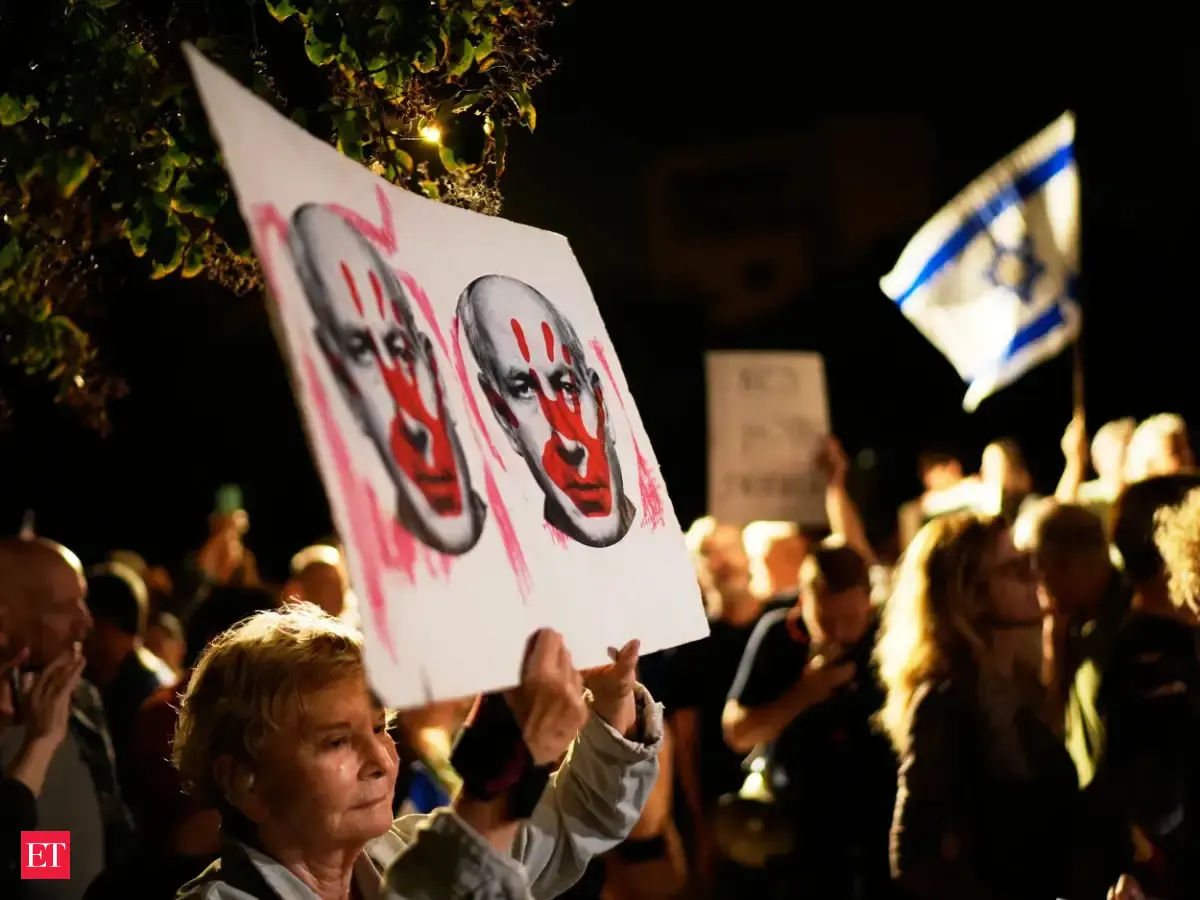
JERUSALEM — Israeli Prime Minister Benjamin Netanyahu faces an acute political impasse after national election results left his right-wing and religious alliance well short of a parliamentary majority, with Arab-led parties capturing a record 19 seats in the 120-member Knesset. According to reporting by SECTIONS, Netanyahu’s political bloc secured 53 seats, while the traditional opposition parties captured 48, creating a divided legislature in which neither primary camp commands the 61-seat threshold required to govern without broad compromises or unprecedented cross-factional alliances. The constitutional duty of determining which leader receives the initial mandate to construct a governing coalition now shifts to Israeli President Isaac Herzog.
Key facts
What happened
The parliamentary election yielded a deeply fragmented distribution of power across the 120 seats of the Knesset. Official tallies detailed by SECTIONS established that the bloc aligned with Prime Minister Benjamin Netanyahu captured 53 seats. This alliance, anchored by Netanyahu's Likud alongside ultra-Orthodox and hard-right nationalist factions, had campaigned on consolidating authority to pursue long-standing security, judicial, and fiscal programs. However, finishing eight seats below the essential 61-seat line denies the incumbent prime minister an unassisted path to renewed office.
The mainstream opposition, comprising centrist, center-left, and secular right factions, secured 48 seats. While denying Netanyahu a decisive triumph, the opposition camp discovered itself equally constrained by arithmetic realities. Under normal Israeli political convention, the opposition cannot construct a government solely out of its standard constituent parties.
The balance of power was shifted entirely by the performance of Arab-led lists, which together claimed 19 seats—an extraordinary result that outstripped prior parliamentary showings. This tally gives the Arab factions their strongest collective posture in the history of the Israeli parliament. Because neither Netanyahu nor his primary rivals can reach 61 seats independently, the political center of gravity has shifted to post-election diplomacy. Opposition strategists have begun exploring whether an alliance, coalition arrangement, or external supply agreement with Arab-led factions can be negotiated to prevent Netanyahu from remaining in office. Meanwhile, the legal prerogative to break the stalemate falls to President Isaac Herzog, who must review the formal recommendations submitted by each elected slate.
Why it matters
The electoral stalemate creates profound ramifications for Israeli statecraft, regional diplomacy, and institutional stability. Operating without a clear parliamentary majority exposes the nation to prolonged executive paralysis at a moment of significant economic strain and volatile regional security dynamics. If neither bloc manages to assemble 61 lawmakers, Israel risks sliding back into the cycle of snap elections that saw citizens visit polling stations five times between 2019 and 2022.
The result also forces an ideological reckoning across the Israeli political spectrum. For decades, mainstream Zionist factions largely excluded Arab-led slates from governing coalitions, and Arab parties routinely chose to remain in ideological opposition rather than formally back an Israeli prime minister. A precedent emerged in 2021 when the United Arab List, known as Ra'am, joined the multi-party government led by Naftali Bennett and Yair Lapid. However, incorporating or relying upon a 19-member Arab contingent represents a shift on a vastly larger operational scale. Any government reliant on such an arrangement would face relentless pressure over national security policies, resource allocation for Arab municipalities, land zoning, and the enduring Israeli-Palestinian conflict.
Conversely, if the opposition fails to forge common cause with the Arab factions, Netanyahu may attempt to fracture opposing factions through offers of senior cabinet portfolios or try to force an immediate national unity arrangement. Financial markets frequently react negatively to prolonged Israeli coalition talks, as the absence of a stable government prevents the passage of statutory annual budgets and leaves international credit rating agencies cautious regarding public sector governance.
The background
Israel functions under a system of nationwide proportional representation with a single nationwide district. Voters cast ballots for closed party lists rather than individual local candidates, and any slate securing at least 3.25 percent of the valid votes cast enters the Knesset. This low threshold regularly populates the assembly with ten or more distinct factions, ensuring that no individual party has ever won an outright 61-seat majority in the country's modern history. Governments are by definition coalitions, established through extensive, legally binding negotiation agreements that assign cabinet ministries, parliamentary committee chairmanships, and legislative priorities.
Netanyahu is Israel's longest-serving prime minister, having held the office across multiple non-consecutive tenures totaling more than 16 years. His recent terms have been defined by contentious domestic debates, including divisive proposals to overhaul the judiciary and continuous geopolitical crises across the Middle East. These structural divisions divided the Israeli electorate into two entrenched camps: those who consider his continued leadership indispensable for national defense, and those who view his tenure as an obstacle to democratic integrity and political normalcy.
Arab citizens of Israel represent roughly 20 percent of the nation's total population. Historically, their political participation has been channeled through distinct movements spanning communist, secular nationalist, and Islamist perspectives. When these factions coordinated under the Joint List umbrella in prior elections, they peaked at 15 seats in March 2020 before later splitting over disagreements regarding direct engagement with Israeli ruling coalitions. A collective tally of 19 seats indicates either heightened voter turnout in Arab towns and cities or unprecedented tactical voting. Under Israel's constitutional architecture, delineated in Basic Law: The Government, President Herzog must meet with delegations from every elected faction to receive their recommendations before officially conferring the mandate to form a cabinet.
Reaction
Direct statements from party leaders remained guarded in the immediate wake of the vote certification, as negotiating teams carried out initial internal evaluations. Reporting by SECTIONS indicates that the opposition is actively weighing the political and structural viability of an alliance with the Arab-led parties to assemble a governing majority.
Within the conservative and ultra-Orthodox camp, Likud officials are expected to strongly denounce any prospective alliance between the mainstream opposition and Arab slates, framing such a move as a danger to the state's traditional security doctrine. Netanyahu has historically sought to mobilize his base by arguing that opposition figures cannot govern without depending on Arab representatives who reject the foundational tenets of Zionism.
Arab party leaders face intense domestic scrutiny from their own voter bases. Representatives of Ra'am, Hadash, Ta'al, and Balad must reconcile the prospect of influencing policy and securing crucial funding for neglected civil infrastructure with the severe political hazards of providing confidence votes to Zionist leaders whose defense and foreign policies remain deeply controversial among Arab citizens. Observers expect formal statements to emerge following party central committee meetings, while President Herzog prepares his consultation timetable at the President's Residence in Jerusalem.
What we don't know yet
Several critical elements of the prospective coalition calculus remain unresolved. First, the reporting from SECTIONS does not specify the precise distribution of the 19 seats among the individual Arab factions. This breakdown is vital because parties such as Ra'am, which focuses primarily on socioeconomic gains for Arab communities, maintain divergent political strategies from Hadash-Ta'al or the nationalist Balad, the latter of which has historically rejected recommending any mainstream Zionist politician to the presidency.
Second, it remains unknown whether President Herzog will confer the primary mandate upon Netanyahu as the head of the largest ideological bloc, or if he will assign it to an opposition leader who can present a plausible pathway to 61 endorsements. Furthermore, it is not established whether the opposition envisions an integrated cabinet coalition with Arab ministers, an external confidence-and-supply agreement, or if centrist elements will balk entirely at cooperating with anti-Zionist lawmakers. Finally, there is no public indication of whether individual defectors from either side could break ranks, which could swiftly invalidate existing arithmetic assumptions.
What to watch
The trajectory of Israeli governance will be dictated by a series of mandatory procedural deadlines in the coming days and weeks. The immediate milestone to monitor is the formal certification of election tallies by the Central Elections Committee, presided over by an incumbent Supreme Court justice. Once certified results are presented, President Herzog has seven days to conclude consultations with each elected party slate and designate a prime ministerial candidate.
The lawmaker chosen by the president will have 28 days to conclude negotiations and assemble a viable 61-member cabinet. If progress is demonstrated, the president retains discretionary authority to grant a single 14-day extension. Observers should watch whether opposition leaders formally sign mutual loyalty pacts or initiate direct summit talks with Arab faction chiefs. If all designated candidates fail to present a verified majority within the statutory time frames, the Knesset enters an automatic dissolution process, triggering a fresh round of national elections.
This report is based on original reporting from SECTIONS.
How this story was produced
This report was written by The Global Wire newsroom from reporting first published by SECTIONS Netanyahu faces uncertain political future. We verify the core facts against the original report, write our own account, and add the background and consequences a short wire item leaves out. Drafting is AI-assisted inside an editor-supervised pipeline, and every story is checked for accuracy of attribution, structure and duplication before it appears — full detail in our AI and funding disclosure.
Spotted an error? Tell us at corrections@horizonglobalnews.com and read our corrections policy or editorial standards.



Reader comments
Loading comments…