

Alaska Braces for Heavy Snow as Weather Service Warns of Disrupted Highway Transit
Up to 15 inches of snow forecast across Alaska has prompted winter storm warnings and advisories from federal meteorologists, threatening key highway corridors.
By The Global Wire Newsroom · Reported from economictimes.indiatimes.com
Link preview · horizonglobalnews.com
Alaska Braces for Heavy Snow as Weather Service Warns of Disrupted Highway Transit
Up to 15 inches of snow forecast across Alaska has prompted winter storm warnings and advisories from federal meteorologists, threatening key highway corridors.
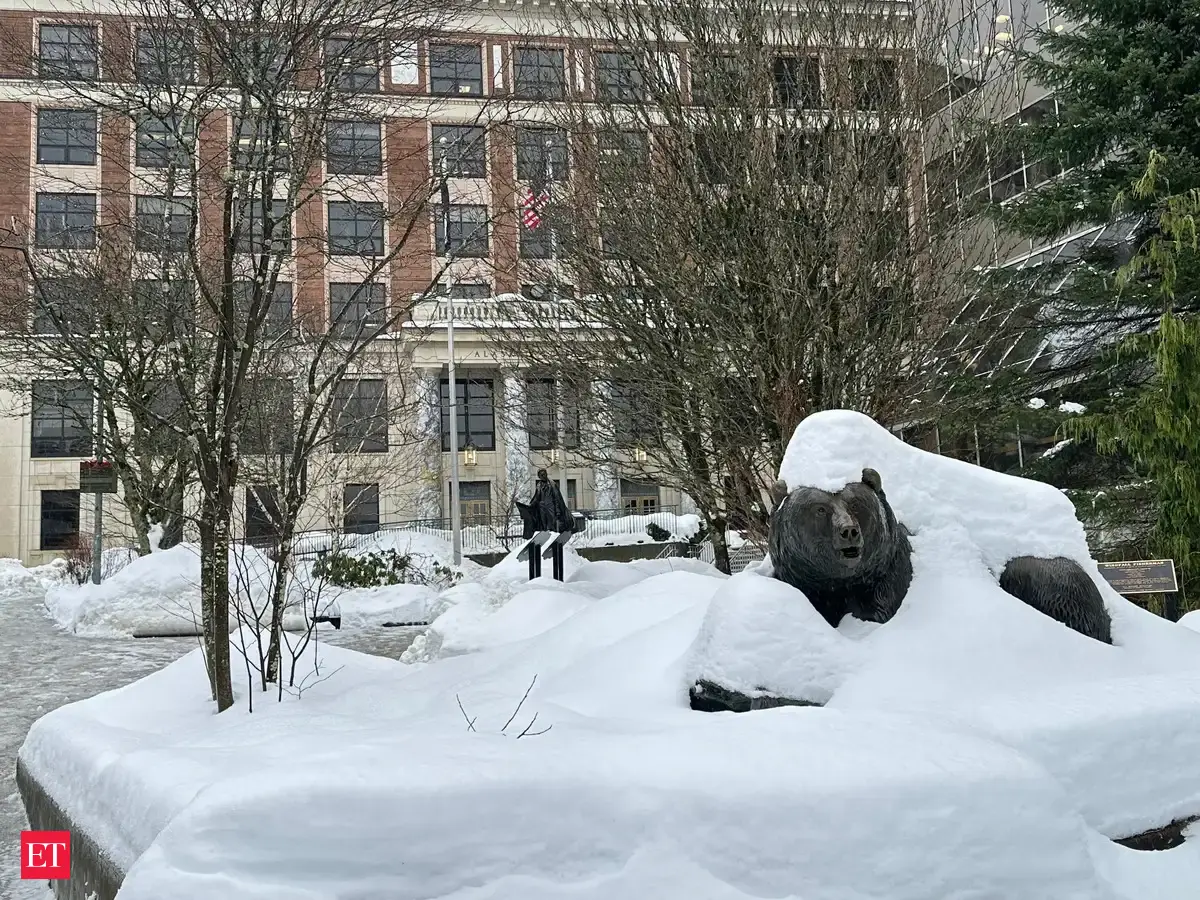
Meteorologists from the National Weather Service have issued a series of winter storm warnings and weather advisories across vast stretches of Alaska, cautioning that up to 15 inches of snow could accumulate in higher-elevation passes and interior corridors. Forecast offices in both Anchorage and Fairbanks alerted motorists and freight haulers that deteriorating road conditions, drifting snow, and reduced visibility will severely impede transit along the state's limited terrestrial highway network. The alerts, reported by The Economic Times, signal the onset of early-season severe winter weather capable of isolating remote communities that rely on overland freight routes for fuel, groceries, and essential services.
Key facts
What happened
In late October, meteorologists at the National Weather Service Weather Forecast Offices in Fairbanks and Anchorage tracked a developing weather pattern directing significant moisture across central and south-central Alaska. As colder Arctic air interacted with the moisture-laden system, atmospheric conditions prompted forecasters to upgrade localized alerts into expansive winter storm warnings. According to reporting by The Economic Times, the system is projected to deposit up to 15 inches of snow in selected regions, while surrounding interior valleys and transit corridors face lower but still disruptive totals accompanied by freezing temperatures.
The National Weather Service office in Fairbanks warned that travel conditions would deteriorate rapidly along critical arteries, including segments connecting interior communities to coastal ports. Motorists navigating through highway passes were warned of drifting snow, icy road surfaces, and sudden drops in visibility caused by squalls and gusting surface winds. In Southcentral Alaska, the Anchorage forecast office reinforced these alerts, issuing warnings for surrounding mountain ranges and transit routes that channel vehicle traffic toward the Kenai Peninsula and the Matanuska-Susitna Valley. Highway maintenance crews and state transit authorities prepared snowplows, sand stockpiles, and heavy equipment as precipitation began transitioning from rain to heavy snow across inland elevations.
Why it matters
The onset of heavy early-season snow across Alaska's highway network carries implications far beyond typical seasonal disruptions seen in the contiguous United States. Alaska possesses one of the sparsest highway networks in North America, with fewer than 6,000 miles of paved public roads serving an expanse of over 660,000 square miles. The primary land routes—most notably the Parks Highway connecting Anchorage and Fairbanks, the Richardson Highway running south to Valdez, the Glenn Highway, and the Dalton Highway traversing the Arctic—have no parallel detours. When a major mountain pass closes due to heavy snow, avalanches, or commercial vehicle jackknifes, surface transportation grinding to a halt severs overland supply chains entirely.
Many interior and northern Alaskan settlements depend on continuous truck traffic along these corridors for deliveries of fresh perishables, shelf-stable goods, retail items, and bulk heating fuel before deep-winter conditions set in. A sudden accumulation of 15 inches of snow on steep gradients creates immediate risks for long-haul freight carriers operating triple-axle tractor-trailers, where minor traction loss can block two-lane thoroughfares for hours. Furthermore, unexpected delays impose downstream costs on local logistics hubs. If road links remain impassable for extended periods, commercial air carriers and cargo haulers often must step in to transport critical items at substantially higher freight rates, driving up consumer prices in communities where the cost of living already significantly outpaces the national average.
The background
Winter storm protocols across the state are managed under the operational guidance of the National Oceanic and Atmospheric Administration’s National Weather Service, which divides Alaska between primary forecast offices located in Anchorage, Fairbanks, and Juneau. A winter storm warning represents one of the agency’s most urgent non-convective alerts, declared when an impending winter weather event is considered imminent or already occurring and is expected to produce severe impacts such as sustained snowfall rates exceeding an inch per hour, severe drifting, or freezing rain. In contrast, winter weather advisories are issued for less severe, though still hazardous, occurrences that warrant caution from the public.
The logistical burden of keeping these arteries open falls to the Alaska Department of Transportation and Public Facilities, which oversees thousands of lane miles divided into northern, central, and southcoast operational regions. The geography presents unique maintenance challenges: road beds often traverse shifting permafrost, high-altitude passes are subject to fierce katabatic winds, and remote stretches lack mobile cellular coverage, complicating emergency dispatch and roadside recovery operations. Mountain crossings such as Thompson Pass on the Richardson Highway and Atigun Pass on the Dalton Highway routinely record some of the highest seasonal snowfall volumes in North America, occasionally exceeding 500 inches over the course of a winter.
Over past decades, early winter storms arriving in October have repeatedly tested state readiness. While native ecosystems and northern infrastructure are adapted to prolonged cold, transitions between autumn and deep winter often bring mixed precipitation events, producing black ice beneath fresh snowfall before maintenance depots can complete pre-treatment operations. Shifts in regional climate patterns have also altered storm tracks over the North Pacific and Bering Sea, occasionally feeding greater amounts of atmospheric moisture into cold inland air masses and increasing the frequency of heavy, high-moisture snowfall events that weigh down power distribution lines and impede municipal snow-clearing operations.
Reaction
Official alerts from the National Weather Service prompted regional public safety bodies to remind drivers of state winter travel advisories, stressing the necessity of winter survival kits, tire chains, and satellite communication devices when traversing remote routes. The Alaska Department of Transportation regularly updates its road condition reporting network, known as Alaska 511, urging haulers to check road cameras, friction reports, and plow tracking before departing major terminals.
While specific statements from municipal officials were not detailed in initial dispatches, county and municipal emergency management offices throughout the affected boroughs, alongside commercial logistics associations, routinely advise residents to postpone non-essential travel during active winter storm warnings. Local utility cooperatives in interior and south-central basins typically place line crews on standby during heavy accumulation forecasts, as heavy, wet snow clinging to spruce and birch boughs frequently results in downed power lines across rural rights-of-way.
What we don't know yet
Several operational questions remain unanswered regarding the exact impact of the incoming weather system. Available reporting does not detail the precise timing of peak accumulation for specific highway corridors, leaving it uncertain whether the heaviest snowfall will coincide with peak commercial freight departures or weekend commuter traffic. Furthermore, meteorologists have not yet confirmed the final freezing level across coastal transition zones, where a difference of only a few hundred feet in elevation can mean the difference between torrential rain and impassable slush.
It is also unknown whether state transportation authorities will need to mandate temporary closures or implement vehicle-weight and chain restrictions on high-elevation passes such as Isabel Pass or Broad Pass. Roadway closures ultimately depend not merely on total precipitation depth, but on crosswind speeds, which determine drifting severity and blowing snow visibility, details that continue to evolve as individual radar sweeps update.
What to watch
In the coming hours, meteorologists and emergency personnel will track specific observation stations across the interior to monitor the rate of snow accumulation and changes in surface barometric pressure. Key indicators will include official updates to the National Weather Service text bulletins, which will refine local snow totals, wind gust projections, and advisory expiration times.
Travelers and logistics dispatchers must monitor the Alaska 511 system for incident reports, plow activity, and route closures along the Parks, Richardson, Glenn, and Seward highways. Observers will also look to rural utility co-ops for notices of electrical outages resulting from line loading, while municipal public works divisions in Fairbanks and Anchorage assess whether primary and secondary street clearance operations will require emergency budget drawdowns as winter operations begin in earnest.
This report draws upon initial details and weather warning documentation reported by The Economic Times.
How this story was produced
This report was written by The Global Wire newsroom from reporting first published by economictimes.indiatimes.com. We verify the core facts against the original report, write our own account, and add the background and consequences a short wire item leaves out. Drafting is AI-assisted inside an editor-supervised pipeline, and every story is checked for accuracy of attribution, structure and duplication before it appears — full detail in our AI and funding disclosure.
Spotted an error? Tell us at corrections@horizonglobalnews.com and read our corrections policy or editorial standards.




Reader comments
Loading comments…