

U.S. Army Takes Delivery of Mobile 20kW Laser Counter-Drone Systems
The vehicle-mounted LOCUST laser system provides light infantry units with mobile directed-energy defense against incoming tactical drones.
By The Global Wire Newsroom · Reported from Prabhat Ranjan Mishra
Link preview · horizonglobalnews.com
U.S. Army Takes Delivery of Mobile 20kW Laser Counter-Drone Systems
The vehicle-mounted LOCUST laser system provides light infantry units with mobile directed-energy defense against incoming tactical drones.
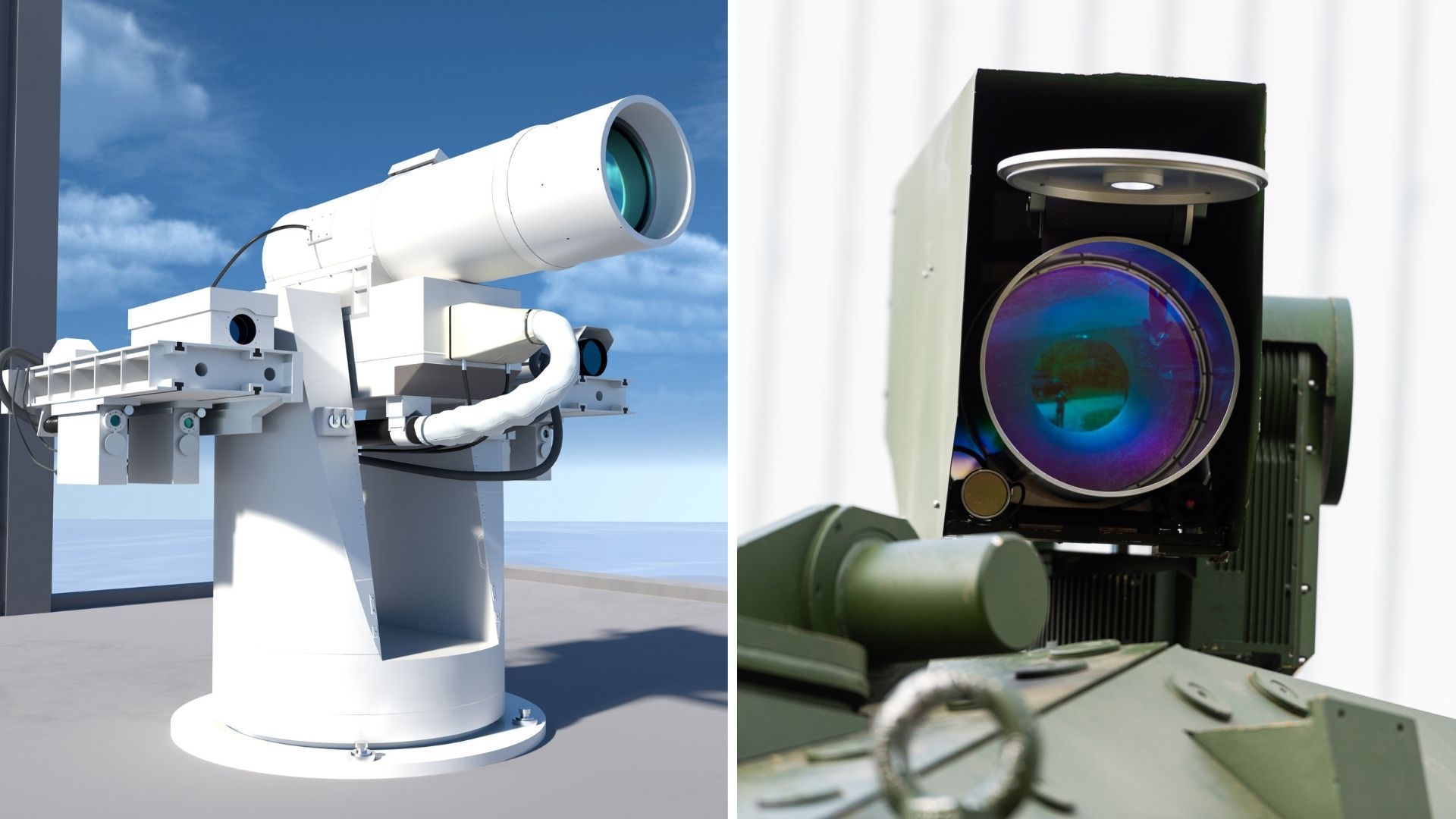
The United States Army has taken delivery of advanced 20-kilowatt-class high-energy laser weapon systems designed to destroy incoming unmanned aerial vehicles, according to reporting by Prabhat Ranjan Mishra on August 30, 2026. The new mobile air defense system integrates AeroVironment’s LOCUST Laser Weapon System onto General Motors Defense’s Infantry Squad Vehicle platform. The delivery marks a significant step forward in the U.S. military's ongoing efforts to field mobile directed-energy capabilities that protect ground troops against low-altitude drone threats, small unmanned reconnaissance craft, and loitering attack munitions in tactical combat environments.
Key facts
What happened
The delivery provides operational ground forces with a lightweight directed-energy asset capable of countering small to medium-sized drone threats. The counter-drone vehicle unites two distinct military technologies: the LOCUST Laser Weapon System (LWS) developed by defense firm AeroVironment, and the Infantry Squad Vehicle (ISV) manufactured by GM Defense, a business unit of General Motors.
The LOCUST LWS comprises a modular directed-energy turret and control assembly that combines electro-optical and infrared sensors, automated target detection and tracking software, and a 20-kilowatt fiber laser emitter. In operation, the system acquires incoming aerial targets, locks its sensor suite onto the threat, and focuses a concentrated high-energy laser beam onto critical target components. The laser generates extreme thermal energy that melts structural frames, burns through control surfaces, or detonates onboard explosive payloads within seconds.
By mounting this laser assembly onto the GM Defense ISV—a tactical vehicle built on the commercial Chevrolet Colorado ZR2 midsize truck architecture—the military establishes a mobile, rapid-reaction air defense capability. The ISV is specifically engineered for high mobility across rugged terrain and is light enough to be sling-loaded beneath a UH-60 Black Hawk transport helicopter or carried inside a CH-47 Chinook helicopter or C-130 Hercules transport aircraft. This physical mobility allows light infantry and airborne units to deploy organic directed-energy defense assets directly into forward operating positions where heavier air defense units cannot easily travel.
Why it matters
The rapid proliferation of inexpensive unmanned aerial vehicles across modern battlefields has fundamentally altered ground combat tactics. Off-the-shelf commercial quadcopters equipped with light explosive droppers, first-person view (FPV) kamikaze drones, and tactical reconnaissance platforms have stripped away traditional ground concealment and exposed infantry formations, logistics convoys, and armored assets to constant aerial observation and rapid strike.
Traditional surface-to-air defense platforms rely almost exclusively on kinetic missiles—such as Stinger shoulder-fired missiles or AIM-9X Sidewinders—which create a severe economic and operational imbalance when used against low-cost drones. Kinetic interceptor missiles cost tens of thousands to hundreds of thousands of dollars each, whereas commercial or custom-built attack drones often cost less than $1,000. Additionally, ground units face strict magazine limits, as vehicles can carry only a small number of physical missiles before requiring extensive resupply operations from rear depots.
High-energy laser systems resolve these cost and magazine constraints. A 20kW laser weapon engagement costs only the fuel consumed by the vehicle’s generator to supply electrical current, translating to a per-shot operational cost measured in dollars rather than hundreds of thousands. Furthermore, as long as the host vehicle maintains power generation and cooling capabilities, the laser system possesses a virtually unlimited magazine capacity, enabling troops to engage multiple incoming targets in rapid succession.
Deploying a 20kW laser system on a light utility vehicle addresses a crucial requirement for short-range air defense. While heavy armored platforms carrying 50kW or 300kW lasers are tailored to defend stationary infrastructure or heavy mechanized columns against cruise missiles and fixed-wing aircraft, the 20kW class laser offers the optimal ratio of weight, power consumption, and thermal management needed to protect highly mobile light infantry operations against Group 1 and Group 2 unmanned aircraft.
The background
The delivery of the 20kW LOCUST-equipped Infantry Squad Vehicle aligns with a decade-long drive by the U.S. Department of Defense to rebuild its short-range air defense (SHORAD) capabilities under Army Futures Command and the Joint Counter-Small Unmanned Aircraft Systems Office (JCO).
Following the conclusion of the Cold War, Western defense planning largely deprioritized ground-based tactical air defense, operating under the assumption that friendly air forces would maintain absolute air dominance. However, rapid technological advances in commercial electronics, miniaturized flight controllers, and satellite navigation over the past decade enabled non-state actors and state adversaries to weaponize small drones at scale. Combat operations across the Middle East, the Caucasus, and Eastern Europe highlighted how small aerial drones could paralyze unarmored infantry and destroy high-value ground assets.
In response, the U.S. Army initiated multiple directed-energy development efforts across different weight and power tiers. Heavy armored platforms were prioritized under the Directed Energy Maneuver-Short Range Air Defense (DE M-SHORAD) program, which integrated 50-kilowatt class lasers onto eight-wheeled Stryker vehicles. Larger stationary or trailer-mounted initiatives, such as the Indirect Fire Protection Capability - High Energy Laser (IFPC-HEL), targeted higher power thresholds up to 300 kilowatts to engage cruise missiles, incoming artillery, and mortar rounds.
Concurrently, defense leadership recognized the need for light, air-transportable counter-UAS platforms suited for rapid-deployment forces like airborne and air assault divisions. In June 2020, GM Defense won the U.S. Army contract to produce the Infantry Squad Vehicle, designed to carry nine soldiers across difficult off-road terrain. Meanwhile, AeroVironment—known for manufacturing small reconnaissance drones and Switchblade loitering munitions—developed the LOCUST system to provide modular, open-architecture laser defense capable of integration across varied ground and naval platforms. The combination of these technologies represents one of the first fielded operational integrations of directed-energy weaponry on an unarmored light infantry vehicle.
Reaction
Although official military statements regarding specific unit assignments were not detailed in initial reports, defense analysts and military strategists view the deployment of lightweight mobile directed-energy systems as a vital addition to modern layered air defense strategies.
Military planners emphasize that directed-energy systems are not intended to replace kinetic missiles or anti-aircraft artillery entirely, but rather to operate as a complementary layer. In a multi-layered defense network, electronic warfare jammers disrupt remote control signals, high-energy lasers neutralize close-range small drones without expending ammunition, and kinetic interceptors are preserved for larger, faster, or heavier high-altitude threats.
Industry observers also highlight that this fielding demonstrates effective cooperation between commercial automotive manufacturing capabilities and specialized military technology developers. Utilizing GM Defense’s production line for the commercial-derived ISV chassis allows the military to field advanced technologies faster and at lower production costs than building custom military vehicle platforms from scratch.
What we don't know yet
Several technical and administrative aspects of this delivery remain unconfirmed. Current disclosures do not state the total number of 20kW LOCUST-equipped Infantry Squad Vehicles included in this specific delivery batch, nor do they disclose the total contract value associated with the procurement.
Critical performance parameters under real-world combat conditions also remain to be demonstrated. High-energy laser systems are susceptible to atmospheric scattering and thermal blooming caused by dust, humidity, smoke, rain, and cloud cover. While testing under controlled range conditions demonstrates precise target disruption, the operational effectiveness of a 20kW laser in dense combat environments with heavy obscurants remains an open empirical question.
Additionally, details regarding the vehicle's onboard auxiliary power unit, electrical storage capacity, and thermal management systems have not been publicly disclosed. Directed-energy emitters generate significant waste heat that must be rapidly dissipated to allow sustained firing; how effectively the lightweight ISV platform manages thermal buildup during high-volume engagement scenarios remains to be observed. Finally, the specific U.S. Army units assigned to operate these systems and their potential overseas operational timelines have not been made public.
What to watch
In the coming months, several key milestones will clarify the operational trajectory of the LOCUST-equipped Infantry Squad Vehicle:
First, observe performance outcomes during upcoming live-fire combat exercises at primary U.S. Army training centers, including the National Training Center at Fort Irwin, California, and the Joint Readiness Training Center at Fort Johnson, Louisiana. These exercises will demonstrate how effectively light infantry units integrate mobile laser defense into rapid offensive and defensive maneuvers.
Second, track the integration of the vehicle's LOCUST tracking and sensor suite into the U.S. Army's broader command-and-control networks, specifically the Forward Area Air Defense Command and Control (FAAD C2) system. Interoperability with off-board radar networks will determine how rapidly the vehicle can acquire low-radar-cross-section targets.
Third, monitor future defense budget requests and Department of Defense procurement announcements to determine if the Army intends to expand this capability from initial fielding into a full program of record with large-scale fleet acquisition. Lastly, watch for potential technical iterations, including potential power scaling of the LOCUST system to higher wattage outputs as battery and thermal cooling technologies advance.
This report is based on original reporting by Prabhat Ranjan Mishra published on August 30, 2026.
How this story was produced
This report was written by The Global Wire newsroom from reporting first published by Prabhat Ranjan Mishra. We verify the core facts against the original report, write our own account, and add the background and consequences a short wire item leaves out. Drafting is AI-assisted inside an editor-supervised pipeline, and every story is checked for accuracy of attribution, structure and duplication before it appears — full detail in our AI and funding disclosure.
Spotted an error? Tell us at corrections@horizonglobalnews.com and read our corrections policy or editorial standards.
Reader comments
Loading comments…