

South Wales Peatland Rewetting Spurs Ecological Recovery in Five-Year Study
A five-year survey of South Wales peatland restoration projects found elevated water tables, regenerating bog vegetation and expanding habitat signs for endangered water voles.
By The Global Wire Newsroom · Reported from TOI Science Desk
Link preview · horizonglobalnews.com
South Wales Peatland Rewetting Spurs Ecological Recovery in Five-Year Study
A five-year survey of South Wales peatland restoration projects found elevated water tables, regenerating bog vegetation and expanding habitat signs for endangered water voles.
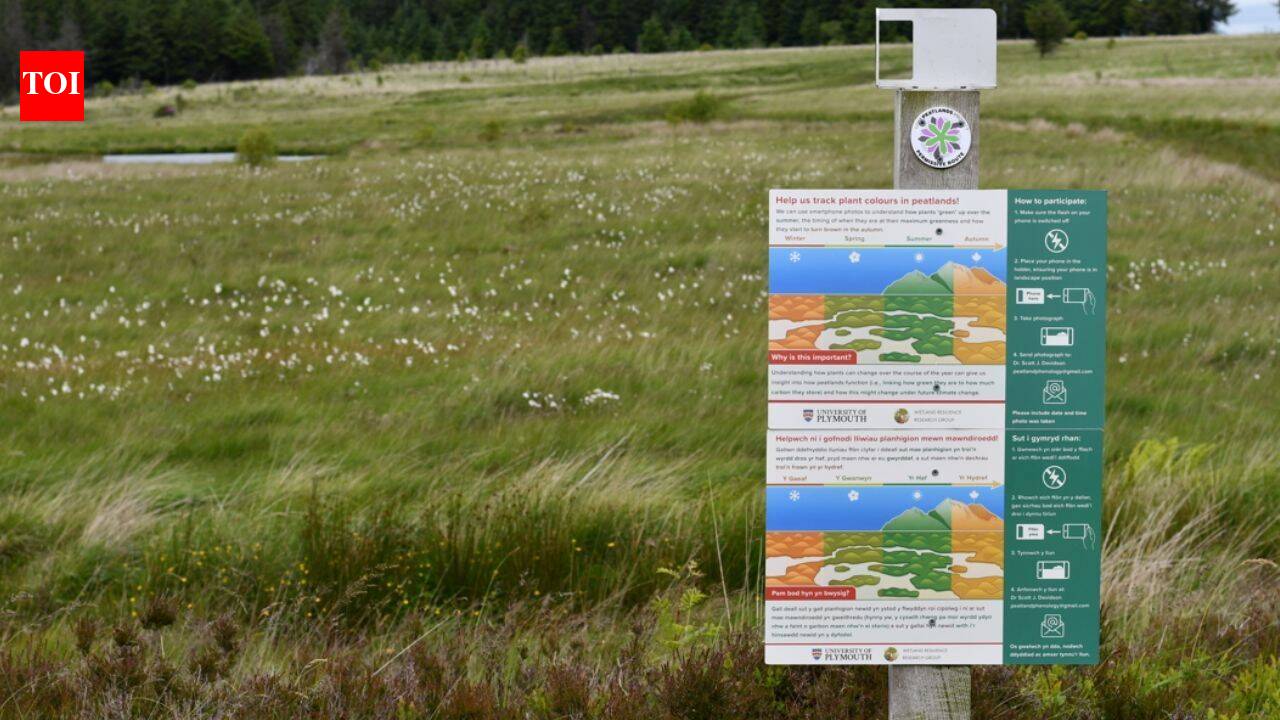
A five-year ecological monitoring programme across South Wales has documented measurable environmental recovery following extensive peatland rewetting initiatives, confirming elevated groundwater tables, the resurgence of specialized wetland vegetation, and expanded territory for threatened native wildlife including the European water vole. The findings, spanning field observations gathered between 2021 and 2025, indicate that systematic hydrological intervention can successfully reverse decades of severe habitat degradation across upland and lowland bog ecosystems.
Key facts
What happened
Between 2021 and 2025, ecological teams carried out multi-season field assessments across multiple restored peatland complexes in South Wales, as reported by the TOI Science Desk. The monitoring effort aimed to evaluate the real-world performance of hydrological restoration measures deployed to rehabilitate severely drained, eroded, or desiccated bogs.
Across the surveyed parcels, contractors and conservation teams previously installed interventions designed to impede water runoff, notably by blocking artificial drainage ditches—traditionally known as grips—using peat dams, timber bunds, and stone barriers. Workers also reprofiled steep, exposed peat hags to curb wind and rain erosion, while applying surface stabilizing techniques to allow vegetative cover to establish.
Hydrological data collected over the five-year monitoring cycle demonstrated that water tables across multiple treated locations rose substantially, holding closer to the surface even across extended summer periods. As a direct result of these wetter conditions, vegetation transects recorded a decline in invasive moor grass and encroaching woody scrub, replaced by colonizing colonies of *Sphagnum* mosses, cotton grass, and other hydric flora critical to active peat accumulation.
Alongside botanical shifts, the monitoring programme logged marked increases in faunal activity. Most notably, researchers observed expanding geographical evidence of the European water vole, documented through burrow networks, feeding stations, and latrine counts along newly stabilized, slow-moving bog channels and reconnected pool systems. Recovering sites also supported wider assemblages of bog-dwelling invertebrates, amphibians, and avian species reliant on open, waterlogged mire environments.
Why it matters
The confirmed recovery of these South Wales sites carries direct ramifications for regional climate mitigation, downstream flood resilience, and national biodiversity recovery. Intact peatlands function as natural carbon sinks, absorbing atmospheric carbon dioxide over millennia and locking it within saturated, oxygen-poor soils. However, when peatlands are drained, exposed to air, or overgrazed, the organic matter rapidly oxidizes, transforming natural sinks into persistent greenhouse gas sources.
In the United Kingdom, where peat covers roughly 10 percent of the total land area, an estimated 80 percent of peatlands suffer from varying degrees of degradation. Rewetting these landscapes halts immediate microbial oxidation, capping emissions and initiating the slow process of active carbon accumulation. The hydrological data from South Wales confirms that physical ditch-blocking techniques translate reliably into sustained moisture retention under variable field conditions.
Beyond atmospheric chemistry, restored bogs act as colossal landscape sponges. By holding rainwater at high elevations and releasing it gradually into river headwaters, saturated peat slows peak storm runoff, moderating discharge into vulnerable valley communities downstream—a pressing public safety concern in South Wales, where narrow topographical catchments regularly face extreme localized flooding. Furthermore, the verified presence of expanding water vole colonies provides vital progress for British mammal conservation. Water voles have lost more than 90 percent of their historic British range over the past half-century due to wetland drainage, industrialization, and intense predation by non-native American mink (*Neovison vison*). Providing high-quality, complex wetland corridors offers the species a defensible stronghold.
The background
Peatlands in Wales cover an estimated 91,000 hectares, ranging from upland blanket bogs across the Brecon Beacons (Bannau Brycheiniog) and the Cambrian Mountains to smaller, fragmented lowland raised mires. For centuries, these landscapes were viewed primarily as marginal wastelands. Starting in the mid-19th century and accelerating sharply after the Second World War, government subsidies incentivized landowners and state agencies to carve extensive drainage ditch networks across the uplands to expand sheep grazing and establish commercial coniferous forestry plantations, primarily non-native Sitka spruce.
These practices lowered regional water tables by several feet, causing the exposed surface peat to crack, dry, and wash away into local streams, which degraded drinking water supplies and damaged salmonid spawning beds with heavy silt loads. By the early 2000s, Welsh conservation agencies recognized that degraded bogs were discharging millions of tonnes of emissions while drastically impoverishing upland ecology.
In response, the Welsh Government established the National Peatland Action Programme, administered through Natural Resources Wales, setting explicit targets to accelerate landscape-scale restoration. The initiative coordinates funding between public budgets, water utilities, and private environmental trusts, tasking land managers with restoring at least 600 to 1,000 hectares of degraded peat per year to meet Wales's statutory objective of reaching net-zero greenhouse gas emissions by 2050. The 2021–2025 monitoring initiative was developed specifically to deliver quantitative empirical evidence regarding whether these capital investments deliver their anticipated long-term hydrological and ecological returns.
Reaction
Environmental scientists and land-management specialists have long maintained that peatland restoration offers among the highest returns on investment of any land-based climate intervention, though project developers have occasionally faced resistance from upland agricultural communities concerned about loss of usable pasture or changes to grazing tenancy agreements.
While formal public statements from statutory bodies regarding the complete 2021–2025 monitoring report have not yet been compiled in a single legislative release, policy specialists in Cardiff and Westminster are expected to scrutinize the empirical findings closely. Environmental bodies such as Natural Resources Wales and the Royal Society for the Protection of Birds (RSPB) have consistently advocated for expanding multi-annual funding allocations for bog restoration, and regional conservation coalitions are anticipated to use this data to lobby for more aggressive ditch-blocking targets in the next agricultural subsidy cycle.
Upland farming unions and tenant graziers will examine the results to determine how sustained high water tables influence boundary drainage, seasonal livestock movements, and participation in the Welsh Government’s Sustainable Farming Scheme, which increasingly links financial payments to verifiable environmental performance metrics.
What we don't know yet
Despite the encouraging broad findings, critical technical details remain absent from initial summaries. The reporting does not disclose the exact aggregate acreage surveyed across South Wales, nor does it quantify the specific hydrological elevation achieved in terms of average water-table depth relative to ground level across distinct seasonal extremes.
It also remains unconfirmed whether water-vole population gains reflect natural dispersal from existing adjacent populations or the gradual success of undocumented regional reintroduction efforts. The data does not detail the extent to which non-native American mink were actively trapped or managed across the survey zones; without sustained predator suppression, expanding water-vole colonies remain acutely vulnerable to localized extirpation.
Finally, the survey concludes at 2025, leaving unanswered how resilient these newly rewetted parcels proved during exceptional regional heatwaves or extended dry spells recorded in recent summer seasons, when shallow bog water levels face their most rigorous physical stress tests.
What to watch
Over the coming months, observers should look for the publication of the definitive, peer-reviewed dataset detailing the 2021–2025 South Wales peatland monitoring study, which is expected to provide exact hectare-by-hectare hydrological measurements, vegetation community matrices, and transect survey maps. That scientific release will establish the specific methodology used to quantify water-vole density and vegetative succession.
Attention will also turn to the Welsh Government’s upcoming budget cycles, where ministers must decide whether to expand funding for Natural Resources Wales’s peatland action portfolios. Observers should track whether the verified success of these South Wales interventions encourages cross-border policy adoption, particularly within England’s Nature for Climate Peatland Grant Scheme and comparable Scottish upland restoration frameworks.
Further field assessments scheduled through 2026 and 2027 will reveal whether the restored peat sites maintain their elevated water tables over time without requiring structural maintenance on dams, and whether carbon flux towers installed across similar UK sites confirm an operational transition from net carbon sources to net atmospheric sinks.
This account is based on reporting by the TOI Science Desk.
How this story was produced
This report was written by The Global Wire newsroom from reporting first published by TOI Science Desk. We verify the core facts against the original report, write our own account, and add the background and consequences a short wire item leaves out. Drafting is AI-assisted inside an editor-supervised pipeline, and every story is checked for accuracy of attribution, structure and duplication before it appears — full detail in our AI and funding disclosure.
Spotted an error? Tell us at corrections@horizonglobalnews.com and read our corrections policy or editorial standards.





Reader comments
Loading comments…