

Creality Unveils K3 3D Printer Featuring Rapid Four-Nozzle Switching Mechanism
Creality has introduced the K3 desktop 3D printer, deploying a rapid four-nozzle tool-changing system designed to curtail filament waste and shorten multi-color fabrication times.
By The Global Wire Newsroom · Reported from Howard Armitage
Link preview · horizonglobalnews.com
Creality Unveils K3 3D Printer Featuring Rapid Four-Nozzle Switching Mechanism
Creality has introduced the K3 desktop 3D printer, deploying a rapid four-nozzle tool-changing system designed to curtail filament waste and shorten multi-color fabrication times.
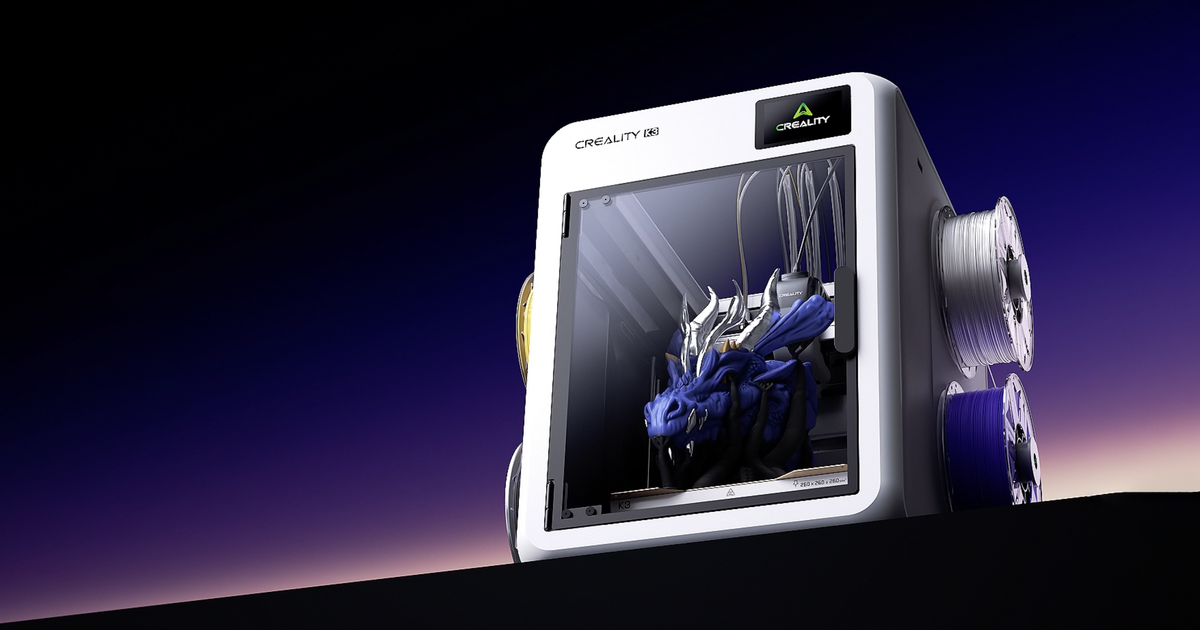
Additive manufacturing hardware manufacturer Creality has introduced the K3, a next-generation desktop 3D printer engineered to swap between four individual nozzles within seconds, addressing the long-standing industry challenge of excessive material waste and sluggish cycle times during multi-color and multi-material fabrication. First detailed in reporting by Howard Armitage on Oct. 17, 2026, the machine represents a direct attempt to challenge conventional single-nozzle multi-material systems, which dominate the consumer segment but rely on protracted filament purging routines that discard substantial volumes of molten polymer.
Key facts
What happened
According to reporting by Howard Armitage, Creality is moving to eliminate one of the primary operational bottlenecks in desktop fused deposition modeling (FDM) with the presentation of its new K3 platform. Multi-color 3D printing has historically required operators to compromise between mechanical simplicity and fabrication efficiency. Single-extruder architectures feed multiple spools into one shared print head, obliging the machine to retract filament, slice or unload the strand, feed an alternate material, and extrude a significant volume of plastic to flush out the previous color whenever a layer dictates a chromatic change.
Creality's design for the K3 bypasses that purge cycle by equipping the print head assembly with a rapid-switching system holding four dedicated nozzles. Rather than mechanically clearing the melt zone of a single hotend over a purge chute or sacrificial wipe tower, the K3 physically swaps the active extrusion tip for another already loaded with the intended filament. According to Howard Armitage, this mechanical transition takes place in mere seconds, allowing the gantry to resume active deposition on the build plate without the prolonged flushing and reheating sequences typical of standard multi-filament hubs.
While complete hardware specifications, build envelope dimensions, and motor drive kinematics were not fully enumerated in the initial dispatch, the core architectural transition from a single shared nozzle to a compact four-station dynamic array marks a fundamental revision of Creality's top-tier desktop lineup.
Why it matters
The introduction of a four-nozzle rapid-exchange system carries significant practical and economic consequences for digital fabrication workshops, prototyping laboratories, and consumer hobbyists. Under prevailing single-nozzle systems—such as those popularized by automated material hubs across the desktop market—a multi-colored object requiring thousands of filament swaps often generates more purged waste plastic by mass than the final printed part itself. These extruded ribbons of scrap, colloquially referred to in workshop settings as filament waste or purge pellets, represent direct financial losses, particularly when employing high-grade engineering polymers such as carbon-fiber reinforced polyamides, polycarbonate, or specialized flexible elastomers.
Beyond raw material consumption, the temporal savings offered by multi-nozzle swapping alter the economics of short-run manufacturing. In a traditional multi-color print with 500 layer-height color transitions, an auxiliary filament unload, purge, and wipe sequence lasting 60 to 90 seconds per swap adds between eight and twelve hours of non-productive operational time to a single print run. By condensing that transition window to a matter of seconds per swap, the Creality K3 substantially lowers power usage, shortens turnaround cycles, and dramatically improves machine throughput for small businesses relying on desktop hardware for end-use parts.
Furthermore, discrete nozzles resolve the chronic issue of cross-polymer temperature incompatibility. Single-nozzle systems struggle when alternating between materials with vastly different melting thresholds, such as combining polylactic acid (PLA) that extrudes around 200 degrees Celsius with high-temperature co-polyester or flexible thermoplastic polyurethane (TPU) that can easily jam when retracted through cold-break heat sinks. Housing independent nozzles enables distinct thermal parameters and mechanical drives optimized for specific filaments without risking hotend clogs.
The background
Fused deposition modeling has advanced rapidly since the expiration of early commercial patents in 2009 unlocked the open-source RepRap movement. Founded in Shenzhen in 2014, Creality built an extensive global footprint on the strength of budget-oriented, single-extruder Cartesian bed-slingers like the Ender-3 series, which made 3D printing accessible to millions of consumers worldwide. However, early efforts to achieve multi-color printing remained largely confined to experimental dual-extrusion setups, where two permanently fixed nozzles sat side-by-side on a single carriage—a configuration plagued by accidental nozzle strikes and filament oozing onto the workpiece.
To sidestep dual-nozzle alignment problems, the industry pivoted heavily toward upstream multiplexers. European manufacturer Prusa Research explored multi-material units (MMU) that cut and retracted filaments before pushing another into a shared hotend. In 2022, Chinese manufacturer Bambu Lab accelerated mainstream multi-color adoption by pairing high-speed CoreXY enclosures with external four-spool automated material systems (AMS). While these configurations made multi-color printing consumer-friendly, the mechanical penalty remained high: every color change required cutting the strand, expelling the molten plug, and extruding a purge tower, turning filament waste into an unavoidable byproduct.
In response to mounting user dissatisfaction over wasted plastic, high-end manufacturers pursued tool-changing architectures. British components maker E3D developed the experimental ToolChanger system, and Prusa Research introduced the industrial-leaning Prusa XL, an expensive multi-toolhead platform featuring up to five independent toolheads parked alongside the upper frame. While independent tool changing virtually eliminated purge waste, the accompanying mechanical overhead—including complex docking carriages, locking pins, individual stepper motors, and expanded gantry frames—elevated unit pricing beyond the budget of standard desktop users. Creality's K3 attempts to bridge this structural divide by compressing multi-tool functionality into a localized multi-nozzle mechanism.
Reaction
The additive manufacturing sector has anticipated lower-cost multi-tool architectures as the market reached saturation with single-nozzle filament multiplexers. While official statements from competitor firms have not been released, digital fabrication communities and open-source slicer developers have long identified purge-waste reduction as the primary missing link in modern desktop printing.
Hardware engineers and additive manufacturing analysts are expected to evaluate Creality's kinematic design against the strict mechanical tolerances demanded by tool-swapping systems. Open-source slicing software groups, including the teams maintaining OrcaSlicer and PrusaSlicer, will need to create dedicated kinematic tool-change scripts and offset-calibration routines to support Creality's proprietary hardware arrangement once unit documentation becomes publicly verifiable.
What we don't know yet
Several critical operational and commercial details remain unclarified following the initial reporting by Howard Armitage. Most notably, the mechanical layout of the four-nozzle swapping system has not been publicly broken down into technical schematics. It remains unconfirmed whether the K3 employs a revolving carousel, a linear internal shuttle, or a micro-docking latch within the carriage envelope.
Additionally, the report did not disclose key commercial variables, including the manufacturer's suggested retail price, initial geographic availability, or official delivery dates. Crucial technical parameters—such as the printable build volume, the presence of active chamber heating, maximum hotend temperatures, and whether each nozzle maintains independent thermal regulation while idling—remain unstated. The reliability of toolhead alignment across thousands of cycles is another open question, as multi-nozzle architectures depend on micro-millimeter precision across the X, Y, and Z axes to prevent visible layer banding or dimensional inaccuracy.
What to watch
The immediate milestones to monitor include Creality's formal publication of complete hardware specifications, documentation of the printer's kinematic drive, and firmware support repositories. Slicing compatibility will serve as an essential indicator of utility, particularly whether Creality Print or independent platforms like OrcaSlicer feature native toolpath profiles tailored to the K3's exchange cycle.
Observers will also watch for the first wave of independent third-party hardware stress tests. These evaluations will determine how well the K3 holds nozzle offsets over continuous, 40-hour print jobs involving thousands of nozzle exchanges, and whether the rapid swap mechanism is prone to mechanical jams or plastic accumulation around idle nozzles. Finally, pricing positioning relative to both single-nozzle multiplexer systems and high-end multi-tool platforms like the Prusa XL will dictate how aggressively competing desktop manufacturers move to engineer their own zero-purge nozzle systems.
This report is based on original news reporting published by Howard Armitage on Oct. 17, 2026.
How this story was produced
This report was written by The Global Wire newsroom from reporting first published by Howard Armitage. We verify the core facts against the original report, write our own account, and add the background and consequences a short wire item leaves out. Drafting is AI-assisted inside an editor-supervised pipeline, and every story is checked for accuracy of attribution, structure and duplication before it appears — full detail in our AI and funding disclosure.
Spotted an error? Tell us at corrections@horizonglobalnews.com and read our corrections policy or editorial standards.




Reader comments
Loading comments…