

Researchers Build Gut-Inspired Biobattery Producing 0.75 Volts in Hydrogel Matrix
A newly developed microbial power source mimics the human digestive tract, using bacteria suspended in flexible hydrogel to produce electric potential for miniature devices.
By The Global Wire Newsroom · Reported from Neetika Walter
Link preview · horizonglobalnews.com
Researchers Build Gut-Inspired Biobattery Producing 0.75 Volts in Hydrogel Matrix
A newly developed microbial power source mimics the human digestive tract, using bacteria suspended in flexible hydrogel to produce electric potential for miniature devices.
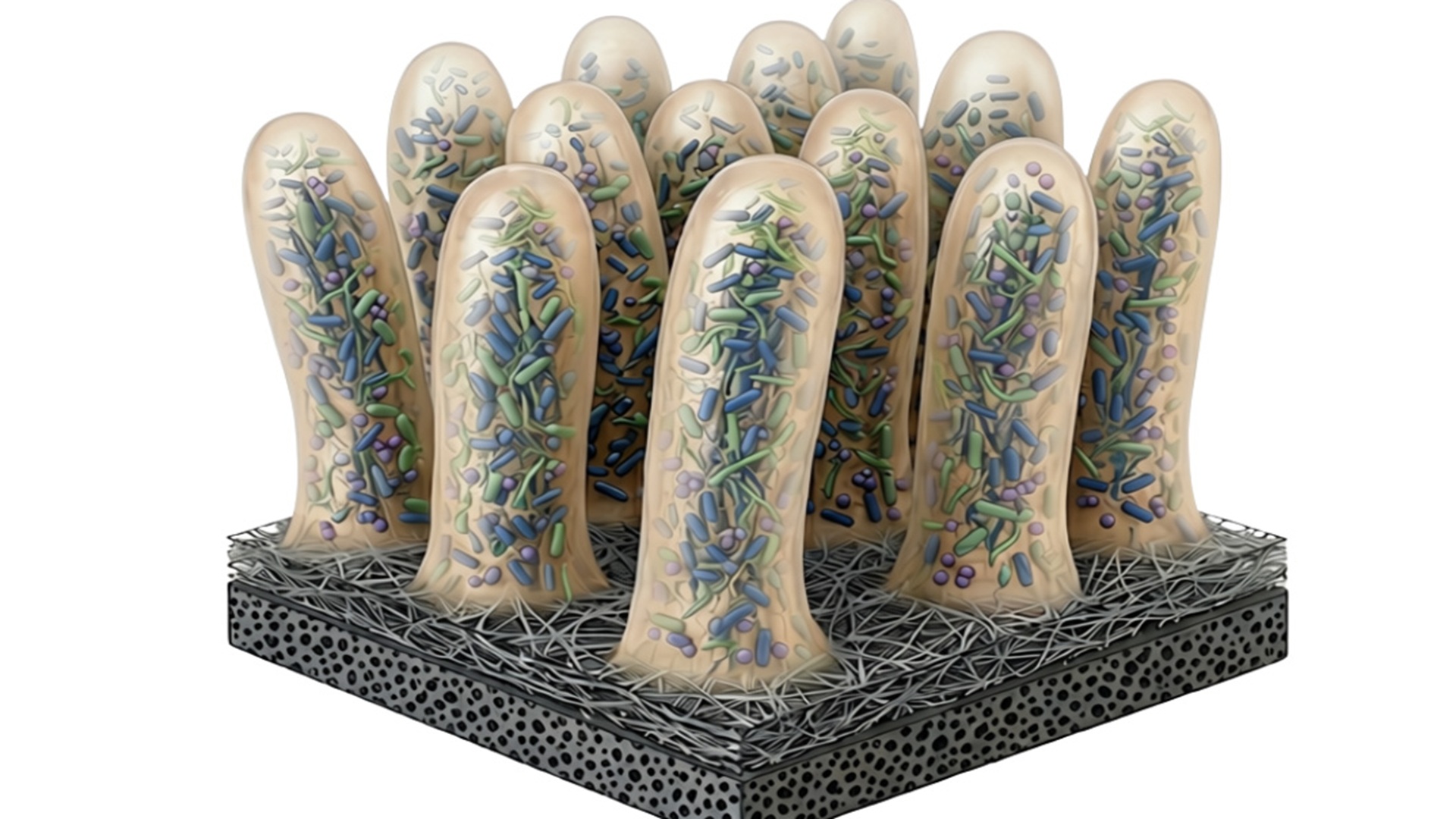
Engineers and bioelectronics researchers in the United States have created a flexible biobattery modeled on the physiological environment of the human digestive tract, producing an electrical output of 0.75 volts. The design integrates living bacteria inside a pliable hydrogel network, establishing a self-contained electrochemical matrix capable of generating usable power without relying on conventional toxic chemical reagents or rigid metallic casings. The development represents an advance in the field of biocompatible energy harvesting, pointing toward self-sustaining power supplies for ingestible diagnostics, wearable medical patches, and miniature environmental monitoring devices.
Key facts
What happened
According to reporting by Neetika Walter, a research team in the United States has successfully engineered a biological battery that draws inspiration from the human gut to generate an electrical potential of 0.75 volts. Rather than employing the heavy metals, flammable organic liquid electrolytes, or rigid enclosures typical of conventional dry cells, the researchers designed an organic platform centered on bacterial metabolism suspended within a synthetic hydrogel framework.
In this experimental platform, the bacteria function as biocatalysts, driving oxidation-reduction reactions through standard metabolic pathways. As the microorganisms consume surrounding organic compounds or biological fuel inputs, they release electrons during metabolic respiration. The hydrogel structure serves a dual purpose: it acts as a hydrated, protective scaffold that keeps the bacterial colonies viable and mechanically stable, while also serving as an internal conductive or semi-permeable electrolytic pathway that facilitates the migration of charged ions between electrodes.
The resulting system achieves an open-circuit electrical potential of 0.75 volts. In conventional electrochemistry, a standard commercial alkaline AA or AAA battery delivers roughly 1.5 volts, whereas single-cell lithium-ion batteries operate near 3.7 volts. Delivering 0.75 volts from a living, flexible biological construct brings the output into range for direct pairing with ultra-low-power integrated circuits, step-up voltage converters, or miniature capacitors used in biological sensing.
The physical form of the device relies on hydrogel polymers, which can bend, compress, and conform to irregular surfaces without disrupting electrical continuity or crushing the embedded microbes. By emulating the crowded, nutrient-exchanging, and flexible mucosal architecture found in the human intestine, the team demonstrated that living cellular communities can remain functionally active and continuously productive in an engineered, solid-state bioelectronic format.
Why it matters
The creation of an operative 0.75-volt biological battery addresses one of the most stubborn engineering bottlenecks in medical technology: how to safely power devices inside or directly against the human body. Contemporary ingestible electronics, such as capsule endoscopes that travel through the digestive system to photograph mucosal tissue, currently depend on conventional silver-oxide or lithium button cells. While tightly sealed, these metallic batteries present severe clinical risks if retained in tissue, including caustic chemical burns, heavy metal toxicity, and internal mechanical perforation.
A microbial battery held together by a soft hydrogel matrix provides an inherently non-toxic alternative. If such a power cell were compromised or degraded within the gastrointestinal tract, its organic components and benign bacteria would pose minimal threat compared to concentrated alkaline hydroxides or lithium salts. Furthermore, an output of 0.75 volts represents a meaningful threshold for modern microelectronics. Contemporary complementary metal-oxide-semiconductor (CMOS) logic circuits engineered for sub-threshold operation can execute baseline digital processing and intermittent radio-frequency data transmission at voltages between 0.4 volts and 0.8 volts.
Beyond direct medical applications, flexible microbial batteries have implications for soft robotics and distributed environmental sensors. Conventional rigid batteries impede the natural deformation of soft robotic grippers and artificial muscles. A power source that matches the mechanical impedance of soft biological tissues allows devices to flex naturally while generating energy in damp, anaerobic, or biologically active environments where standard electronics quickly corrode or fail.
The background
Microbial fuel cells (MFCs) and biological batteries have been studied in academic laboratories for decades, beginning with early twentieth-century observations that bacterial cultures generate electrical currents during the decomposition of organic matter. Historically, microbial fuel cells functioned primarily as rigid, two-chamber glass laboratory systems separated by proton-exchange membranes, such as Nafion, and connected through external electrical circuits. These traditional setups were developed largely for municipal wastewater treatment facilities, where wild strains of bacteria broke down sewage sludge while generating small trickles of supplemental electricity.
Over the past fifteen years, researchers identified specific electroactive microbial strains—most notably within the genera *Shewanella* and *Geobacter*—that possess outer-membrane cytochrome proteins and conductive hair-like appendages known as microbial nanowires. These specialized structures enable extracellular electron transfer, allowing the cells to discharge metabolic electrons directly onto solid external mineral surfaces or artificial electrodes without requiring synthetic chemical mediators.
Despite these biological insights, translating microbial fuel cells into practical, compact electronics has historically stumbled on packaging challenges. Bacteria require liquid water, stable nutrient access, and benign pH conditions to survive. When conventional MFCs were shrunk down, drying out, nutrient starvation, and membrane leakage frequently killed the bacterial culture within hours. Moreover, single-chamber micro-scale MFCs often produced negligible voltages, frequently hovering between 0.1 volts and 0.3 volts, which proved insufficient to overcome the operational thresholds of electronic components.
To overcome these obstacles, materials scientists turned to hydrogels—crosslinked three-dimensional polymer networks capable of holding substantial volumes of water while retaining solid structural integrity. Materials such as polyacrylamide, polyethylene glycol, alginate, and gelatin have been broadly adopted across tissue engineering and bioelectronics because they mimic the natural extracellular matrix of mammalian and bacterial tissues. By embedding bacterial cells directly within these polymer lattices, researchers have sought to create self-contained biological materials that insulate living cells from mechanical stress and dehydration, establishing a bridge between living microbiomes and solid-state electronic devices.
Reaction
While formal public statements from regulatory agencies or commercial device manufacturers have not yet been released following the initial research disclosures, responses are anticipated from biomedical engineering panels and academic conferences specializing in bio-interfacial systems. The Institute of Electrical and Electronics Engineers (IEEE) Engineering in Medicine and Biology Society, along with the Materials Research Society (MRS), regularly evaluate such bio-hybrid technologies at annual symposia.
Clinical gastroenterologists and regulatory specialists at agencies such as the U.S. Food and Drug Administration (FDA) typically scrutinize any technology intended for gut insertion through the lens of biocompatibility, biocontainment, and long-term safety. When devices containing live microorganisms are introduced into clinical discussions, medical review bodies consistently demand rigorous evaluations regarding whether non-native bacterial species could escape their containment matrices, alter the native host microbiome, or introduce opportunistic pathogens into vulnerable patient populations.
What we don't know yet
Key technical parameters and performance metrics remain unaddressed in the preliminary reporting. The initial accounts do not disclose the precise bacterial species or genetic strain encapsulated within the hydrogel, leaving open whether the device relies on standard electroactive laboratory models like *Shewanella oneidensis*, genetically modified organisms, or commensal gut microbes adapted to the human digestive tract.
Additionally, the operational lifespan of the biobattery has not been specified. It is not yet clear how many hours or days the embedded bacteria can sustain the 0.75-volt output before nutrient exhaustion or metabolic byproduct accumulation halts electricity generation. Critical electrochemical figures—such as continuous current density, peak power density, internal impedance, and performance stability under mechanical stretching or variable ambient temperatures—remain undisclosed. Crucially, the reporting does not state whether the biobattery was tested strictly in benchtop laboratory settings or evaluated within an active biological model or synthetic digestive fluid, where digestive enzymes and acidic gastric juices could compromise hydrogel integrity.
What to watch
The trajectory of this gut-inspired biobattery will depend on several upcoming scientific and technical validation steps. Observers should watch for the publication of peer-reviewed data in formal materials and bioengineering journals, which will provide complete schematics of the hydrogel formulation, electrode materials, bacterial growth media, and full polarization discharge curves.
Future research milestones will center on in vitro stability testing inside artificial gastric and intestinal environments. Demonstrating that the hydrogel matrix can endure acidic pH levels as low as 1.5 in the stomach before operating in the neutral-to-alkaline conditions of the small intestine will be essential for ingestible applications. Investigators will also need to demonstrate proof-of-concept integrations where the 0.75-volt cell powers an actual low-power sensor—such as an internal temperature monitor, pH sensor, or wireless transmitter—either on its own or through miniaturized energy-harvesting power management integrated circuits (PMICs).
This account is based on original reporting by Neetika Walter.
How this story was produced
This report was written by The Global Wire newsroom from reporting first published by Neetika Walter. We verify the core facts against the original report, write our own account, and add the background and consequences a short wire item leaves out. Drafting is AI-assisted inside an editor-supervised pipeline, and every story is checked for accuracy of attribution, structure and duplication before it appears — full detail in our AI and funding disclosure.
Spotted an error? Tell us at corrections@horizonglobalnews.com and read our corrections policy or editorial standards.





Reader comments
Loading comments…