

Honda Demonstrates Avatar Robot with Human-Mirroring Hand at CEATEC 2026
Honda Motor Co. has showcased its experimental Avatar Robot at CEATEC 2026, demonstrating a multi-fingered robotic hand controlled remotely to perform intricate physical tasks.
By The Global Wire Newsroom · Reported from Aamir Khollam
Link preview · horizonglobalnews.com
Honda Demonstrates Avatar Robot with Human-Mirroring Hand at CEATEC 2026
Honda Motor Co. has showcased its experimental Avatar Robot at CEATEC 2026, demonstrating a multi-fingered robotic hand controlled remotely to perform intricate physical tasks.
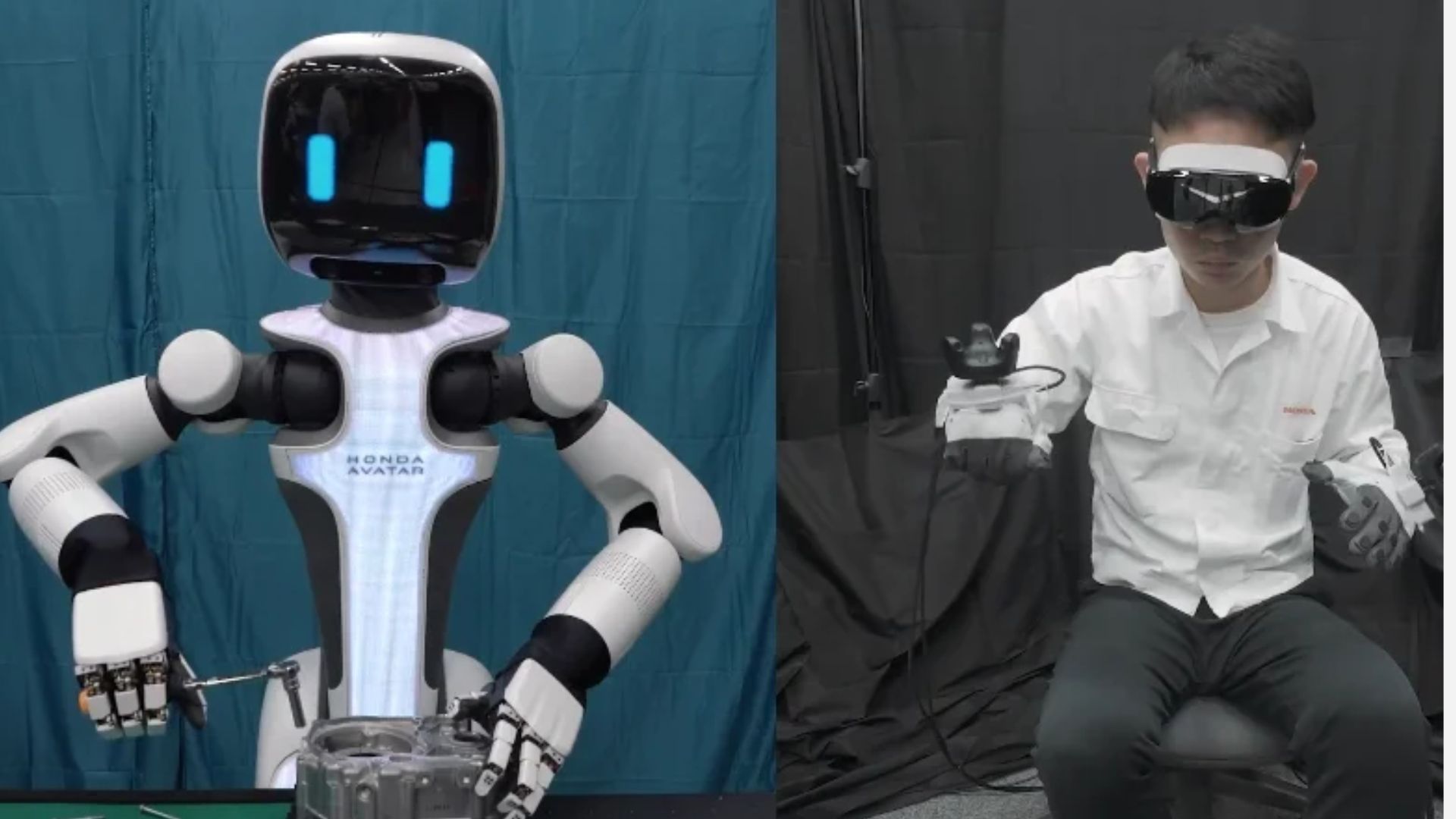
CHIBA, Japan — Honda Motor Co. demonstrated its experimental Avatar Robot at the CEATEC 2026 technology exhibition in Japan, highlighting advanced remote-control capabilities and a multi-fingered robotic hand capable of mirroring human movements to manipulate complex tools and objects, according to reporting by Aamir Khollam. The public demonstration featured teleoperation systems designed to allow human operators to execute intricate physical tasks from a distance, marking a major milestone in the Japanese automaker's broader push into next-generation robotics and remote work technologies.
Key facts
What happened
According to reporting by Aamir Khollam, Honda presented its Avatar Robot in action at CEATEC 2026, offering attendees a live demonstration of how the hardware mirrors human hand and arm motions to perform physical labor remotely. The primary focus of the demonstration was the robot's multi-fingered hand mechanism, engineered to respond in real time to the fine movements of a human operator stationed at a remote control station.
During the demonstration, the robotic hand engaged with various objects and tools, displaying the precise motor control required for gripping, turning, and positioning items that conventional single-purpose industrial arms cannot handle. The system relies on a combination of high-precision actuators, sensor arrays, and low-latency communication protocols that transmit spatial coordinates and force data back and forth between the human operator and the machine. By providing tactile feedback to the user, the Avatar Robot allows operators to feel resistance and surface contact, helping prevent accidental damage to fragile items or slippage when handling heavy objects.
While Honda did not release full technical specifications, payload limits, or retail pricing during the exhibition, the presentation highlighted the functional progress made on hardware components since the concept was first outlined. The demonstration underscored how the avatar framework aims to combine human spatial awareness and cognitive judgment with mechanical precision, providing a bridge between fully autonomous robotics—which often struggle in unpredictable, unstructured environments—and direct physical labor.
Why it matters
The development of dexterous avatar robotics carries substantial implications for industrial safety, labor productivity, disaster response, and space exploration. For heavy industries and civil infrastructure, deploying teleoperated robotic hands into high-risk environments—such as nuclear facilities undergoing decommissioning, chemical containment zones, or disaster sites with unstable structures—enables technicians to perform delicate repairs without exposing personnel to hazardous radiation, toxic chemicals, or physical collapses.
From an economic perspective, Japan faces acute demographic pressures driven by a declining birth rate and a rapidly aging population. Statistics from Japan's Ministry of Internal Affairs and Communications demonstrate a shrinking working-age demographic, creating severe labor shortages in fields such as maintenance, construction, healthcare, and agriculture. Teleoperated avatar systems could permit skilled workers to perform physical tasks in multiple locations nationwide without traveling, significantly increasing workforce efficiency and allowing elderly or mobility-impaired specialists to remain active in the economy.
Furthermore, the technology holds strategic relevance for international space exploration programs, including initiatives led by the Japan Aerospace Exploration Agency (JAXA) and NASA. Orbital and lunar environments present high operational risks for human astronauts during extravehicular activities. Equipped with human-like dexterity, teleoperated avatar robots mounted on spacecraft, space stations, or planetary rovers could allow ground-based controllers on Earth to conduct routine maintenance, repair tasks, and scientific sample handling, reducing mission costs and safety risks for crew members.
The background
Honda's expansion into human-mimicking robotics began in 1986 with a series of covert experiments conducted at the company's research centers in Japan. Known as the E-series (Experimental Models E1 through E6), these early prototypes focused on mastering the fundamental physics of bipedal walking and dynamic balance. By 1993, Honda progressed to the P-series (Prototype Models P1, P2, and P3), integrating full human-shaped upper bodies, arm joints, and head units onto walking platforms.
This initial phase of development culminated in December 2000 with the reveal of ASIMO (Advanced Step in Innovative Mobility). Over nearly two decades of continuous public demonstrations and research iterations, ASIMO became a globally recognized symbol of humanoid robotics, showcasing autonomous obstacle avoidance, voice recognition, stair climbing, and fluid running. Honda officially concluded the ASIMO demonstration project in 2018, reallocating its engineering teams to apply the underlying movement, sensor, and control technologies toward practical commercial applications.
In September 2021, Honda formally announced its updated technology vision, highlighting three core growth sectors: electric vertical takeoff and landing (eVTOL) aircraft, space exploration systems, and the Honda Avatar Robot. The avatar initiative was specifically formulated to address the historical limitation of industrial automation: the lack of versatile human dexterity. Standard industrial robots are highly efficient at repetitive assembly-line actions but struggle with varied object shapes, flexible materials, and delicate hand tools. To solve this, Honda designed a multi-fingered robotic hand powered by compact actuators and tendon-like drive cables, engineered to mirror the complex kinematics of human fingers.
The choice of CEATEC as the unveiling venue reflects the trade show's historical importance. Established in 2000 and held at the Makuhari Messe facility in Chiba Prefecture, CEATEC serves as Japan's chief showcase for electronic components, artificial intelligence, cyber-physical systems, and next-generation mobility solutions, drawing global industry leaders, tech researchers, and international press.
Reaction
Industry observers and robotics researchers at CEATEC 2026 noted that Honda's live demonstration underscores a broader transition in industrial robotics toward hybrid teleoperation, where human intelligence directs high-precision mechanical effectors. While Honda has not published formal corporate press statements containing executive commentary immediately following the presentation reported by Aamir Khollam, market analysts anticipate evaluations from industrial automation partners and research bodies in the coming months.
Technology integrators and safety agencies are expected to closely analyze the system's operational parameters, particularly regarding network reliability and human operator ergonomics. Japanese government bodies, such as the Ministry of Economy, Trade and Industry (METI), have consistently encouraged investment in telepresence and avatar robotics as part of strategic national policies to combat labor supply deficits and strengthen emergency response infrastructure.
What we don't know yet
Despite the live showcase at CEATEC 2026, several key operational parameters remain unconfirmed in the initial reporting by Aamir Khollam. Honda has not released explicit figures regarding the robotic hand's maximum lifting capacity, pinch strength, battery endurance, or mechanical durability under continuous industrial use. Additionally, the exact design of the operator interface—such as whether controllers use wearable haptic gloves, exoskeletal arms, or spatial tracking cameras—was not fully detailed in available reports.
Furthermore, critical questions remain about how the avatar system performs across real-world, wide-area network environments. While trade show demonstrations operate over dedicated, low-latency local networks, operating an avatar robot over long-distance cellular 5G networks, optic fibers, or satellite links can introduce latency spikes and packet loss, which can disrupt delicate touch control. Finally, Honda has not published a commercial release schedule, unit pricing, or maintenance cost estimates, making it difficult to assess how quickly the technology can transition from an experimental trade show prototype into a commercially viable industrial product.
What to watch
In the coming months, industry stakeholders should monitor whether Honda releases detailed technical white papers or empirical test data outlining the system's force-feedback sensitivity, spatial precision, and latency limits. Academic and technical conferences—such as the IEEE International Conference on Robotics and Automation (ICRA) or the IEEE/RSJ International Conference on Intelligent Robots and Systems (IROS)—will be key venues to watch for published research from Honda's development teams.
Looking further ahead, attention will focus on potential real-world pilot programs. Analysts will be watching for potential announcements of trial partnerships with Japanese construction companies, maintenance firms, healthcare providers, or space agencies like JAXA. Progress toward Honda's long-term commercial goals for the 2030s will depend heavily on overcoming high component manufacturing costs, standardizing haptic control interfaces, and establishing regulatory frameworks for remote industrial operations across regional boundaries.
This report is based on original reporting by Aamir Khollam covering the CEATEC 2026 technology exhibition.
How this story was produced
This report was written by The Global Wire newsroom from reporting first published by Aamir Khollam. We verify the core facts against the original report, write our own account, and add the background and consequences a short wire item leaves out. Drafting is AI-assisted inside an editor-supervised pipeline, and every story is checked for accuracy of attribution, structure and duplication before it appears — full detail in our AI and funding disclosure.
Spotted an error? Tell us at corrections@horizonglobalnews.com and read our corrections policy or editorial standards.




Reader comments
Loading comments…