

BAE Systems Advances Counter-Drone Microwave Weapon to Field Prototype Stage
A high-power microwave system capable of stopping swarms of unmanned aerial vehicles without launching interceptor missiles has reached Technology Readiness Level 6 after outdoor trials.
By The Global Wire Newsroom · Reported from Aamir Khollam
Link preview · horizonglobalnews.com
BAE Systems Advances Counter-Drone Microwave Weapon to Field Prototype Stage
A high-power microwave system capable of stopping swarms of unmanned aerial vehicles without launching interceptor missiles has reached Technology Readiness Level 6 after outdoor trials.
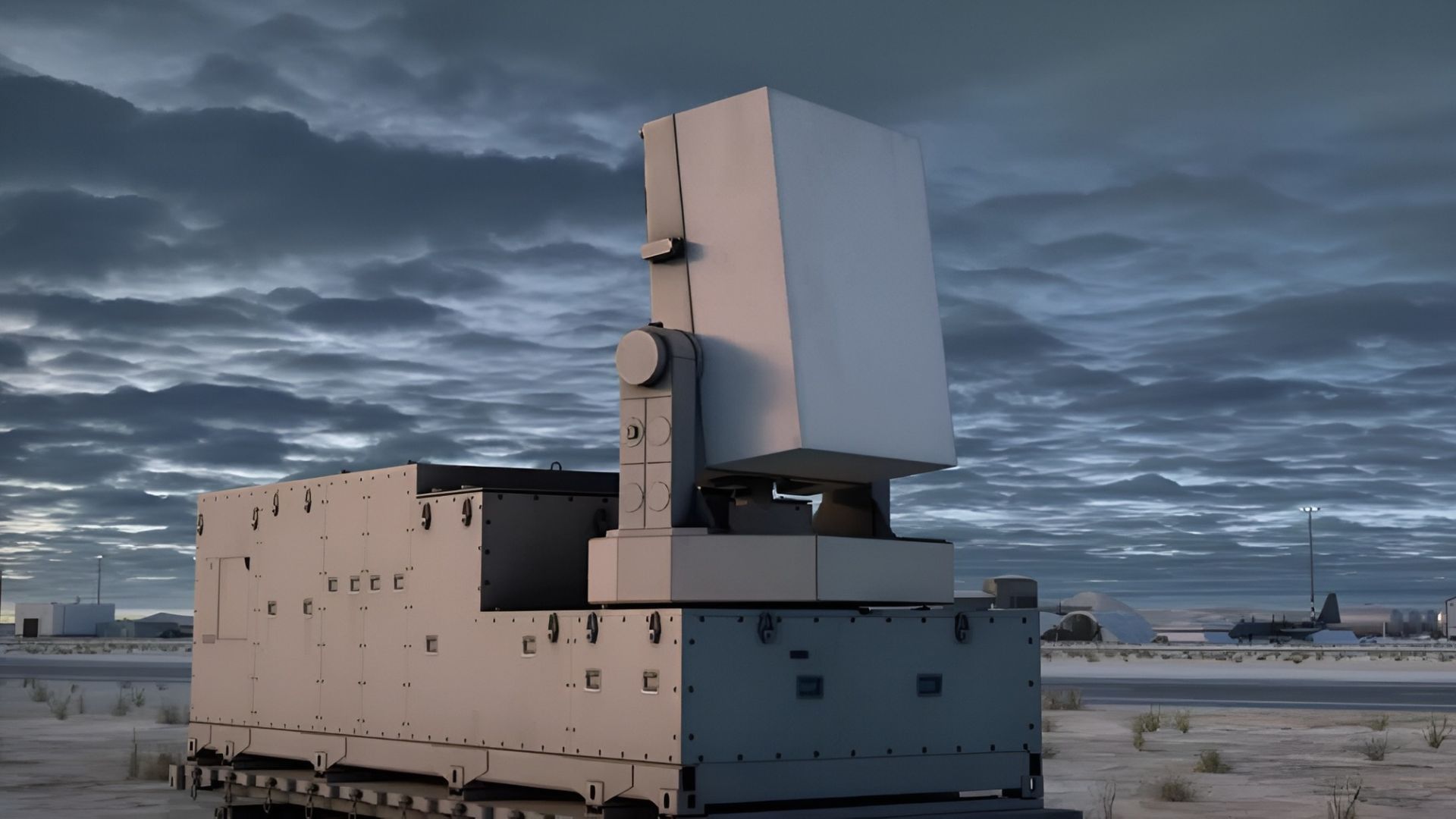
British defense contractor BAE Systems has advanced its non-kinetic counter-drone microwave weapon to Technology Readiness Level 6 following successful outdoor field testing, marking a significant development in the global military effort to neutralize airborne drone swarms without relying on expensive interceptor missiles. The field trials demonstrated the directed-energy system's capability to target and disable multiple unmanned aerial vehicles simultaneously in realistic open-air conditions, moving the technology out of controlled laboratory environments and closer to battlefield integration.
Key facts
What happened
BAE Systems announced that its high-power microwave (HPM) weapon system reached Technology Readiness Level 6 (TRL 6) after completing field trials conducted outdoors against swarms of unmanned aerial vehicles. The testing evaluated the system's operational capability to identify, track, and disable multiple drone threats simultaneously in open space, representing a critical leap forward from earlier laboratory-bound demonstrations.
Reaching TRL 6 indicates that the system has transitioned from an early experimental concept to a fully functional engineering prototype tested in a relevant environment. On the nine-point Technology Readiness Level scale created by NASA in the 1970s and standardized across global military procurement agencies, TRL 6 serves as the primary gateway to full operational integration, preceding final field testing (TRL 7), system qualification (TRL 8), and active combat deployment (TRL 9).
During the trials, the high-power microwave platform emitted concentrated bursts of electromagnetic radiation aimed at incoming groups of drones. Rather than relying on physical explosive impacts or solid projectiles, the weapon sent high-intensity radio frequency waves through the air to penetrate the lightweight housings of airborne targets. The electromagnetic pulse induces unexpected voltage spikes within the internal microelectronics, flight controllers, and wireless communication links of the drones, causing immediate system failure, loss of control, or physical burn-out of essential circuit boards. This mechanism allows a single HPM emitter to neutralize an entire incoming cluster of drones within a broad conical beam, rather than targeting each drone individually with precise point-defense fire.
Why it matters
The advancement of microwave directed-energy technology to TRL 6 addresses one of the most pressing financial and tactical dilemmas facing modern armed forces: the severe cost asymmetry inherent in counter-drone air defense. In modern combat zones, hostile state forces and non-state armed groups regularly deploy low-cost, commercially modified or mass-produced single-use attack drones. These unmanned systems often cost between several hundred and a few thousand dollars each. Conversely, traditional kinetic air defense weapons—such as surface-to-air interceptor missiles used in systems like the Patriot, NASAMS, or Sea Viper—cost between several hundred thousand and several million dollars per launch.
Using high-value air defense missiles to shoot down inexpensive, mass-manufactured drones rapidly exhausts defense stockpiles and imposes immense financial burdens on military budgets. A high-power microwave system fundamentally changes this equation by drastically lowering the cost per engagement. Once installed on a mobile vehicle, surface warship, or stationary base, an HPM system relies entirely on electrical power supplied by onboard generators or energy storage units. The cost per fired pulse is measured in fractions of a dollar, bounded primarily by fuel or grid electricity consumption.
Beyond economic efficiency, microwave weapons solve the problem of magazine capacity. Physical missile launchers carry a finite number of interceptors before requiring lengthy and hazardous rearming operations in the field. An HPM system provides a virtually infinite magazine capacity, capable of firing repeated electromagnetic bursts as long as electrical power remains available.
Furthermore, drone swarms are specifically designed to overwhelm defensive perimeters by flooding local airspace with dozens or hundreds of coordinated targets. Traditional point-defense weapons, including rapid-fire rotary cannon and high-energy lasers, must track and engage targets sequentially, one by one. By contrast, high-power microwaves generate a wider radiation envelope, enabling defense units to neutralize entire clusters of incoming autonomous drones simultaneously. Because the weapon uses non-kinetic electromagnetic waves, it also eliminates the risk of unexploded friendly ordnance or shrapnel falling on civilian areas or friendly troops near the defense perimeter.
The background
Unmanned aerial systems have transformed tactical warfare over the past decade, evolving from high-altitude strategic reconnaissance assets into cheap, ubiquitous tactical weapons. Combat operations across Eastern Europe, the Middle East, and maritime trade routes in the Red Sea have demonstrated how small, agile drones can bypass radar networks, conduct precision strike missions, and conduct intelligence surveillance against high-value military assets and critical civilian infrastructure.
To counter this evolving threat, global defense contractors and military research organizations have pursued various Counter-Unmanned Aerial Systems (C-UAS) technologies. These technologies broadly fall into two main categories: soft-kill electronic warfare systems and hard-kill kinetic defenses. Soft-kill systems use RF jamming or GPS spoofing to interrupt control signals, but modern autonomous drones utilizing optical navigation, pre-programmed flight plans, or fiber-optic control tethering are largely immune to standard signal jamming. On the other hand, hard-kill systems using traditional artillery shells or guided missiles face severe logistical bottlenecks and inventory exhaustion.
Directed Energy Weapons (DEWs) have emerged as the primary solution to bridge this gap. DEW research generally splits into two technological paths: High-Energy Lasers (HEL) and High-Power Microwaves (HPM). High-energy lasers use focused light beams to melt through target hulls or ignite onboard fuel and explosives. While effective, lasers require precise line-of-sight tracking and can be slowed by adverse atmospheric conditions, such as dense fog, heavy rain, dust, or smoke. Furthermore, lasers typically target one threat at a time.
High-power microwave systems operate on different physical principles. Rather than relying on thermal destruction via concentrated light, HPM platforms generate high-intensity radio frequency waves across broad frequencies. These pulses can penetrate cloud cover and atmospheric haze while spreading across a wide geographic angle, making them uniquely suited for counter-swarm operational roles. Defense companies like BAE Systems have spent years miniaturizing these high-power pulse generators, cooling systems, and beam-forming antennas to transform laboratory technology into field-deployable military hardware.
Reaction
Military planners and defense analysts view the transition of BAE Systems' microwave counter-drone concept to TRL 6 as an important validation point for non-kinetic defense capabilities. Armies, navies, and air forces worldwide are actively seeking field-ready directed-energy platforms to safeguard vulnerable assets, including forward operating bases, supply convoys, aircraft carriers, and critical national infrastructure.
Industry observers expect procurement agencies in the United Kingdom, the United States, and NATO allied nations to evaluate the test results closely as they establish future defense budgets and force modernization goals. Defense analysts emphasize that achieving TRL 6 provides military buyers with concrete engineering evidence that microwave weapons can function outside controlled laboratory environments, reducing technological risk for future acquisition programs.
While formal adoption announcements from defense ministries depend on further operational testing, global defense leaders have repeatedly identified counter-drone defense as a top procurement priority. Representatives from military research laboratories are expected to monitor subsequent trial phases to assess how the BAE Systems platform integrates with existing command-and-control battle management software and multi-layered air defense networks.
What we don't know yet
Despite the milestone reported by BAE Systems, several key technical details and operational limitations remain undisclosed. Public details regarding the precise operational range of the microwave weapon have not been released, leaving it unclear at what distance the system can successfully disable incoming drones before they reach target proximity.
Additionally, the physical specifications of the prototype—including its overall weight, footprint, power consumption, and cooling requirements—have not been made public. These parameters will dictate whether the system can be mounted on light tactical wheeled vehicles, armored fighting vehicles, naval vessels, or if it remains restricted to stationary ground installations.
It is also unknown how effective the system remains against specialized military drones equipped with electromagnetic shielding, Faraday cages, or hardened electronic components designed to withstand electromagnetic interference. Finally, BAE Systems has not publicly disclosed estimated production costs per unit or an exact timeline for progressing the platform through TRL 7 and TRL 8 toward full-scale commercial manufacturing and active operational service.
What to watch
In the coming months, key indicators will determine the trajectory of BAE Systems' microwave counter-drone weapon as it advances toward potential military service:
This report is based on original reporting by Aamir Khollam.
How this story was produced
This report was written by The Global Wire newsroom from reporting first published by Aamir Khollam. We verify the core facts against the original report, write our own account, and add the background and consequences a short wire item leaves out. Drafting is AI-assisted inside an editor-supervised pipeline, and every story is checked for accuracy of attribution, structure and duplication before it appears — full detail in our AI and funding disclosure.
Spotted an error? Tell us at corrections@horizonglobalnews.com and read our corrections policy or editorial standards.






Reader comments
Loading comments…